
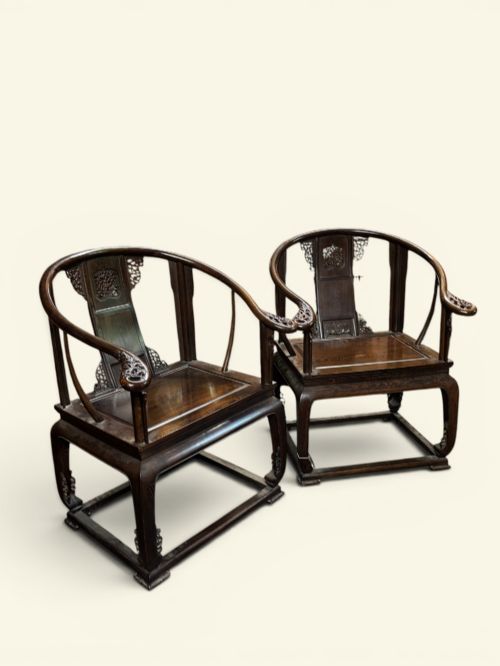
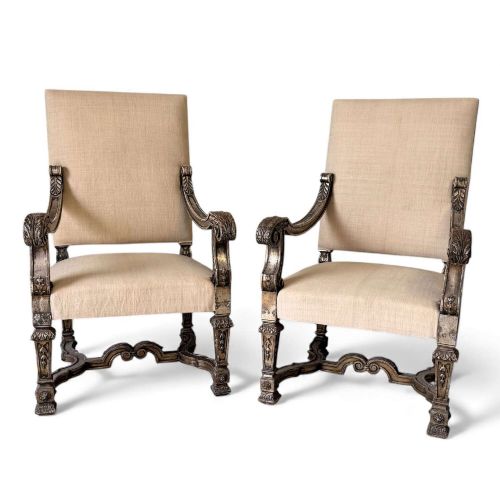
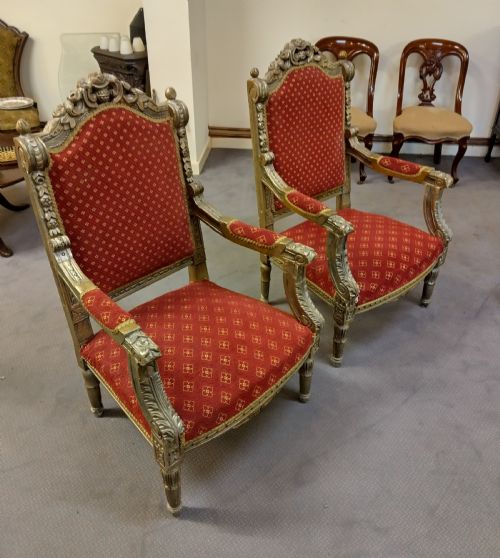
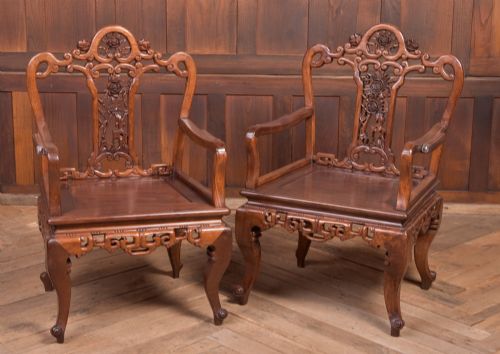
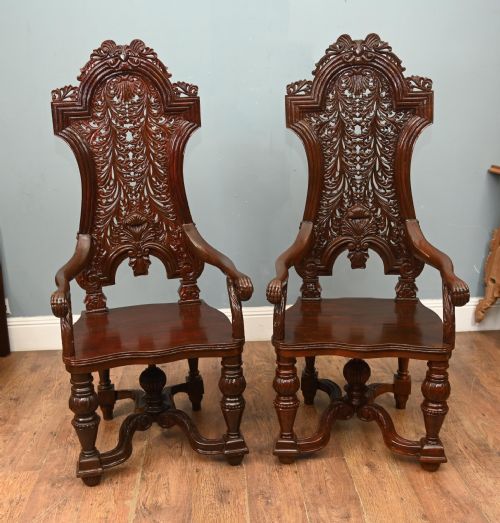


Wooden Throne Chair Pair
These wooden throne chair pair selections bring impressive architectural presence and historic grandeur into a room, offering commanding seating with rich carved detail.
Wooden Throne Chair Pair
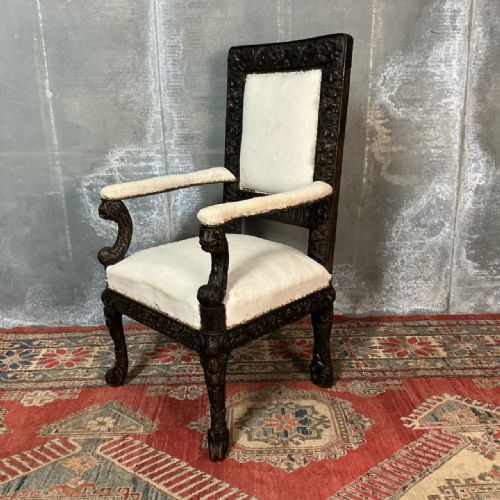
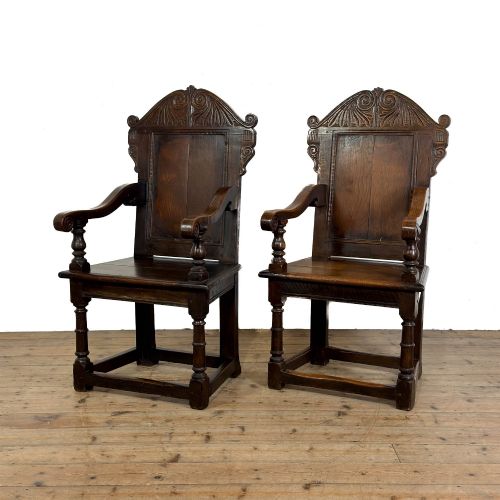
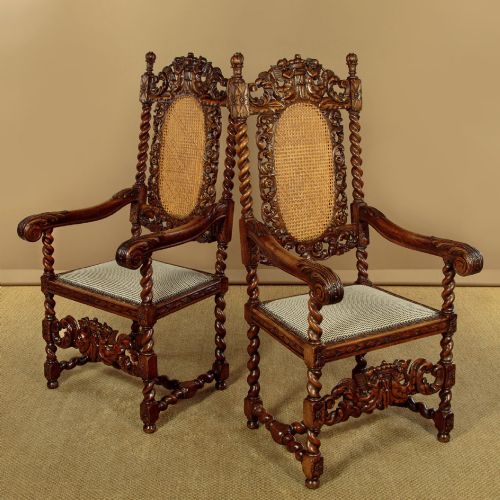
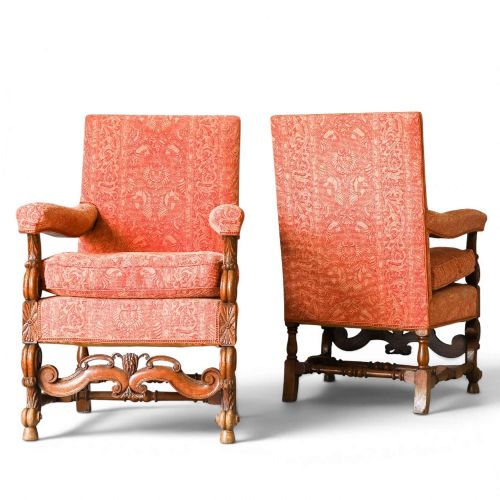
When you search for a wooden throne chair pair, you encounter substantial seating designed to command attention through height, weight, and intricate carving. These pieces span the eighteenth, nineteenth, and early twentieth centuries, drawing heavily on revival aesthetics.
The selections on this page most commonly manifest as heavy oak armchairs, high-back hall chairs, and ceremonial seats. They incorporate stylistic influences ranging from Gothic Revival and Jacobean to Baroque, Renaissance, and Anglo-Indian traditions.
Makers and workshops constructed these imposing pairs for grand halls, libraries, and formal reception spaces where status and theatricality mattered. Surviving examples retain their architectural silhouettes and heavy timber frames across diverse geographic origins.
What varies in quality
Depth, crispness, and artistic ambition of the hand-carved ornamentation separate standard revival pieces from exceptional works. Master carvers achieved deep undercut relief and expressive figural details, such as green men or scrollwork, that lesser workshops missed.
The choice and density of primary timbers dictate longevity and structural integrity over centuries of use. Superior examples employ mature, stable hardwoods that resist warping and maintain tight joints under pressure.
Styles observed across the inventory include Jacobean Revival, Baroque Revival, Gothic Revival, Anglo-Indian, and Qing Dynasty forms.
The Wooden Throne Chair Pair Glossary
- Wainscot chair
- An early wooden armchair characterised by a solid panelled back and heavy turned supports. This form preceded more heavily upholstered seating styles in domestic interiors.
- Glastonbury chair
- A distinctive nineteenth-century revival chair design featuring an X-framed folding base and sloping arms. It draws inspiration from medieval ecclesiastical furniture.
- Giltwood
- Timber treated with a thin layer of gold leaf or gilt finish to simulate solid gold enrichment. It appears frequently on Baroque and Renaissance revival ceremonial seating.
- Green man
- A sculptural motif representing a human face surrounded by or entwined with foliage and vines. It symbolises rebirth and occurs often on Victorian Gothic revival oak furniture.
- Horseshoe-back armchair
- A traditional Chinese seating form featuring a curved crestrail that sweeps continuously into the armrests. These pieces utilise dense hardwoods without relying on Western joinery.
Wooden Throne Chair Pair: Frequently Asked Questions
Where should I place these chairs?
These commanding seats function best in spaces with high ceilings and substantial proportions, such as entrance halls, libraries, or living rooms. Their architectural weight allows them to anchor a room as focal points.
Position them symmetrically to respect their paired nature, ensuring adequate clearance around the high backs and carved arms so their silhouette remains visible.
How do I care for the wood?
Maintain the timber by dusting regularly with a soft, dry cloth and avoiding placement near direct heat sources or strong sunlight. These precautions prevent the dense hardwoods from drying out or splitting.
Apply a microcrystalline wax periodically to nourish the surface and protect the historic patina without building up greasy residues on the carvings.
Are these chairs comfortable for daily seating?
Most historic examples prioritize visual impact and upright posture over modern lounge comfort. The rigid high backs and solid wooden construction encourage an upright, formal seating position.
Adding matching custom squab cushions can improve usability for extended periods while preserving the original wooden frame and upholstery lines.
How do I distinguish revival periods?
Gothic and Jacobean revival pieces from the nineteenth century rely on heavy oak, strapwork, and geometric panels that emulate seventeenth-century joinery. Baroque and Renaissance revivals introduce more exuberant scrollwork, gilt finishes, and figurative carvings.
Examining the tool marks, timber shrinkage, and fastener types helps differentiate nineteenth-century interpretations from earlier centuries of production.