


Wooden Tea Caddy Sarcophagus
A wooden tea caddy sarcophagus brings architectural heft to the table, offering a stately home for precious loose leaves.
Wooden Tea Caddy Sarcophagus
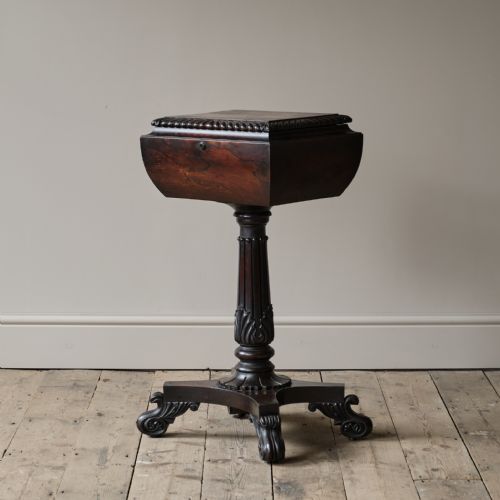
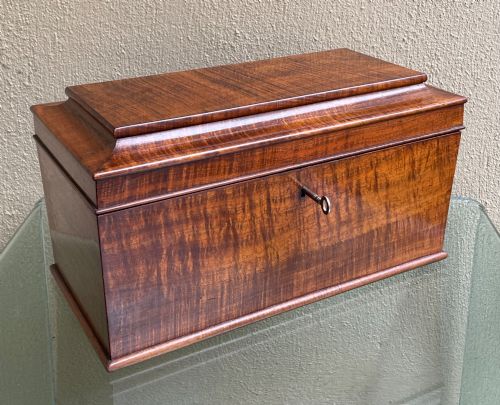
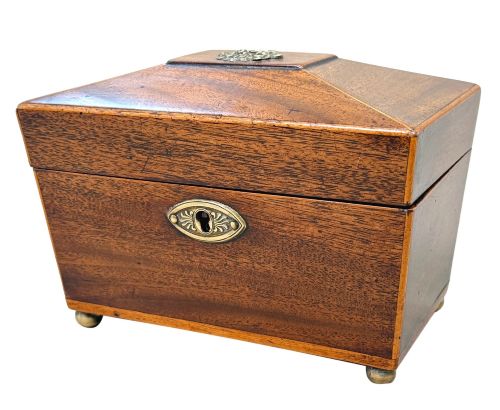
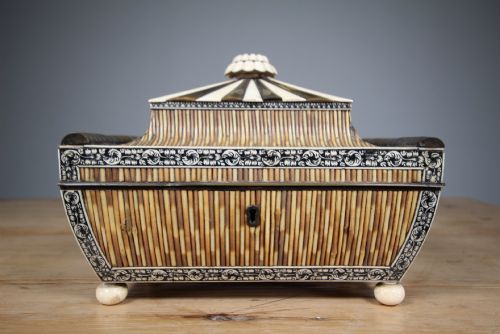
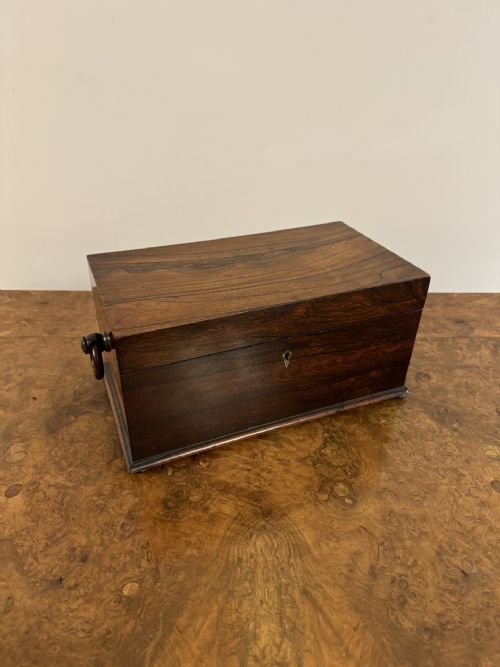
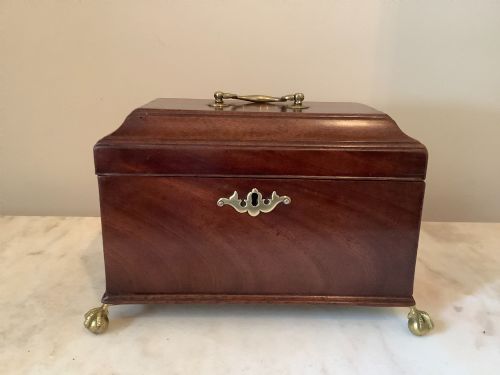
A wooden tea caddy sarcophagus draws its name from the ancient tomb shape, featuring a heavy, domed or stepped lid and often resting on carved feet or bun feet. These pieces serve primarily as secure storage for tea when the leaf was a costly commodity, though many survive today as decorative boxes or keepsake containers.
The versions most commonly met on this page date from the Regency and Georgian periods, alongside Victorian interpretations, rendered in substantial timbers rather than light veneers.
Makers shaped these containers into distinctive sarcophagus profiles, sometimes incorporating a loose leaf case or internal compartments with secret drawers for extra security.
Materials and construction
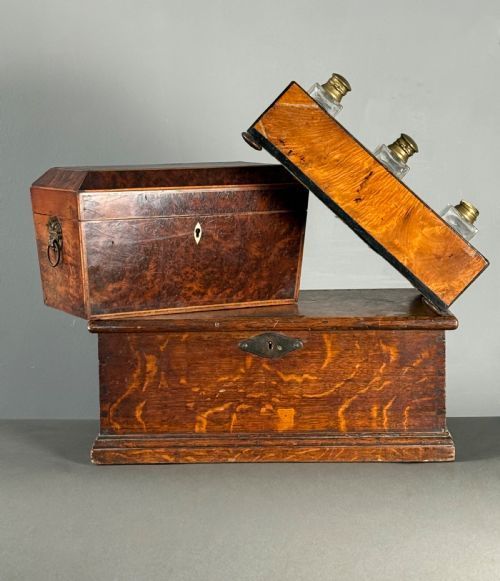
Cabinet makers built these boxes using dense hardwoods such as mahogany, rosewood, and coromandel, often selecting flame veneers or burr timbers to display striking natural grain patterns. Brass inlay, boxwood stringing, and mother of pearl details frequently accent the exterior surfaces.
Internal layouts typically feature lidded canisters or mixing bowls made of cut glass, accompanied by working locks with brass escutcheons.
Several examples include secret drawers hidden behind false partitions, designed to keep household secrets as secure as the tea.
Distinctions in quality
Weight and timber selection dictate the baseline standard, with thick solid woods and carefully matched burr veneers marking out superior examples. The precision of brass inlay and the tightness of mitre joints reveal the hand of a skilled cabinet maker.
Original internal fittings, such as intact glass mixing bowls and functioning locks with matching keys, elevate an example above those missing their original compartments.
Henry Hollamby
The Wooden Tea Caddy Sarcophagus Glossary
- Sarcophagus form
- A box design featuring a steep-sided, sloped lid resembling a classical stone tomb. This silhouette defines many high-status containers from the early nineteenth century.
- Teapoy
- A pedestal table fitted with a tea caddy box on top, or a large tea chest designed to stand on the floor. These pieces allowed tea preparation to take place away from the main dining table.
- Escutcheon
- A protective metal plate surrounding a keyhole. On these boxes, they are commonly cast from brass.
- Stringing
- A narrow inlay of contrasting wood used to outline panels and lids. This technique highlights the geometric precision of the piece.
- Parquetry
- Geometric mosaic woodwork formed by small pieces of veneer arranged in patterns. It appears on selected Regency lids.
Wooden Tea Caddy Sarcophagus: Frequently Asked Questions
How were these boxes used originally?
Household staff stored black and green teas inside internal lidded compartments, locking the outer box to ration the leaf.
Guests gathered in the drawing room while the host unlocked the caddy to mix infusions using an integrated glass bowl.
How do I date a sarcophagus tea caddy?
Look to the overall silhouette, timber choices, and hardware style, noting that Regency pieces often feature brass inlay and rosewood veneers.
Georgian examples tend to favour mahogany with simpler bracket feet, while Victorian boxes frequently show heavier burr walnut and bolder proportions.
Can I use one as a jewellery box?
These containers adapt easily to modern storage needs, offering velvet-lined compartments or open spaces suited for keepsakes and trinkets.
Retaining their original internal dividers helps organise smaller items without altering the historical structure of the box.