


Wooden Step Ladder
A wooden step ladder combines utilitarian climbing utility with domestic elegance, offering a practical solution for high shelves and libraries.
Wooden Step Ladder
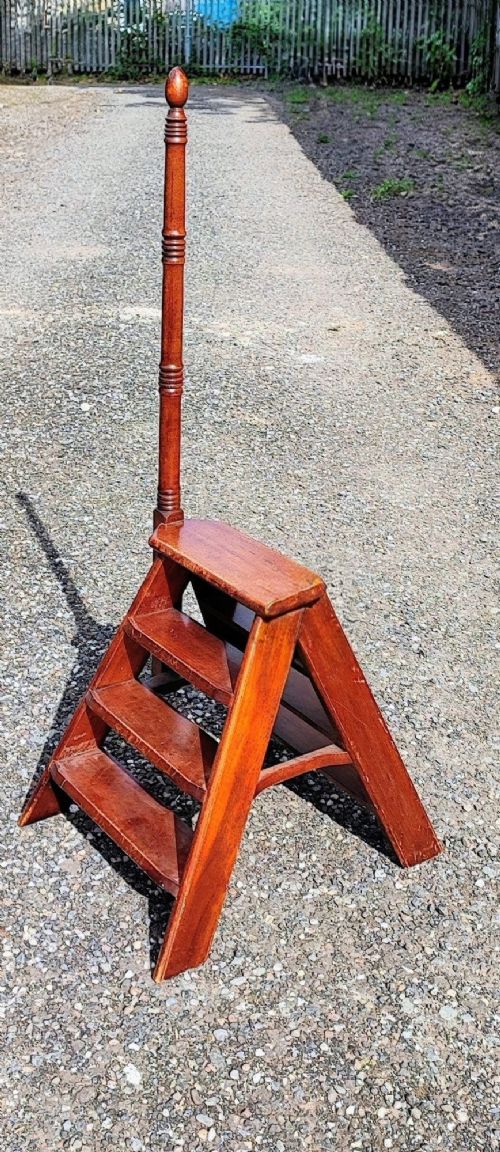
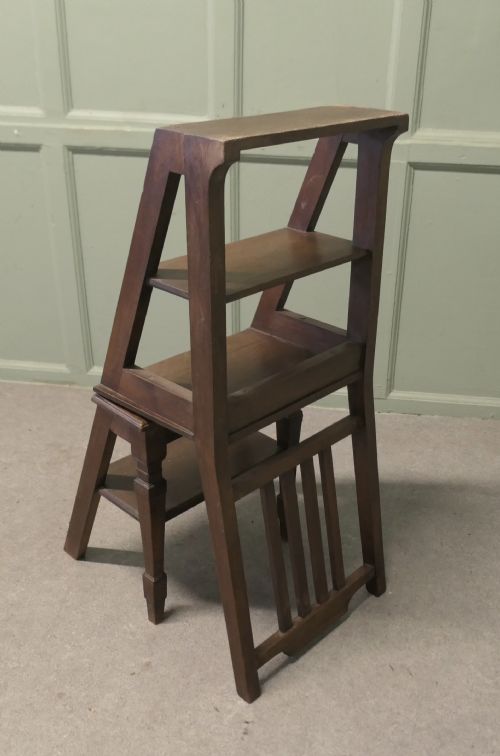
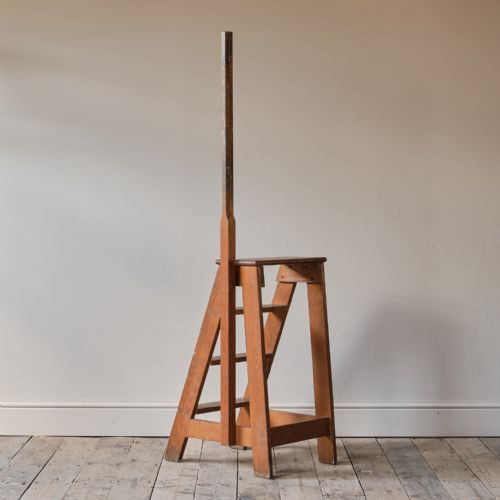
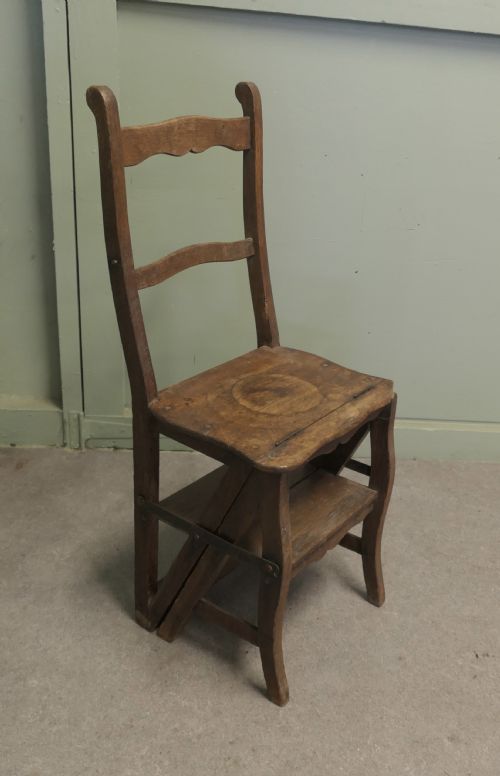
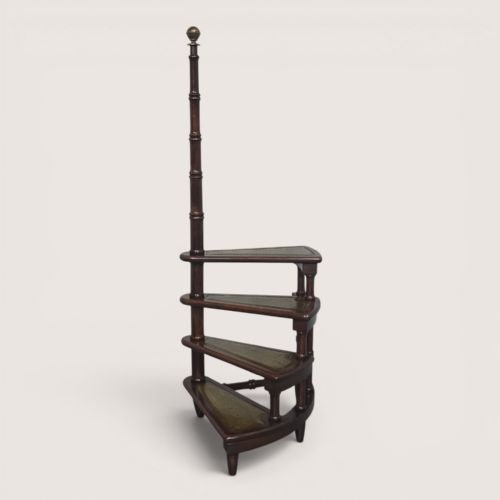
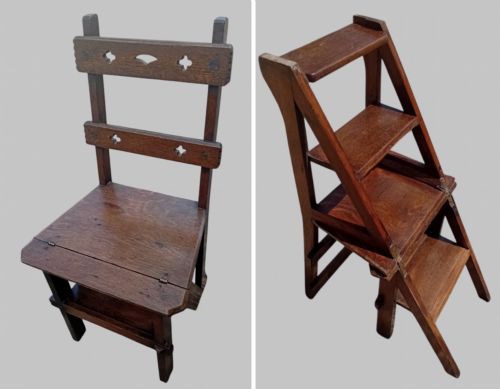
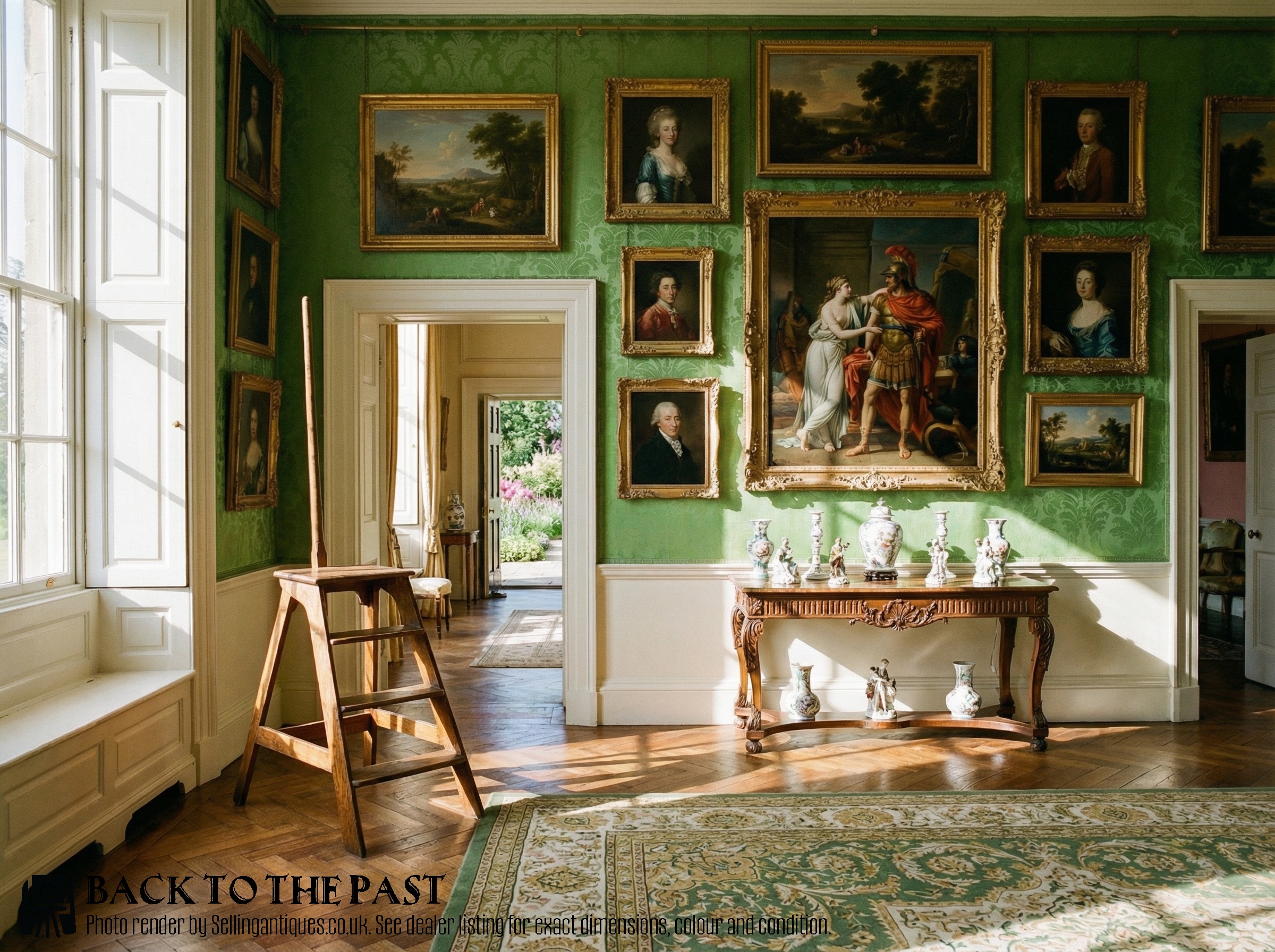
The selection ranges from sturdy A-frame kitchen steps and rustic ash designs to intricate folding library chairs that transform into steps. Pieces emerge from various periods including the Georgian, Victorian, Edwardian and early twentieth century eras.
Formal variants often feature leather-topped treads and turned supports, while utilitarian examples prioritise straightforward timber construction. Library steps dominate the selection, appearing in straight flights, folding mechanisms, and spiral configurations.
Distinctions in craftsmanship
Quality separates simple utilitarian workshop pieces from sophisticated salon or library furniture through the choice of timber and refinement of joinery. Finer examples display figured mahogany or golden oak with careful attention to structural proportions.
Metamorphic designs reveal quality in the smoothness of their transforming mechanisms and the clever concealment of hinges within the chair or step configuration. Sturdiness under weight remains a primary indicator of enduring structural integrity across all periods.
Decorative embellishments, including leather-topped treads, brass fittings, and Gothic Revival or Aesthetic Movement detailing, elevate standard utility objects into pieces of refined interior joinery.
Railway companies once required dedicated timber steps just to reach high carriage compartments, proving that even locomotives needed a leg up.
The Wooden Step Ladder Glossary
- Metamorphic
- Furniture designed to transform from one object into another, such as an armchair converting into a flight of steps. This ingenious mechanism allowed library furniture to serve dual domestic purposes.
- Treads
- The horizontal surfaces or steps upon which a person places their feet when climbing. In finer library examples, these treads are sometimes inset with tooled leather.
- A-frame
- A self-supporting structural configuration shaped like the capital letter A, providing stability without leaning against a wall. This format appears frequently in utilitarian kitchen and library steps.
- Gothic Revival
- An architectural and decorative style drawing inspiration from medieval design, characterised by pointed arches and robust timberwork. Several oak library steps exhibit this distinct stylistic influence.
- Regency
- A British design period spanning the early nineteenth century known for classical restraint and elegant proportions. Pieces from this era often utilise fine mahogany.
Wooden Step Ladder: Frequently Asked Questions
How do metamorphic library steps work?
Metamorphic library steps utilise hinged sections that pivot or fold seamlessly to transform an armchair or table into a stable flight of steps. This dual-purpose design conserved space in stately libraries while providing immediate access to high bookshelves.
Craftsmen concealed the mechanical pivots within the structural rails of the furniture so the piece maintained its formal appearance when closed. Users simply unfolded or rotated the upper portions to reveal the treads beneath.
Where were wooden step ladders used?
These ladders served practical roles in domestic kitchens, grand libraries, commercial premises, and railway facilities. Utilitarian pine examples functioned as everyday household tools for reaching high cupboards or cleaning.
Formal hardwood versions remained in private libraries or studies to assist readers in reaching elevated book collections. Railway companies and commercial workshops also utilised robust timber ladders for daily maintenance tasks.
How do I care for antique wooden steps?
Maintain antique wooden steps by keeping them away from direct heat sources and sudden humidity changes that cause timber to split. Regular dusting with a soft cloth preserves the finish without abrasive chemical intervention.
Periodically check metal hinges and folding brackets to ensure screws remain secure without overtightening the wood. Apply a traditional wax polish occasionally to nourish hardwoods like mahogany and oak.
How can I date a wooden step ladder?
Dating relies on examining the timber species, joinery methods, tool marks, and stylistic indicators such as Gothic Revival or Arts and Crafts details. Georgian and Regency pieces favour rich mahogany with precise cabinetmaker joints.
Victorian and Edwardian examples introduce varied pine, oak, and industrial hardware associated with railway or kitchen use. Structural wear patterns and original hardware fixings also provide clues regarding the manufacturing era.