


Folding Library Ladder
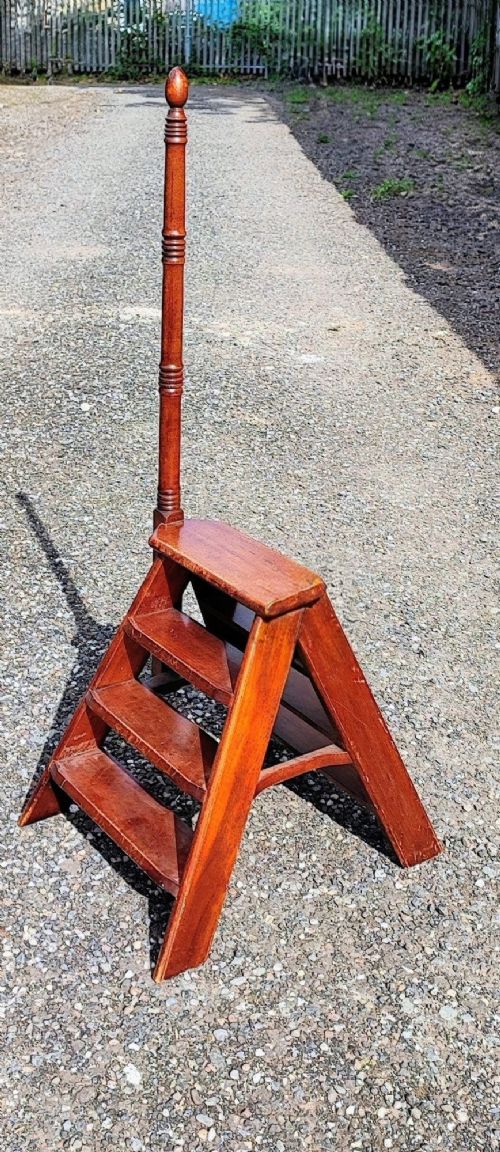
These folding library ladder examples are clever mechanical pieces designed to reach high shelves, combining everyday utility with ingenious historical furniture design.
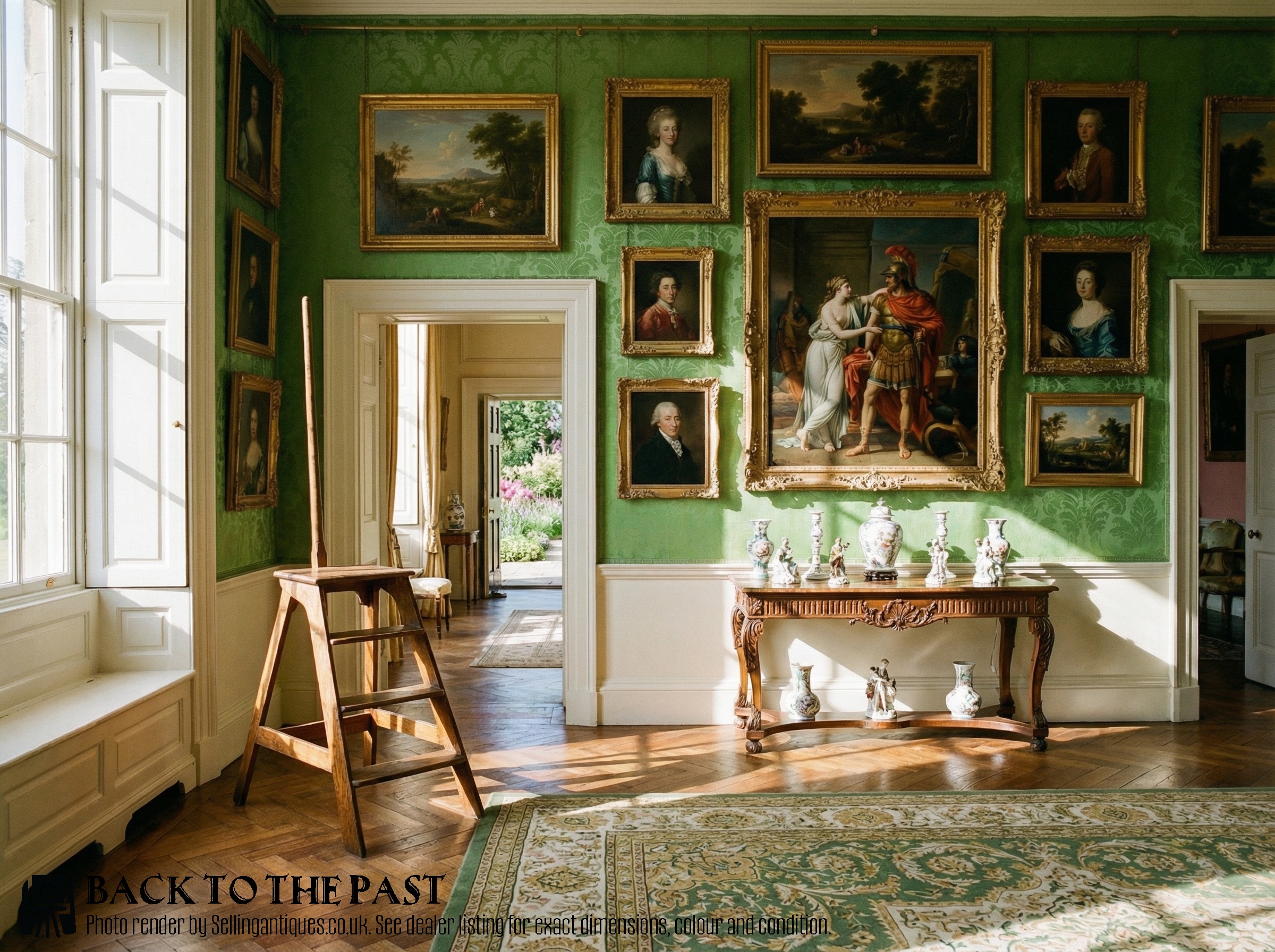
Folding Library Ladder
A folding library ladder serves the practical purpose of reaching high bookshelves while remaining compact enough to store away when not in use. When you search for a folding library ladder, you encounter various configurations built to assist in private studies and grand libraries.
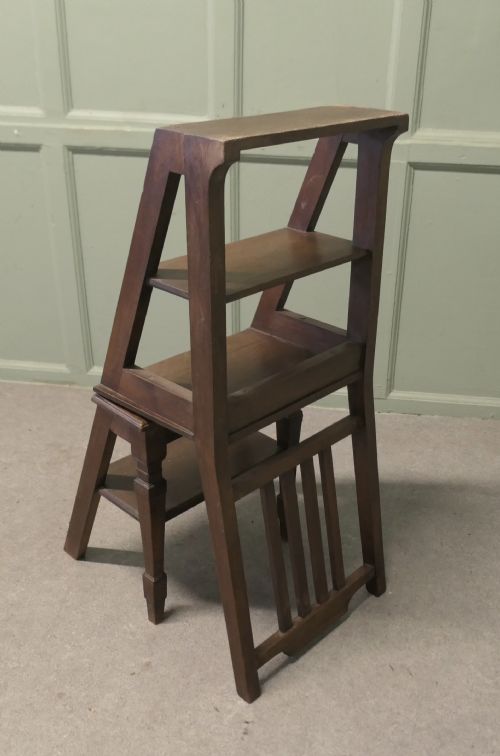
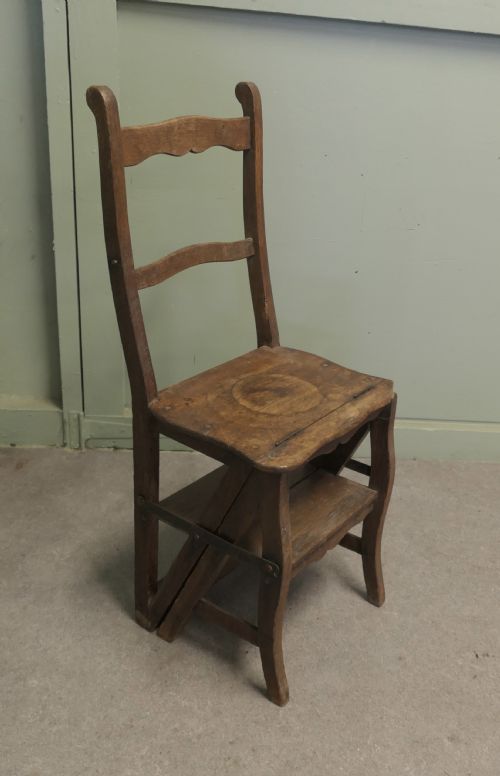
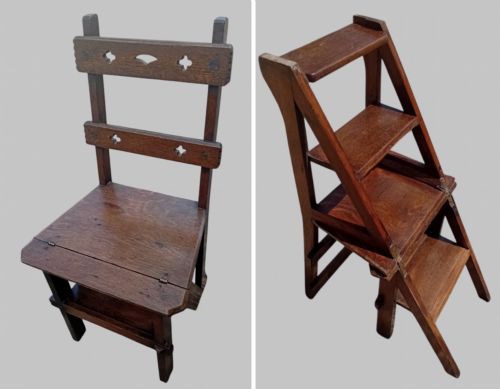
The selections available here range from simple folding poles and A-frame designs to sophisticated metamorphic items. You are most likely to meet dual-purpose furniture where an armchair or standard chair transforms smoothly into a set of steps.
Originating across multiple eras, these pieces span from the Georgian and Regency periods through the Victorian and Edwardian epochs up to later industrial utility designs. They reflect the evolving domestic needs of collectors who required functional height access without sacrificing room aesthetics.
Materials and construction methods
Cabinetmakers and manufacturers utilised sturdy timbers including mahogany, oak, pine, teak, and fruitwood to ensure structural integrity under weight. Hardwoods provided the necessary strength for repetitive folding actions while displaying rich natural grain patterns.
Metal components such as brass hinges, iron brackets, and mechanical pivots allowed the wooden sections to fold, slide, or lock securely into position. Some designs incorporated supplementary materials like leather treads or cane panels to enhance comfort and visual appeal during transformation.
Listings feature oak, mahogany, teak, and pine examples spanning from the Georgian period through to the 1930s.
Factors of construction and design quality
The refinement of the mechanical joints and hinges distinguishes the finer examples from simpler utility pieces. Smooth, reliable movement during conversion from seating or storage to a ladder indicates superior craftsmanship and precise historical engineering.
The choice of primary timber and secondary details elevates certain items significantly. Selected mahogany, figured oak, and intact leather inserts demonstrate greater initial investment and superior workshop execution compared to utilitarian pine or basic industrial models.
Morgan and Sanders·Jones's Patent
The Folding Library Ladder Glossary
- Metamorphic furniture
- Pieces designed to transform from one furniture form into another, such as an armchair converting into a set of library steps. This clever engineering allowed private spaces to maintain dual functionality.
- A-frame steps
- A self-supporting ladder configuration hinged at the top to form an inverted V-shape. This design provides stable elevation without leaning against delicate bookshelves or walls.
- Gothic Revival
- A design style drawing inspiration from medieval architecture, characterised by pointed arches, tracery, and robust oak construction. Pieces in this style often echo ecclesiastical or monastic furnishings.
- Pole ladder
- A slender ladder design featuring parallel upright poles connected by rungs, often engineered to fold or compress for compact storage. These tall units accessed elevated shelving tiers in extensive historical collections.
- Aesthetic Movement
- A late nineteenth-century design current emphasising visual beauty and artistic expression over strict historical revivalism. Items from this movement often display refined joinery and simplified structural honesty.
Folding Library Ladder: Frequently Asked Questions
How do metamorphic chairs work?
These pieces use hidden pivots, sliding tracks, and folding hinges concealed within the framework of an armchair or side chair. By lifting or rotating specific sections, the backrest and seat unfold to reveal a sturdy flight of wooden steps.
Once the user finishes reaching the upper bookshelves, the steps fold back inward and lock securely into the standard seating configuration. This seamless transition preserved floor space in traditional domestic libraries.
Were these ladders used in homes?
Wealthy homeowners, scholars, and institutional libraries utilised these folding steps to access extensive private book collections housed in tall bookcases. They provided necessary elevation while maintaining the formal appearance of a gentleman's study.
Simpler utilitarian versions also saw service in commercial shops and offices before entering the domestic market as collectible antiques.
How do I date these steps?
Dating relies on identifying the prevailing furniture styles, secondary timber usage, and mechanical hardware associated with specific historical periods. Georgian and Regency examples typically feature fine mahogany and classical lines, whereas Victorian pieces often display heavier oak or Gothic ornamentation.
Patent plaques, stamped maker marks, and the complexity of the folding mechanism also provide clear indicators of manufacturing origin and date.
Are they safe to climb?
Most antique library steps remain structurally sound if constructed from durable hardwoods like oak or mahogany and maintained properly. However, users should inspect the brass hinges, iron pivots, and locking mechanisms carefully before applying weight.
Due to their historical nature and lighter domestic construction in certain models, many collectors choose to use them primarily for display or occasional gentle access.