
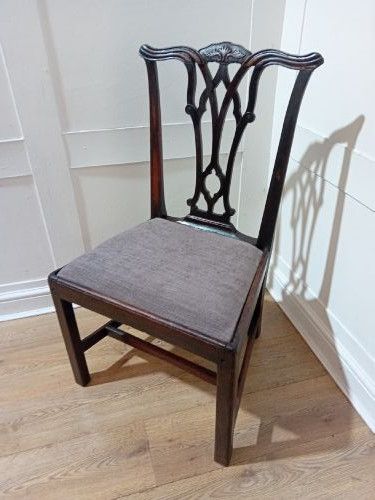

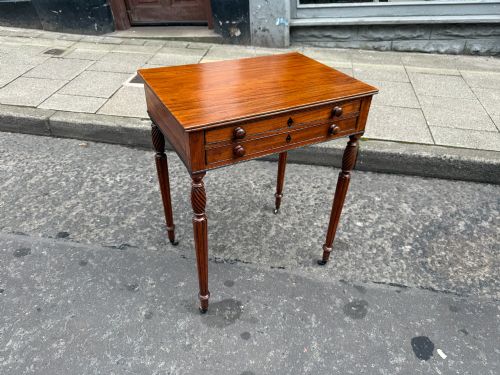
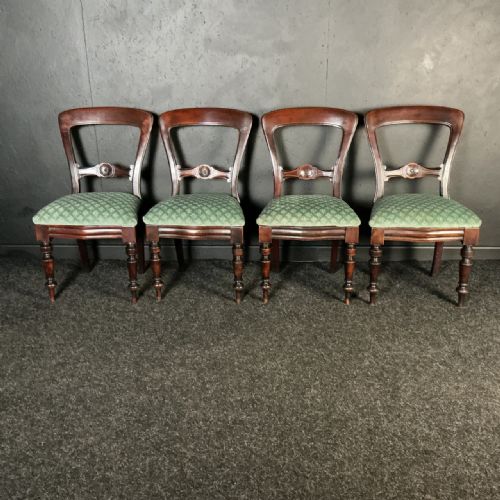
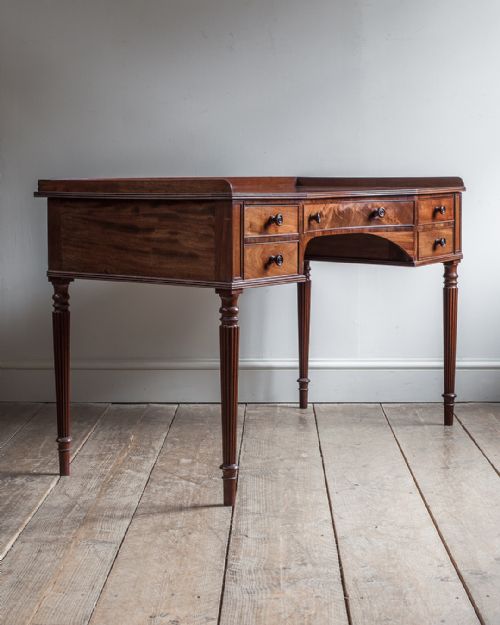
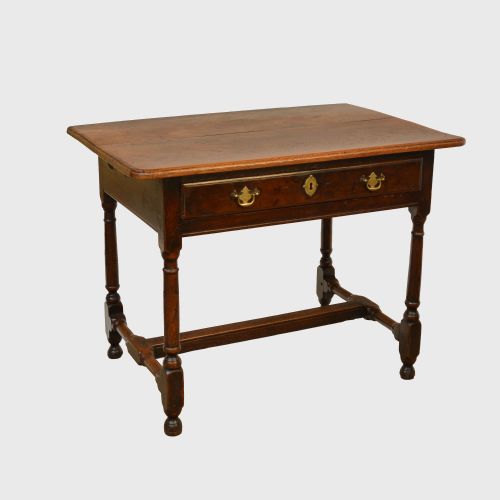
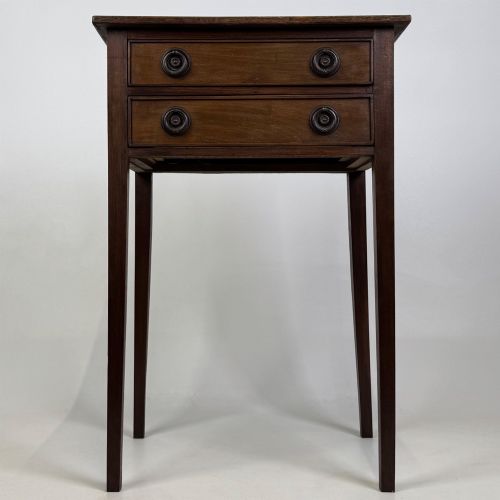
Wooden Side Desk
A wooden side desk brings functional timber craftsmanship into a room, offering a sturdy surface for daily tasks without dominating the floor space.
Wooden Side Desk
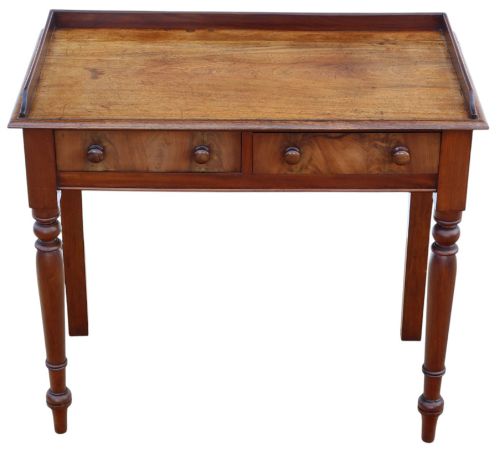
A wooden side desk combines the practical surface of a writing table with the compact footprint of a side table, serving multiple domestic functions across different periods.
Buyers browsing this category encounter various forms from the Georgian, Victorian, and Edwardian eras, including writing tables, side tables, and dressing tables.
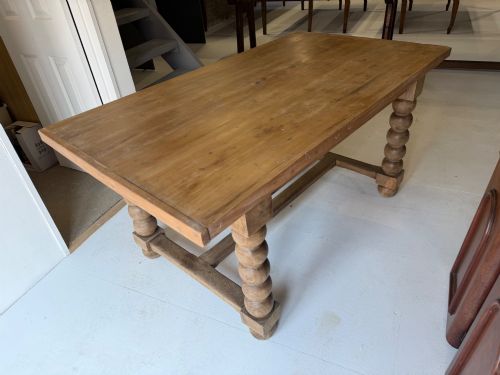
The materials span from solid mahogany and walnut to regional timbers like elm, beech, and pine, reflecting the diverse domestic output of past centuries.
Materials and construction
Cabinet makers utilised dense hardwoods such as mahogany and walnut alongside robust domestic timbers like oak and pine for structural integrity.
Joinery methods relied on traditional techniques, incorporating turned legs, drawer framing, and occasional decorative veneers like satin birch or flame mahogany.
Listings feature items from the 18th century through the Edwardian period, utilising mahogany, oak, walnut, pine, and beech.
Factors of quality
The distinction between tiers rests on the selection of timber, such as figured mahogany or burr elm, and the precision of the underlying joinery.
Proportion and restraint in decorative carving separate standard utility pieces from finer examples produced for formal reception rooms.
The Wooden Side Desk Glossary
- Mahogany
- A durable tropical hardwood prized for its rich reddish-brown tone and stability in furniture construction. It frequently appears in 18th-century and Victorian writing tables.
- Lowboy
- A small oak, walnut, or fruitwood dressing or side table typically fitted with one or more drawers. Originating in the early period, it sits on relatively tall legs.
- Pembroke table
- A small form of table with hinged drop leaves on either side, often used for writing or breakfast. The design became popular during the Georgian era.
- Campaign style
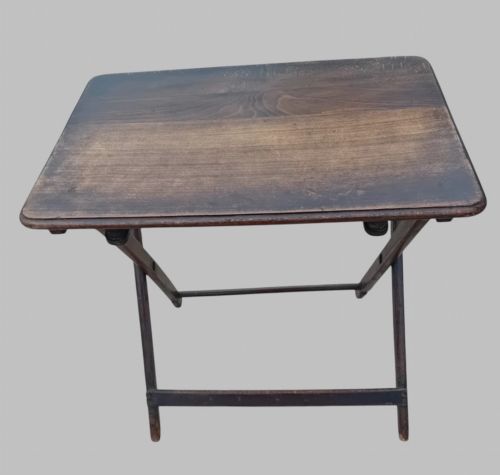
- Portable furniture constructed for travel, typically featuring recessed brass fittings and folding mechanisms. Pieces from the early 20th century often utilise beech.
Wooden Side Desk: Frequently Asked Questions
What is a wooden side desk?
A wooden side desk is a compact table used for writing, serving, or general placement, constructed from timbers such as mahogany, oak, or pine.
These pieces bridge the gap between dedicated writing furniture and small side tables, fitting easily into hallways, bedrooms, or studies.
How do I date a wooden side desk?
Dating relies on identifying the primary wood species, construction techniques, and stylistic markers associated with periods like the Georgian or Victorian eras.
Changes in leg turning, drawer linings, and hardware styles provide clear indicators of the decade or century of manufacture.
Where should I place a side desk?
A side desk suits spaces requiring a surface for occasional writing or display without the bulk of a large partner's desk.
Common placements include against a hallway wall, beside a drawing-room chair, or in a bedroom as a combined writing and dressing surface.
Which woods were commonly used?
Cabinet makers predominantly selected mahogany for formal reception furniture, while regional workshops utilised oak, elm, beech, and pine.
Finer examples occasionally incorporate decorative veneers such as satin birch, flame mahogany, or walnut.