


Wooden Ship Diorama
A wooden ship diorama brings the character of nineteenth-century maritime life straight into a room through layered models and painted seas.
Wooden Ship Diorama
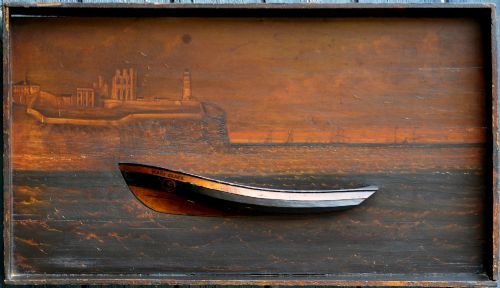
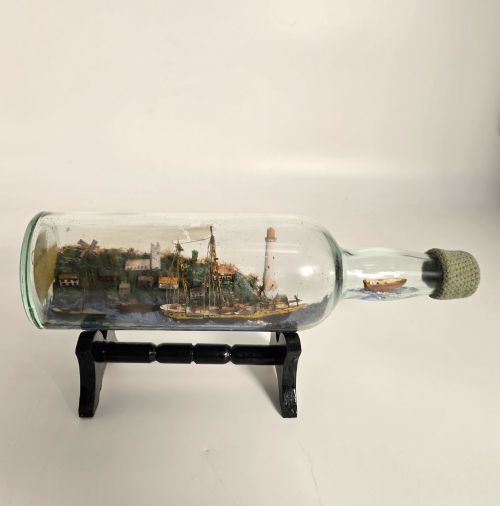
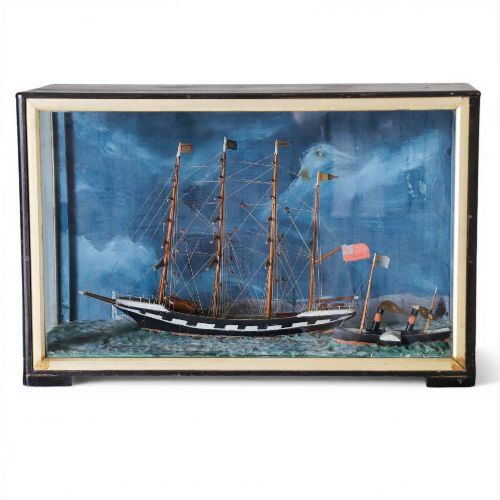
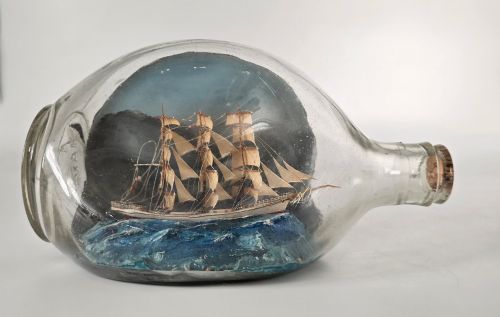
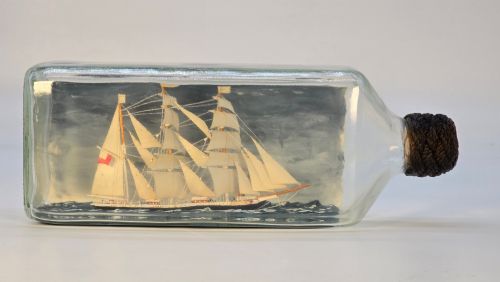
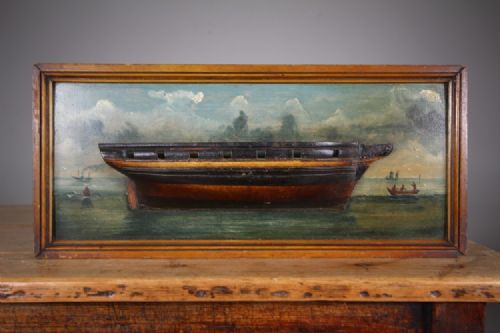
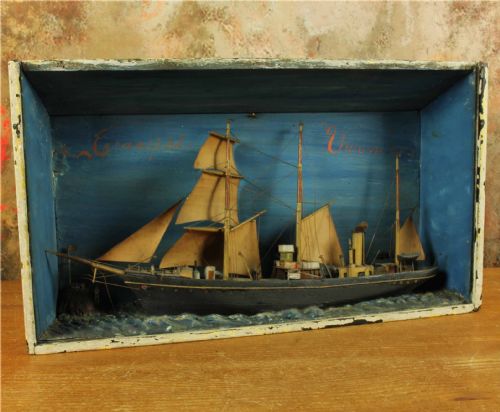
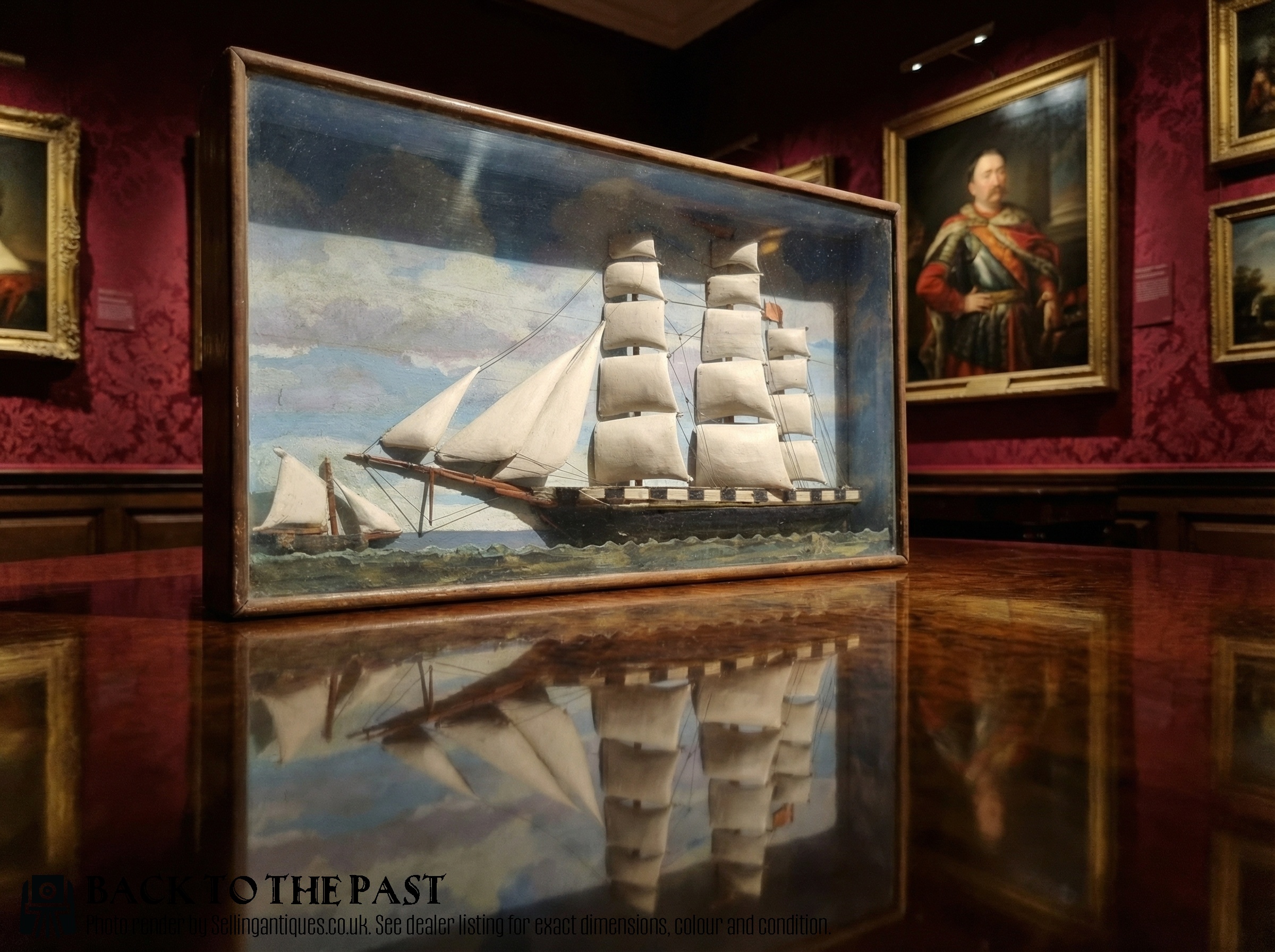
A wooden ship diorama presents a sailing vessel contained within a glazed box or bottle, often capturing a specific moment at sea. These pieces sit firmly within maritime folk art traditions, offering detailed depictions of clippers, barques, and sailing vessels racing or riding out the waves.
The most common examples on this page date from the nineteenth century and the early decades of the twentieth century. Makers constructed these items using wood, canvas, and painted plaster to simulate hulls, rigging, and rolling water within shallow shadow boxes or glass bottles.
Regional variations appear across English and French workshops, ranging from naïve wall art to structured shadow box displays mounted on wooden plinths. Collectors encounter everything from solitary sailing ships to complex scenes featuring multiple vessels and distant shorelines.
How they were made
Makers built the structural elements of these scenes from carved wood, utilising canvas or carved wooden sails to catch the sense of movement. Hulls and decks received careful coats of paint, while putty and plaster shaped the choppy waves and sea swells surrounding the vessel.
Interior settings often relied on layered fabric, cork, and paper to create depth behind the glass front of the box or within the neck of a bottle. Ebonised timber frames and glazed shadow boxes kept the delicate rigging protected from dust and moisture over generations.
Materials recorded in current items include wood, glass, paint, plaster, putty, fabric, cork, and canvas.
What varies in quality
Quality rests in the precision of the rigging and the natural movement of the carved hull against the painted backdrop. Finer examples display meticulous attention to scale and proportion, whereas simpler folk art pieces lean toward a charmingly naive interpretation of the vessel.
The integrity of the original case or bottle heavily influences the character of the piece, particularly where original paint finishes and glass remain intact. Works incorporating specialist decorative elements like straw work or detailed multi-vessel races demonstrate a higher tier of maritime craftsmanship.
The Wooden Ship Diorama Glossary
- Diorama
- A three-dimensional scene enclosed in a box or bottle, designed to depict a specific historical or maritime subject. These pieces use layered foregrounds and painted backgrounds to create an illusion of depth.
- Shadow box
- A deep glazed frame that houses a model and its surrounding environment, protecting the delicate elements from the room. This form allows the viewer to observe the ship from a direct frontal perspective.
- Folk art
- Artistic work created within a traditional culture by self-taught makers, often using accessible local materials. In maritime contexts, this describes pieces made by sailors or coastal craftsmen outside formal naval academies.
- Barque
- A sailing vessel with three or more masts, having the fore- and main-masts square-rigged and the mizzen-mast fore-and-aft rigged. This rig appeared frequently in nineteenth-century commercial shipping.
- Clipper
- A very fast nineteenth-century merchant sailing ship with three masts and a large sail area. These vessels inspired many of the most dramatic racing scenes found in maritime dioramas.
Wooden Ship Diorama: Frequently Asked Questions
How do I hang a shadow box?
Shadow boxes require sturdy wall fixings because the combination of timber framing, glass, and internal models creates a substantial weight. Ensure the hanging wire or brackets match the load capacity of the specific wall type.
Position the piece at eye level to appreciate the depth of the painted backdrop and the intricate rigging of the vessel within the case.
Where should I place a diorama?
Keep these items away from direct sunlight and damp environments to protect the original paint finishes, wood, and paper elements inside the case or bottle. Stable indoor temperatures prevent the timber components from expanding and contracting.
Display them on solid surfaces or secure wall spaces where accidental knocks remain unlikely, as internal rigging is inherently delicate.
Can I open a bottle diorama?
Attempting to open or alter a bottle diorama breaks the sealed environment that has protected the delicate folding masts and paper components for a century or more. The skill of these pieces lies in how the maker assembled the model to fit through the narrow neck.
Leave the bottle completely sealed to preserve its structural integrity and historical authenticity as a piece of maritime folk art.