
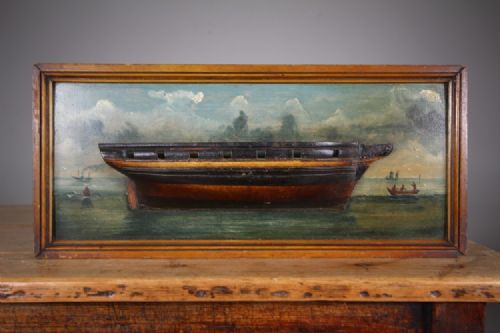
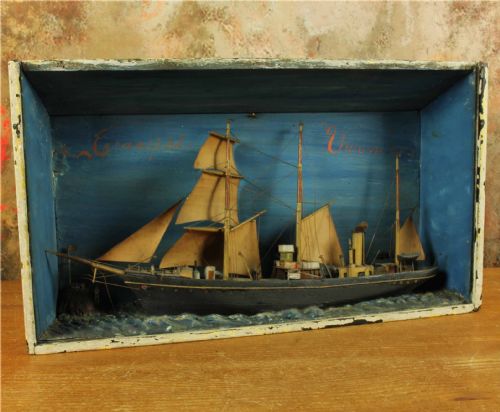


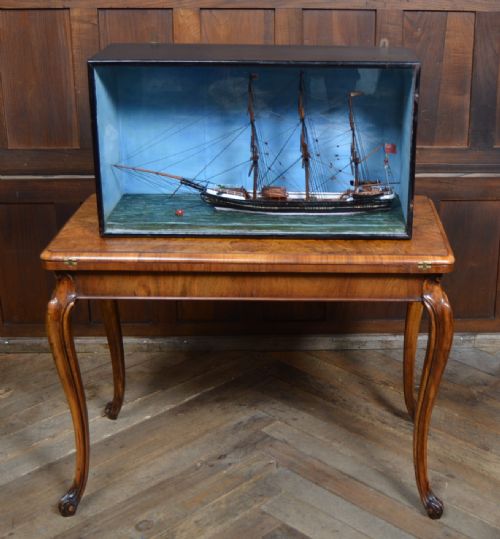
Painted Maritime Diorama
A painted maritime diorama brings the movement of nineteenth- and early-twentieth-century sailing and steam ships inside a framed wooden case.
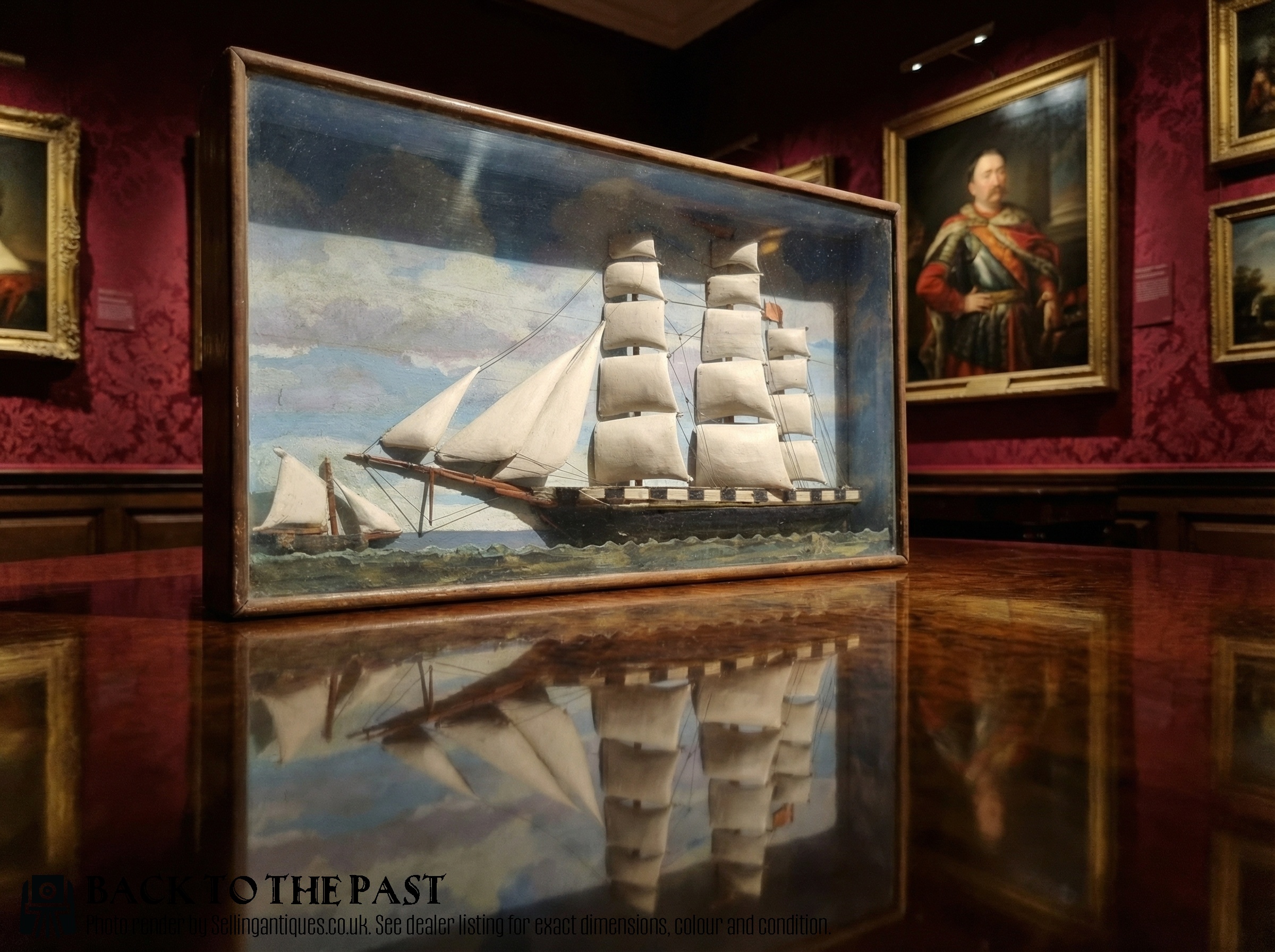
Painted Maritime Diorama
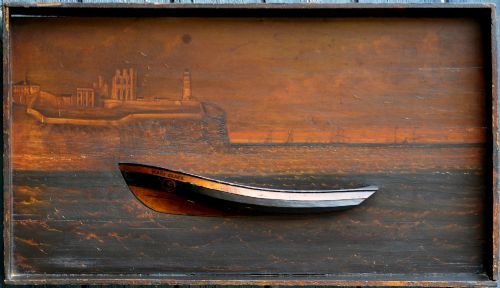
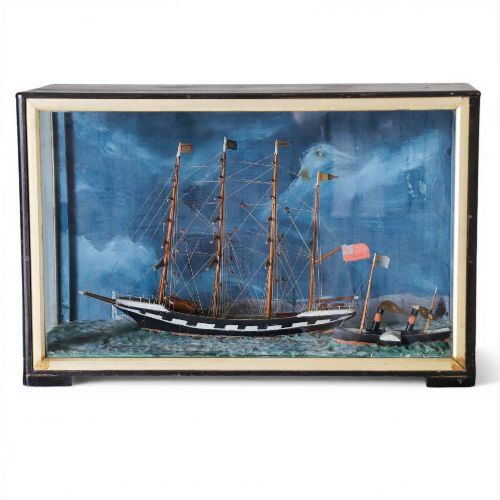
A painted maritime diorama presents a three-dimensional model of a vessel set against a painted canvas or paper background within a wooden shadow box or glass case. These works capture sailing ships, clippers, and steam vessels in motion, often racing or under full sail across open water.
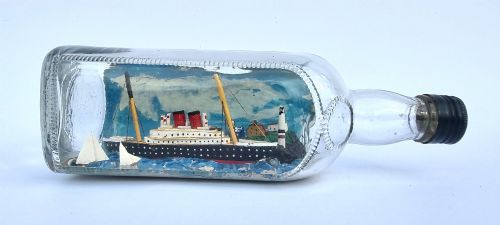
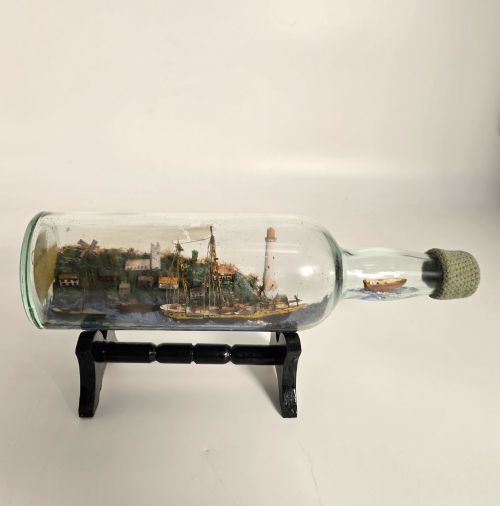
The pieces listed on this page span the Victorian era, the nineteenth century, and the early decades of the twentieth century. Examples range from naive folk art interpretations and shell-decorated shadow boxes to detailed scratch-built ship models and vessels housed inside glass bottles.
Makers from this tradition include both British and French creators, working within vernacular maritime folk art styles. English folk art examples sit alongside French handmade boat models, reflecting a widespread maritime hobby and trade skill.
Materials and construction methods
Makers constructed these scenes using simple wood for the shadow box frames and scratch-built ship models, combined with canvas, paper, and fabric for the sails and rigging. Plaster and paint shaped the textured waves and seascapes upon which the vessels rest.
Artists applied oil paint to backgrounds to render Turneresque seascapes and atmospheric skies that give depth behind the miniature hulls. Some makers incorporated natural materials such as shells into the framing and foreground of the box to enhance the maritime theme.
Some nineteenth-century makers could not resist adding tiny painted seagulls that appear frozen mid-dive toward an impossibly miniature ocean.
Factors that distinguish the work
Quality rests in the precision of the scratch-built ship model and the fidelity of the painted background. Finer examples display meticulous rigging and nuanced oil paint seascapes that create a genuine sense of atmospheric perspective.
The construction of the wooden case and the condition of the glass enclosure influence the overall integrity of the piece. Naive folk art charm remains central, but works with balanced proportions and stable media stand apart from simpler iterations.
The Painted Maritime Diorama Glossary
- Maritime Diorama
- A three-dimensional display housed in a cased shadow box depicting a ship at sea. These works combine sculpted models with painted backdrops.
- Shadow Box
- A deep, glass-fronted wooden frame designed to protect and showcase three-dimensional objects. This enclosure keeps dust away from delicate rigging and paper elements.
- Folk Art
- Artistic work created within a vernacular tradition by self-taught or untrained makers. These pieces rely on traditional craft skills rather than academic training.
- Turneresque
- Pertaining to the atmospheric, light-filled painting style associated with J.M.W. Turner. In these dioramas, backgrounds often employ this loose, expressive handling of sea and sky.
- Scratch-Built
- A model constructed entirely from raw materials rather than from a commercial kit. Makers shape every component of the vessel by hand.
Painted Maritime Diorama: Frequently Asked Questions
What is a painted maritime diorama?
A painted maritime diorama is a cased three-dimensional display featuring a model ship set against a painted background. These objects combine sculpture and painting to simulate a vessel at sea.
Most examples are housed in wooden shadow boxes with glass fronts to protect the delicate paper, fabric, and painted elements inside.
How old are these maritime dioramas?
The pieces available here primarily date from the nineteenth century through the 1930s. Victorian examples and early-twentieth-century folk art works represent the core of this tradition.
Makers built them during an era when maritime trade and naval power dominated public imagination, inspiring detailed vernacular models.
Where were these dioramas made?
Many of these pieces originate from British and English folk art traditions, reflecting coastal and maritime communities. French makers also produced notable handmade boat models in boxes.
Sailors, local craftsmen, and hobbyists constructed them in port towns and inland workshops alike.
How do I display a shadow box diorama?
Shadow box dioramas require wall mounting or shelf placement in stable environments away from direct sunlight and dampness. The enclosed glass protects the delicate rigging and painted surfaces from handling.
Keep them in rooms with steady temperature and humidity to preserve the wood, canvas, and paper components.
What materials did makers use?
Makers relied on wood for the frames and hulls, paired with canvas, fabric, and paper for sails and structural details. Oil paint rendered the seascapes, while plaster sometimes formed the textured waves.
Some folk art variants also incorporated natural materials like shells into the composition.