




Maritime Folk Art Diorama
A maritime folk art diorama brings the sea indoors through layered miniature vessels and coastal scenes.
Maritime Folk Art Diorama
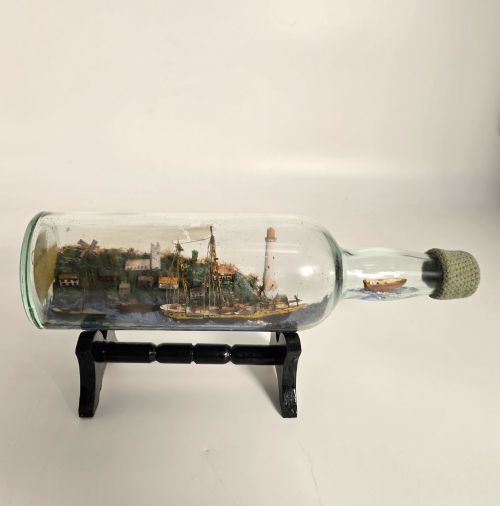
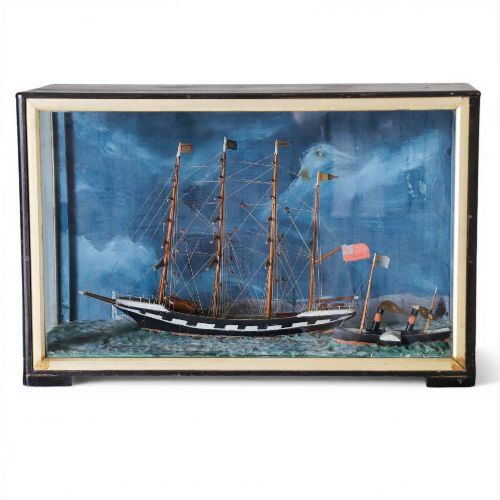
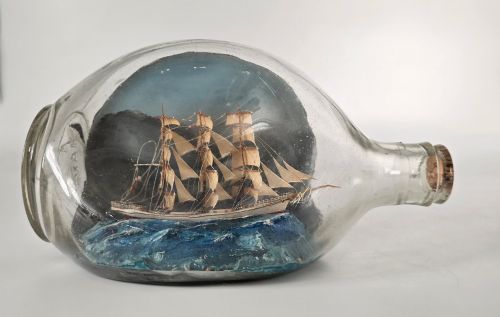
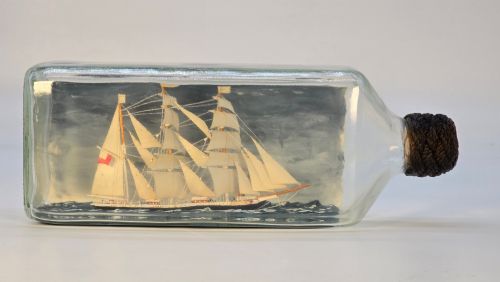
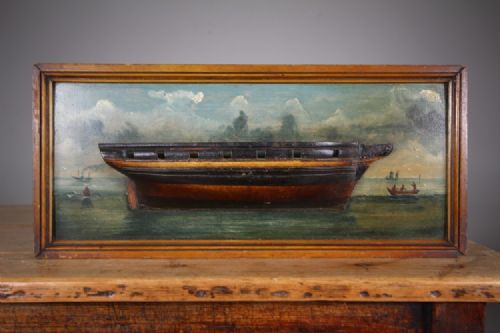
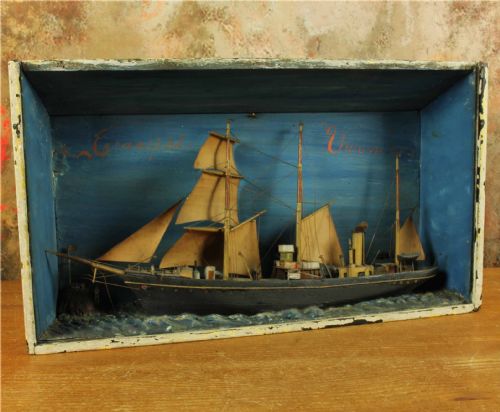
A maritime folk art diorama presents a small-scale marine scene enclosed within a box, shadow frame, or glass bottle. These pieces depict sailing ships, steam vessels, and racing maritime scenes through constructed models set against painted or textured backgrounds.
You will most frequently encounter nineteenth century and early twentieth century examples, including Victorian shadow boxes and English folk art ship models. The forms range from wall-hanging cases to scratch-built vessels secured on wooden plinths.
The regional origins extend across English, French, Cornish, and Irish makers who utilised local materials to record specific vessels like the Glynllifon or Queen Anne. Each piece combines amateur ingenuity with precise observations of nineteenth century rigging and hull design.
Materials and Construction
Makers built these pieces using wood for hulls and frames, canvas and fabric for sails, and plaster or putty to model the texture of waves. Paint applied to the backing board creates depth and stormy skies behind the carved models.
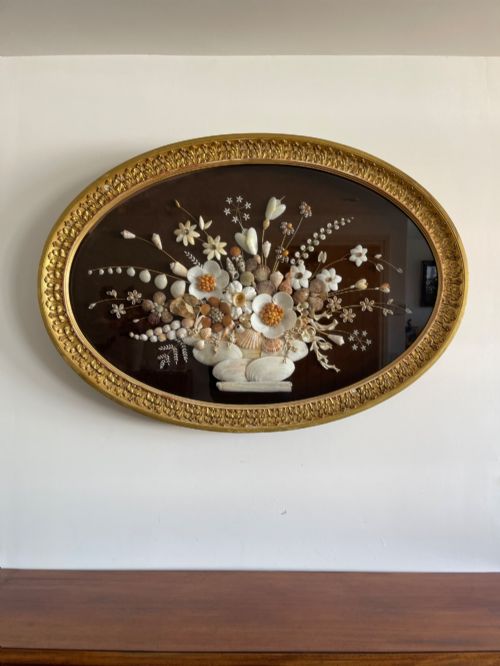
Glass protects the delicate interiors of shadow boxes and bottles, sealing the cork and rigging from dust and moisture. Straw work and shellwork appear in specialised examples, adding tactile coastal patterns to the marine subjects.
The listings span the nineteenth century through the 1930s, featuring materials such as cork, plaster, canvas, and glass alongside wood.
Assessing Quality
Quality rests in the precision of the rigging and the spatial depth achieved between the painted backdrop and the raised model. Superior pieces capture accurate maritime architecture rather than relying solely on naive charm.
The integrity of the original housing defines the visual impact, particularly where undamaged glass and well-preserved wooden cases maintain the internal environment. Finer examples balance intricate scratch-built ship details with harmonious painted seascapes.
The Maritime Folk Art Diorama Glossary
- Diorama
- A three-dimensional scene featuring models placed in front of a painted background.
- Shadow Box
- A deep framed glass-fronted case designed to protect and display small objects in relief.
- Scratch-built
- A model constructed from raw materials rather than from a commercial kit or manufactured parts.
- Barque
- A sailing vessel with three or more masts having square sails on the fore and main masts and fore-and-aft sails on the mizzenmast.
- Plinth
- A heavy wooden base or block supporting a model or sculpture.
Maritime Folk Art Diorama: Frequently Asked Questions
What is a maritime folk art diorama?
A maritime folk art diorama is a handmade three-dimensional display depicting ships at sea within a box, frame, or bottle. These objects combine painted backgrounds with carved wooden models and rigging.
They reflect vernacular maritime traditions from the nineteenth and early twentieth centuries, created by sailors, coastal residents, and folk artists.
How were ship in a bottle dioramas made?
Makers constructed the ship models with hinged masts and rigging that lay flat against the hull. The vessel was passed through the narrow neck of the glass bottle and pulled upright using attached strings.
Once the ship was positioned and glued to the interior base using putty or cork, the strings were trimmed and the bottle sealed.
Where should I display a diorama?
Display these pieces away from direct sunlight and damp environments to protect the fragile painted canvas, wood, and paper elements inside the cases. Wall-hanging shadow boxes require secure fixings due to the weight of the timber and glass.
Tabletop pieces on plinths benefit from stable surfaces where accidental knocks can be avoided.
How do I identify the age of a piece?
Dating relies on the style of the ship rigging, the construction methods of the wooden frame, and materials such as early glass and hand-mixed paints. Specific vessel names or dates inscribed on the back or plinth offer direct evidence of the period.
Victorian and early twentieth century examples show distinct framing techniques compared to later vernacular revivals.