


Victorian Maritime Shadow Box
A victorian maritime shadow box captures the romance of the nineteenth-century sea inside a neat glazed case, offering a tangible piece of nautical history for your wall.
Victorian Maritime Shadow Box
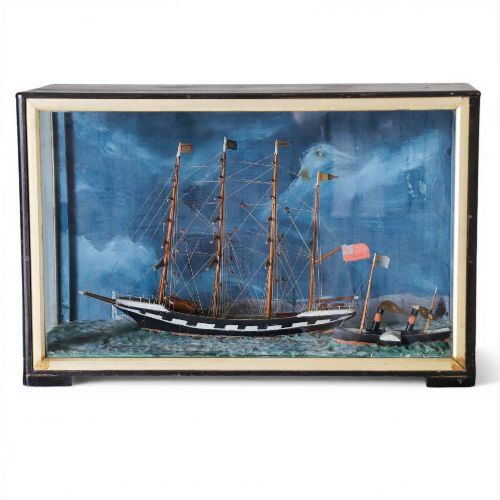
A victorian maritime shadow box brings nineteenth-century seafaring heritage into domestic spaces through detailed three-dimensional models of vessels. You encounter maritime dioramas depicting single sailing ships, racing vessels, and steam barges set against painted backdrops.
Most examples originate from the nineteenth century and the early twentieth century, reflecting a rich tradition of maritime folk art. The selection includes named vessels such as the Glynllifon and the Queen Anne alongside anonymous craft.
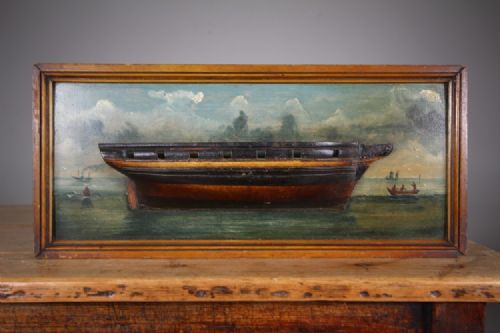
The forms range from standard wall art shadow boxes to picture clocks and specialised straw work or shell dioramas. These pieces preserve the craftsmanship of coastal artisans who immortalised naval and merchant vessels in miniature.
Construction and materials
Maker construction relies on a combination of wood for the protective shadow box case and glass to seal the interior from dust. Artisans built miniature hulls and rigging using carved wood, paper, fabric, and occasionally delicate straw work or shells.
Sailors occasionally passed long voyages crafting intricate ship models from scraps, unknowingly engineering heirloom shadow boxes for future centuries.
Evaluating quality and craftsmanship
Quality in a victorian maritime shadow box rests upon the intricacy of the ship model and the fidelity of the painted seascape. Finer examples display meticulous rigging and well-proportioned hulls that accurately reflect real vessels of the period.
The integration of the model with the painted background dictates the overall visual depth and success of the diorama. Superior craftsmanship is evident in stable construction, clean glass, and materials that have retained their original colour without excessive degradation.
The Victorian Maritime Shadow Box Glossary
- Shadow box
- A deep glazed frame designed to display three-dimensional objects protected from the environment. This format became popular in the Victorian era for preserving delicate folk art.
- Maritime folk art
- Creative work produced by self-taught or community artisans, often sailors or coastal residents. These pieces use accessible materials like wood, canvas, and shells to depict nautical subjects.
- Turneresque
- A descriptive term for seascapes that emulate the dramatic, atmospheric lighting and turbulent skies found in the paintings of J.M.W. Turner. It indicates a more expressive painted backdrop.
- Automaton
- A mechanical device integrated into an artwork to create movement. In maritime pieces, this mechanism might simulate the motion of waves or sailing ships.
- Straw work
- A decorative technique utilising flattened pieces of dried straw applied to a surface in geometric or pictorial patterns. This painstaking craft appears on select nineteenth-century ship dioramas.
Victorian Maritime Shadow Box: Frequently Asked Questions
What is a maritime shadow box?
A maritime shadow box is a glazed wooden case enclosing a three-dimensional model of a ship set against a painted sea background. These pieces were created to commemorate specific vessels or general seafaring scenes during the nineteenth century.
They serve as wall art that preserves coastal folk art traditions and naval history. The enclosed format protected the fragile paper, fabric, and wood components from sea air and domestic dust.
How were these dioramas displayed?
These pieces were primarily designed to hang on walls within homes, offices, or maritime establishments. Their compact depth allowed them to fit easily into domestic rooms while offering an engaging three-dimensional view.
Owners mounted them at eye level to appreciate the detail of the rigging and the perspective of the painted waves. They remain suitable for wall hanging today, provided they are kept away from direct sunlight and damp conditions.
How do I date a maritime shadow box?
Dating relies on examining the construction methods, materials, and stylistic cues of both the box and the enclosed model. Nineteenth-century examples often feature hand-painted canvas or paper backgrounds and specific hull designs typical of the era.
Reference to named ships with documented launch dates, such as vessels from the eighteen-sixties or circa nineteen hundred, provides a reliable marker. Examining the framing techniques and types of glass used also helps narrow down the period of manufacture.
What materials are used inside?
Makers constructed the internal models using wood, paper, canvas, and fabric for the ship hulls, sails, and flags. Oil paint created the moody seascapes on the backboards, occasionally supplemented by plaster for textured waves.
Some specialist examples incorporate organic materials like delicate sea shells or straw work for decorative embellishment. Every component was chosen for its durability and ability to mimic real naval architecture on a miniature scale.