


Antique Folk Art Ship
An antique folk art ship captures the romance of the sea through the inventive hands of self-taught makers.
Antique Folk Art Ship
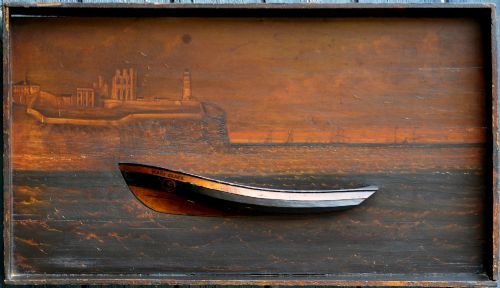
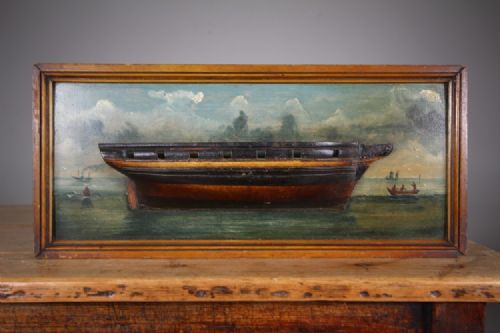
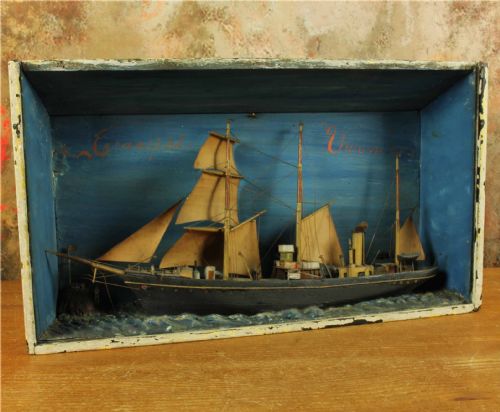
When searching for an antique folk art ship, collectors encounter varied maritime creations that reflect the resourcefulness of sailors and local craftsmen. These pieces span the nineteenth century and the early twentieth century, taking the form of detailed dioramas, shadow boxes, and model vessels.
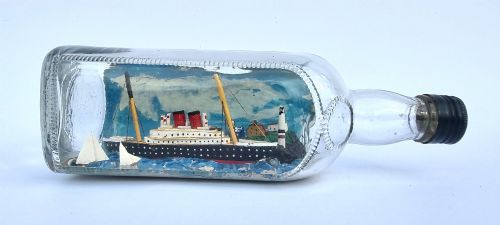
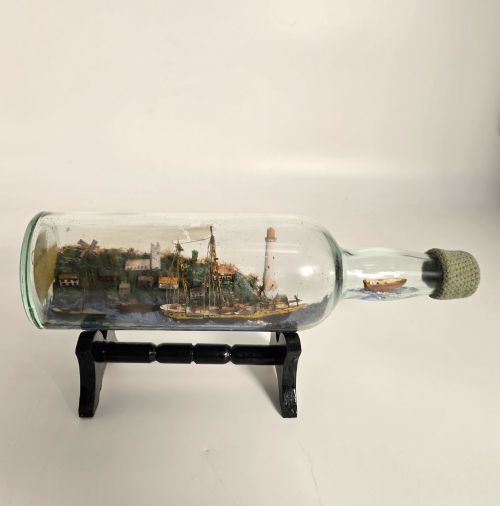
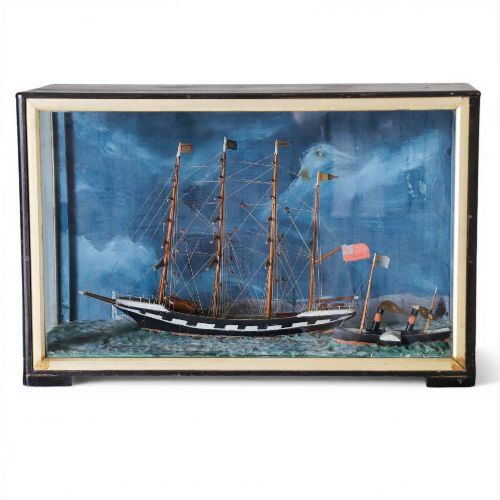
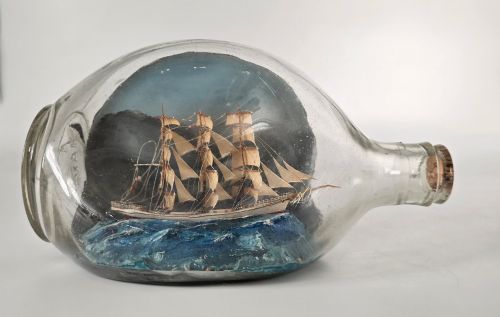
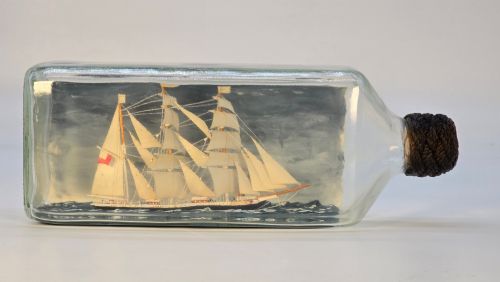
The most common versions met on this page are ship dioramas and models enclosed in glass bottles, often attributed to British, English, Welsh, or French origins. Examples range from simple scratch-built wooden models to complex multi-masted sailing vessels racing at sea.
Beyond bottles and boxes, the category embraces related sailor-made objects such as woolie embroideries, painted pine seaman's chests, and straw work dioramas. Each format preserves maritime heritage through naive construction and individual artistic expression.
Materials and construction
Makers utilised humble, readily available materials such as wood, pine, glass, plaster, canvas, metal, and thread to construct these maritime scenes. Hulls and fittings were carved from scrap timber, while textiles and painted backgrounds created atmospheric seascapes.
Bottled ships required ingenious collapsible rigging assembled through narrow bottle necks, secured with threads and sealed with plaster or wax. Shadow box dioramas layered painted canvas, glass, and carved wooden vessels to produce a sense of deep perspective.
Sailors spent long voyages folding masts flat to squeeze entire sailing ships through narrow wine bottle necks.
Assessing quality and character
Quality rests in the precision of the naive execution and the depth of the narrative captured within the diorama or model. Superior examples display careful rigging, expressive painted seascapes like Turneresque skies, and well-preserved original painted surfaces.
The complexity of the vessel, from single-masted boats to four-masted sailing ships with steam barges, dictates the visual impact. Condition of the enclosing glass, original paintwork on pine frames, and intact textile elements further separate standard pieces from exceptional ones.
The Antique Folk Art Ship Glossary
- Diorama
- A three-dimensional scene depicting ships at sea, often enclosed in a wooden shadow box with glass. These displays combine carved wooden hulls with painted backgrounds and threaded rigging.
- Woolie
- A traditional embroidery created by sailors using coloured wool threads to depict ships under sail. These textile works often feature textured stitching to represent waves and clouds.
- Scratch built
- A model constructed entirely from raw materials by the maker rather than from a commercial kit. This method highlights the individual ingenuity characteristic of folk art.
- Straw work
- Decorative art utilising split straw applied to surfaces to create geometric or pictorial designs. In maritime pieces, straw provides shimmering highlights for waves or hulls.
Antique Folk Art Ship: Frequently Asked Questions
How do I display a ship diorama?
Place dioramas away from direct sunlight and excessive humidity to protect delicate paper, canvas, and thread elements inside the frames or bottles.
Ensure the mounting surface is stable and secure, as many antique shadow boxes and bottled vessels possess fragile internal structures.
What materials were used in folk art ships?
Makers relied on accessible materials including carved wood, pine, paint, glass, metal, plaster, canvas, and thread.
These everyday components were adapted by sailors and local artisans to recreate realistic maritime scenes without professional workshop tools.
How can I tell the age of a model?
Dating relies on material analysis, construction techniques, and stylistic clues such as vessel types like clippers or barques.
Nineteenth-century and early twentieth-century pieces often exhibit distinct patination on pine, hand-blown glass bottles, and period pigments.
Are bottled ships fragile?
While the glass container protects the delicate rigging inside, sudden temperature changes can stress the sealing wax and internal threads.
Handle bottled models with care and avoid tilting them abruptly to prevent shifting the internal wooden components.