




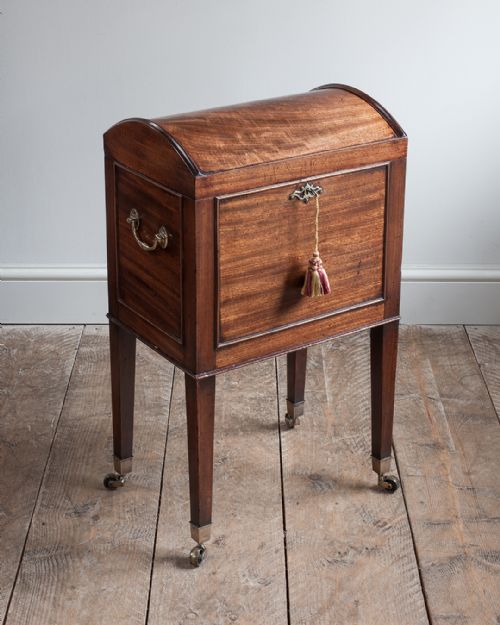


Wooden Sarcophagus Cellarette
A wooden sarcophagus cellarette is a grand dining room container designed to chill wine bottles, bringing historic presence and storage to a period interior.
Wooden Sarcophagus Cellarette
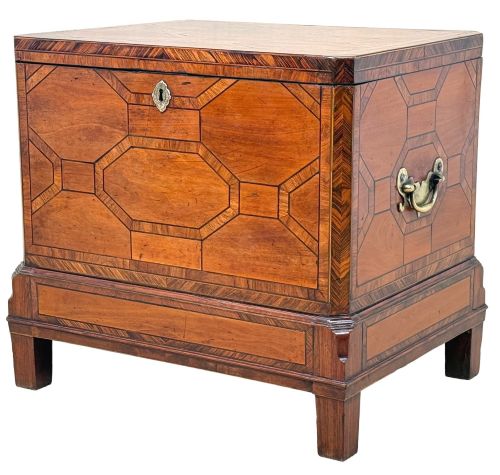
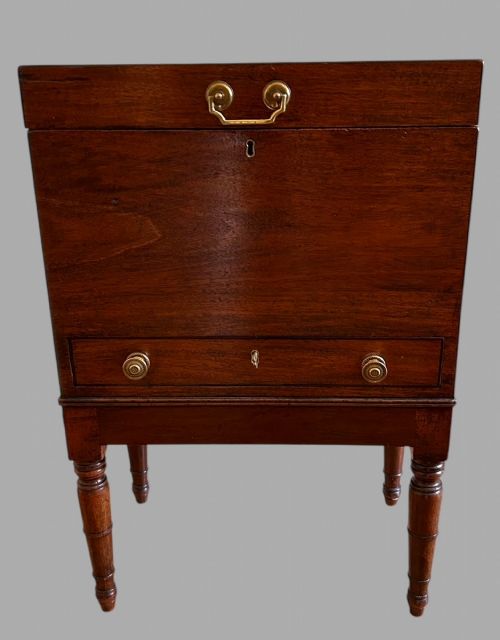
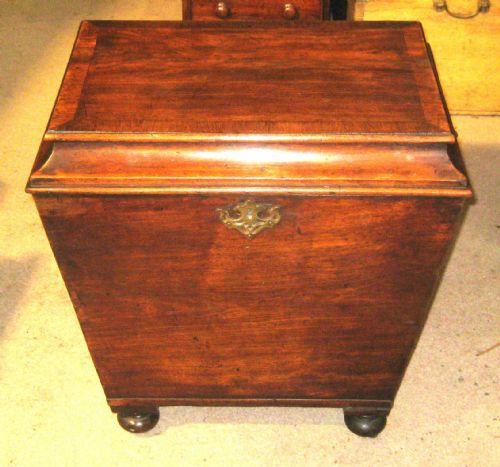
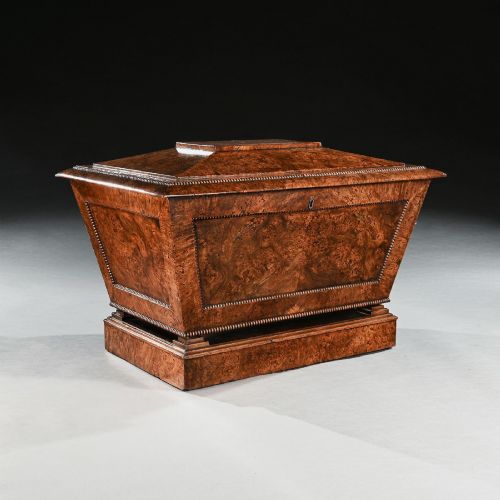
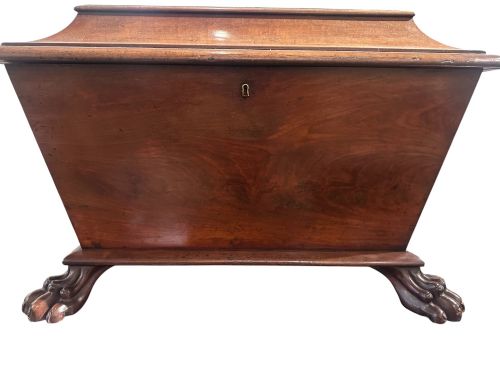
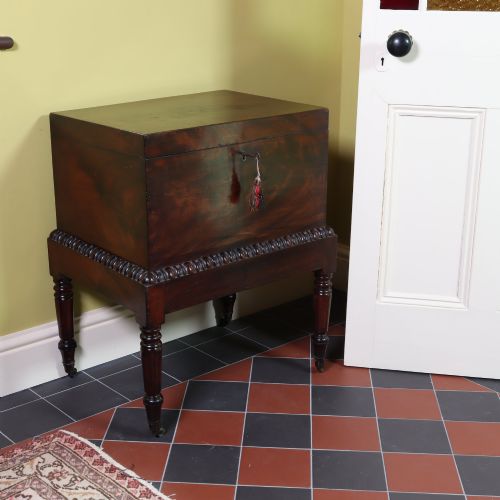
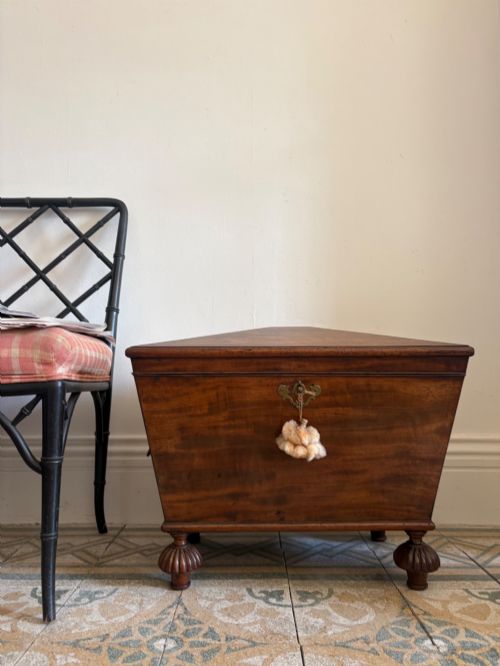
A wooden sarcophagus cellarette takes the classical tomb-like form popularised during the Georgian, Regency, and Victorian periods for storing bottles in the dining room. These large containers typically rest on paw feet, castors, or plinth bases, designed to sit beneath sideboards or beside dining tables.
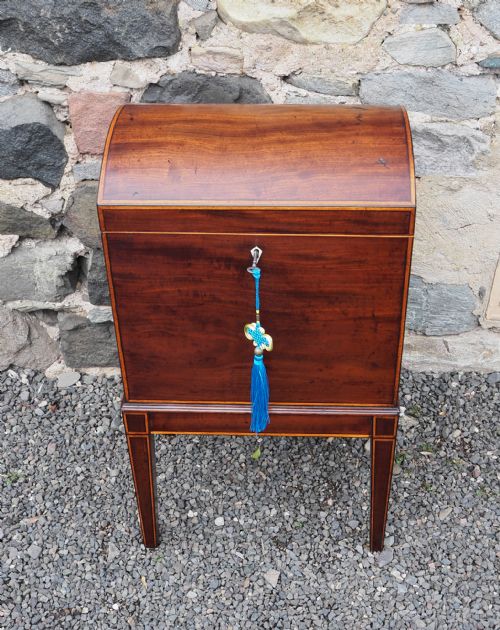
The most common examples on this page are mahogany vessels from the Regency and Georgian eras, often featuring distinctive curved lids and panelled sides. Makers built these containers to house bottles of wine or spirits securely, frequently incorporating lead liners to hold ice.
How they were made
Cabinet makers utilised dense timbers like solid and flame mahogany, frequently embellished with pollard oak, satinwood, and boxwood inlay to create rich surface movement. Metal fittings such as brass handles, paw feet, and ormolu mounts added structural weight and decorative contrast.
Internal construction involved lead linings to hold melting ice without damaging the surrounding woodwork. Carpenters shaped the heavy timber bodies using traditional joinery, often incorporating carved details and panelled lids to match the prevailing architectural styles.
Several examples retain secret compartments once intended to keep expensive spirits safe from light-fingered household staff.
What varies in quality
The depth of figure in the mahogany and the choice of secondary timbers distinguish standard boxes from exceptional examples. Cabinet work showing careful matching of flame veneers or intricate boxwood inlay indicates a higher tier of production.
Subtleties in carving work, such as detailed paw feet or crisp ormolu mounts, separate workshops of high repute from simpler regional outputs. The retention of original lead liners and functional brass hardware also influences the overall integrity of the piece.
Thomas Hope·Freemans of Norwich·T Feetham·Gillows of Lancaster and London·Maples and Co
The Wooden Sarcophagus Cellarette Glossary
- Sarcophagus
- A coffin-shaped container with a domed or pitched lid, adopted by Georgian and Regency designers for large wine coolers.
- Cellarette
- A lockable container or box built specifically for storing and chilling wine bottles near the dining table.
- Ormolu
- Gilt-bronze mounts applied to furniture for decorative enrichment, frequently seen on Regency and French-influenced pieces.
- Pollard oak
- Timber taken from trees that were pruned close to the trunk, producing a dense, knotty grain pattern prized for decorative panels.
- Flame mahogany
- Wood veneer cut from the fork of the mahogany tree to create a distinctive flickering, wave-like pattern.
Wooden Sarcophagus Cellarette: Frequently Asked Questions
How were cellarettes used in the dining room?
These containers sat beneath sideboards or near the dining table to hold wine bottles and ice during long meals. Servants would retrieve bottles as needed while guests dined.
Their heavy construction and lead linings kept wine chilled until it reached the table.
Can I use an old cellarette for modern wine storage?
Many of these containers retain their original lead interiors, making them suitable for holding ice and contemporary wine bottles. Their deep proportions accommodate standard wine and spirit bottles easily.
Placing them in a dining room restores their original domestic function as a drinks cabinet.
How do I identify a Regency period piece?
Regency items often display classical architectural influences, such as carved paw feet, bold mahogany grain, and heavy brass ring handles. The sarcophagus shape became particularly fashionable during this era.
Makers working in the early nineteenth century favoured strong symmetrical forms and dark polished timbers.
What is the difference between a cellarette and a wine cooler?
The terms are frequently used interchangeably in historical records to describe containers built for dining room bottle storage. Some larger stationary vessels were specifically designated as wine coolers, while smaller boxes functioned as movable cellarettes.
Both types share similar internal lead linings and robust wooden construction.