

Wooden Refectory Kitchen Table
A wooden refectory kitchen table brings scale and history to a room, offering a sturdy surface built for daily gatherings.
Wooden Refectory Kitchen Table
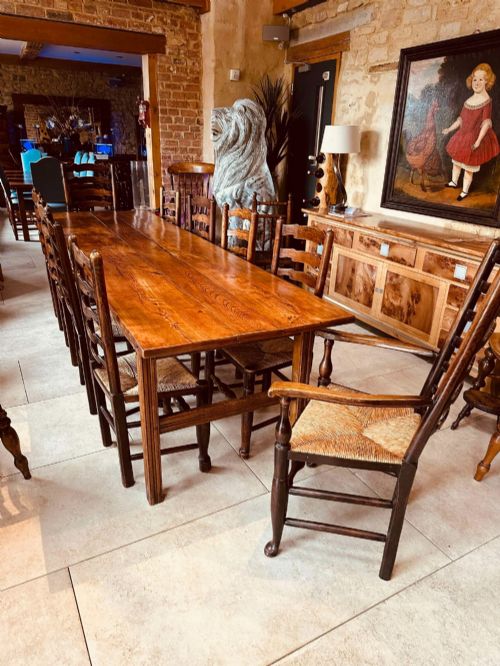
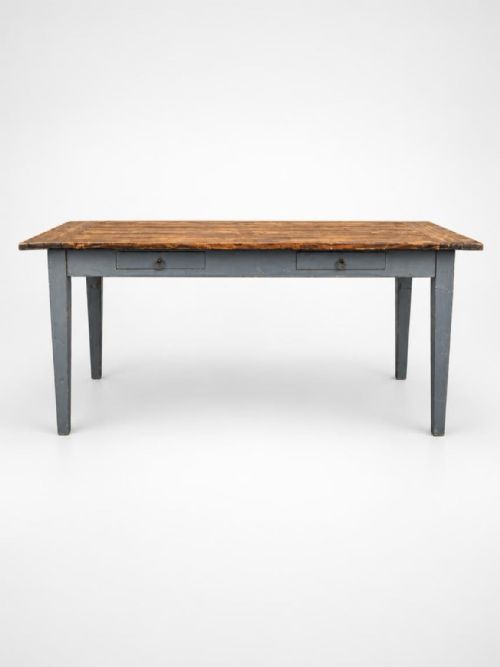
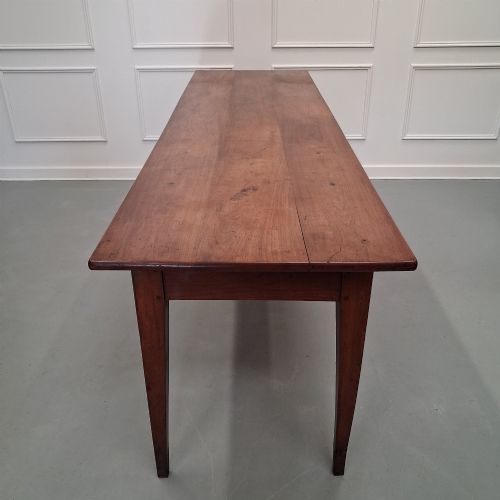
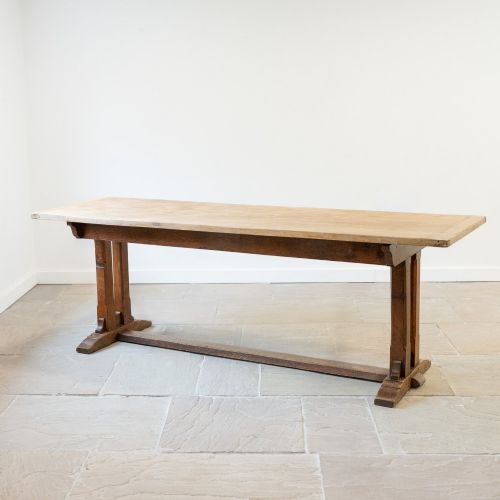
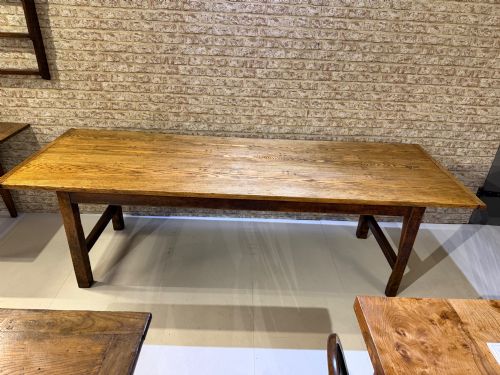
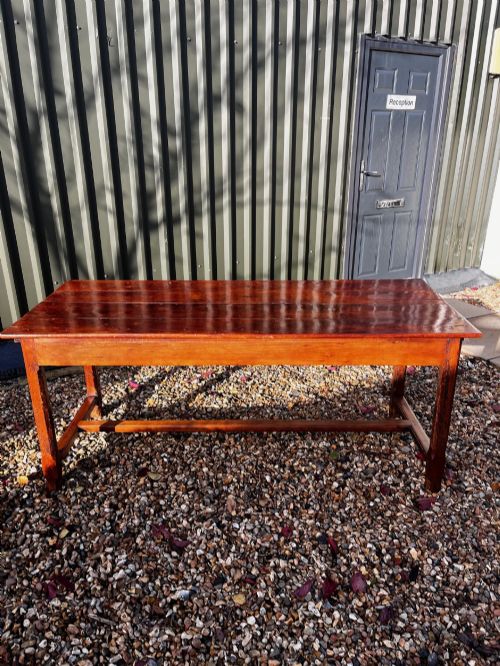
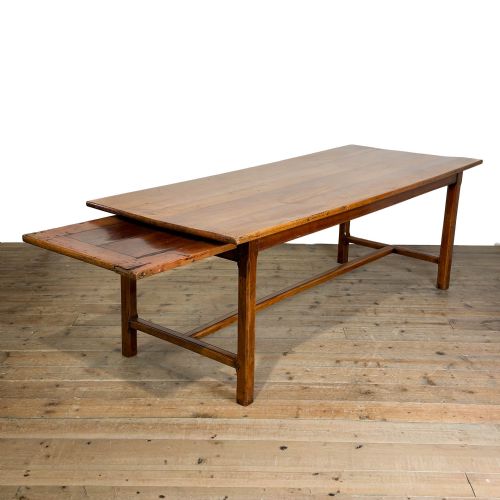
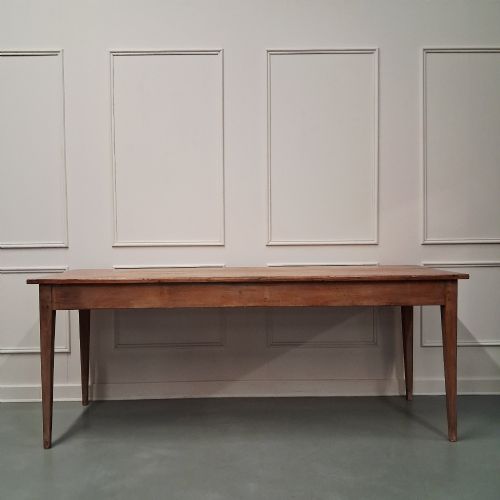
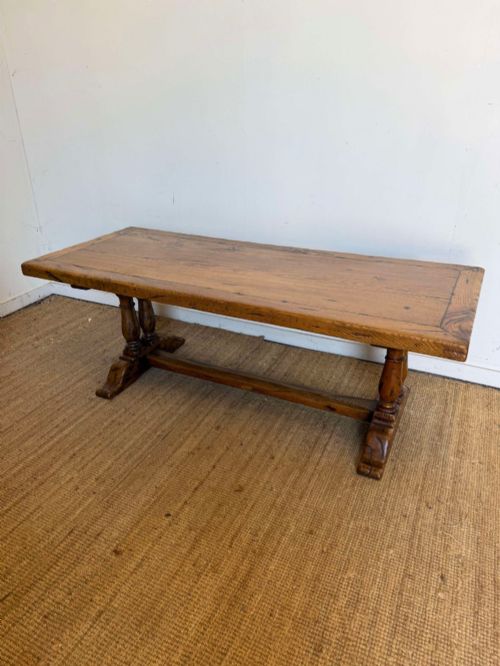
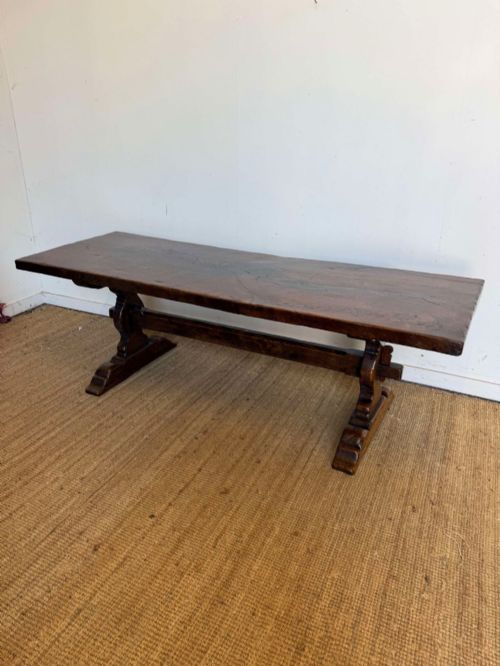
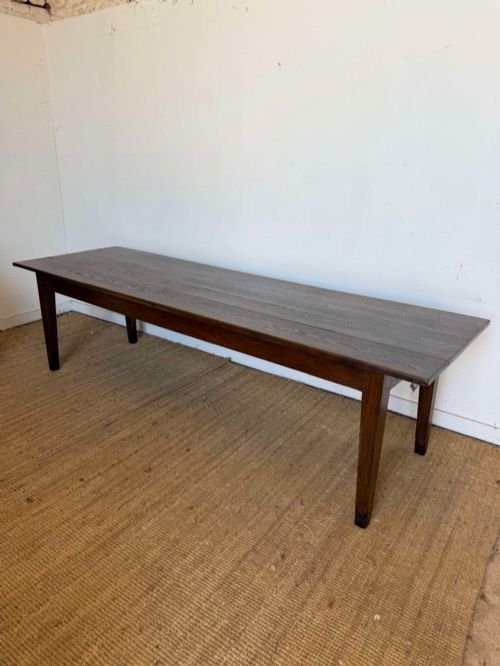
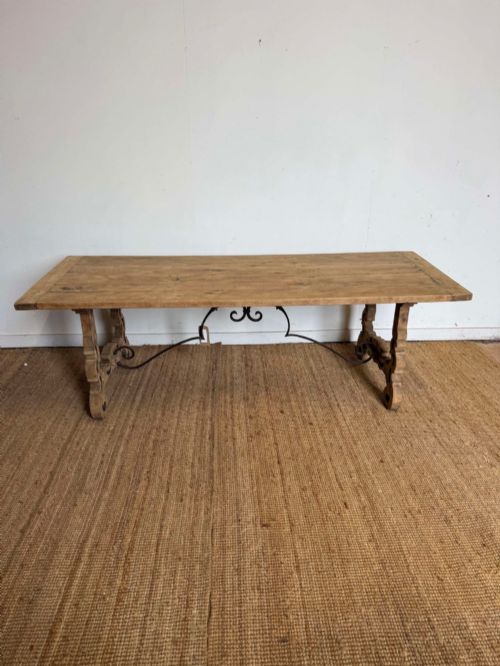
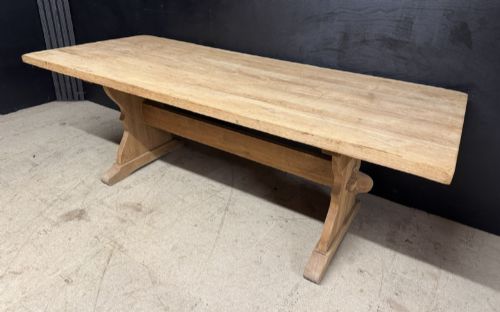
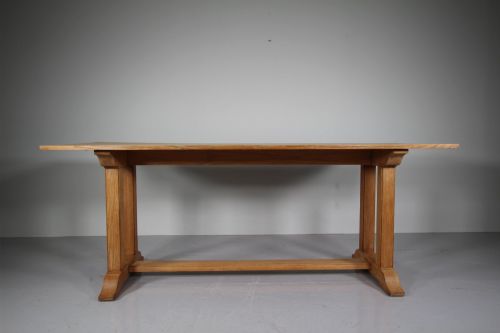
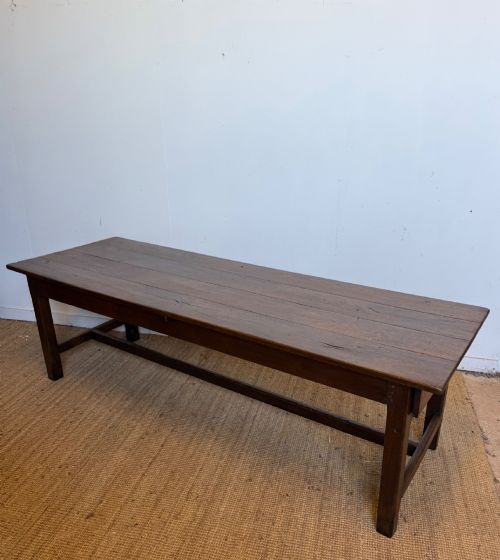
A wooden refectory kitchen table serves as a substantial centrepiece for communal dining, rooted in centuries of domestic use. When searching for a wooden refectory kitchen table, buyers encounter formats spanning from the eighteenth century through to the 1930s. The most common examples on this page are nineteenth-century French and English designs, often built with planked wooden tops and sturdy stretcher bases.
Originating in monastic and baronial dining halls, these pieces evolved into farmhouse and provincial furniture intended for hard daily use. Listings frequently showcase French country and rustic farmhouse styles alongside English oak interpretations. These variations reflect regional timber supplies and domestic dining traditions across Europe.
How they were made
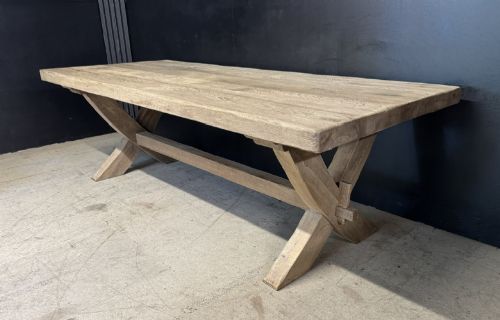
Constructed primarily from hardwoods such as oak, elm, fruitwood, cherry wood, and chestnut, these tables rely on solid timber planks for their expansive tops. Many pieces feature single-plank or multi-plank surfaces joined with traditional pegging and cross-framing techniques. Supporting structures utilise heavy timber legs, X-trestles, or occasional iron stretchers to maintain stability across long spans.
Makers shaped these surfaces using hand planes, saws, and drawknives, leaving subtle tool marks that distinguish older examples. Over decades of scrubbing and use, the timber develops a distinct patina, particularly on scrubbed oak and bleached pine surfaces. Joinery methods prioritise mechanical strength, employing mortise and tenon joints to bear the weight of heavy dining traffic.
Wooden Refectory Kitchen Table Retail Price Guide 2026
Typical asking prices for wooden refectory kitchen table among the pieces listed under this phrase on Sellingantiques today, from the lower quarter to the upper quarter. They describe what is for sale here now, not the wider market.
Listings span several centuries, featuring oak, elm, fruitwood, and pine across English and French provincial styles.
What varies in quality
Quality in these tables rests on the integrity of the timber selection and the retention of original surfaces. Tables fashioned from dense, mature oak or figured fruitwood exhibit superior structural durability compared to softer secondary woods. The thickness of the top planks and the proportion of the underframe dictate the overall visual balance.
The degree of original patination significantly influences character, separating pieces that retain centuries of honest wear from those stripped down harshly. Structural additions or alterations to the base framing shift a piece away from its original state. The presence of documented workshop origins, such as specific London makers from the 1930s, adds formal attribution.
Heals of London·Arthur Reynolds
The Wooden Refectory Kitchen Table Glossary
- Refectory table
- A long dining table historically used in monastic dining halls, characterised by a narrow proportion and strong stretcher base.
- Stretcher
- A horizontal wooden or iron beam connecting the legs of a table to provide lateral rigidity and prevent spreading.
- X-trestle
- A base construction formed by intersecting diagonal timbers that support the main tabletop at each end.
- Patina
- The surface sheen and colour acquired by wood through age, light exposure, and decades of cleaning.
- Scrubbed top
- A tabletop surface washed repeatedly with water and soap until the grain rises and the wood assumes a pale, matte tone.
Wooden Refectory Kitchen Table: Frequently Asked Questions
How do I measure for a refectory table?
Measure your dining space carefully, allowing ample clearance around all sides for chairs to pull out comfortably. Consider the placement of table legs and stretchers to ensure diners can sit without obstruction.
Account for the length of the table against your room dimensions, keeping in mind that longer examples require significant floor area for movement.
Are these tables suitable for daily use?
These pieces were originally built for heavy domestic work and dining, making them inherently robust for modern household routines. Solid timber construction withstands regular activity while accommodating daily family meals.
Routine maintenance involves gentle cleaning and avoiding excessive moisture on historic wood surfaces to preserve the original finish.
How do I date an antique table?
Dating relies on observing construction methods, timber species, and tool marks visible on the underside and legs. Eighteenth-century examples often feature pegged mortise and tenon joints and deeper hand-planed patination.
Twentieth-century pieces, such as Arts and Crafts or 1930s designs, show different milling precision and occasionally bear maker signatures or retailer stamps.
What is the difference between oak and fruitwood?
Oak provides a dense, heavy structure with prominent grain patterns, frequently utilised in English and French provincial refectory designs. Fruitwoods like cherry and pear offer a finer, warmer grain structure with distinct tonal variations.
Both timbers deliver excellent durability, but fruitwood surfaces often present a softer, reddish-brown lustre compared to the golden tones of oak.