



Wooden Panel Oil Painting
When you search for a wooden panel oil painting, you find centuries of pigment bound in oil and spread across timber boards.
Wooden Panel Oil Painting
A wooden panel oil painting brings together the rigidity of timber and the rich pigment of oil paint, spanning centuries of portraiture, landscape and genre scenes. These works appear on flat boards, pine panels, mahogany supports and even repurposed architectural elements like coach panels and overdoors.
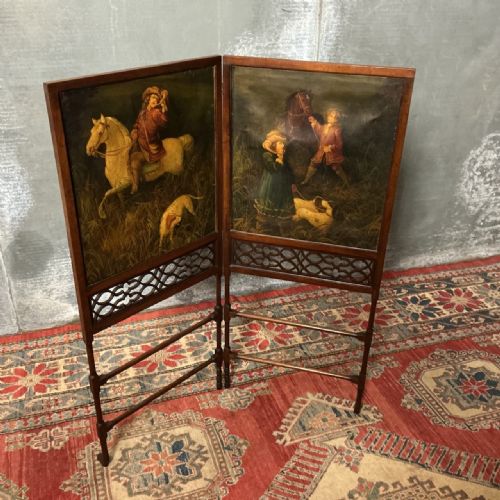
The pieces on this page range from early topographical views and naive portraits to French trumeau mirrors, fire screens and maritime scenes. You encounter works originating from English, French, Dutch and Scottish schools across periods including the eighteenth century, the Victorian era and the early twentieth century.
Makers and artists vary from named professionals like William Williams, Alfred John Bouchette and Kershaw Schofield to regional British and continental schools. Collectors seek out these objects for their tactile support, which offers a different texture and grain compared to standard canvas.
Materials and technique
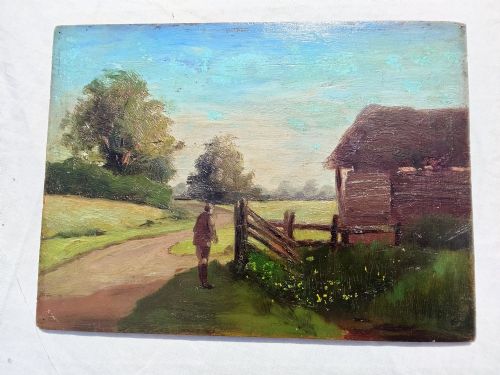
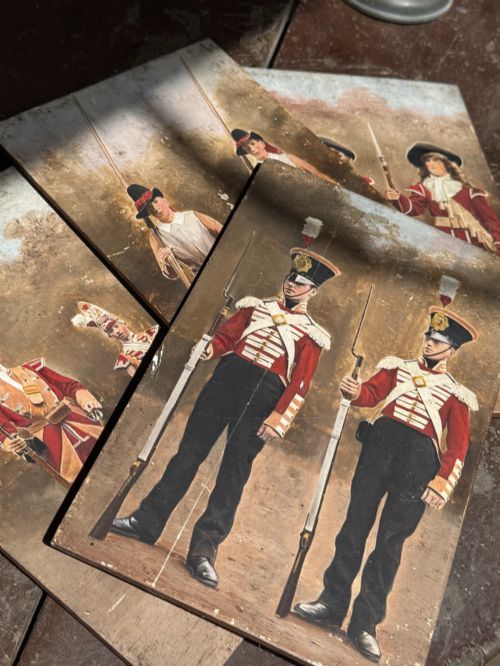
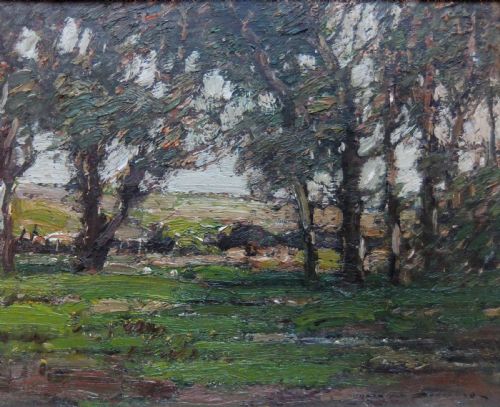
Artists painted directly onto prepared timber supports, utilising wood panels, pine boards, wood boards and burr maple frames. The rigidity of the wooden substrate allowed for fine brushwork and detailed application of oil paint without the give associated with stretched canvas.
Frames played an integral role in the construction, often featuring ornate wooden gilt designs that complemented the rural landscapes, pastoral scenes and portraits rendered on the panel.
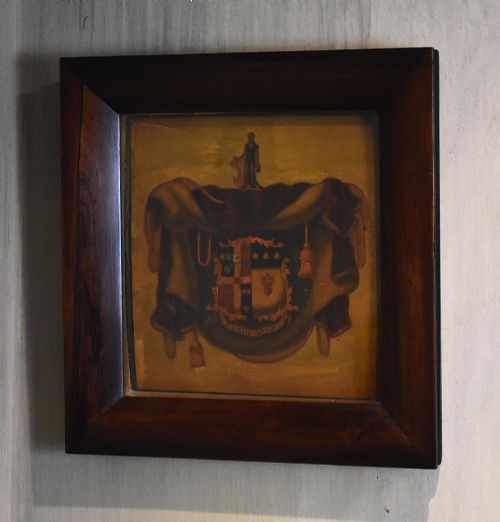
One unexpected survival is a Georgian Scottish heraldic coach panel that once rode past fields on the side of a carriage.
Assessing quality and execution
Quality rests in the precision of the brushwork and the stability of the timber support. Finer pieces demonstrate confident draftsmanship in figures and landscapes, whereas simpler works lean towards a naive execution.
The relationship between the painted surface and its housing dictates the overall integrity of the piece. Well-preserved panels paired with period frames or original architectural settings hold greater visual coherence.
William Williams·Alfred John Bouchette·Kershaw Schofield·Joseph Vickers de Ville·Hubert Wellington
The Wooden Panel Oil Painting Glossary
- Wood Panel
- A flat piece of timber used as a rigid support for painting instead of canvas. Artists favored wood for its smooth surface and durability.
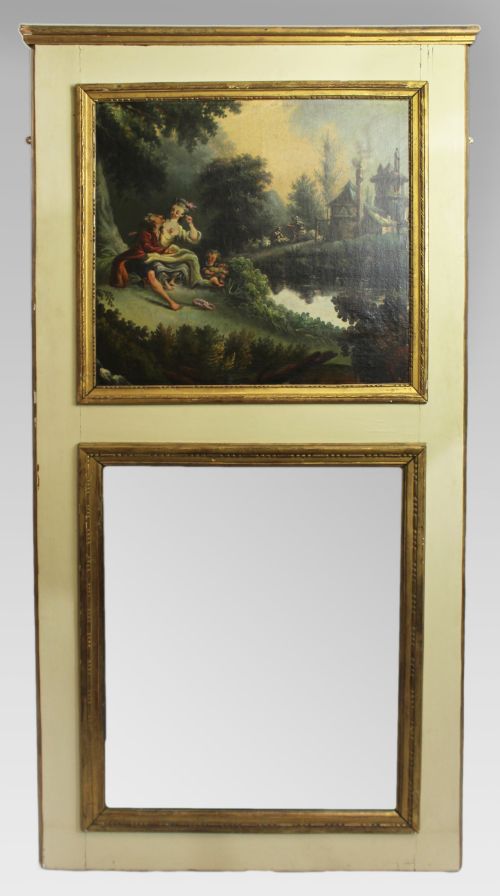
- Trumeau Mirror
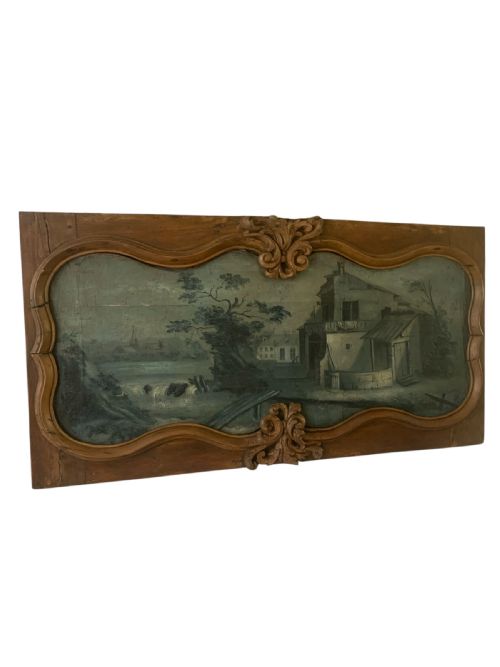
- An architectural wall mirror featuring a painted panel above the glass. These items often incorporate pastoral or decorative oil scenes from the nineteenth century.
- Coach Panel
- A painted section originally part of a horse-drawn carriage or transport vehicle. These panels occasionally feature heraldic designs or decorative motifs.
- Genre Painting
- A work depicting scenes from everyday life involving ordinary people. These compositions frequently show figures in domestic interiors or rural landscapes.
- Naïve Art
- Artwork created by a person without formal academic training in perspective and proportion. Such pieces display a charming simplicity in line and form.
Wooden Panel Oil Painting: Frequently Asked Questions
What is a wooden panel oil painting?
A wooden panel oil painting is an artwork executed in oil paint directly onto a wooden board rather than stretched canvas. These pieces utilise various timber supports, ranging from mahogany and pine to repurposed architectural panels.
The medium provides a solid ground that has allowed numerous landscapes, portraits and genre scenes to survive across centuries in stable condition.
How do I care for wooden panel art?
Caring for a wooden panel oil painting involves protecting the timber from extreme fluctuations in temperature and humidity. Stable environmental conditions prevent the wood from warping or splitting over time.
Keep the piece away from direct sunlight and heating sources, and dust the surface gently with a soft, dry cloth without applying liquids.
How do I identify the age of a panel painting?
Identifying the age of a panel painting requires examining the type of wood, the preparation of the ground layer and the style of the brushwork. Carpenters' marks, panel thickness and framing techniques also offer clues to the period.
Signatures, inscriptions on the reverse and historical labels help connect the work to specific schools or documented artists.
Where were these paintings displayed originally?
Many panel paintings served as wall art in domestic interiors, while others functioned as architectural elements integrated into furniture, fire screens or overdoors. Trumeau mirrors incorporated panels above glass to decorate nineteenth-century reception rooms.
Artists also produced smaller works for portable display or for incorporation into decorative gilt frames suited to period salons.