


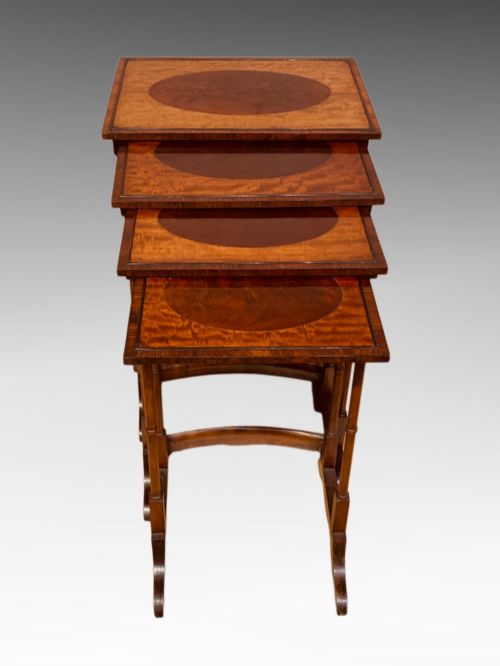


Wooden Nesting End Tables
These wooden nesting end tables are clever sets of tables that slide neatly inside one another, offering versatile surface space when entertaining.
Wooden Nesting End Tables
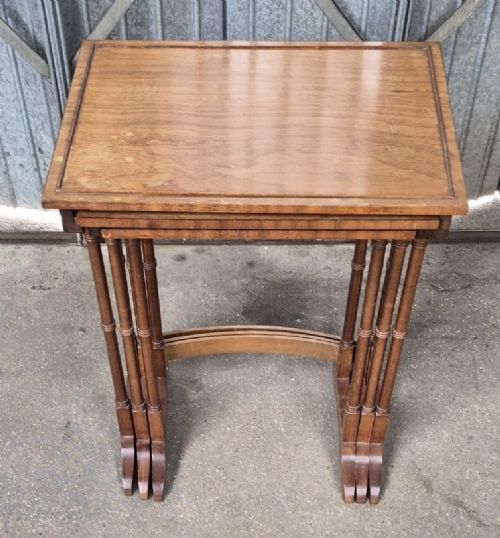
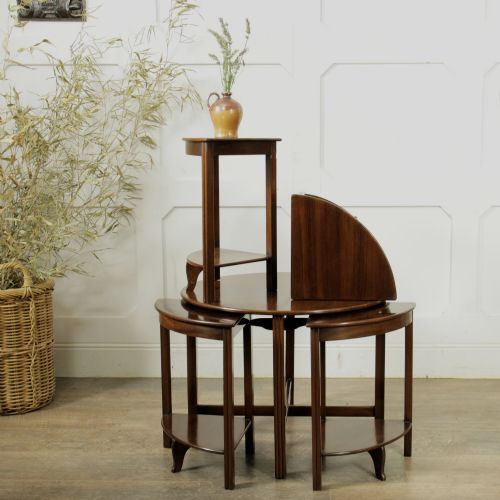
Wooden nesting end tables are sets of matching tables designed to stack together in a compact footprint until required for use around a room. The selection spans various eras, including Georgian, Victorian, Edwardian, and the early twentieth century.
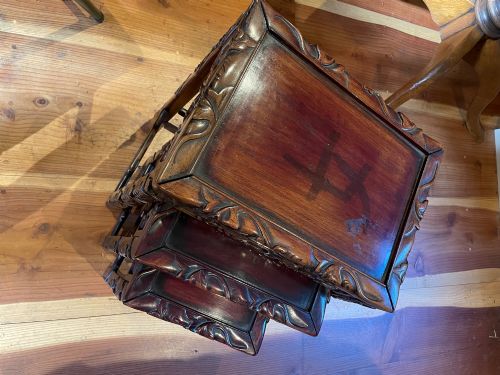
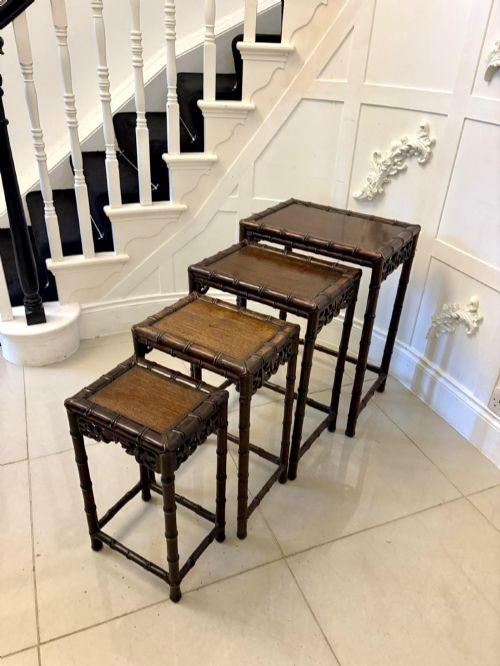
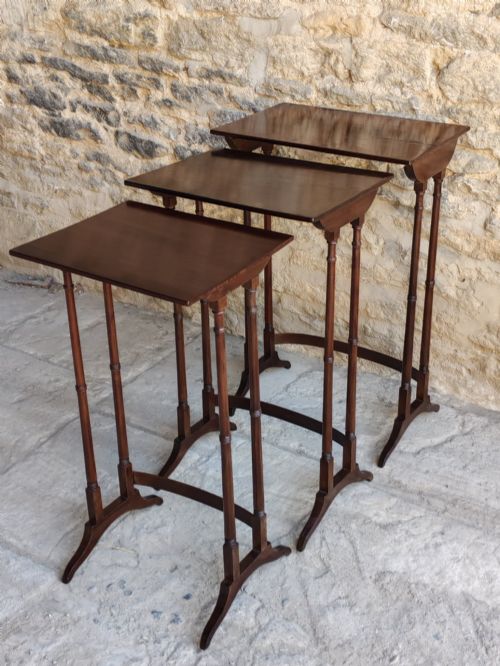
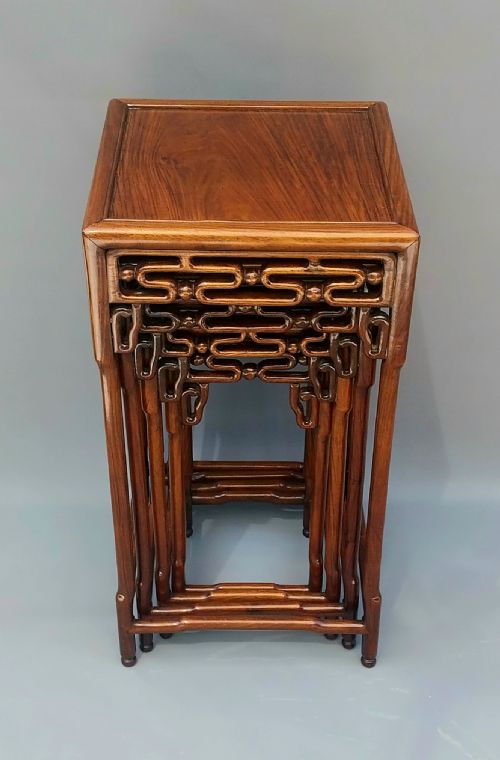
The version most commonly encountered on this page is the mahogany set of four, often referred to as a quartetto set. These designs originate from both English cabinetmakers and Chinese export workshops using rosewood, hongmu, and huanghuali.
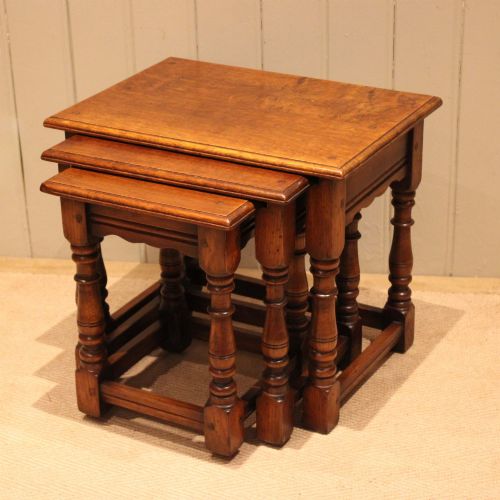
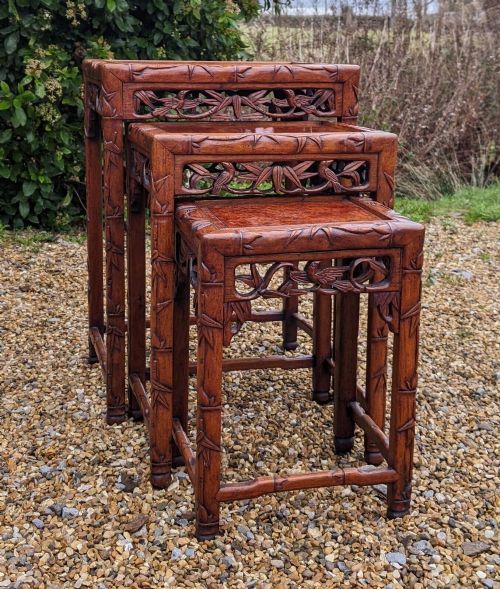
Formations vary from circular Edwardian arrangements to rectangular tables featuring inlaid satinwood, carved faux bamboo, and embossed leather tops. Oak and walnut examples also appear, sometimes with barley twist legs or parquetry surfaces.
How they were made
Cabinetmakers utilised dense timbers like mahogany, oak, walnut, and exotic hardwoods such as rosewood and huanghuali to construct sturdy frames that could withstand repeated sliding. These woods were chosen for their durability and rich natural grain patterns.
Decorative techniques include satinwood inlay, parquetry, and intricate carving, particularly on Chinese export pieces and Jacobean revival styles. Some tables incorporate leather tops and faux bamboo turning to achieve specific aesthetic effects.
Wooden Nesting End Tables Retail Price Guide 2026
Typical asking prices for wooden nesting end tables among the pieces listed under this phrase on Sellingantiques today, from the lower quarter to the upper quarter. They describe what is for sale here now, not the wider market.
Some nineteenth-century makers cleverly disguised solid hardwood as exotic bamboo, proving that Victorian craftsmen loved a good botanical trick.
What varies in quality
Quality rests in the precision of the joinery and the selection of timber, where superior sets display book-matched grain and tight, stable joints. The smoothness of the sliding action between the graduated frames indicates careful initial construction.
Refinement in secondary details such as delicate inlay work, hand-carved motifs, and the condition of the polished surface separate standard utility tables from exceptional examples.
The Wooden Nesting End Tables Glossary
- Quartetto
- A set of four tables designed to nest together. This term appears frequently in Edwardian and nineteenth-century descriptions.
- Parquetry
- Geometric mosaic woodwork used for decorative surface patterns. It creates intricate tiled designs on table tops.
- Faux bamboo
- Wood carved and painted to resemble natural bamboo stalks. This decorative technique became popular during the nineteenth century.
- Satinwood
- A luminous, yellow-toned timber used primarily for contrasting inlay work on mahogany furniture. It adds bright decorative detail to dark wood surfaces.
Wooden Nesting End Tables: Frequently Asked Questions
What are wooden nesting end tables?
Wooden nesting end tables are multi-tiered sets where smaller tables slide beneath the largest one to save space.
They serve as practical occasional surfaces that expand when guests arrive and store compactly otherwise.
How were nesting tables used historically?
Historically, these tables were deployed in drawing rooms and parlours for serving tea, holding books, or supporting small lamps.
Servants would move the individual tables around the room as needed and return them to the stack after use.
How do I care for antique wooden tables?
Keep wooden nesting tables out of direct sunlight and away from heat sources to prevent the timber from splitting or warping.
Dust them regularly with a soft cloth and occasionally apply appropriate beeswax to maintain the polished finish.
How can I tell the period of a table?
Dating relies on identifying timber choices, construction methods, and stylistic cues such as Edwardian inlay or Victorian carving.
Comparing the proportions and secondary woods helps place a set within periods like the Georgian era or the early twentieth century.