


Wooden Milking Stool
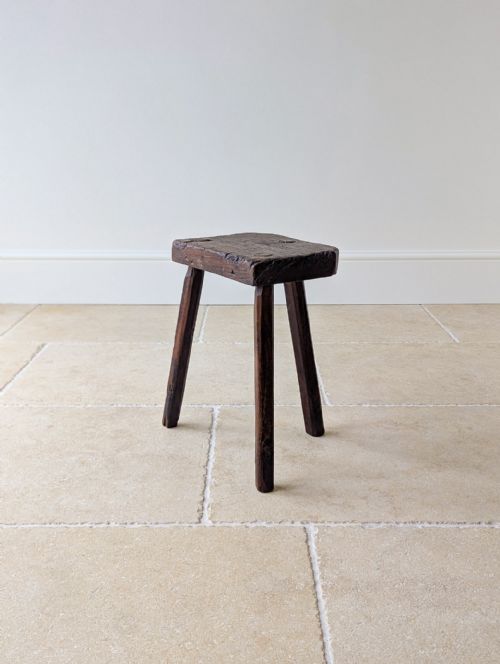
A wooden milking stool offers direct contact with domestic utility, shaped from solid timber for functional daily work.
Wooden Milking Stool
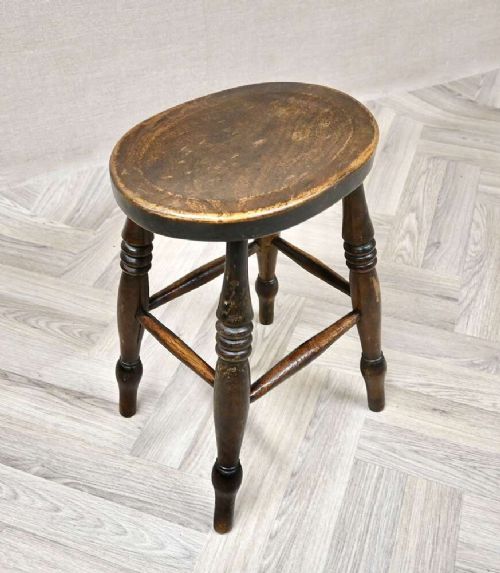
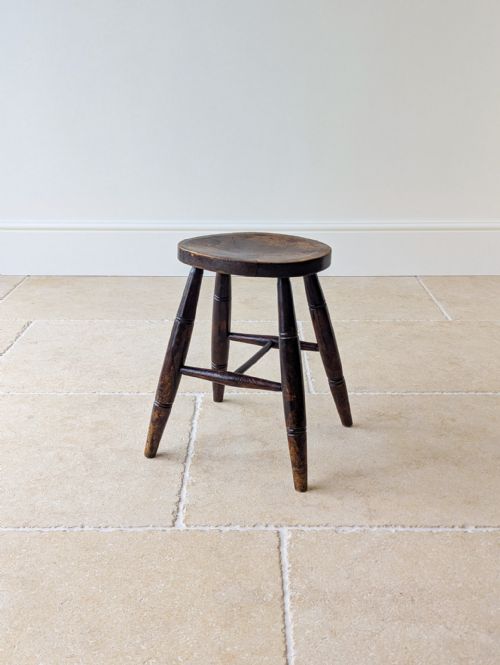
A wooden milking stool is a low, unpretentious seat designed originally for farm work, though the listings here encompass related vernacular forms. Buyers searching for a wooden milking stool encounter pieces from the Georgian, Victorian, and later periods, spanning the eighteenth and nineteenth centuries.
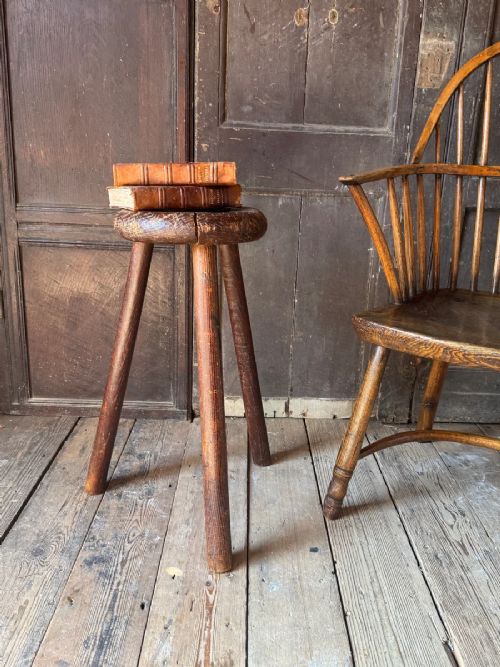
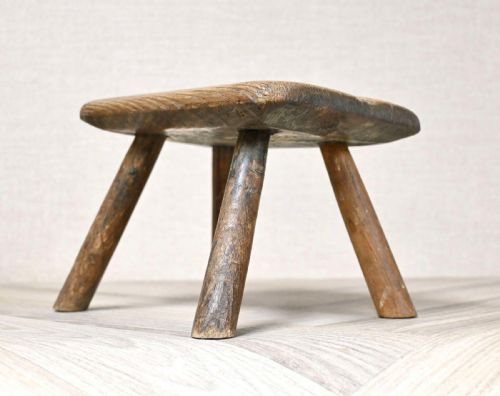
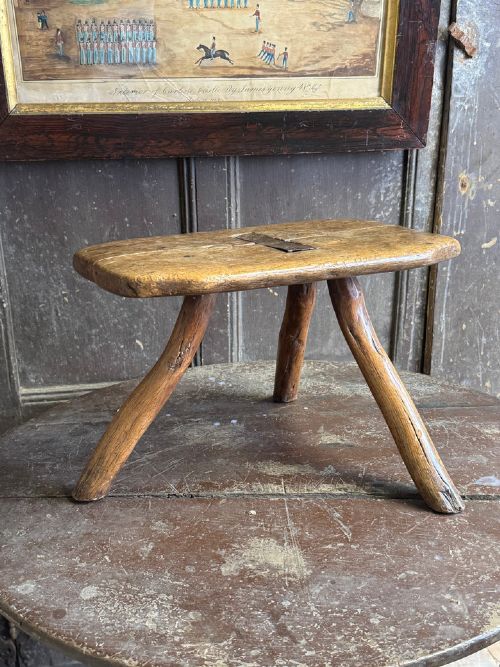
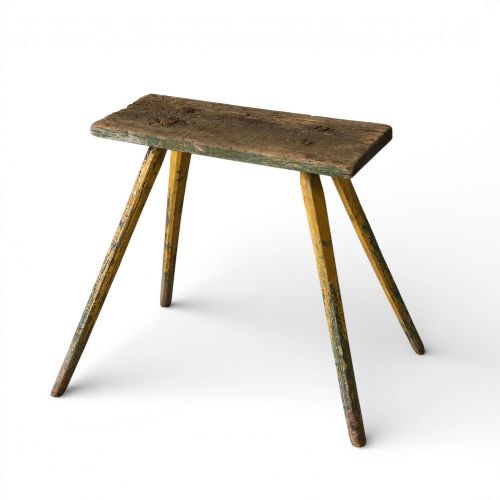
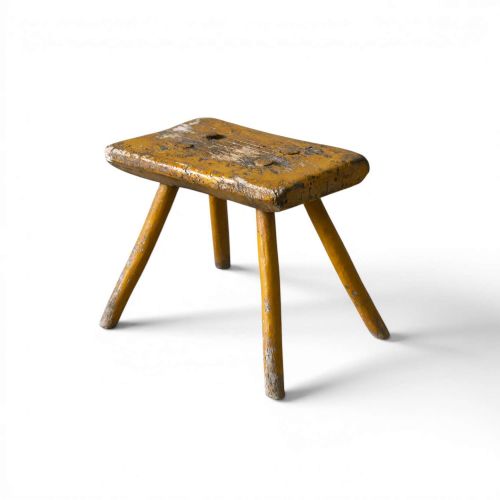
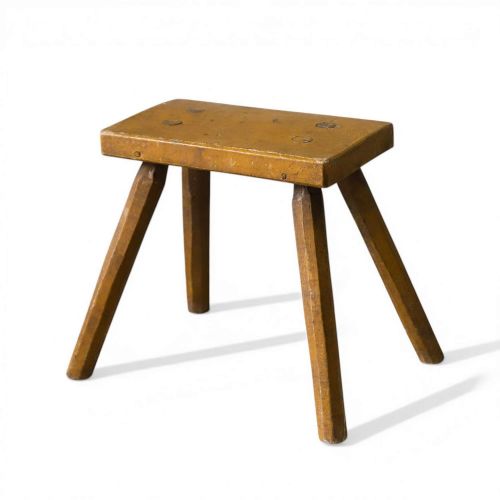
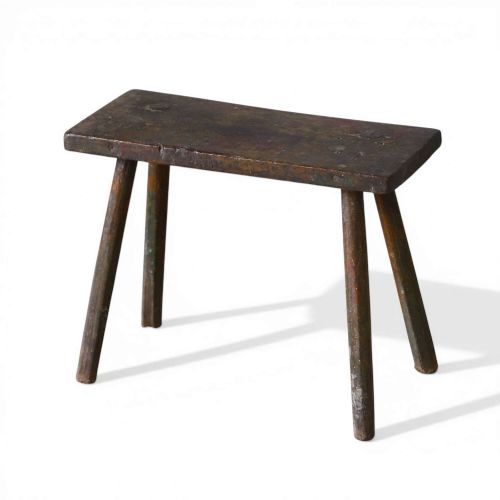
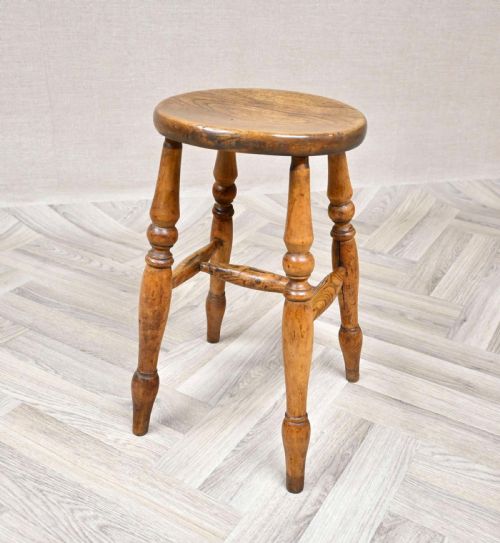
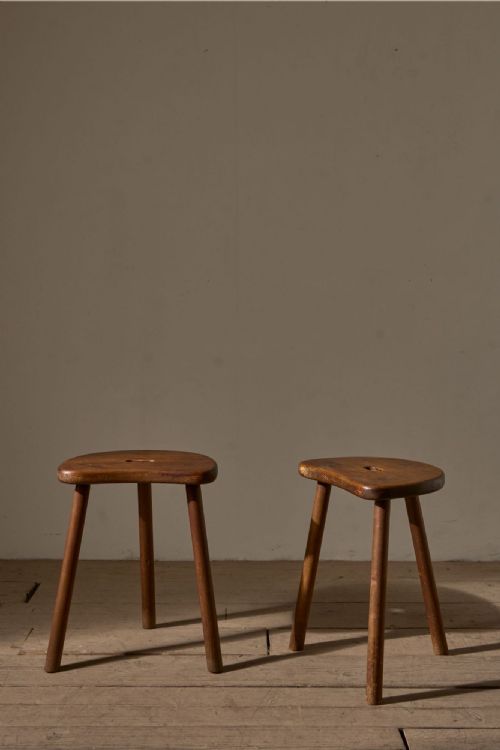
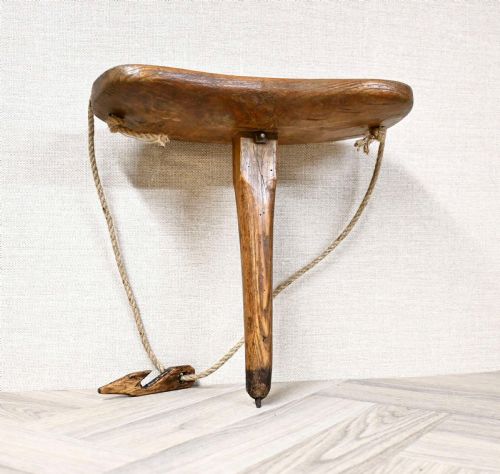
The majority of surviving examples take the form of three-legged or four-legged country stools with seats fashioned from elm, ash, oak, or pine. Alongside traditional dairy pieces, the selection includes variants such as Windsor stools, nursery stools, and small hearth seats.
Origins range across English, French, and Eastern European workshops, showing regional adaptations in leg splay and seat shaping. Many items bear the marks of daily domestic or agricultural labour rather than formal cabinet making.
How they were made
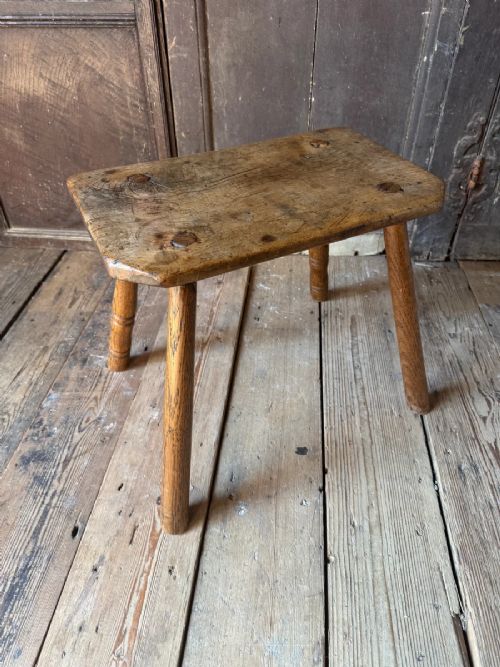
Maker-joiners utilised native hardwoods like elm and ash for seats and legs, often employing pegged construction to secure joints under heavy use. Splayed legs were driven into bored holes in the underside of the seat, sometimes wedged from above for stability.
Surviving surfaces frequently display the tool marks of the adze, drawknife, or spoon bit used to shape the solid timber. Where paint is present, original layers of ochre, yellow, green, or black pigment remain on the pine or hardwood frames.
Wooden Milking Stool Retail Price Guide 2026
Typical asking prices for wooden milking stool among the pieces listed under this phrase on Sellingantiques today, from the lower quarter to the upper quarter. They describe what is for sale here now, not the wider market.
Listings feature woods including oak, elm, ash, pine, beech, and sycamore across 18th-century, Georgian, and Victorian periods.
What varies in quality
Quality rests in the integrity of the timber and the honesty of the construction, where evidence of blacksmith repairs or original pegging adds character. A well-proportioned seat with balanced leg splay shows deliberate craftsmanship despite the utilitarian purpose.
The survival of original surface finishes, whether unpolished scrubbed timber or untouched historical paint, separates untouched examples from those stripped or heavily restored in later decades.
J. Shoolbred
The Wooden Milking Stool Glossary
- Vernacular
- An object made by local tradesmen or country craftsmen for everyday domestic or agricultural use, following traditional regional patterns rather than high-style cabinet designs.
- Windsor
- A style of seating constructed with turned legs and spindles wedged directly into a solid sculpted wooden seat rather than a framed chassis.
- Splayed
- Angled outward from the centre for greater stability on uneven floors, commonly seen on three-legged and four-legged country stools.
- Plank stool
- A primitive form constructed from flat boards joined by pegs or dovetails, representing an early method of domestic furniture making.
- Adze
- A traditional hand tool with a curved blade used to chop and hollow out the wooden seat tops to fit the human form.
Wooden Milking Stool: Frequently Asked Questions
What were wooden milking stools used for?
These low seats were built for practical farm work, primarily sitting close to the ground while milking dairy animals by hand.
Over time, their sturdy build and compact size made them useful for various low-level domestic tasks around the hearth or workshop.
How old are most wooden milking stools?
The examples available generally date from the eighteenth and nineteenth centuries, reflecting Georgian and Victorian rural traditions.
Earlier pieces show simpler pegged construction, while later nineteenth-century versions often incorporate turned legs or painted finishes.
How should I clean a painted wooden milking stool?
Original painted surfaces require gentle dusting with a dry cloth to preserve the historical pigment layers without causing flaking.
Avoid chemical solvents or moisture, which can strip away the aged patination accumulated over generations of use.
Why do some stools have three legs?
A three-legged configuration ensures the seat remains steady on uneven stone floors or farmyards without rocking.
This practical design choice remains a defining characteristic of many traditional dairy and country work seats.