


Wooden Military Campaign Chest
A wooden military campaign chest is built to travel with officers across continents, offering sturdy storage that dismantles for transport.
Wooden Military Campaign Chest
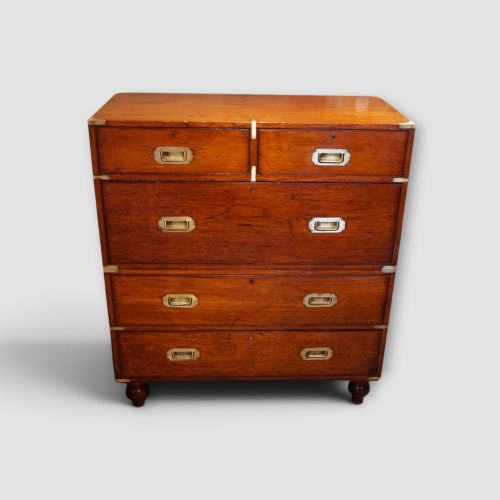
A wooden military campaign chest provides practical storage designed specifically for officers on the move during the eighteenth and nineteenth centuries. These portable pieces divide into modular sections or feature folding stands to fit easily inside tents and cargo holds.
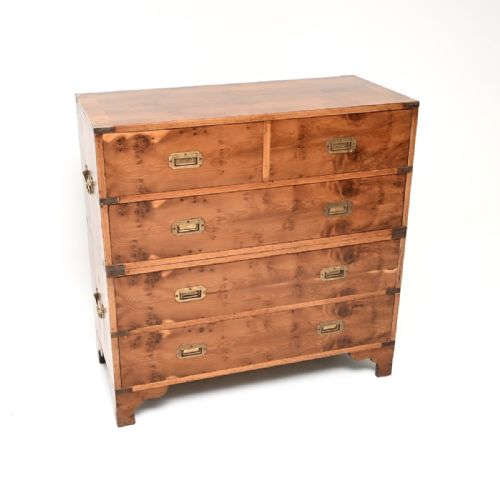
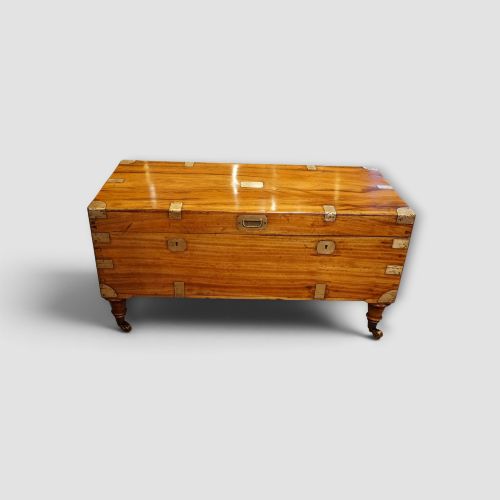
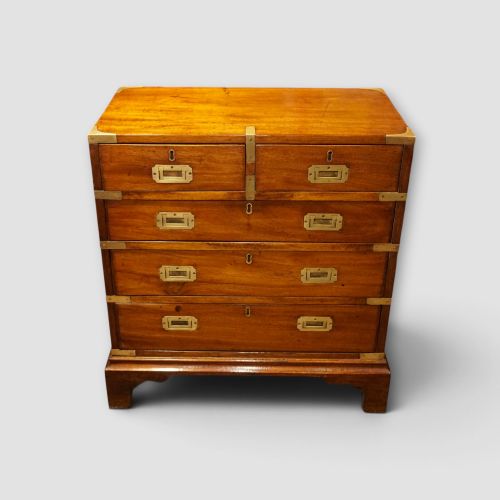
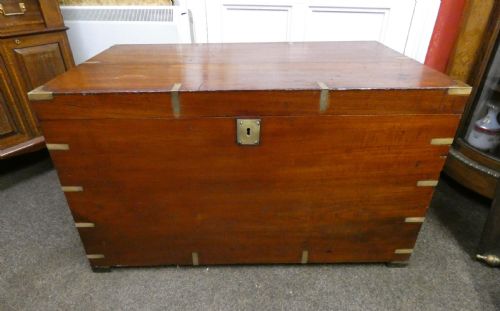
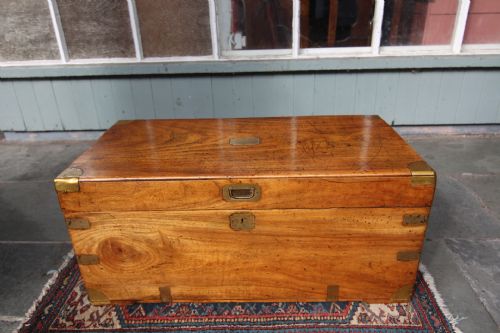
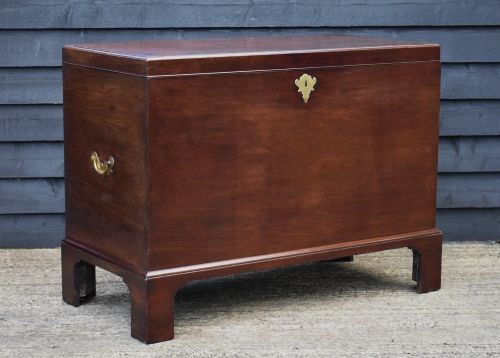
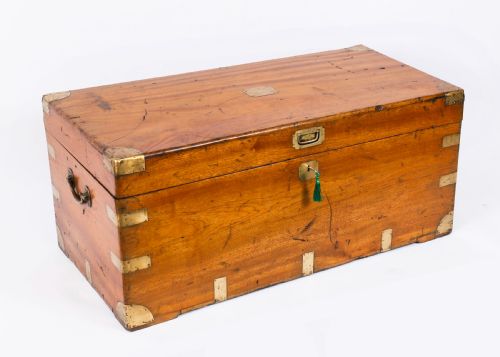
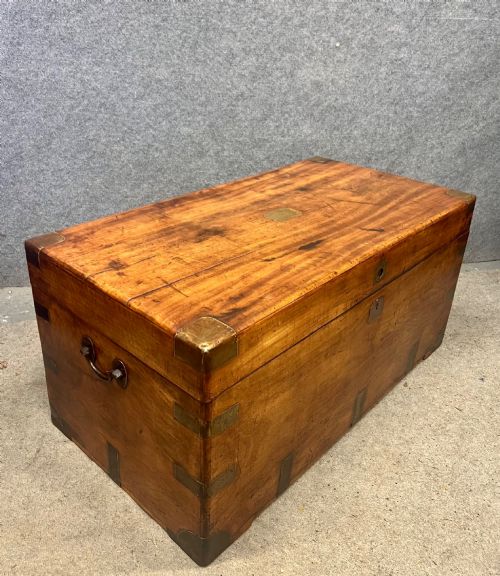
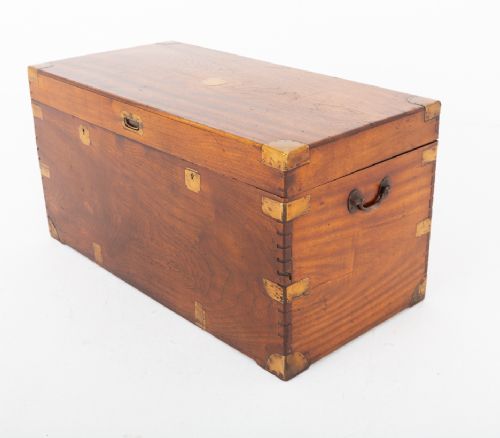
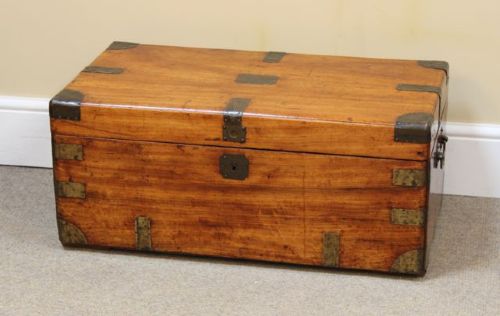
Camphor wood and mahogany dominate the offerings, often fitted with robust brass corners and recessed carrying handles. Buyers frequently encounter nineteenth-century examples and Victorian variants alongside Georgian travelling trunks and robust chests of drawers.
Materials and construction methods
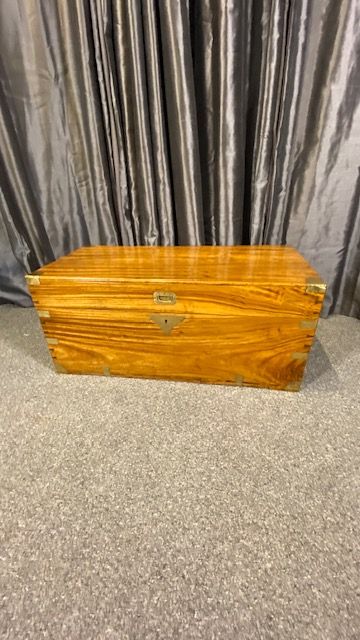
Carpenters utilised dense timbers like mahogany, teak, and solid camphorwood to withstand damp climates and rough transit without warping. Camphor wood was particularly favoured for trunks because its natural aroma deterred insects from stored uniforms and papers.
Joinery had to remain exceptionally rigid while allowing sections to separate quickly via secure brass pins and brackets. Recessed brass handles and corner plates protected vulnerable edges from knocks during loading and unloading.
Wooden Military Campaign Chest Retail Price Guide 2026
Typical asking prices for wooden military campaign chest among the pieces listed under this phrase on Sellingantiques today, from the lower quarter to the upper quarter. They describe what is for sale here now, not the wider market.
Many surviving camphor wood trunks still retain a faint, unmistakable medicinal scent after two centuries of guarding officers' uniforms.
Evaluating the standard of execution
The precision of the brass hardware and the tightness of the drawer joints separate utilitarian supply pieces from officer-commissioned items. Superior examples retain original flush-fitting hardware, working locks with keys, and clean internal partitions.
Finer specimens display carefully selected timber grains and secondary woods like pine used only for hidden structural elements. The degree of wear on the recessed handles and feet indicates how extensively the piece travelled on active service.
Army & Navy Stores
The Wooden Military Campaign Chest Glossary
- Campaign chest
- A modular set of drawers or a trunk designed to separate into distinct sections for military transport. These items often feature brass binding and flush handles to prevent snagging.
- Camphor wood
- An aromatic timber frequently utilised for nineteenth-century trunks and chests. Its natural scent helped protect stored military uniforms from moths and damp conditions.
- Recessed handle
- A pull handle inset flush into the face of a drawer or trunk panel. This design prevented the hardware from catching on ropes or canvas during transit.
- Brass bound
- A method of reinforcing wooden corners and edges with brass strips and brackets. It added structural strength to pieces subjected to heavy travel.
Wooden Military Campaign Chest: Frequently Asked Questions
Why are camphor wood and mahogany common?
Carpenters selected dense hardwoods like mahogany and teak for their strength and resistance to splitting during travel. Camphor wood was chosen specifically because its strong scent kept insects away from stored clothing.
These materials ensured the trunks survived long sea voyages and harsh camp environments without failing.
How were these chests used while travelling?
Officers packed uniforms, papers, and personal valuables inside these chests for journeys by ship, horse, or wagon. The modular design allowed servants to separate the sections quickly when setting up camp.
Recessed brass handles and reinforced corners protected the wooden structure from the repeated impacts of loading and unloading.
How do I identify a nineteenth-century example?
Nineteenth-century pieces typically display hand-cut dovetails, heavy brass corner brackets, and solid timber construction in mahogany or camphor wood. The presence of recessed handles and modular stacking points indicates military utility rather than domestic use.
Examining the internal secondary woods and the style of the brass hardware helps confirm the period of manufacture.