


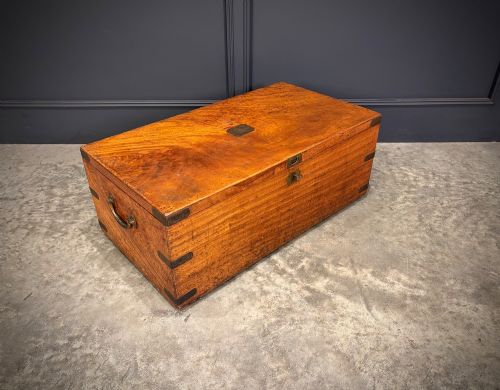


19th Century Campaign Trunk
A 19th century campaign trunk is a sturdy, portable piece of officer’s luggage built for travel, offering robust storage and distinct historical character.
19th Century Campaign Trunk
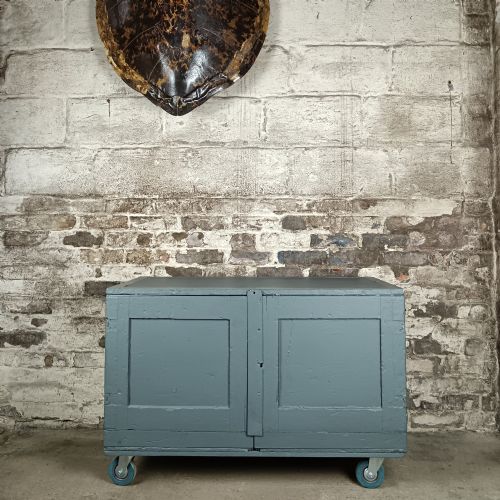
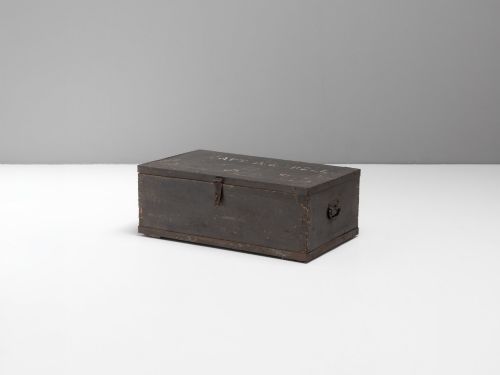
A 19th century campaign trunk represents a practical category of portable furniture constructed for military officers and travellers on the move. These pieces span periods from the Georgian and Regency eras through to the Victorian age, often appearing in forms such as blanket boxes, deed boxes, and two-part chests.
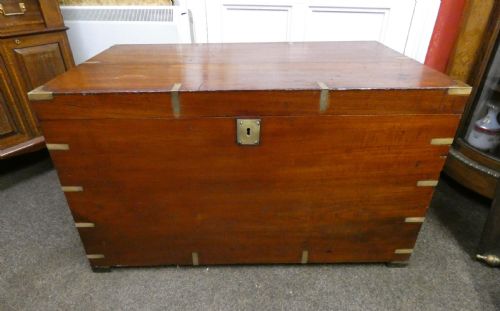
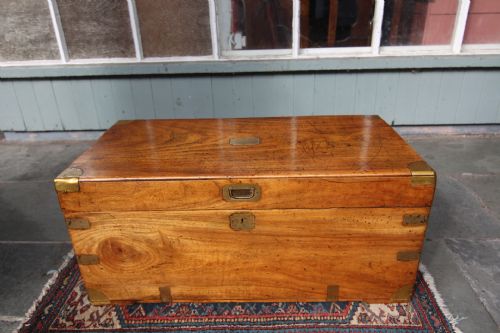
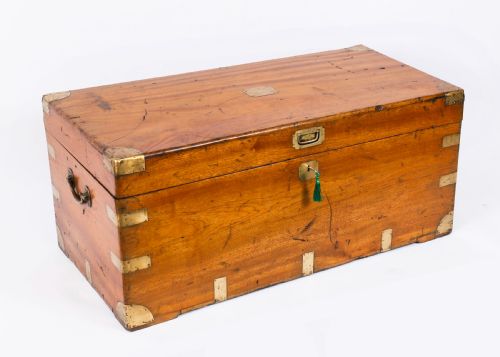
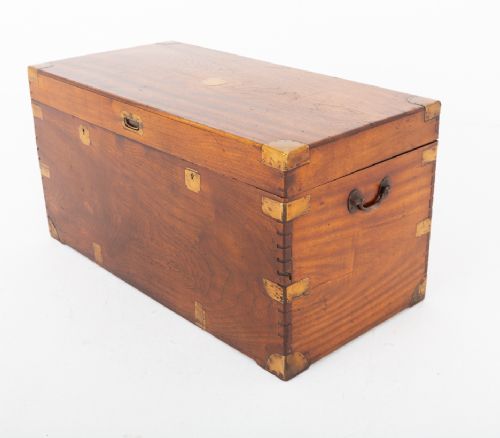
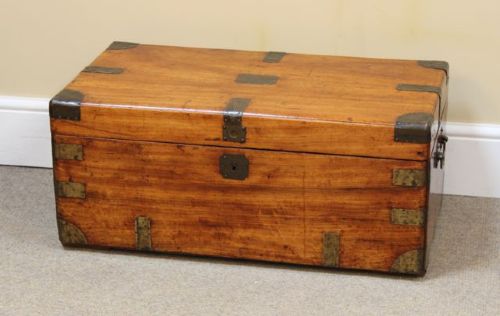
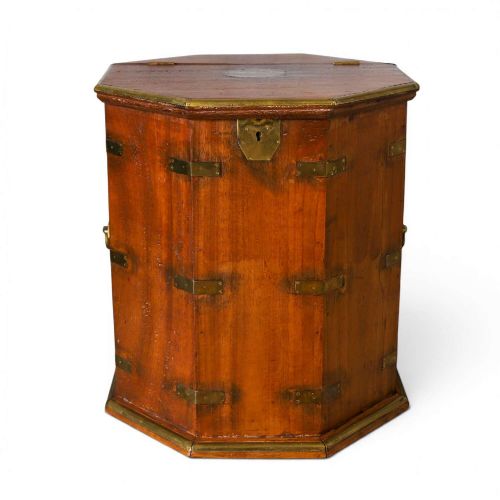
The version most frequently met on this page is the camphor wood trunk, typically secured with brass bindings and recessed carrying handles. Such trunks were designed to withstand long sea voyages and overland journeys while protecting uniforms and documents.
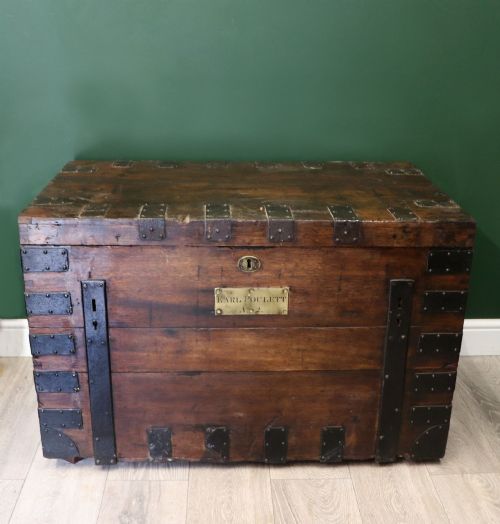
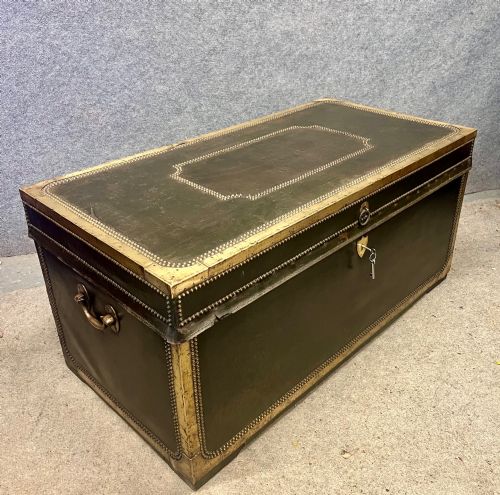
Beyond camphor wood, surviving examples manifest in teak, oak, padouk, and leather-covered wood. Their modular construction and reinforced corners reflect the demands of colonial service and expeditionary life.
How they were made
Makers utilised dense timbers like camphor wood, teak, and padouk to resist humidity and insect damage during transport. These woods were joined securely and reinforced to endure rough handling in transit.
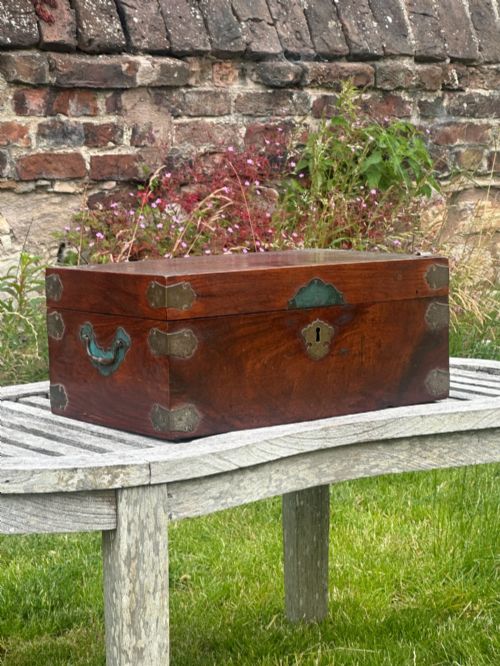
Brass corners, straps, and binding plates were screwed or riveted to the exterior edges to absorb impacts. Recessed drop handles allowed the trunks to be packed tightly into wagons or ships without protruding hardware catching on obstacles.
19th Century Campaign Trunk Retail Price Guide 2026
Typical asking prices for 19th century campaign trunk among the pieces listed under this phrase on Sellingantiques today, from the lower quarter to the upper quarter. They describe what is for sale here now, not the wider market.
The inventory spans the Georgian, Regency, and Victorian periods.
What varies in quality
The standard of materials and the integrity of the original hardware set examples apart. Trunks featuring solid primary timbers, heavy brass corner brackets, and intact internal compartments demonstrate superior original commissioning.
Execution of the dovetail joints and the quality of the flush-fitting handles indicate the skill of the workshop. Pieces retaining maker stamps, original leather straps, or specialised locking mechanisms command greater interest.
Samuel Pratt·Ah Foo·Drew & Sons·Elkington·Seabrook of St.Pauls
The 19th Century Campaign Trunk Glossary
- Camphor wood
- Aromatic timber utilised for campaign furniture because its natural oils deter insects. It frequently exhibits a distinct fragrance when the interior is opened.
- Brass bound
- Furniture strengthened with brass straps and corner angles to protect edges from impact during transit. This method also reinforces the structural joints of travel chests.
- Recessed handle
- A pull handle set into a shallow cavity in the wood so it does not project beyond the surface. This design permits tight packing in cargo holds.
- Two-part chest
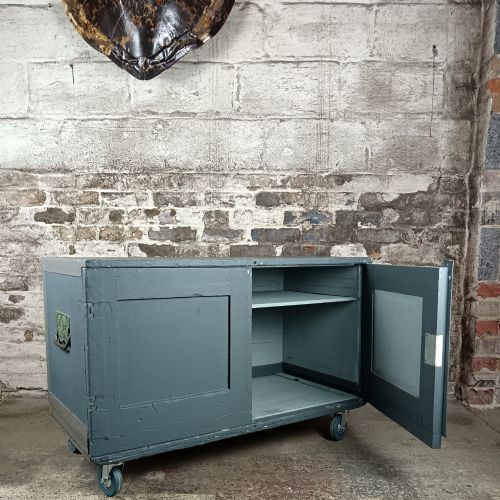
- A modular cabinet built in stacked sections for ease of handling on expeditions. Each section fastens securely to the next using brass drop-pins or side hooks.
- Deed box
- A smaller storage chest traditionally used for transporting legal documents and valuable papers. These boxes often feature fitted interior compartments and robust locks.
19th Century Campaign Trunk: Frequently Asked Questions
What were 19th century campaign trunks used for?
These trunks served as durable luggage for British military officers, diplomats, and colonial administrators travelling across the empire. They protected uniforms, papers, and personal belongings against moisture and rough handling during long voyages.
Over time, many of these utilitarian chests transitioned into domestic use as blanket boxes or coffee tables. Their modular construction made them adaptable for storing household textiles while retaining their expeditionary appearance.
How do I identify camphor wood?
Camphor wood is recognised by its characteristic aromatic scent, which remains perceptible even after many decades. The timber displays a warm grain pattern ranging from pale honey to rich golden brown tones.
Due to its insect-repellent properties, it was the preferred material for military luggage destined for tropical climates. Examining the interior surfaces often reveals the characteristic grain and natural lustre of the wood.
How should I clean a leather travel trunk?
Leather travel trunks require gentle cleaning with a soft, dry cloth to remove surface dust. Conditioning the hide periodically helps maintain flexibility and prevents drying out.
Harsh chemical cleaners and excessive moisture should be avoided to protect the original finish and metal bindings. Preserving the natural patina ensures the historical character remains intact.
How do I date a campaign trunk?
Dating a campaign trunk involves examining the construction methods, materials, and hardware styles. Early 19th-century examples often display Georgian or Regency design characteristics, whilst later Victorian pieces incorporate different locking mechanisms and brass configurations.
Maker stamps or labels inside the lid provide definitive chronological clues. Comparing the type of wood and construction joints against documented periods helps narrow down the decade of production.