
Wooden Linen Press Cabinet
A wooden linen press cabinet provides substantial architectural storage, combining upper linen compartments with lower drawer space in traditional domestic interiors.
Wooden Linen Press Cabinet
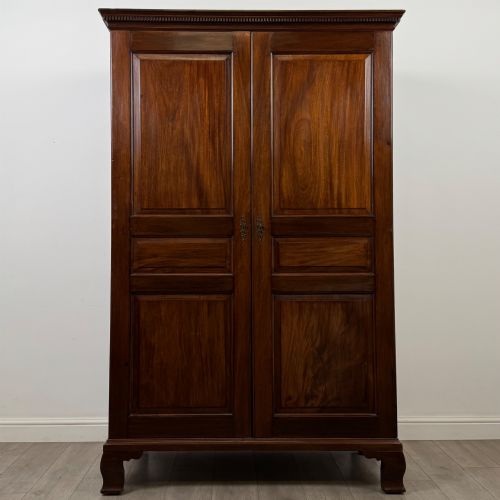
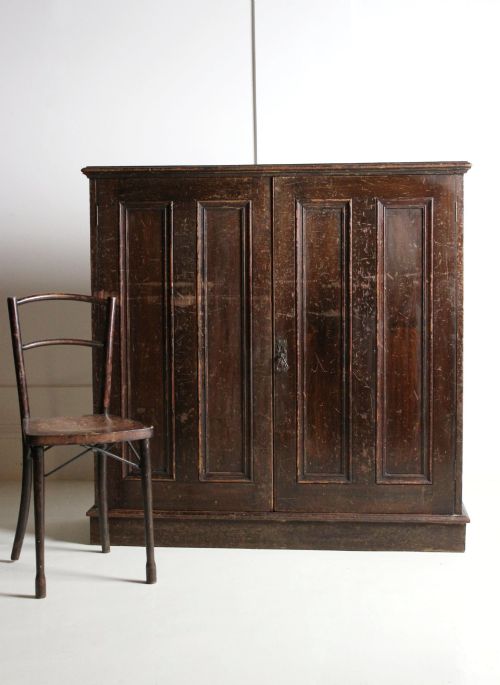
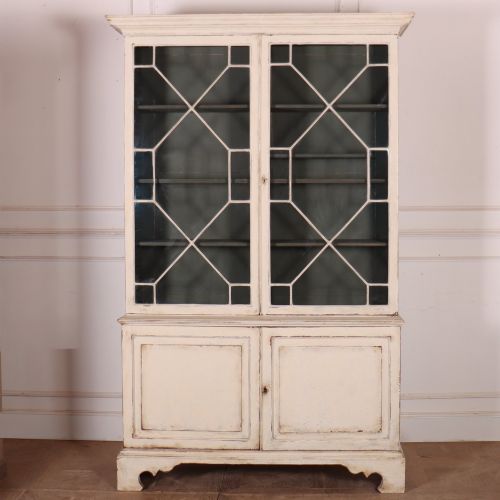
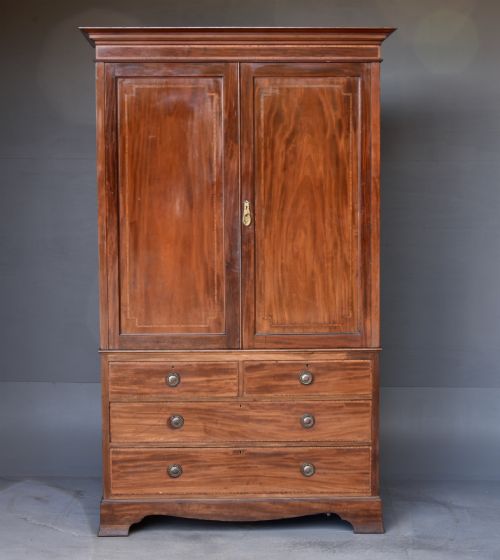
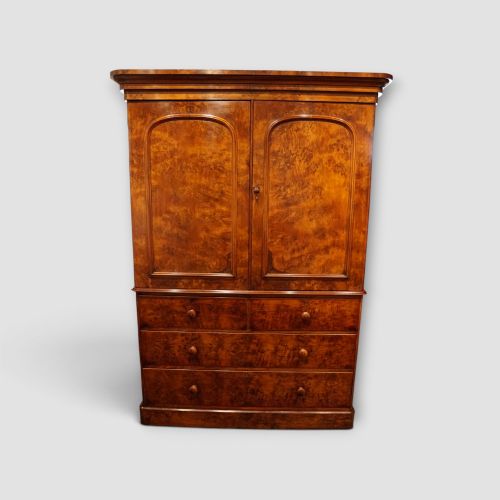
A wooden linen press cabinet is a tall storage furniture form historically designed to store folded textiles and garments. The pieces seen here span centuries of domestic utility, originating in periods from the seventeenth century through the Edwardian era and the 1930s.
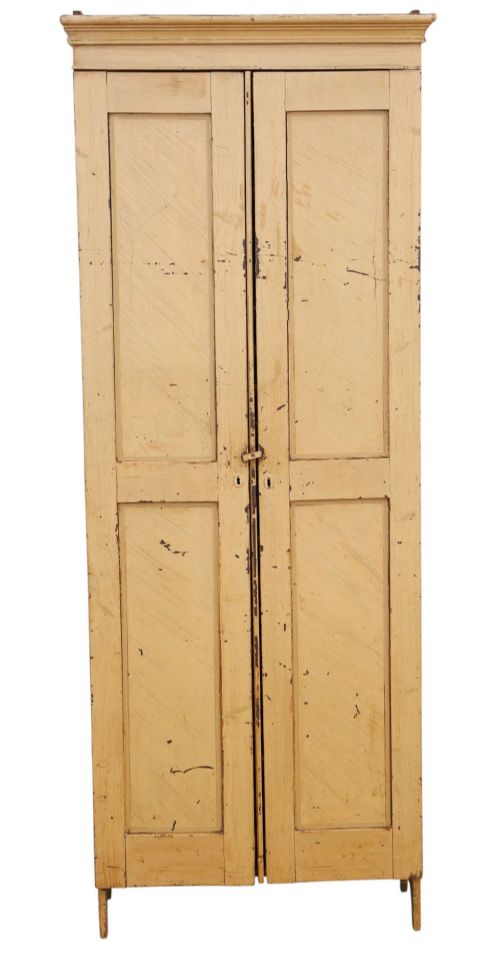
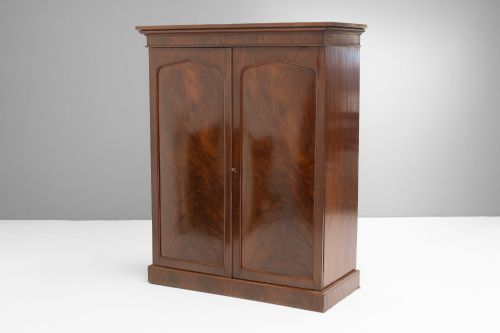
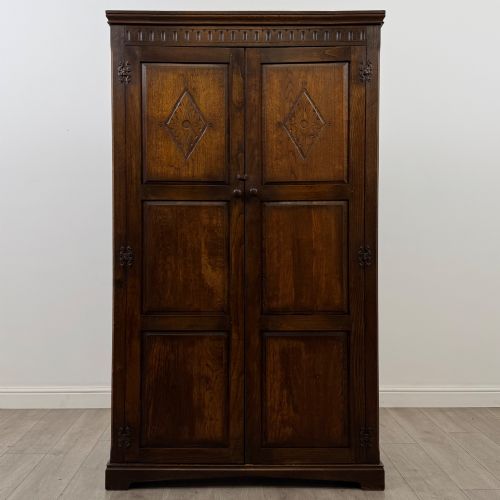
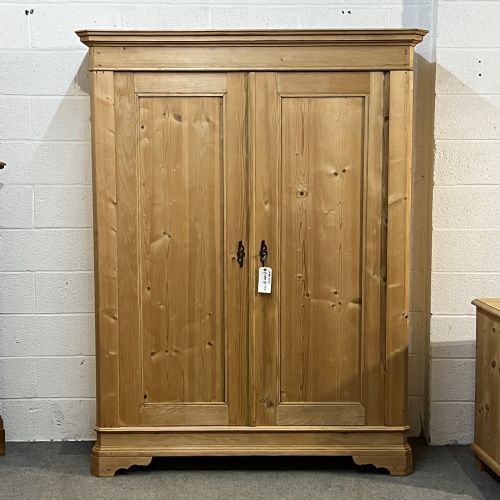
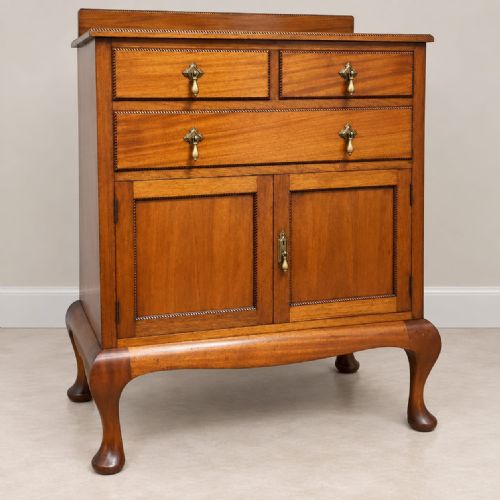
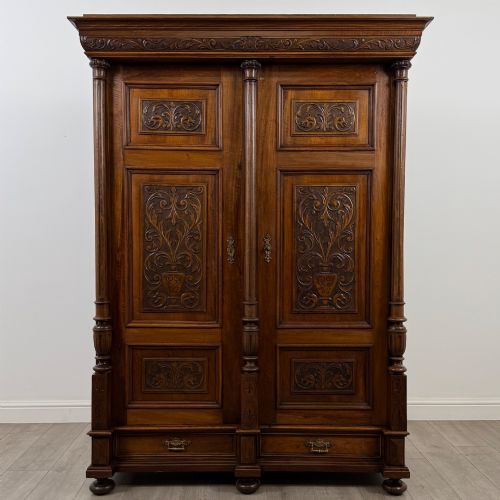
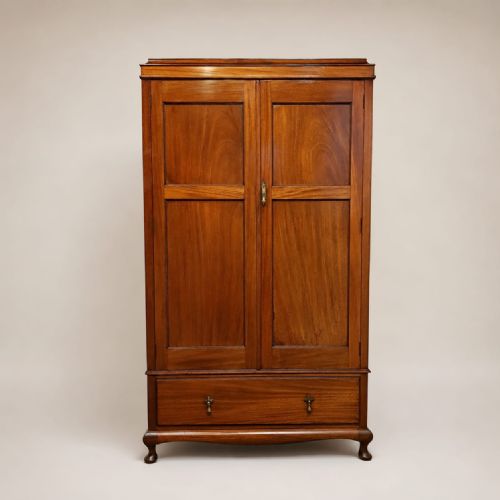
The versions most commonly met on this page are constructed from dense hardwoods like mahogany and oak, alongside painted or stripped pine. These examples range in form from Georgian breakfront presses to Victorian burr walnut cabinets and tallboy chests.
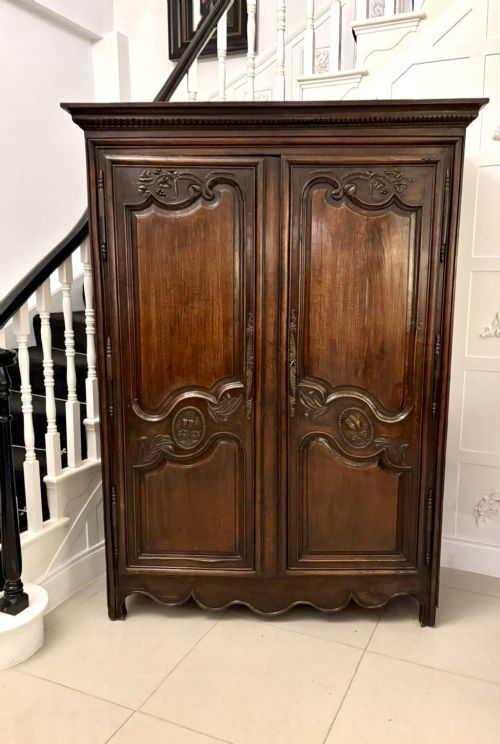
Makers utilised various regional styles, producing English George III designs, French Provincial armoires, and Italian side cabinets. Each piece reflects the storage requirements of its period, balancing upper shelving sections with lower chest configurations.
How they were made
Cabinetmakers constructed these wooden linen press cabinet pieces using solid timbers such as mahogany, oak, walnut, cherry wood, and pine. Joinery methods relied on traditional frame and panel construction to accommodate the natural movement of large wooden surfaces over time.
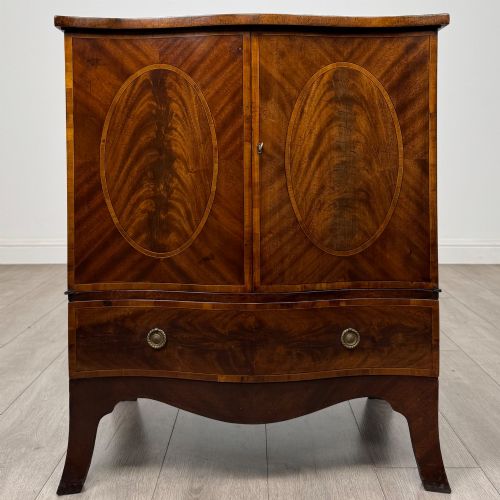
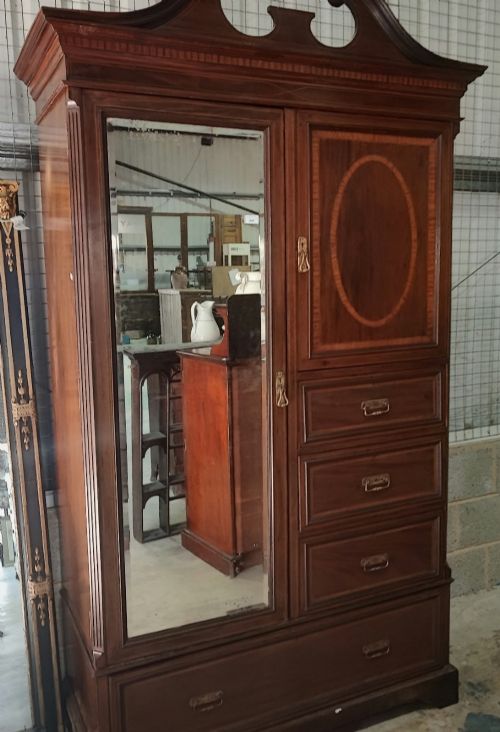
Surface decoration involved finely figured veneers, flame mahogany timbers, marquetry inlay, and polished finishes, alongside painted or lacquered treatments. Brass hardware, including handles and escutcheons, functioned as both structural support and visual punctuation on the doors and drawers.
Some nineteenth-century pine presses retain their original coat of paint, having quietly survived centuries of domestic redecoration without ever seeing a sander.
What varies in quality
The standard of a wooden linen press cabinet rests upon the selection of timber and the precision of its construction. Pieces utilising highly figured flame mahogany, burr walnut, or detailed marquetry inlay demonstrate a superior level of ambition from the cabinetmaker.
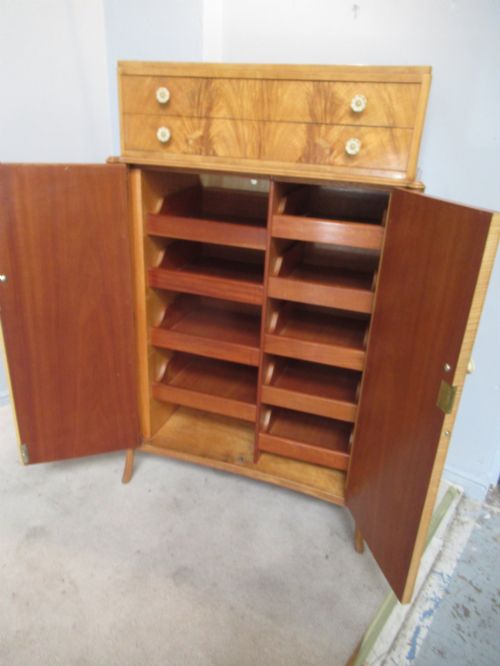
Proportion and interior organisation also separate standard examples from finer works. The integration of sliding trays behind upper panelled doors, combined with dovetailed drawer construction below, marks the difference between basic utility storage and high-status craftsmanship.
maples & co·Edwards and Roberts
The Wooden Linen Press Cabinet Glossary
- Linen press
- A tall cabinet specifically designed with upper sliding shelves for storing folded linen and lower drawers for garments. This form evolved to protect household textiles from dust and dampness.
- Tallboy
- A tall chest of drawers placed upon a second, often larger chest or base cabinet. This form maximised vertical storage capacity within domestic bedchambers.
- Breakfront
- A piece of furniture featuring a central section that projects forward from the flanking wings. This architectural arrangement creates depth and shadow across large cabinet facades.
- Marquetry
- Decorative veneer work formed by fitted pieces of various coloured woods, brass, or shell to create pictorial patterns. Artisans applied this technique to enrich the exterior surfaces of high-status furniture.
- Compactum
- A fitted wardrobe designed to maximise internal storage by incorporating hanging space, shelves, and drawers within a single unified carcass.
Wooden Linen Press Cabinet: Frequently Asked Questions
What is a wooden linen press cabinet?
A wooden linen press cabinet is a tall storage piece featuring upper doors that conceal sliding shelves or trays, paired with a chest of drawers in the lower section. These pieces were traditionally built to store flat textiles and household linens.
Over time, many of these cabinets were adapted for use as general wardrobes by replacing internal sliding trays with hanging rails. They remain practical architectural items for bedroom and hallway storage.
How do I date a wooden linen press cabinet?
Dating relies on identifying timber choices, construction techniques, and stylistic markers associated with specific periods. Eighteenth-century examples often feature solid mahogany or oak with formal Georgian proportions, while Victorian versions frequently display burr walnut veneers or flame mahogany.
Later Edwardian and 1930s pieces introduce lighter timbers, simpler lines, or revival styles such as Sheraton revival. Examining drawer linings, backboards, and internal hardware provides further clues to the exact manufacturing era.
Where were linen press cabinets used?
These cabinets were primarily placed in bedrooms, dressing rooms, and large landing spaces within country houses and town residences. Their substantial height and capacity made them central storage fixtures for domestic textiles.
Today, they function effectively in contemporary homes as linen stores, wardrobe alternatives, or general storage cupboards in hallways and living spaces.
What is the difference between a wardrobe and a press?
A traditional wardrobe is primarily designed with vertical hanging space for garments on hangers. A linen press incorporates horizontal sliding shelves or trays in the upper section, intended for folded textiles.
While many presses have been converted to include hanging space, their exterior proportions typically remain distinct with a prominent upper cabinet and a lower drawer base.