
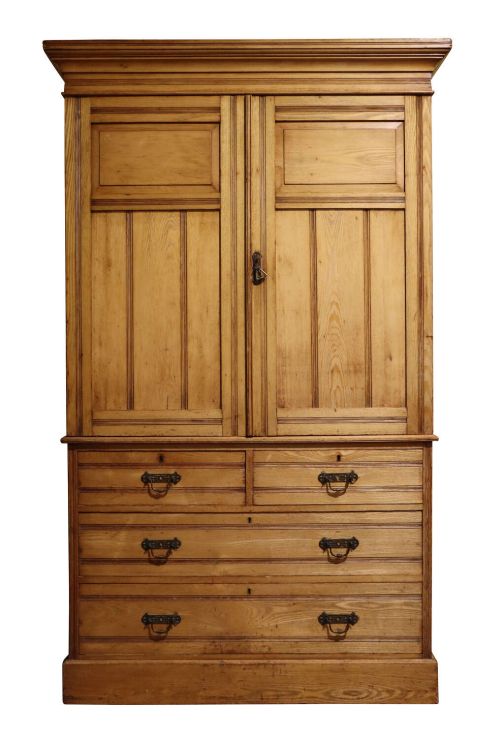
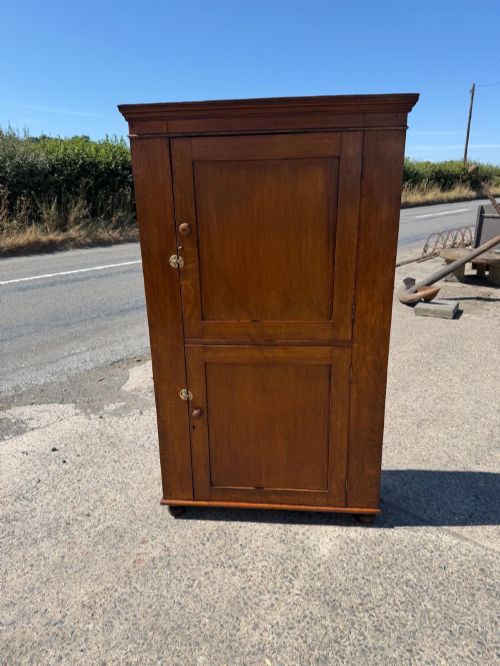
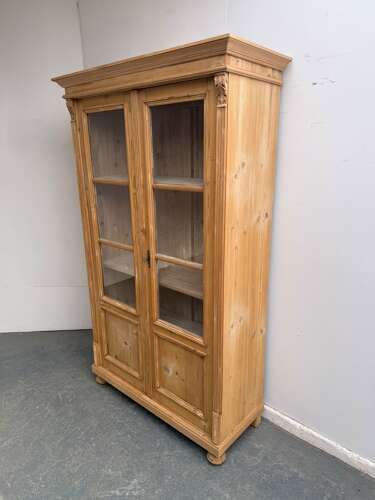
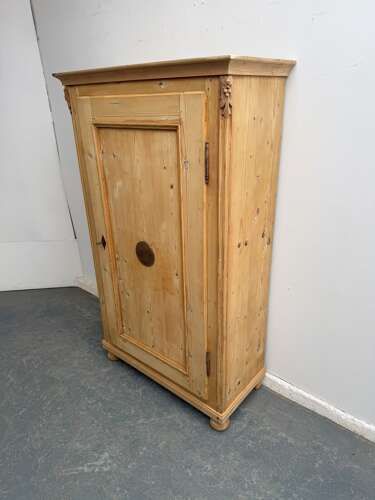
Victorian Armoire Cabinet
A victorian armoire cabinet provides substantial period storage, combining timber construction with practical hanging space or shelving.
Victorian Armoire Cabinet
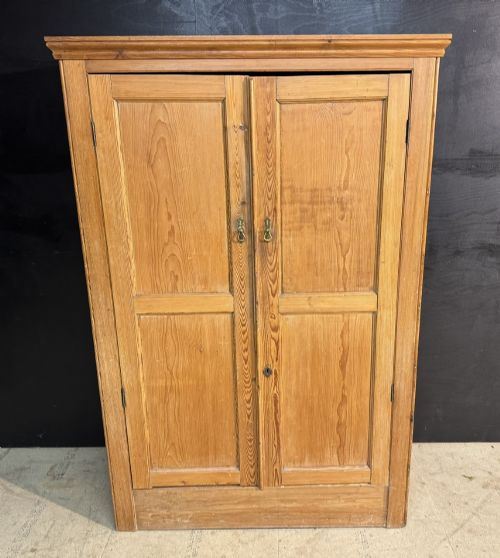
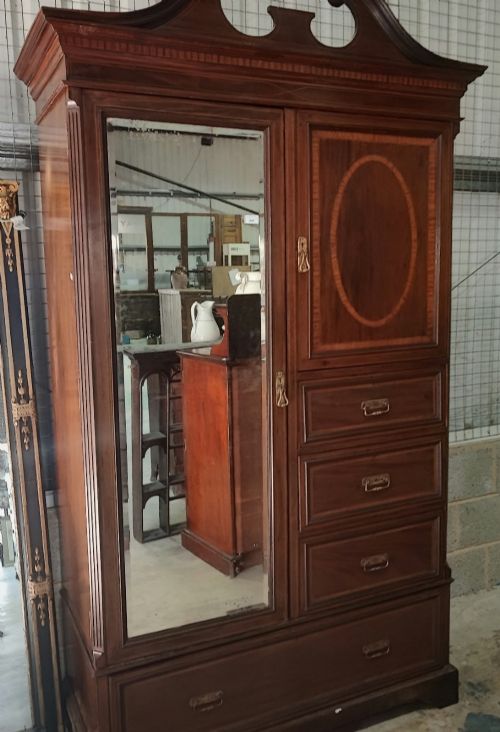
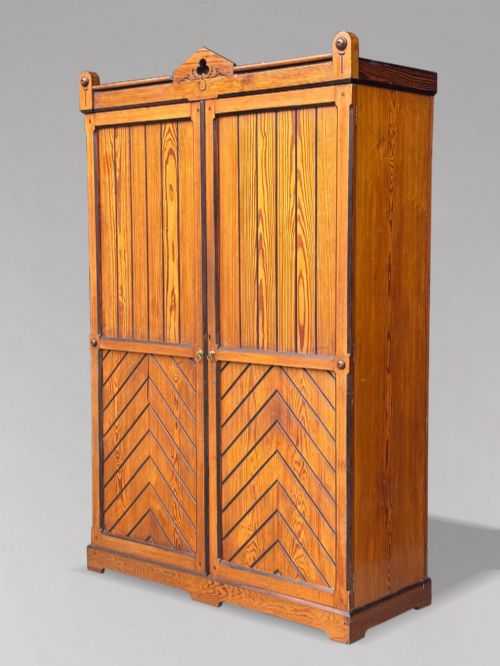
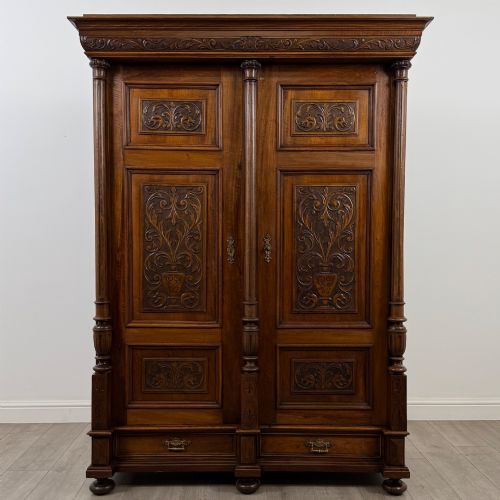
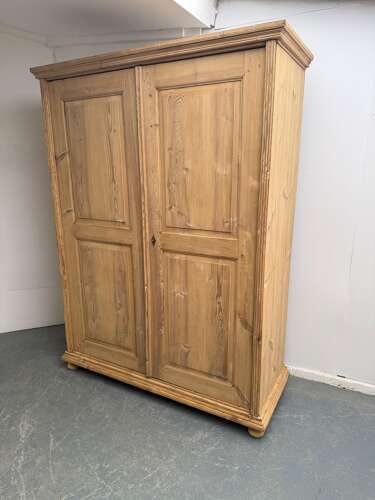
A victorian armoire cabinet encompasses large wardrobes, linen presses, and storage cupboards produced primarily during the nineteenth century and the Edwardian period. Buyers search for these pieces to obtain deep hanging capacity or internal shelving housed within classical timber carcases. The selection ranges from robust pine country furniture to formal walnut and mahogany designs.
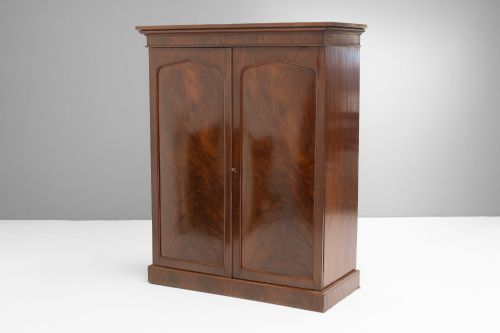
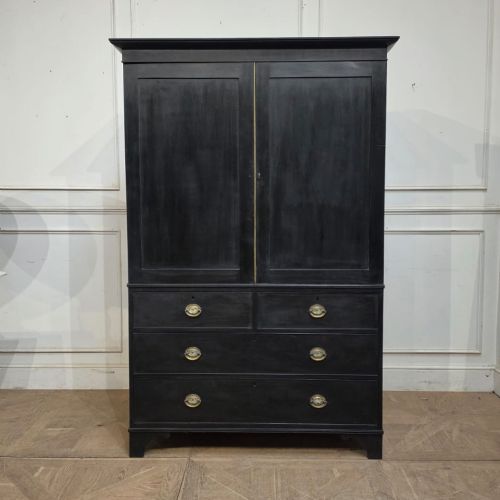
Examples on this page span styles from Victorian and Edwardian to Arts and Crafts and French Provincial variations. Common formats include two-door wardrobes, compactum configurations, and tall housekeepers cupboards. Most pieces date from the mid-nineteenth century onwards, reflecting domestic storage needs of the period.
Materials and Construction
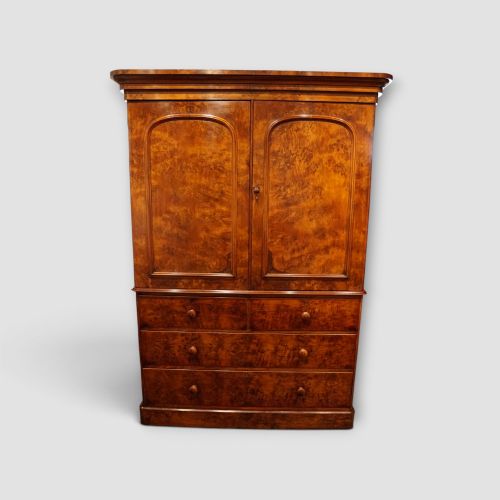
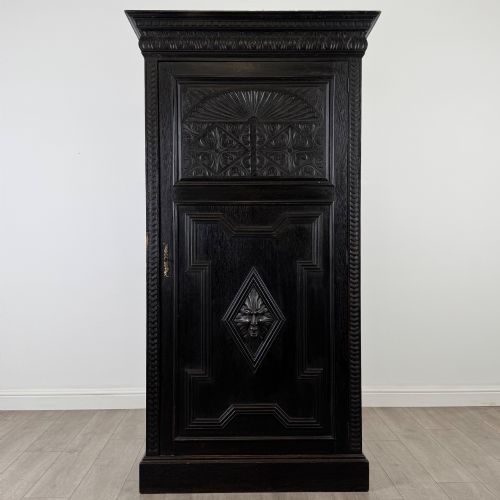
Makers utilised native and imported hardwoods including mahogany, walnut, oak, and ash alongside versatile softwoods like pine. Surfaces often display original painted finishes, scumble glaze, or wax polishing over natural grain. Finer examples incorporate burr walnut veneers, decorative brass hardware, and carved detailing.
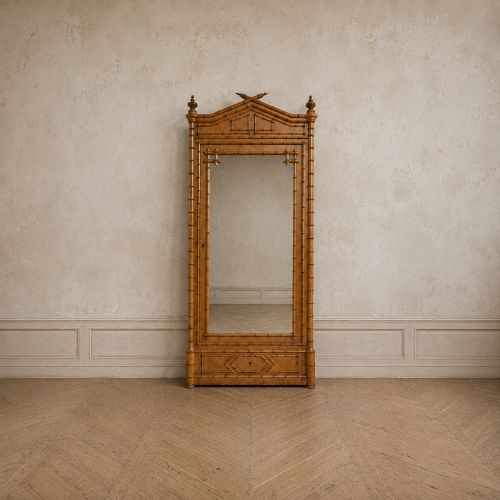
Structural methods involve traditional joinery, panelled doors, and knockdown frames designed for domestic installation. Cornices, blind fretwork, and plinths including bun feet complete the architectural proportions of the carcase. Glass mirrors and iron fittings appear on later nineteenth-century and turn-of-the-century variants.
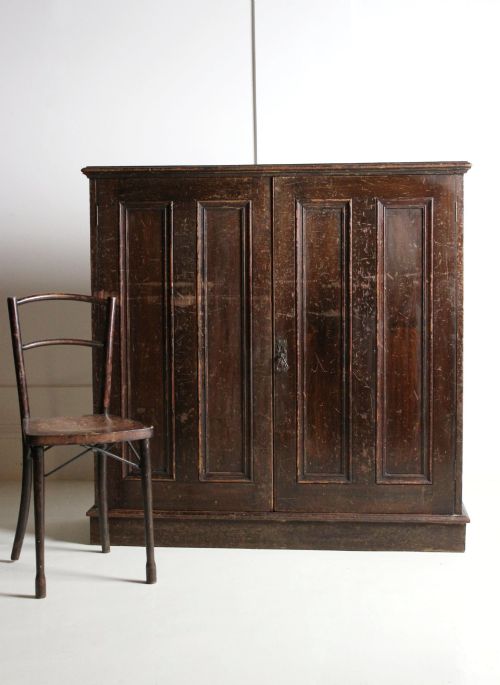
Several pine cupboards arrive bearing decades of country kitchen stories waiting beneath layers of old wax and paint.
Design and Execution
Quality rests on the selection of timber and the precision of the cabinetmaker's joinery. Superior examples demonstrate well-figured veneers, balanced proportions, and integrated architectural mouldings rather than plain panel construction. Original surfaces, whether polished mahogany or untouched country paint, retain greater integrity than stripped or heavily altered pieces.
The sophistication of internal fittings distinguishes standard utility cupboards from high-end commissions. Fitted drawers, sliding linen trays, and maker signatures elevate a piece above basic workshop production. Carved ornamentation and secondary woods like oak or ash indicate higher workshop standards.
maples & co·Edwards and Roberts·Maple & Co
The Victorian Armoire Cabinet Glossary
- Linen Press
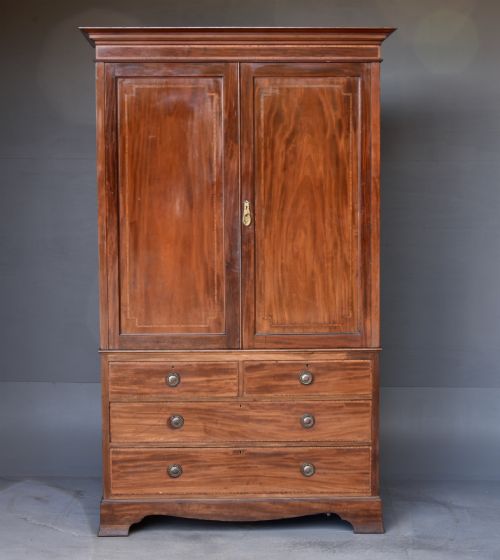
- A tall storage cupboard featuring upper sliding trays or shelves above a chest of base drawers. This form was traditionally used for storing folded household linen before hanging wardrobes became standard.
- Compactum
- A multi-compartment wardrobe combining hanging space, drawers, and shelving within a single unified carcase. These fitted interiors offer efficient storage division.
- Cornice
- The decorative horizontal moulding crowning the top of a cabinet or wardrobe. Elaborate versions may feature blind fretwork or architectural dentil work.
- Scumble Paint
- A decorative paint technique applied to imitate more expensive timber grain or to create a mottled surface texture. It appears frequently on nineteenth-century vernacular furniture.
- Fielded Panel
- A raised central wooden panel set within a rebated frame on cabinet doors. This construction method accommodates seasonal wood movement while adding depth.
Victorian Armoire Cabinet: Frequently Asked Questions
What is the difference between an armoire and a wardrobe?
Armoire traditionally refers to a large ornamental cupboard of continental origin, whereas wardrobe denotes British hanging furniture.
In practical terms on this page, both terms describe large timber storage units with internal hanging space or shelves.
Are these cabinets easy to dismantle?
Many nineteenth-century wardrobes and cupboards utilise knockdown construction with pegged or bolted joints.
This engineering allowed large pieces of furniture to be transported up narrow staircases and assembled in bedrooms.
How do I care for a waxed pine finish?
Apply a traditional beeswax polish sparingly and buff with a soft cloth to maintain the surface sheen.
Avoid placing timber furniture near direct heat sources to prevent shrinkage or splitting in the old wood.
What distinguishes a linen press from a standard cupboard?
A linen press specifically contains sliding internal trays behind the upper doors, paired with drawers below.
Standard cupboards typically offer open hanging space or fixed shelving without the traditional sliding linen slides.