

Wooden Fireside Seat
A wooden fireside seat brings warmth and grounded character to a room, offering sturdy domestic comfort built to last centuries.
Wooden Fireside Seat
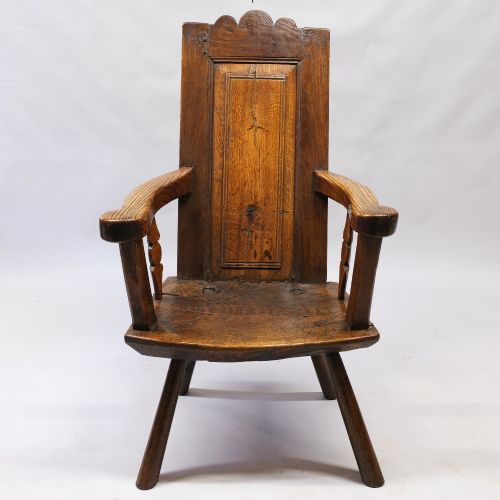
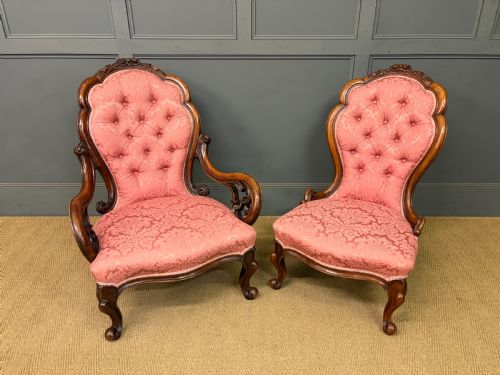
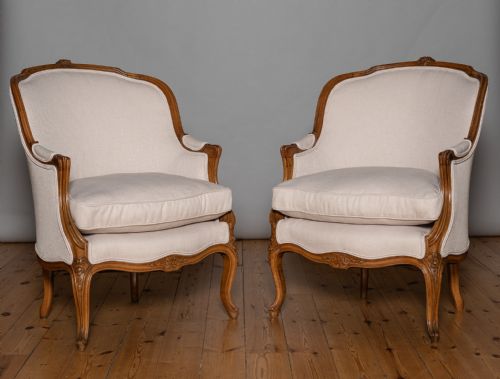
A wooden fireside seat encompasses regional seating designed for warmth and utility near the hearth, ranging from humble stools to high-backed settles and Windsor armchairs. Buyers searching for a wooden fireside seat will encounter sturdy country furniture shaped by local tradition across the eighteenth and nineteenth centuries.
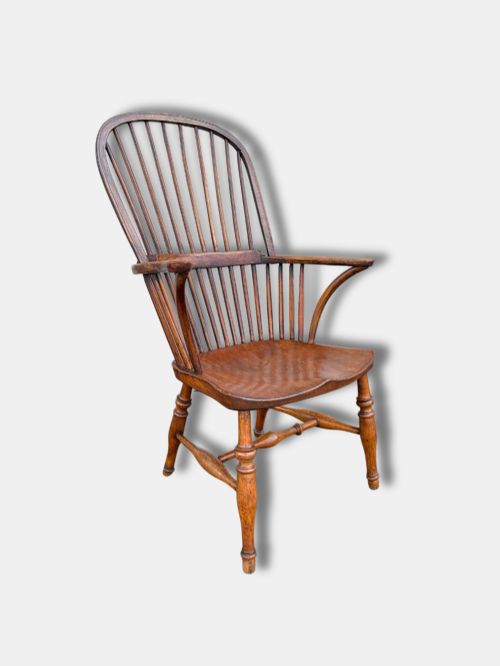
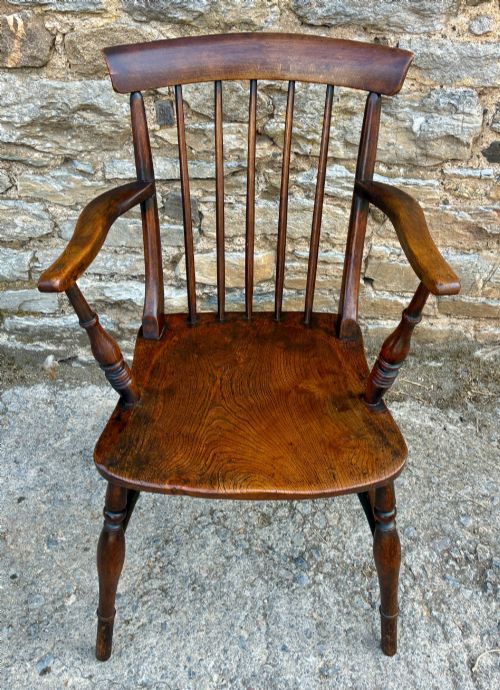
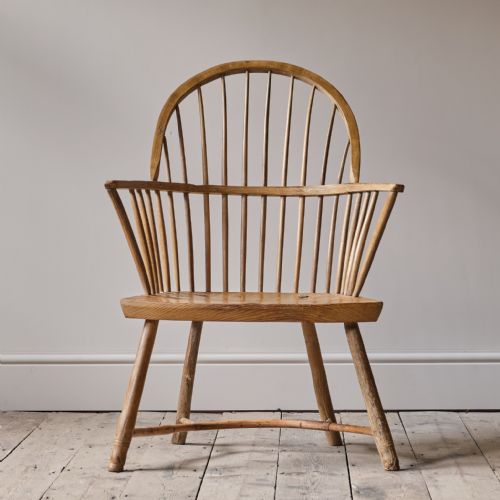
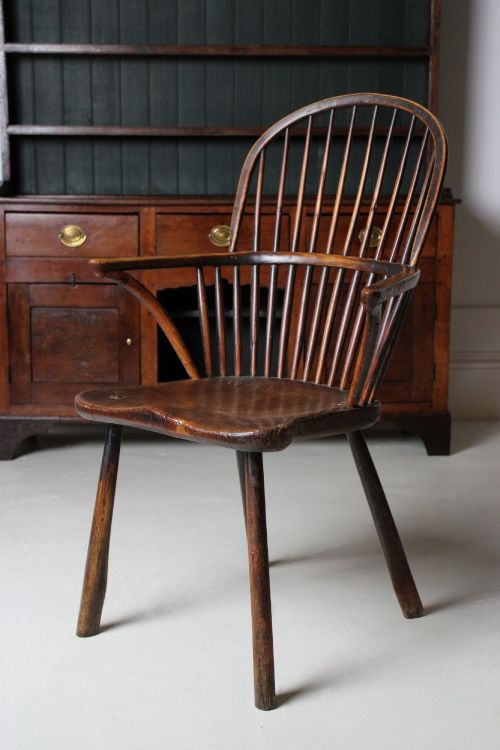
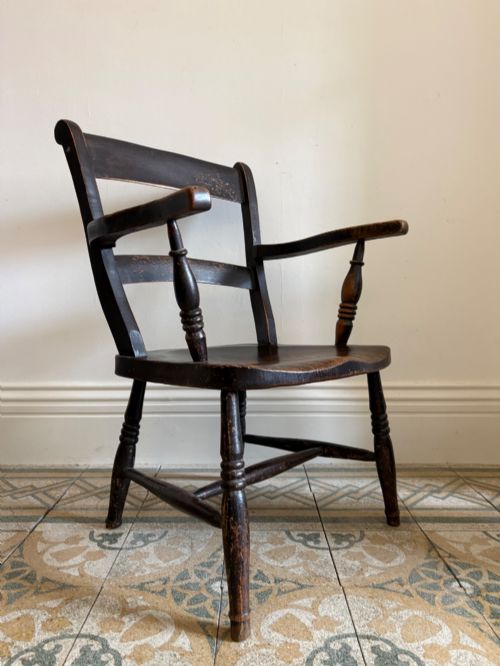
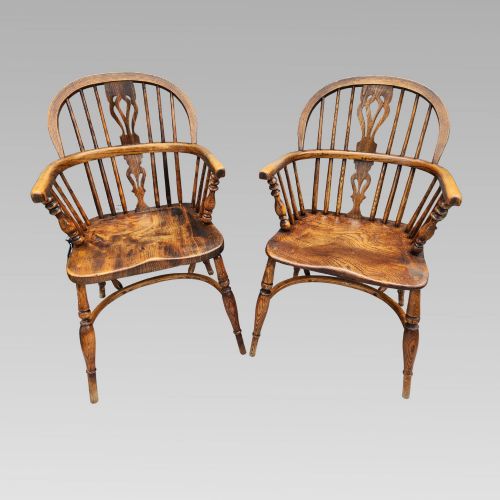
The most frequent form on this page is the Windsor armchair, built with a solid timber seat holding turned spindles, bentwood hoops, and stick backs. These domestic chairs often pair ash or beech frameworks with generous elm seats shaped for long hours by the fire.
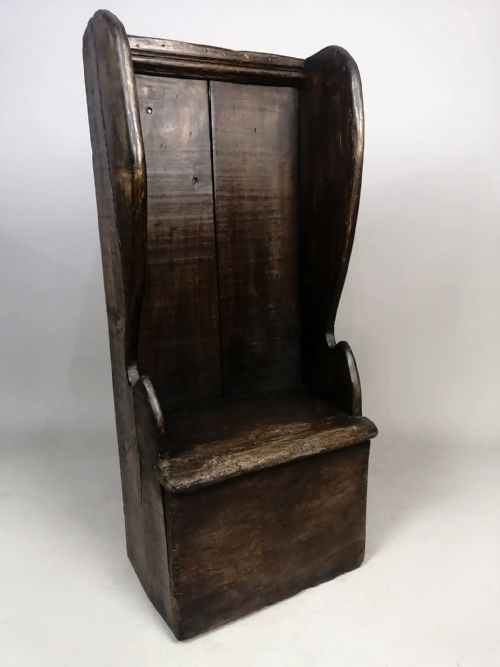
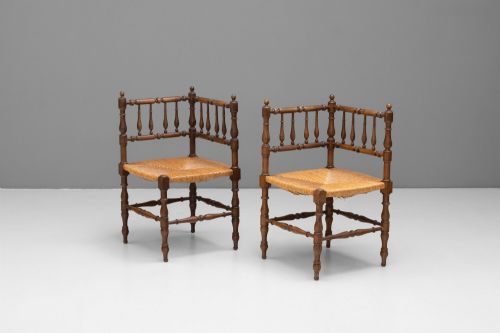
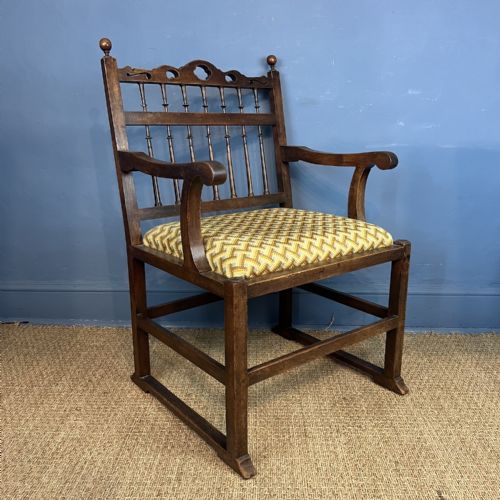
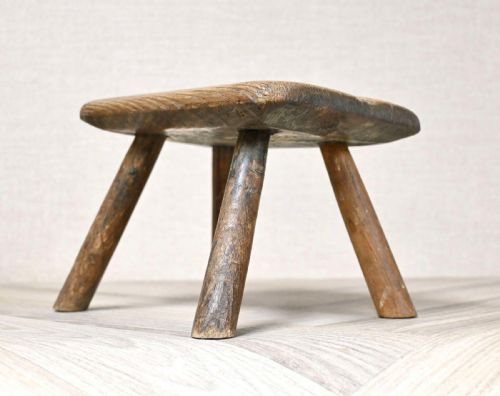
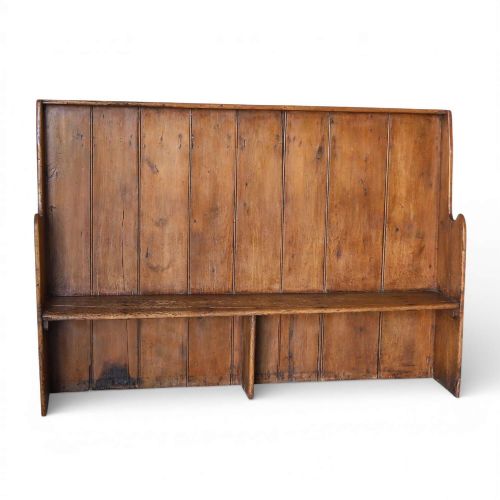
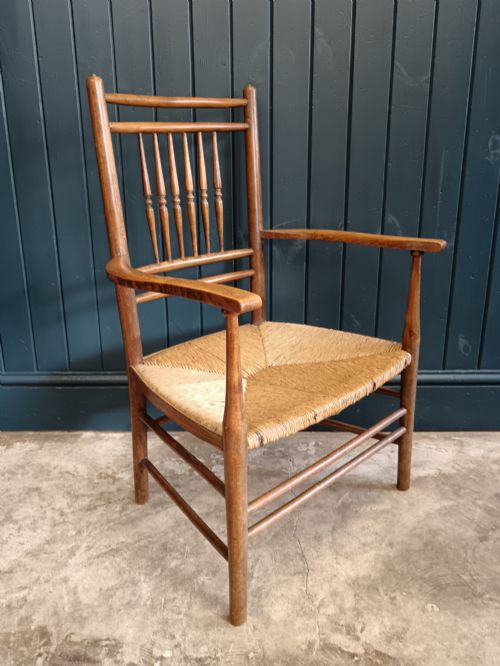
Alongside armchairs, the selection includes low hearth stools, rocking chairs, and high-backed settles that kept drafts away from the body. These functional pieces derive from English country, vernacular, and Arts and Crafts traditions, prioritising practical strength over ornamental excess.
How they were made
Wood selection relied on the specific strengths of native timber, combining tough ash or beech for turned legs and spindles with thick, stable elm for carved saddle seats. Cabinetmakers and bodgers worked green timber, allowing parts to shrink and lock tightly together as the wood dried.
Construction depended on traditional joinery such as wedged tenons and wedged mortise-and-tenon joints, ensuring frames remained rigid despite fluctuating hearth temperatures. Steam bending shaped continuous back rails and hoops, while surface finishes developed naturally through decades of daily use and waxing.
What varies in quality
Quality rests in the integrity of the original timber and the crispness of the turning, particularly in the spindles, arms, and legs of Windsor forms. Examples retaining deep, unblemished surface patination and minimal structural replacement command greater respect among collectors.
Proportion and comfort distinguish superior pieces, as seen in the balanced curve of a comb back or the generous sweep of a carved elm seat. Well-balanced seating shows harmonious scaling between the undercarriage turnings and the upper framework without awkward repairs.
The Wooden Fireside Seat Glossary
- Windsor chair
- A chair built with a solid wooden seat into which the legs and back sticks are directly inserted. This staple of vernacular seating relies on thick saddle-shaped timber for stability.
- Settle
- A high-backed wooden bench with solid sides and a storage box base designed to block cold drafts. These heavy seats anchored domestic life in large farmhouse kitchens.
- Patination
- The rich surface sheen and colour developed by wood over long periods of handling, waxing, and exposure to light. Good patination reveals the natural grain beneath decades of gentle wear.
- Bodger
- A travelling pole-lathe turner who shaped chair legs and spindles in the woods near the timber source. Their efficient output supplied local chairmakers with essential components.
- Comb back
- A Windsor chair variation where the top rail resembles the teeth of a comb, supporting vertical spindles topped by a low headboard. This regional style offered sturdy head support near the hearth.
Wooden Fireside Seat: Frequently Asked Questions
What is a wooden fireside seat used for?
These pieces provided stable, low seating designed to sit comfortably close to an open hearth while keeping drafts away from the body.
Their robust construction made them versatile additions to farmhouse kitchens, parlours, and sitting rooms for daily domestic tasks.
How do I tell different periods apart?
Earlier pieces from the seventeenth and eighteenth centuries often display heavier rustic framing, primitive comb backs, and deeper patination.
Later Victorian and Arts and Crafts examples introduce cleaner turned spindles, steam-bent hoops, and lighter framing techniques.
Which woods were commonly used?
Elm served as the standard choice for carved solid seats because its interlocking grain resisted splitting under pressure.
Ash, beech, and fruitwood provided strong, flexible material for turned legs, spindles, and bentwood back rails.
How do I care for antique timber?
Keep wooden seating away from direct heat sources and sudden temperature shifts to prevent the dry timber from cracking.
Apply traditional beeswax occasionally to nourish the grain and maintain the natural surface sheen.