
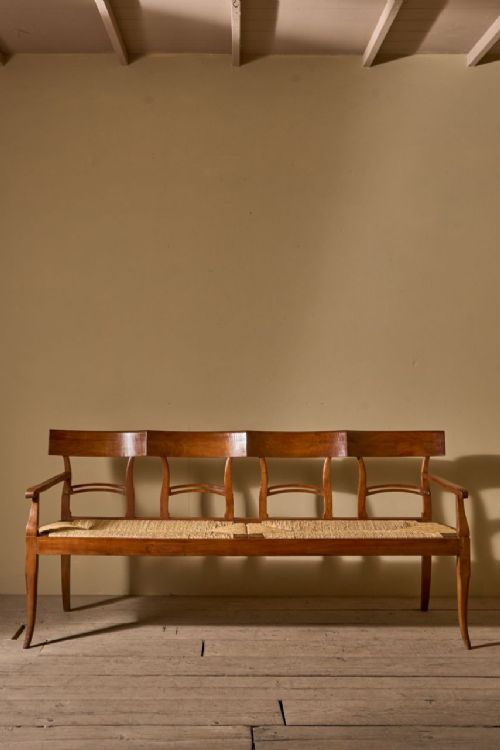
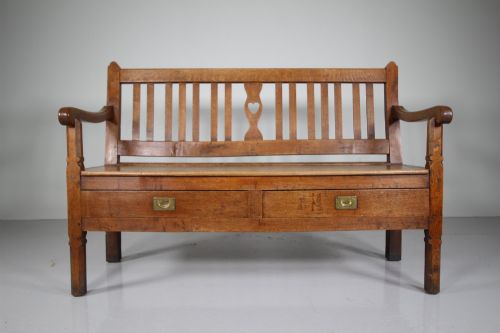

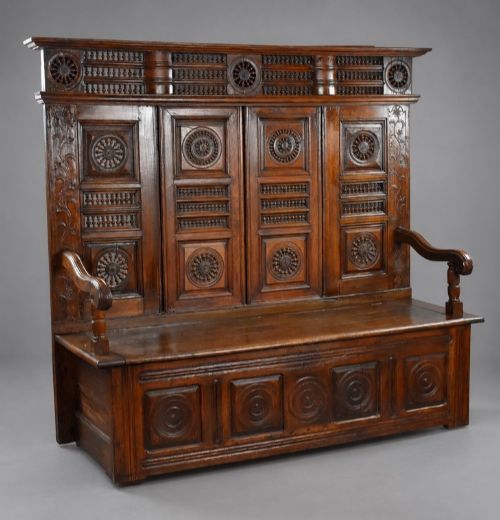
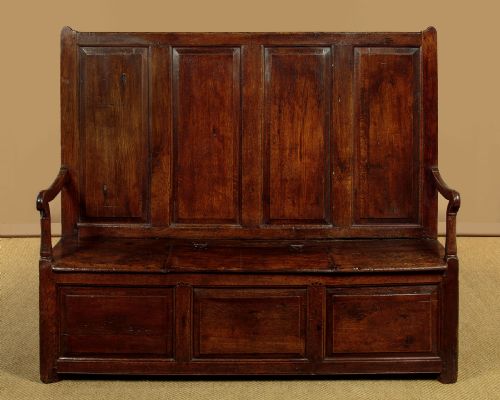
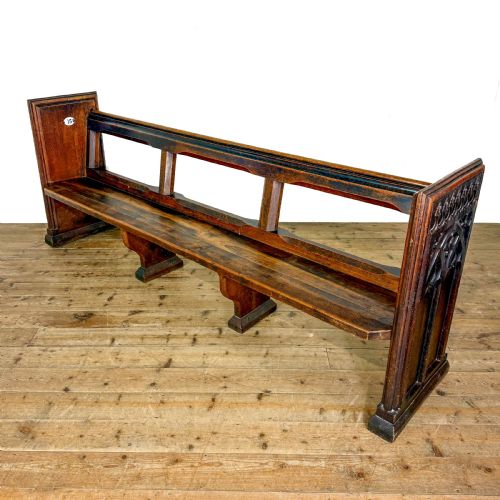
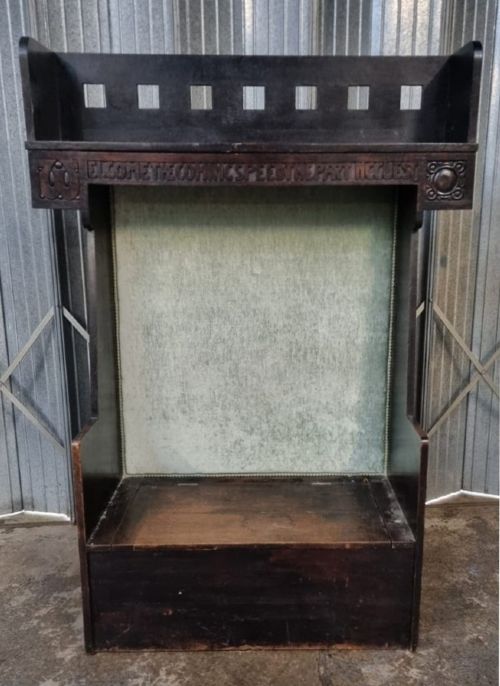

Wooden Entry Hall Bench
A wooden entry hall bench provides a practical and welcoming seating solution in a corridor, frequently appearing in oak, pine, and mahogany.
Wooden Entry Hall Bench
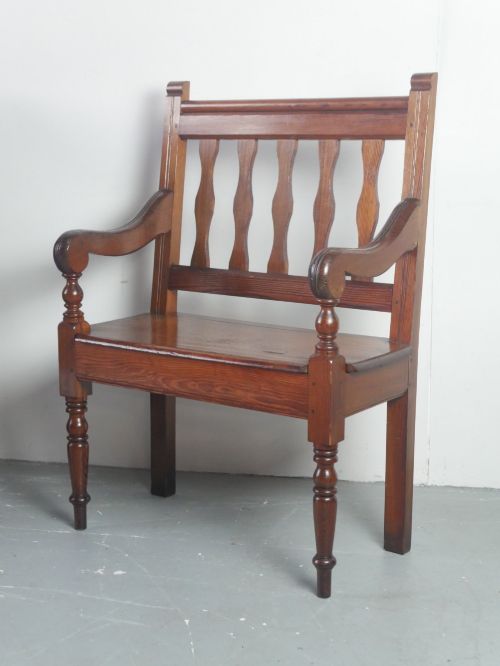
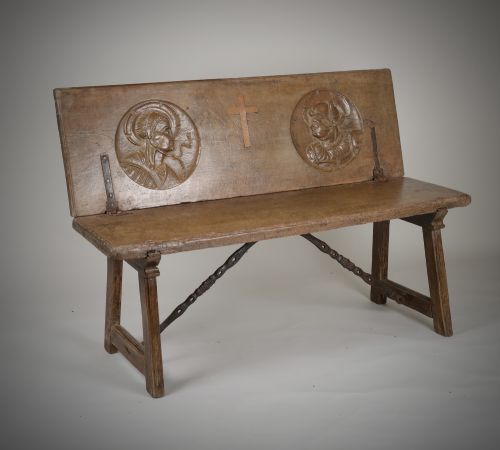
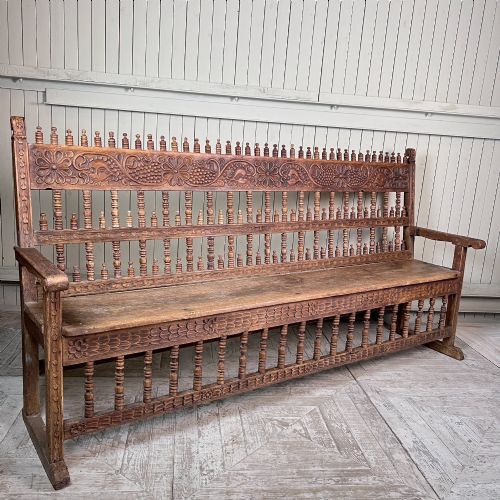
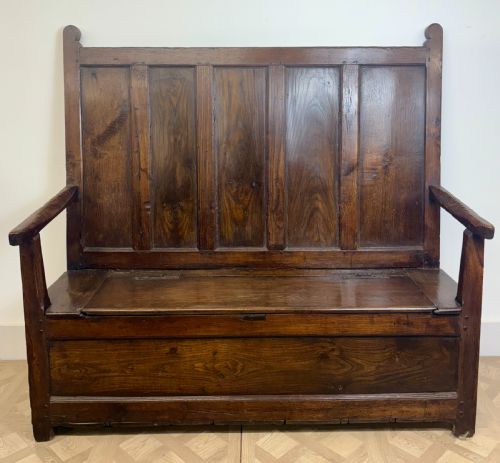
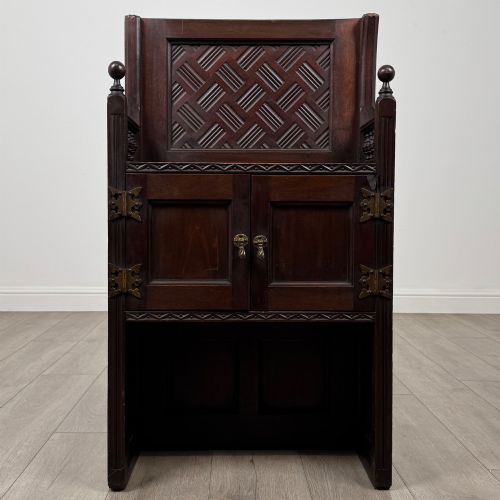
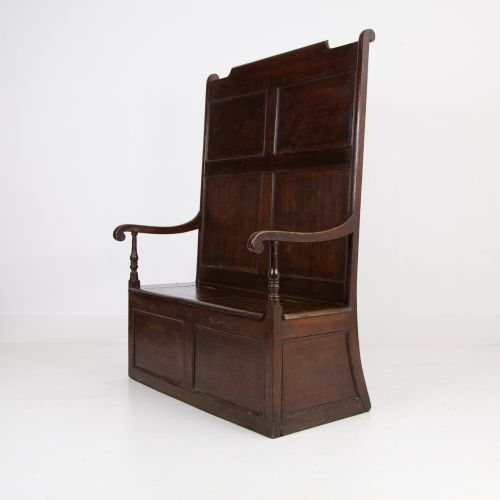
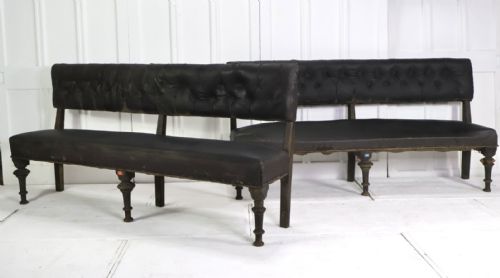
A wooden entry hall bench serves as a functional seating piece for an entranceway, corridor, or reception area. Buyers seeking a wooden entry hall bench will encounter various traditional forms including settles, box settles, window seats, and monks benches. These items date from periods such as the 18th Century, Georgian era, Victorian period, and early 20th Century.
The selection ranges from robust country house and tavern styles to refined Regency and Italian carved walnut examples. Oak and pine dominate the offerings, often featuring panelled backs, storage boxes, or rush and fabric seats. Regional variations span from Welsh and Irish country pieces to Hungarian painted pine settlers and Spanish colonial hardwoods.
How They Were Made
Cabinet makers and joiners utilised solid hardwoods like oak, walnut, mahogany, and cherrywood alongside softer pine and ash. Construction methods rely heavily on traditional joinery such as panelled framing, pegged mortise and tenon joints, and box storage compartments built to endure daily household use.
Surface treatments vary from polished wax finishes on natural timber to original or later applied paint in grey, cream, green, and blue. Additional elements such as brass fixtures, iron details, and rush or beige linen upholstery appear across different styles and periods.
Periods represented range from the 16th Century through Georgian and Victorian eras up to the 1920s.
What Varies In Quality
The standard of a wooden entry hall bench depends upon the integrity of its timber and the depth of its hand-carved detailing. Superior examples exhibit crisp panel work, harmonious proportions, and original structural components without excessive modern timber replacement.
Surface preservation significantly influences the piece, distinguishing items retaining their original painted finishes or honest waxed patination from those with heavily altered or stripped surfaces. The complexity of the design, from plain vernacular tavern benches to elaborate Gothic Revival and Arts and Crafts carvings, dictates the tier of craftsmanship.
The Wooden Entry Hall Bench Glossary
- Settle
- A wooden bench with a high back, solid arms, and often a closed base or storage box beneath the seat. This form protected sitters from draughts in historical hallways.
- Box Settle
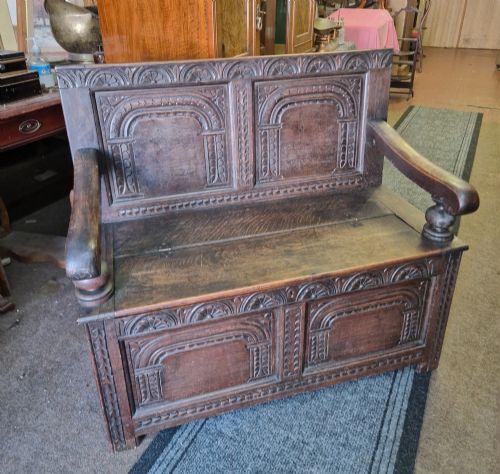
- A variant of the settle featuring a hinged seat lifting to reveal a compartment for storing household items. These dual-purpose pieces maximised space in traditional domestic interiors.
- Monks Bench
- A convertible furniture form that transforms from a settle with a high panelled back into a table by pivoting the back downwards. It represents a clever space-saving invention from earlier centuries.
- Panelling
- woodwork technique involving framed wooden sheets fitted into grooves to form decorative walls or furniture backs. This method provided structural rigidity while allowing timber to expand and contract naturally.
- Patina
- The surface sheen and colour developed by wood, metal, or paint over decades of handling, light exposure, and waxing. Collectors value an untouched patina as evidence of genuine age.
Wooden Entry Hall Bench: Frequently Asked Questions
What is a wooden entry hall bench used for?
These pieces provide a designated seat for putting on and taking off footwear in an entrance hallway.
Many styles also include integrated box storage beneath the seat for concealing everyday clutter like boots and umbrellas.
How do I identify a Georgian hall bench?
Georgian examples typically display restrained classical proportions, fielded panel construction, and clean structural lines without heavy Victorian ornamentation.
They are most commonly constructed from solid oak or mahogany with waxed patinated surfaces.
Are painted hall benches original?
Some pieces retain original historic paint finishes, particularly Hungarian and Scandinavian pine items finished in grey, cream, green, or blue.
Other pieces have been painted at a later date to suit domestic interior schemes, which is common in vernacular furniture.