
Wooden Dining Sideboard
A wooden dining sideboard provides generous storage and surface space while anchoring a traditional dining room with timber character.
Wooden Dining Sideboard
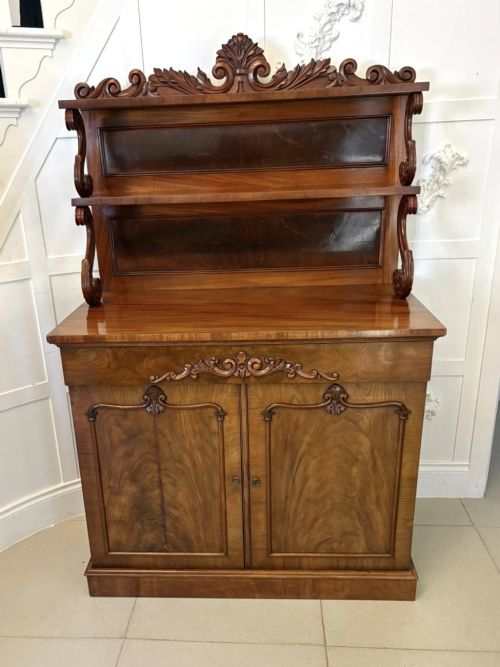
A wooden dining sideboard serves as a practical and decorative storage cabinet within the dining room, designed to hold tableware, linen and serving dishes. These pieces range from simple cupboards and servers to grand, multi-tiered chiffoniers and credenzas.
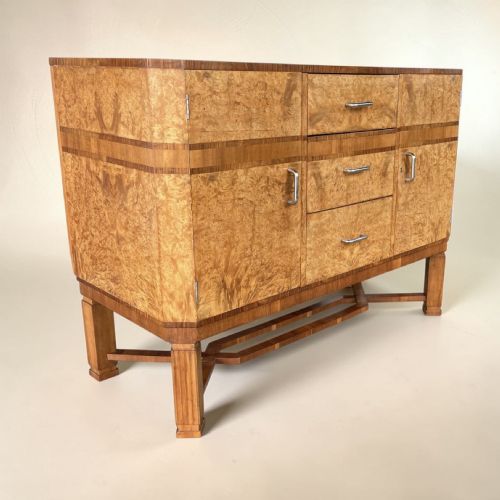
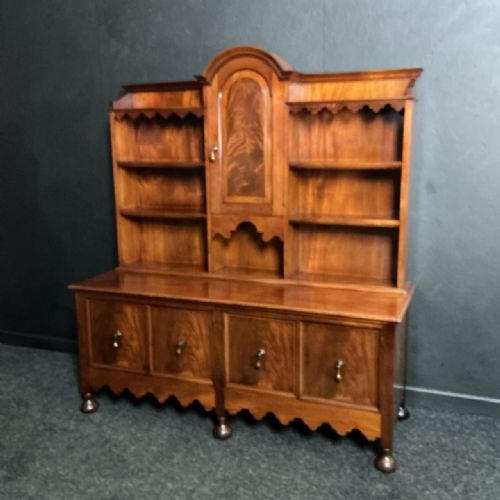
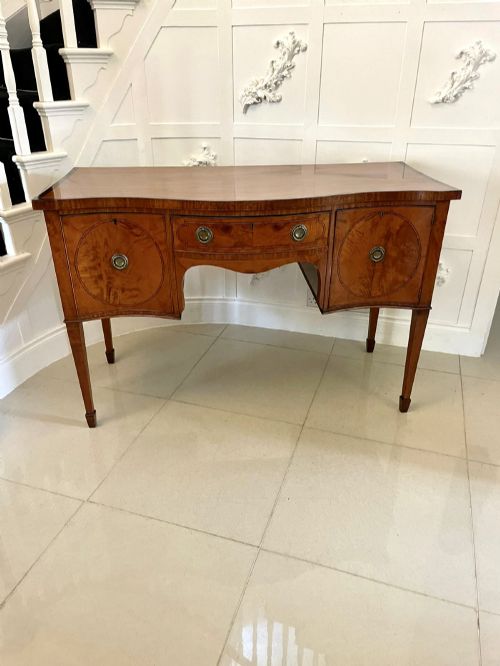
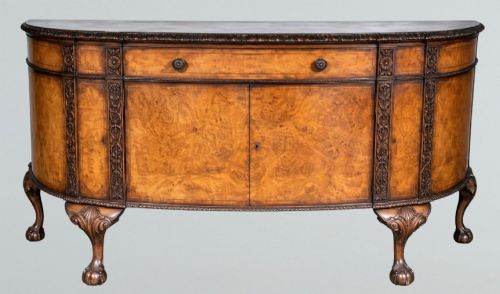
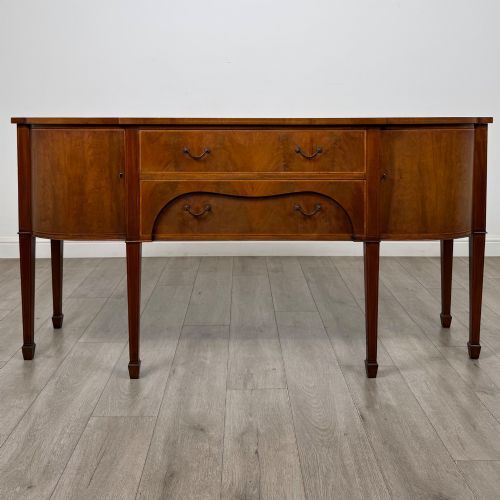
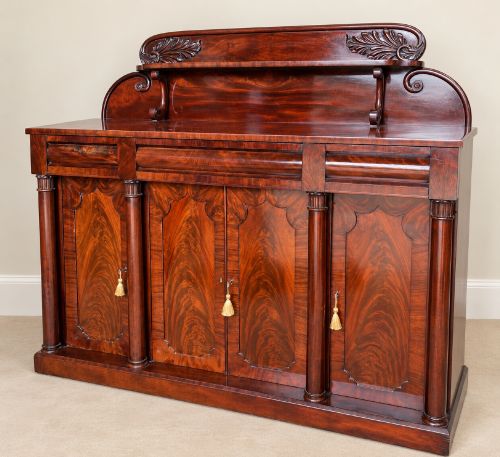
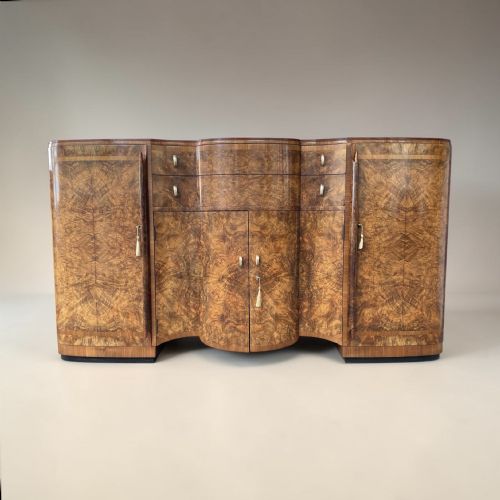
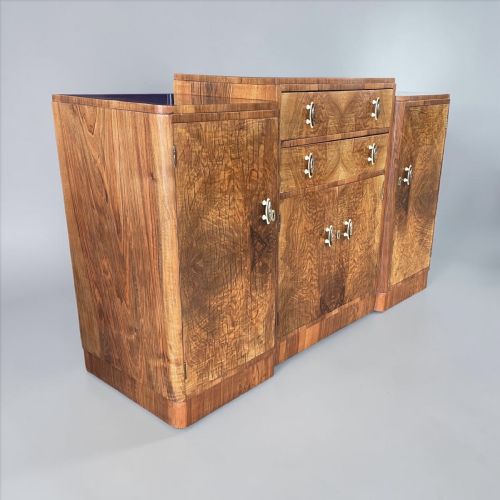
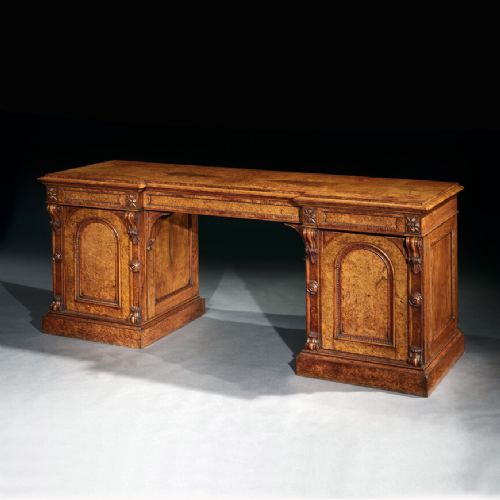
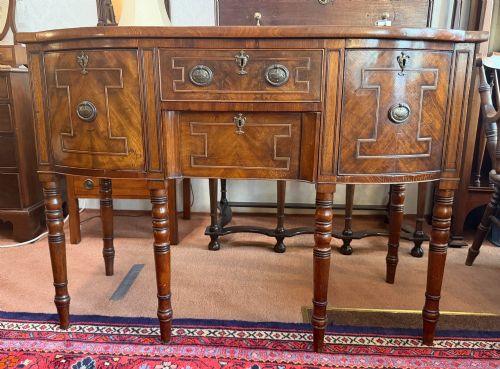
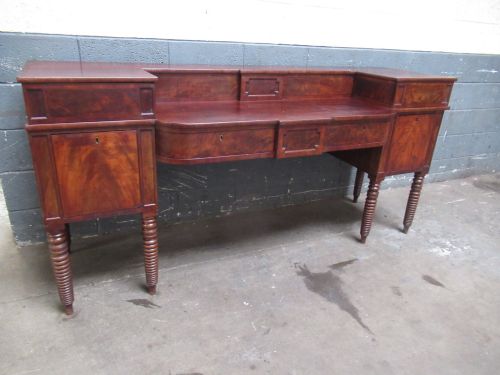
The wooden dining sideboard appears most frequently in mahogany, oak and walnut across this selection, spanning periods from the eighteenth century through the Edwardian era and into Art Deco designs. Buyers encounter formal George III serpentine shapes alongside robust Victorian carved oak and streamlined 1930s cabinetry.
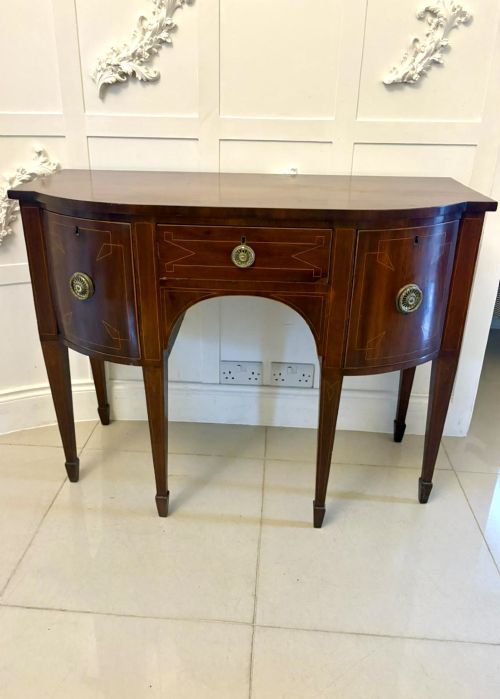
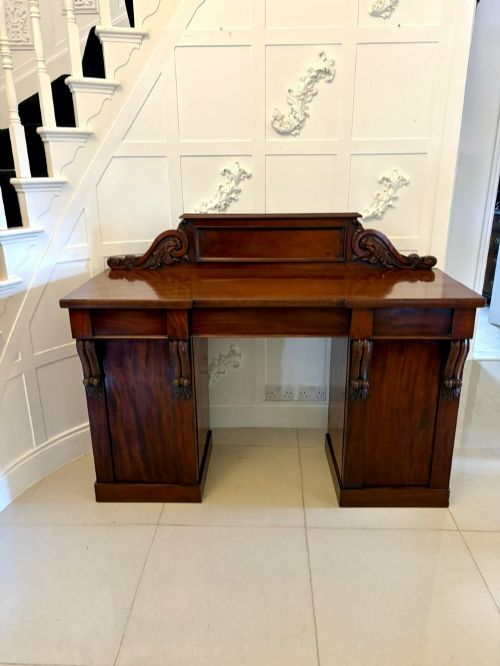
Makers and cabinetmakers adapted the form across centuries, producing Georgian bow-fronts, Regency pedestal designs and Sheraton Revival satinwood models. Each variation reflects the prevailing domestic requirements and aesthetic tastes of its specific decade.
How they were made
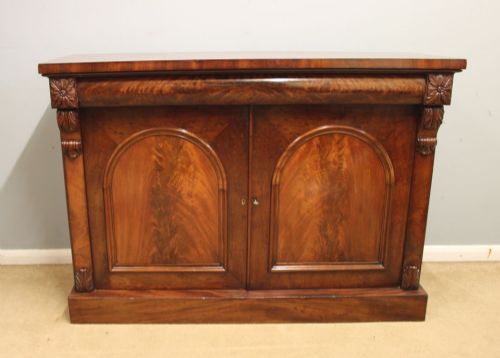
Craftsmen built these sideboards using solid native timbers and exotic imported hardwoods, frequently applying figured mahogany veneers, flame mahogany or burr walnut to create striking surface patterns. Secondary woods like pine or oak appear internally for drawer linings and carcases.
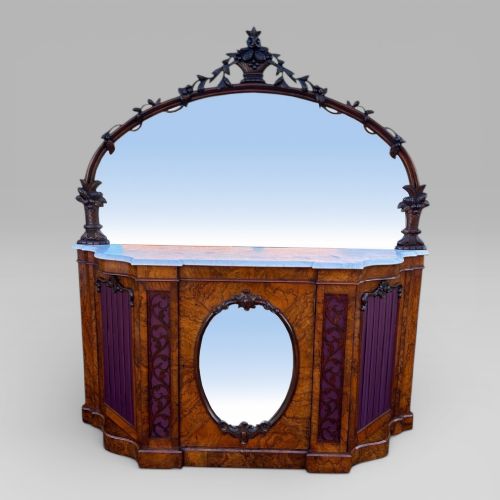
Decorative detailing relies on precision techniques such as boxwood and satinwood stringing, marquetry inlay, and carved ornamentation including mirror backs, marble tops and brass handles. Joinery methods involve traditional dovetailing for drawers and mortise and tenon frames for structural stability.
Mahogany and oak dominate the timber selections across these listings, spanning the Georgian, Victorian and Edwardian periods.
What varies in quality
The grade of timber selected for the primary visible surfaces dictates the visual impact, with highly figured mahogany, pollard oak and burr walnut marking the upper tier of production. Superior examples display carefully matched grain patterns across drawer fronts and doors rather than random timber orientation.
The finesse of hand-carved ornamentation, the inclusion of original brass hardware and the precision of inlaid stringing distinguish workshop masterpieces from standard domestic furniture. Structural integrity, evidenced by smooth drawer movement and solid backboards, underpins the lasting worth of each piece.
Maurice Adams·Gomme
The Wooden Dining Sideboard Glossary
- Bow-front
- A cabinet front curved in a convex sweep outwards. This shape softens the room's geometry and became popular during the Georgian and Regency periods.
- Chiffonier
- A low sideboard or cabinet, often featuring a shelved superstructure or mirror back. It served smaller dining spaces for holding glass and silverware.
- Serpentine
- A front shape curving inward centrally and outward at the ends, forming an S-curve. This profile demands exceptional woodworking skill.
- Inlay
- A technique of embedding pieces of contrasting wood, such as satinwood or boxwood, into the primary timber surface to form decorative patterns.
- Pedestal sideboard
- A form consisting of two separate pedestals joined by a central serving board. These grand pieces originated in the late eighteenth century.
Wooden Dining Sideboard: Frequently Asked Questions
What is a wooden dining sideboard used for?
These cabinets provide essential storage space for dining room essentials like cutlery, table linen and serving platters. The top surface also offers a convenient staging area during dinner parties.
Historically, they functioned as the central station from which servants prepared courses before serving them to the dining table.
How do I date a wooden dining sideboard?
Dating relies on identifying timber choices, construction techniques and stylistic motifs characteristic of specific periods. For instance, satinwood inlay and tapered legs point towards the late eighteenth century, while mirror backs and heavy carved oak identify the Victorian era.
Examining internal drawer construction, such as hand-cut dovetails versus machine-made joints, provides further clues to age.
Where should I place a sideboard in my dining room?
Sideboards traditionally stand against the main dining room wall, opposite or adjacent to the dining table for easy access during meals. Ensure you measure the floor space and clearance for opening doors and drawers fully.
Avoid placing antique timber cabinets in direct sunlight or against active radiators to protect the veneer and polish.
What is the difference between a sideboard and a buffet?
While terms often overlap, a buffet traditionally emphasises a lower surface designed explicitly for serving food. Sideboards generally incorporate more diverse storage cabinetry with cupboards and drawers.
Both forms share similar historical periods and timber materials across these listings.