



Wooden Desktop Book Rack
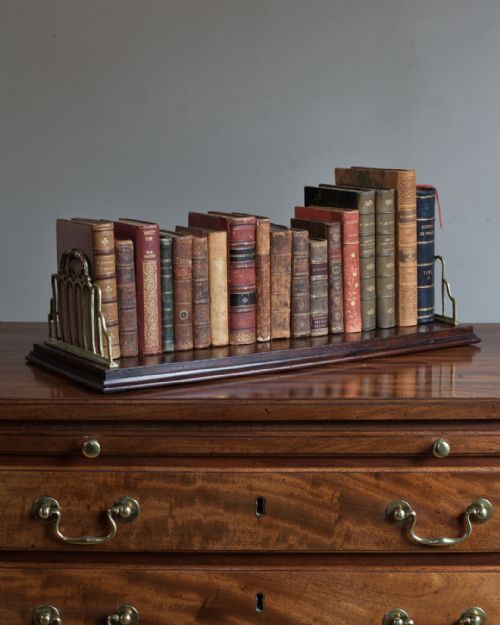
These wooden desktop book rack pieces keep reference volumes upright on a table, and a sturdy sliding mechanism lets you adjust the span to suit your favourite titles.
Wooden Desktop Book Rack
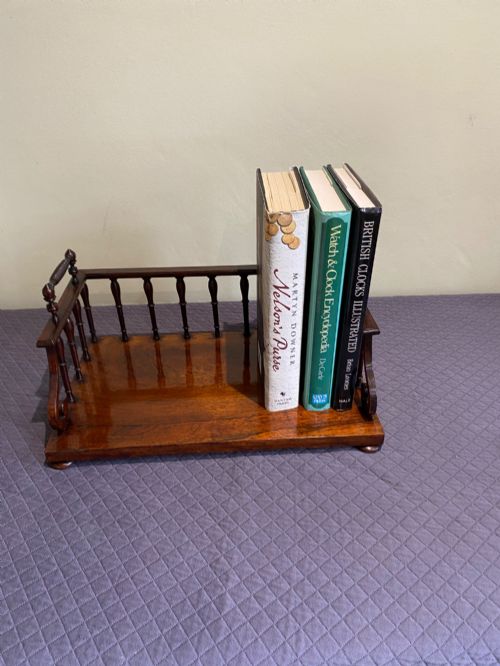
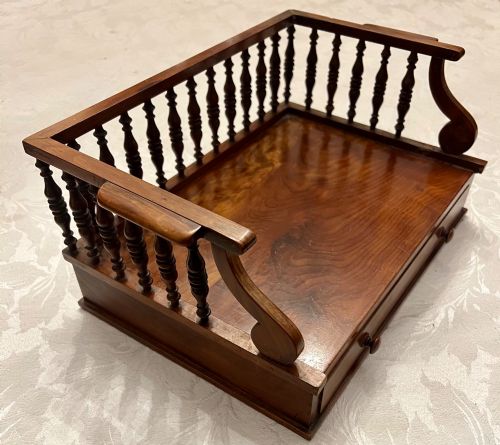
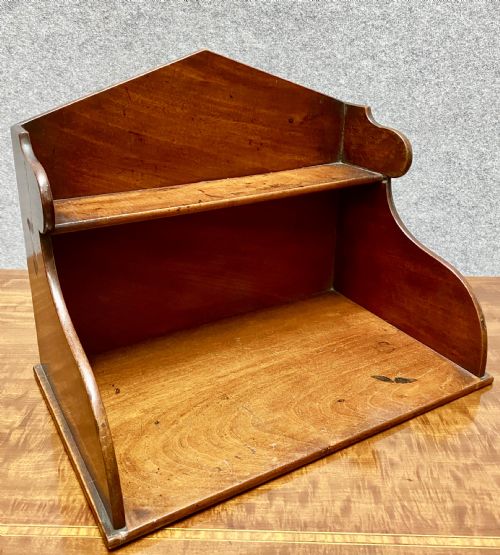
A wooden desktop book rack sits upon a library table or writing desk to organise a working selection of volumes. When you search for a wooden desktop book rack, you encounter extending book slides, fixed troughs, and revolving stands spanning the Regency, Victorian, and Edwardian eras.
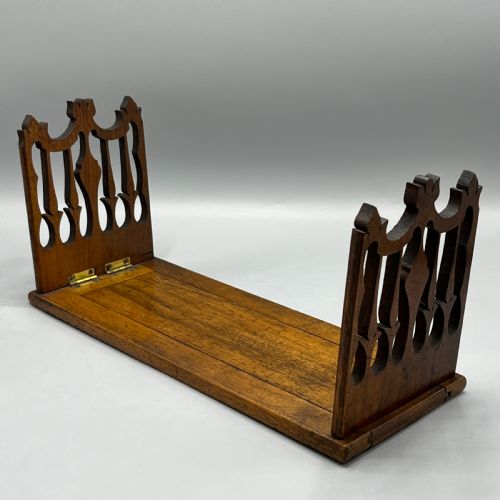
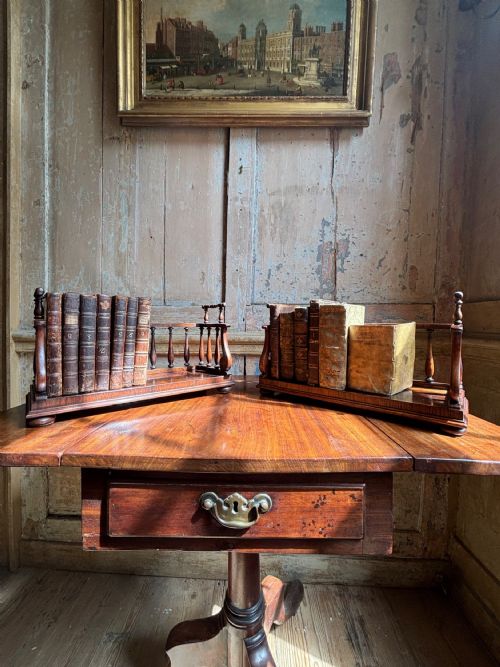
The most common form on this page is the extending book slide, often fitted with folding or concertina actions supported by brass mounts. These pieces appeared in home libraries and studies to hold octavo and quarto volumes within arm's reach.
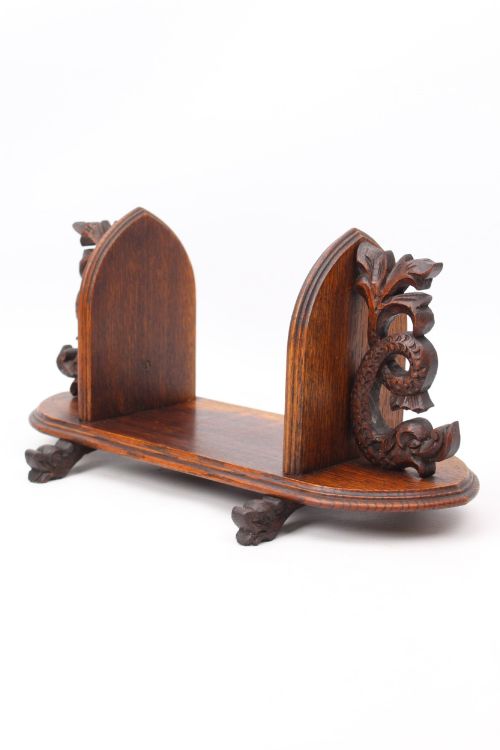
Makers fashioned these accessories from dense hardwoods like rosewood, walnut, and oak to withstand the weight of heavy calf-bound texts. Simpler static troughs and carved bookends also serve the desktop workspace.
Materials and Construction
Cabinet makers utilised dense timbers such as mahogany, rosewood, coromandel, and oak, often selecting figured grain for the main body and bookends. Boxwood stringing, bone inlay, and Tunbridge Ware mosaic detailing frequently enrich the primary wooden surfaces.
Extending models rely on concealed wooden runners or brass scissor actions to permit smooth adjustment of the width. Brass hinges, mounts, and galleries provide structural reinforcement and contrast with the dark hardwoods.
Wooden Desktop Book Rack Retail Price Guide 2026
Typical asking prices for wooden desktop book rack among the pieces listed under this phrase on Sellingantiques today, from the lower quarter to the upper quarter. They describe what is for sale here now, not the wider market.
Some Victorian book slides include built-in novelty rests designed specifically to hold open volumes of sheet music on the piano.
Assessing Quality and Execution
Quality rests in the precision of the extending mechanism and the stability of the joints under load. Superior examples feature robust brass actions that slide smoothly without binding, while lesser items suffer from warped wooden bases or loose hinges.
The refinement of the decorative work sets apart finer pieces, from finely painted ceramic plaques and intricate Tunbridge Ware to deep hand-carved teak panels. Plain utilitarian slides rely entirely on the quality of the timber selection and tight cabinet joints.
Arthur Simpson·Gillows
The Wooden Desktop Book Rack Glossary
- Book slide
- A desktop stand with an adjustable length, usually featuring expanding sides to hold varying numbers of volumes. These pieces were standard fittings on nineteenth-century library tables.
- Tunbridge Ware
- Small wooden items decorated with microscopic mosaic tesserae forming geometric or pictorial patterns. This specialised craft centred on Tunbridge Wells during the Victorian period.
- Book trough
- A fixed open-topped box designed to hold books upright at an angle on a desk or shelf. Unlike extending slides, these lack moving parts.
- Coromandel
- A dense, heavily figured exotic hardwood from Asia with dark brown and black grain patterns. Cabinet makers prized it for luxury Victorian desk accessories.
- Gothic Revival
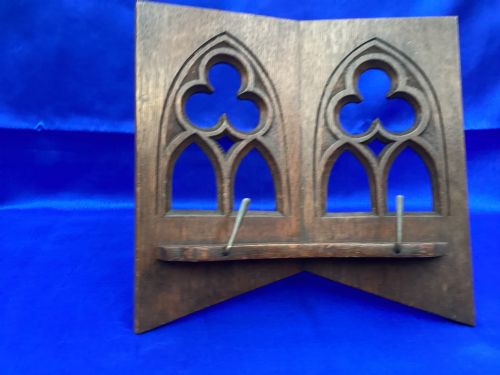
- An architectural and decorative style drawing on medieval forms, featuring pointed arches and trefoil motifs. This style appears frequently on nineteenth-century oak book stands.
Wooden Desktop Book Rack: Frequently Asked Questions
How do extending book slides work?
Extending book slides use a concealed wooden runner system or a brass scissor mechanism that allows the two end pieces to pull apart or push together. This design lets the user adjust the length to accommodate a growing or shrinking row of volumes.
Most mechanisms operate smoothly when clean, though older wooden runners can occasionally stick if exposed to damp conditions over the decades.
What is Tunbridge Ware?
Tunbridge Ware refers to wooden objects decorated with intricate mosaic patterns made from many tiny pieces of naturally coloured woods. Craftsmen glued these wooden blocks together and sliced them transversely to create repeating geometric bands or pictorial scenes.
These mosaics typically appear on the upright ends of Victorian book slides, framed by contrasting borders.
How do I date a wooden book rack?
Dating relies on timber choice, construction methods, and decorative style matching known historical periods. Regency and early nineteenth-century pieces often feature rosewood with brass inlay, while Victorian examples introduce heavy walnut, coromandel, and Gothic Revival carving.
Edwardian pieces frequently use quarter-sawn oak in the Arts and Crafts tradition, sometimes bearing maker labels or registration marks.
Were these racks used in offices or homes?
These accessories served primarily in private home libraries, studies, and drawing rooms where individuals kept working collections of poetry, novels, and reference books close at hand. Desk accessories of this scale suited personal writing tables rather than massive institutional libraries.
Their decorative finishes ensured they complemented domestic interior furnishings of the period.