


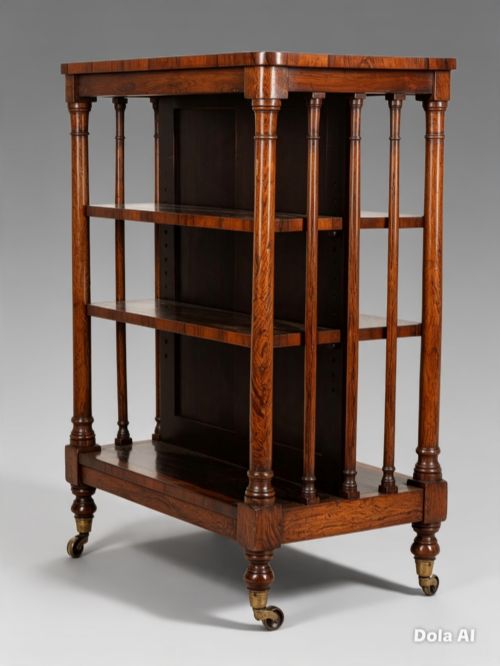


Antique Rosewood Bookstand
An antique rosewood bookstand offers a handsome home for your volumes, rendered in rich dark timber from the Regency and Victorian eras.
Antique Rosewood Bookstand
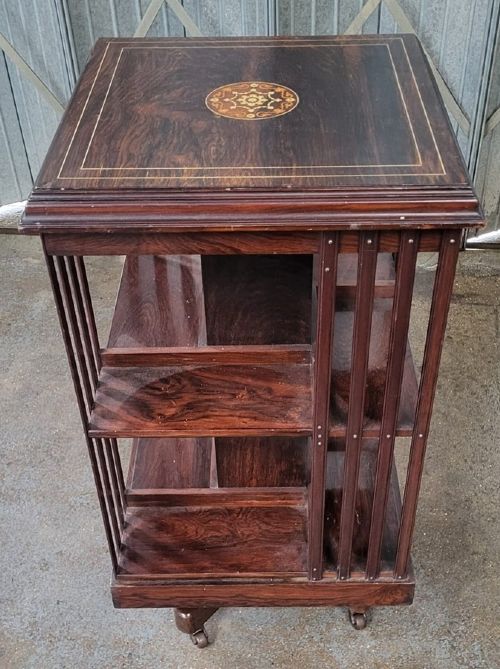
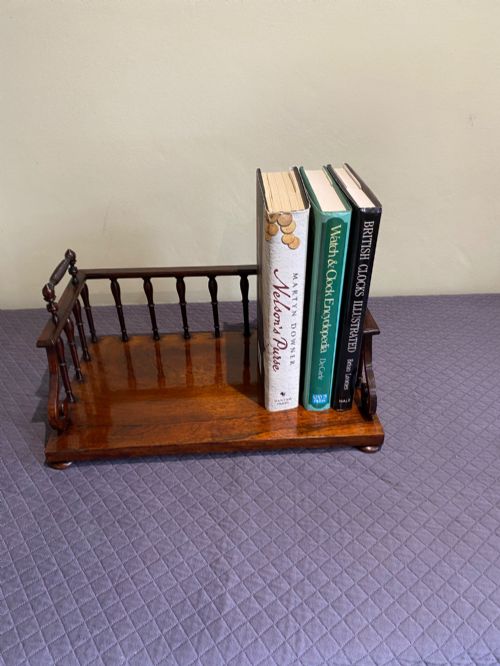
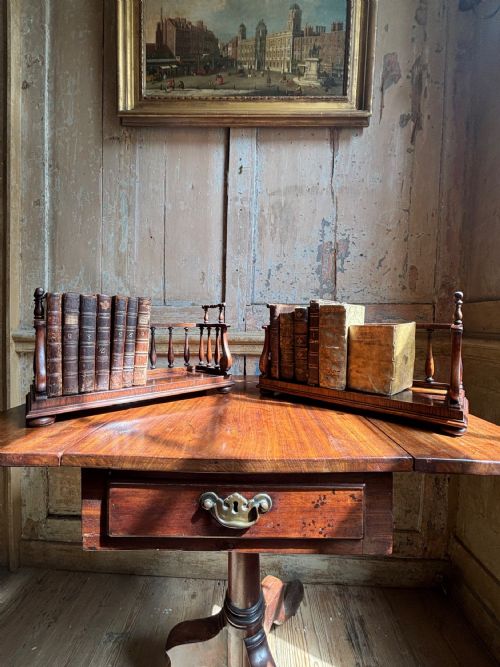
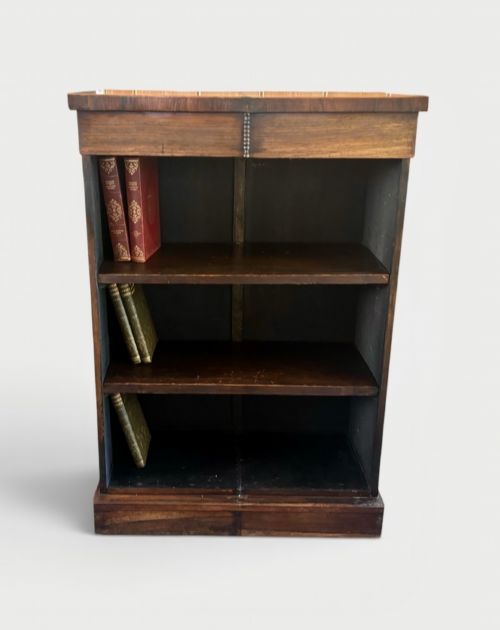
When you search for an antique rosewood bookstand, you are looking at desk accessories, book slides, book racks, and revolving bookcases designed to keep volumes orderly. These items emerge primarily from the nineteenth century, spanning the Regency, William IV, Victorian, and Edwardian periods.
Originating largely from English workshops, alongside specific Anglo-Indian examples, these pieces demonstrate how nineteenth-century craftsmen accommodated domestic libraries of varying scales. The forms range from simple carriers to double-sided bookcases and tiered waterfall shelves.
How they were made
Craftsmen built these pieces using solid rosewood and veneers, often incorporating contrasting boxwood inlay to accentuate the surfaces. The dense nature of the timber allowed for crisp joinery and durable construction across both small desk accessories and large revolving bookcases.
Metal components such as brass galleries, hinges, and mounts appear frequently to strengthen corners and add decorative contrast to the dark wood. Specialised techniques like Tunbridge Ware surface decoration also appear on smaller book slides, creating intricate geometric mosaic patterns.
Some nineteenth-century readers apparently needed mechanical assistance to browse their novels, spawning rotating bookstands that spin like lazy Susans.
What varies in quality
The refinement of the timber selection dictates much of the visual appeal, with deeply figured rosewood grain setting finer pieces apart from plain stock. Subtle additions such as delicate boxwood stringing or well-cast brass mounts indicate a higher standard of original workshop production.
Structural execution in moving parts, particularly the smooth rotation of revolving bookcases or the precise sliding action of book carriers, distinguishes superior examples. Pieces associated with notable idioms, such as the manner of Gillows, exhibit particularly confident proportions and joinery.
Gillows
The Antique Rosewood Bookstand Glossary
- Rosewood
- A dense, heavily figured tropical hardwood prized for its dark purple-brown colour and contrasting black grain. It polishes to a high lustre and forms the primary material for these items.
- Boxwood Inlay
- Light-coloured boxwood set into recesses in the darker rosewood surface to create contrasting geometric or floral patterns. This decorative technique is common on Edwardian and nineteenth-century pieces.
- Tunbridge Ware
- Woodworking characterised by mosaic decoration made from tiny pieces of naturally coloured woods assembled to form pictorial or geometric motifs. It appears on Victorian book-slides.
- Book Slide
- An adjustable desk accessory with extending sections designed to hold a varying number of upright books between two ends. These often feature decorative wooden or brass mounts.
- Regency
- A style period spanning the early nineteenth century defined by classical restraint, elegant proportions, and classical revival motifs. Pieces from this era often incorporate brass inlay and rosewood veneers.
Antique Rosewood Bookstand: Frequently Asked Questions
What is a rosewood book slide?
A book slide is an adjustable desk accessory designed to keep a small selection of volumes upright between two decorative ends.
These pieces typically feature extending wooden bases that expand or contract to fit the exact number of books you place inside them.
How do revolving bookcases work?
Revolving bookcases sit upon a concealed internal pivot mechanism that allows the entire wooden tier to spin freely.
This design enabled readers to access multiple shelves of books easily from a single seated position beside a desk or armchair.
What is Tunbridge Ware?
Tunbridge Ware is a form of decorative woodworking featuring tiny mosaic tiles assembled from various naturally coloured timbers.
Craftsmen used these microscopic wood blocks to create detailed geometric or floral pictures on the surfaces of Victorian book slides.
How do I care for rosewood?
Rosewood benefits from being kept away from direct sunlight and sudden changes in room temperature to prevent the timber from drying out.
An occasional application of microcrystalline wax helps nourish the polished surface without building up excessive residue over time.