




Regency Rosewood Bookshelf
A regency rosewood bookshelf brings rich grain and architectural restraint to a room, offering sturdy display for a lifetime of reading.
Regency Rosewood Bookshelf
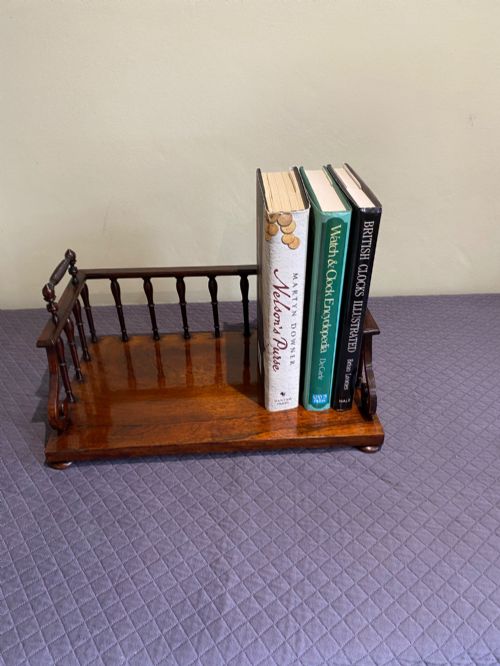
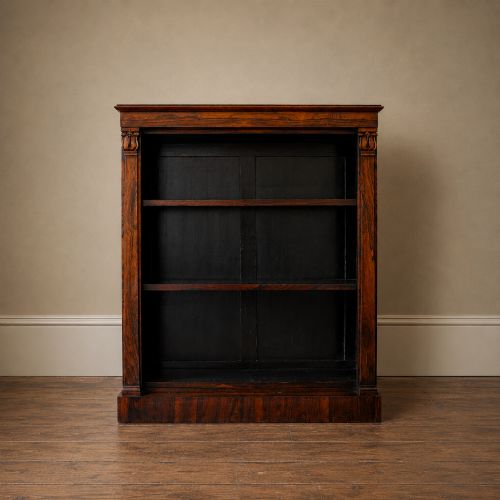
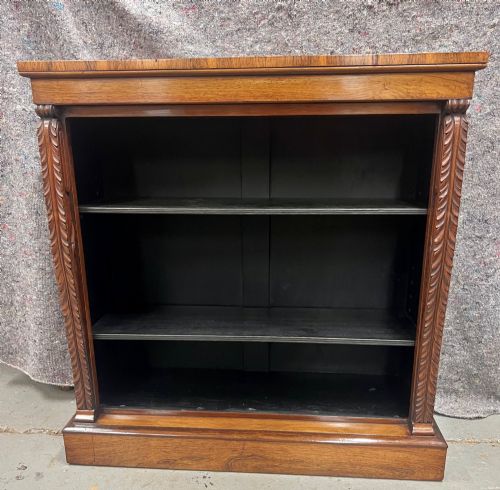
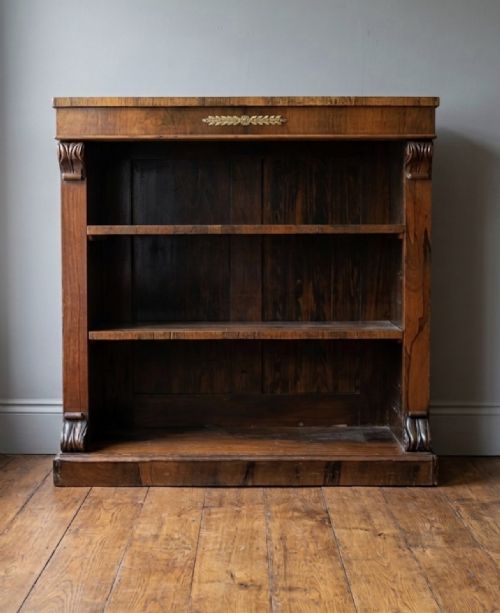
When you search for a regency rosewood bookshelf, you encounter low open bookcases, tiered waterfall shelves, and wall-mounted units dating primarily from the nineteenth century. The open bookcase is the form you meet most frequently on this page, often fitted with adjustable shelves for practical use.
Many examples date from the Regency period proper, alongside pieces from the subsequent William IV and broader nineteenth-century eras. Workshops also produced side cabinets, dwarf bookcases, and desk accessories to serve domestic libraries.
Makers utilised alternative finishes when genuine timber was scarce, resulting in items with simulated paint or grained surfaces. Pairs of bookcases and double-sided formats occasionally appear alongside single freestanding pieces.
What varies in quality
The distinction between standard commercial production and superior cabinetwork rests on the selection of timber and the precision of the joinery. Finer pieces display continuous, well-matched veneer grains across the entire frontage rather than piecemeal patches.
Detailing separates workshop tiers, with better examples featuring crisp brass inlay, finely turned supports, and integrated structural elements like inverted breakfronts. Original surfaces, whether polished rosewood or period grained finishes, elevate the integrity of the piece.
Some nineteenth-century makers concealed actual storage behind rows of leather dummy books, fooling guests into admiring a nonexistent library.
The Regency Rosewood Bookshelf Glossary
- Waterfall bookcase
- A tiered shelving unit where each successive shelf steps back from the one below, creating a cascading profile. These pieces often feature graduated shelves supported by slender side panels.
- Breakfront
- A cabinet or bookcase whose central section projects forward from the flanking wings. This configuration adds architectural depth to low library furniture.
- Dwarf bookcase
- A low shelving unit designed to sit beneath dado height, keeping volumes within easy reach. They frequently incorporate open fronts or small side cabinets.
- Dummy books
- Faux book spines attached to cupboard doors or cabinet fronts to conceal storage space. Makers used leather and gilt tooling to mimic real bindings.
- Parcel gilt
- A decorative technique where specific carved or moulded details receive a thin application of gold leaf. It highlights structural lines against dark rosewood.
Regency Rosewood Bookshelf: Frequently Asked Questions
Where did people place these bookcases?
Owners positioned low open bookcases against library walls or beneath parlour windows to keep frequently read volumes within reach. Dwarf and waterfall formats suited smaller sitting rooms where floor space remained at a premium.
Wall shelves and hanging units offered elevated storage for smaller collections and desk accessories. Double-sided bookcases stood away from walls to divide larger rooms.
How do I care for rosewood furniture?
Keep these pieces away from direct sunlight and heat sources to prevent the rosewood veneer from drying or splitting. Maintain a stable indoor climate to protect the timber and any applied brass or leather elements.
Dust regularly with a dry cloth and avoid silicone-based polishes that build up over time. Natural wax applied sparingly preserves the finish of the wood.
How do I identify a Regency period piece?
Examine the proportions for classical restraint, as Regency design favoured clean architectural lines and symmetry over heavy ornamentation. Look for construction methods typical of the early nineteenth century, such as hand-cut dovetails in the secondary timbers.
Check for characteristic materials like solid rosewood, brass inlay, and original paper or leather labels left by cabinetmakers. Grained finishes and simulated paint also point toward nineteenth-century workshop practices.