




Bookcase on Castors
A bookcase on castors combines fitted shelving with mobility, letting you reposition a heavy collection of volumes across a room with ease.
Bookcase on Castors
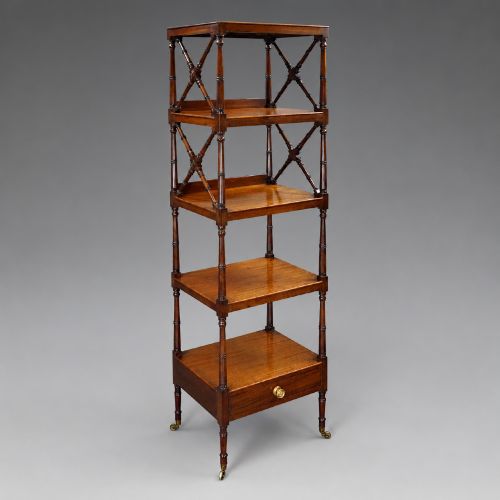
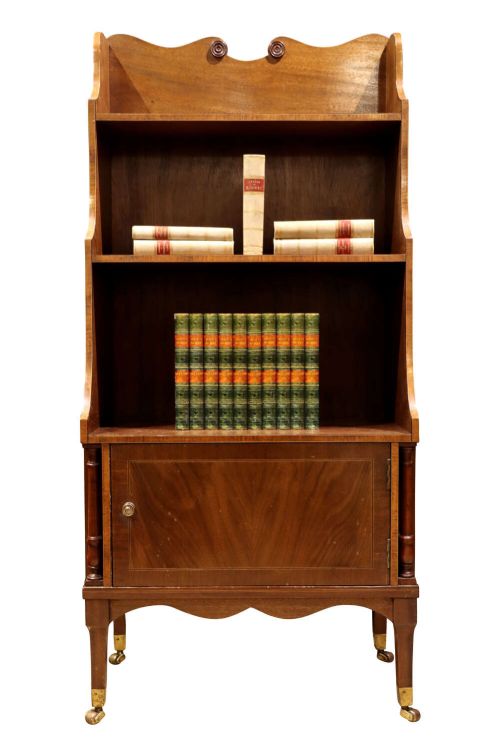
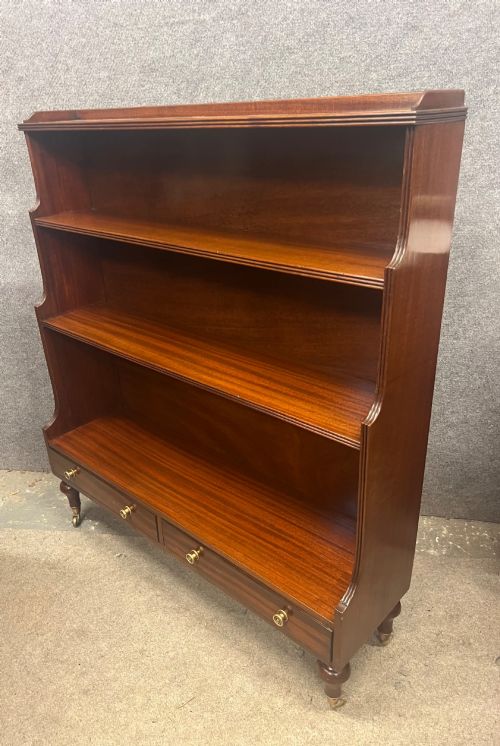
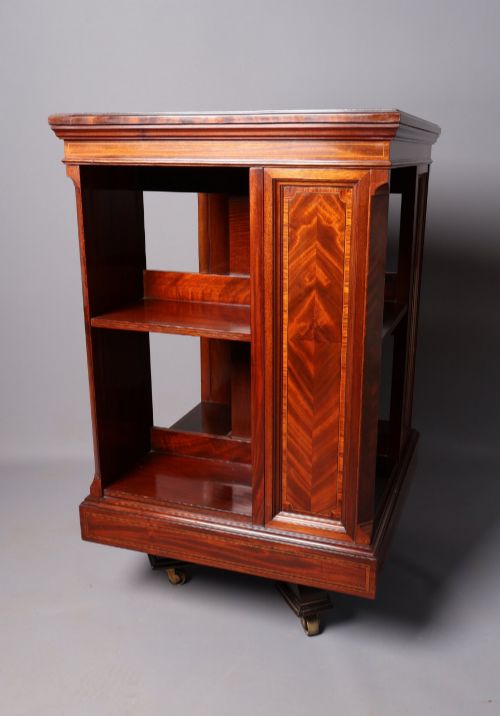
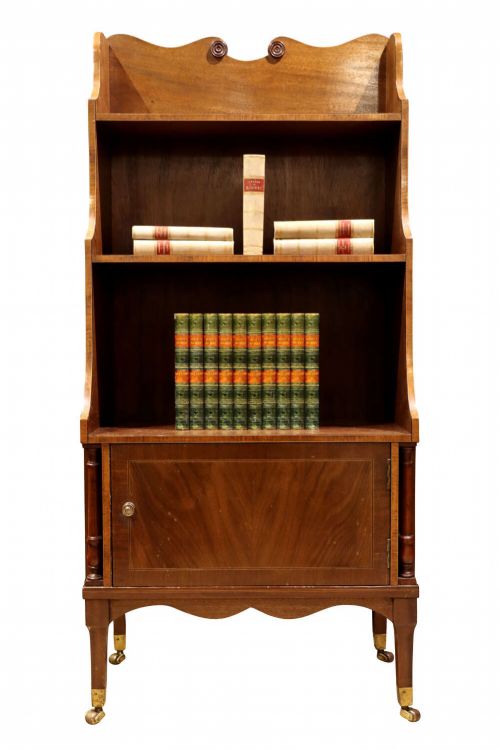
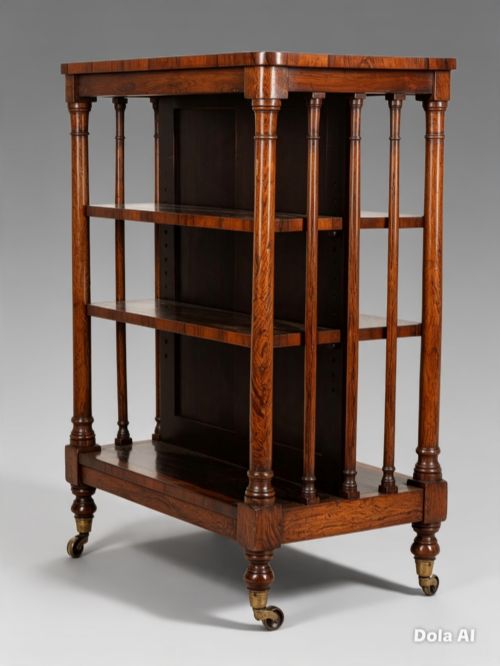
A bookcase on castors appears in several distinct forms across this selection, ranging from compact revolving bookstands to tall waterfall cabinets and open shelving units. Most pieces date from the Edwardian period or the nineteenth century, reflecting a strong preference for practical domestic furniture during those eras.
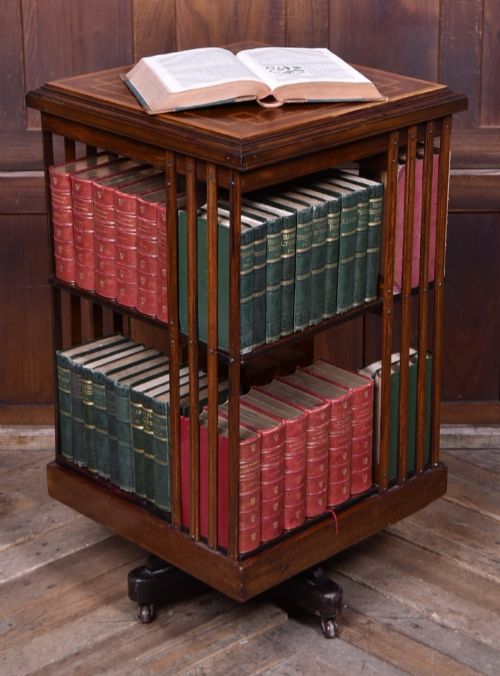
You are most likely to meet Edwardian mahogany revolving bookcases on this page, alongside various stationary bookcases and 19th-century shelving stands. These items served busy libraries and studies where moving heavy books was a daily necessity.
Materials and construction
Makers utilised solid mahogany, oak, and rosewood for the primary frames, often adding delicate satinwood inlay to enrich the appearance of Edwardian and Victorian surfaces. Gilded wood and velvet also appear on specific Italian Rococo forms, showing a diverse approach to decorative detail.
Support and mobility rely on metal components, specifically brass and cast iron castors fitted to the base of the furniture. These metal wheels allowed heavy timber shelving units to glide smoothly across carpets and wooden floors without damaging the structure.
Some revolving bookcases let you reach a dozen novels without moving an inch from your armchair.
Craftsmanship and distinction
The standard of a bookcase on castors depends heavily on the precision of its timber joinery and the integration of its moving parts. Superior examples maintain smooth rotation in revolving models and sturdy, plumb vertical lines in tall waterfall cabinets.
The integration of the castor mechanism itself marks a clear division in quality, where original brass fixtures fitted flush into the timber feet elevate the piece above later replacements. Finer items also showcase skilled timber selection, such as figured mahogany and crisp satinwood inlay.
Maple and Co
The Bookcase on Castors Glossary
- Castor
- A small wheel fitted to the base of a piece of furniture to allow easy rolling movement. They are frequently made of brass or iron.
- Waterfall bookcase
- A tiered shelving unit where each successive shelf steps back from the one below it, creating a cascading profile.
- Revolving bookcase
- A compact shelving unit mounted on a rotating pivot and a central base, allowing access to books from all sides.
- Whatnot
- A multi-tiered open piece of furniture designed for displaying books and decorative objects.
- Inlay
- A decorative technique where contrasting materials like satinwood are inserted into recesses within the primary wood surface.
Bookcase on Castors: Frequently Asked Questions
What is a bookcase on castors?
A bookcase on castors is a movable shelving unit fitted with small wheels at the base. This design allows the furniture and its contents to be shifted across a room with minimal effort.
Such pieces range from small revolving stands to tall cabinets, built primarily to serve domestic studies and libraries.
Why were castors added to bookcases?
Castors were added to help servants and owners reposition heavy timber furniture for cleaning or rearranging a room. Books are dense and add considerable weight, making wheels essential for movement.
This mobility also allowed readers to bring their reference volumes closer to a desk or fireside seating area.
Are these bookcases suitable for heavy books?
Yes, traditional bookcases made from solid mahogany or oak possess strong structural frames capable of supporting substantial libraries. The addition of castors distributes the weight evenly across sturdy wooden bases.
However, it remains wise to check that the internal shelves and the castor mountings are secure before loading heavy folios.
How should I care for antique timber and castors?
Keep antique timber away from direct heat sources and strong sunlight to prevent the wood from drying out or splitting. Dust the surfaces regularly with a dry cloth and apply a quality beeswax sparingly.
Inspect the castor fixings periodically to ensure the metal wheels remain free of dust and debris, allowing them to roll smoothly.