




Rosewood Library Stand
These rosewood library stand pieces combine rich tropical timber with practical storage, offering both workspace utility and period elegance.
Rosewood Library Stand
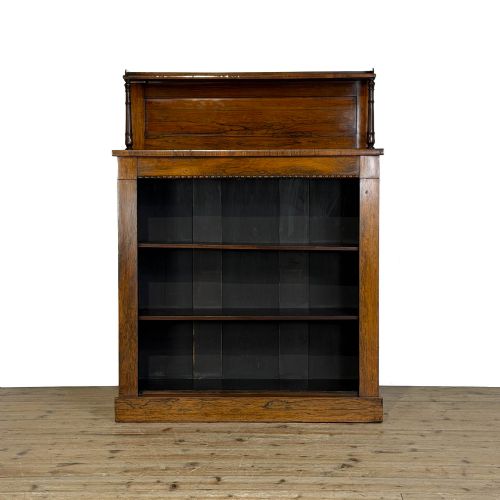
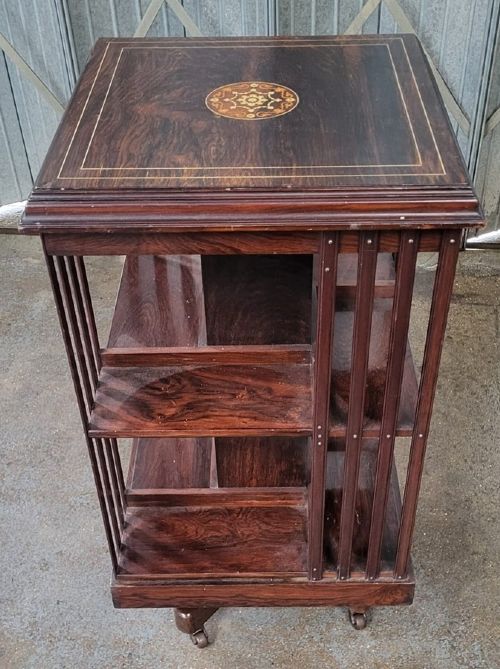
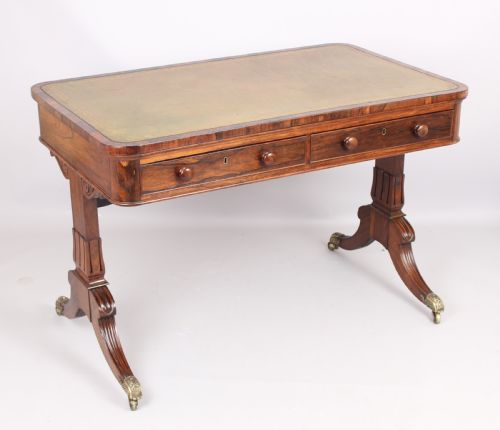
A rosewood library stand encompasses freestanding tables, open bookcases, writing desks, and revolving book carriers designed for nineteenth-century reading spaces. The selection ranges from compact revolving bookcases to double-sided bookcases and writing tables suited for central room placement.
Regency, William IV, and Victorian periods dominate the examples found here, alongside Edwardian interpretations. Makers constructed these pieces in solid rosewood or utilised simulated rosewood on secondary timbers like pine and mahogany.
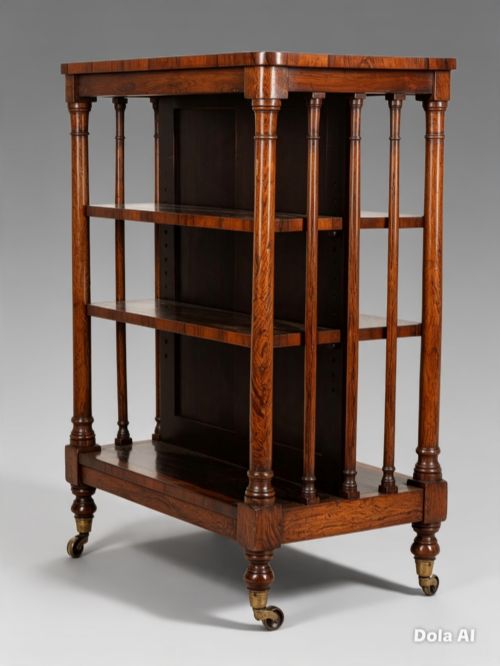
Forms often incorporate brass fittings, boxwood inlay, and leather inserts for writing surfaces. Buyers encounter both monumental library tables and smaller book carriers or whatnots.
Materials and construction
Cabinetmakers selected dense rosewood for its pronounced grain and deep natural colour, occasionally substituting simulated rosewood on secondary timbers such as pine. Brass details appear frequently as castors, galleries, and inlay, providing structural reinforcement and contrast against the dark timber.
Inlay work utilised boxwood to create delicate linear patterns on Edwardian surfaces, while writing tables frequently integrated fitted leather skivers. Secondary framing relied on mahogany and timber supports hidden beneath the primary rosewood veneers.
Materials recorded across the archive include solid rosewood, simulated rosewood, brass, leather, pine, mahogany, and boxwood inlay.
Evaluating quality and finish
Quality rests in the selection of the rosewood veneer, the crispness of any boxwood inlay, and the integration of secondary timbers like mahogany. Pieces finished on all sides for freestanding room placement demand superior timber selection throughout the carcass.
Hardware integrity separates standard production from finer workshop output, particularly in original brass castors and revolving mechanisms. The subtlety of carved details, such as those attributed to Gillows, distinguishes exceptional examples from simpler regional pieces.
Gillows
The Rosewood Library Stand Glossary
- Rosewood
- A dense, heavily figured tropical timber prized for its dark purple-brown colour and contrasting dark grain. It takes a high polish and formed the primary surface for grand nineteenth-century library furniture.
- Simulated rosewood
- A painted or stained finish applied to a secondary timber, such as pine or mahogany, to mimic the grain and colour of genuine rosewood. This technique appeared on furniture produced during the Regency and William IV periods.
- Book slide
- An adjustable rack or stand designed to hold a small selection of volumes upright on a desk or table. These devices often featured hinged ends and decorative inlays.
- Whatnot
- A piece of freestanding open shelving with multiple tiers supported by slender uprights. Makers utilised them in libraries and drawing rooms to display books and decorative objects.
Rosewood Library Stand: Frequently Asked Questions
Where were they placed?
Many of these pieces were built as freestanding items designed to sit in the centre of a room rather than against a wall. Double-sided bookcases and library tables allowed access from multiple angles.
Smaller items like book carriers and whatnots sat on desks or in corners to manage working volumes.
How do I date a piece?
Dating relies on stylistic markers and construction methods associated with periods such as Regency, William IV, and Victorian. Regency and William IV pieces often show bolder architectural forms and rosewood solids or veneers.
Later Edwardian examples frequently incorporate lighter boxwood inlay and refined, slender proportions.
Are they all solid rosewood?
Not all pieces utilise solid rosewood throughout their construction. Cabinetmakers frequently applied rosewood veneers over secondary timbers like mahogany or pine.
Some examples use simulated rosewood, where a painted grain effect mimics the tropical hardwood on alternative woods.