



Rosewood Desk Organiser
A rosewood desk organiser brings order to papers with rich grain and fine brass inlay.
Rosewood Desk Organiser
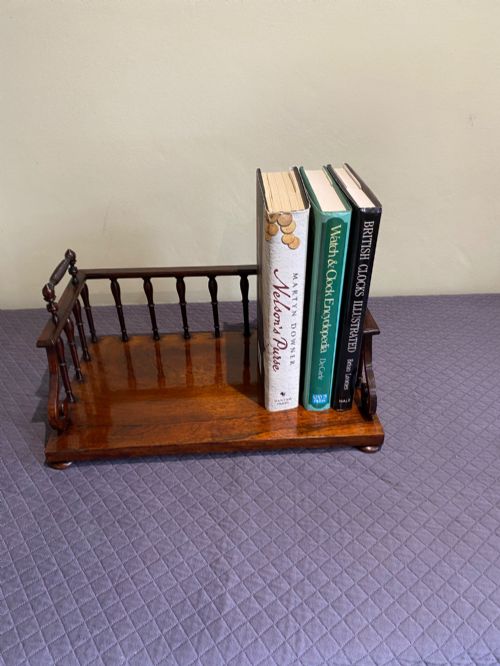
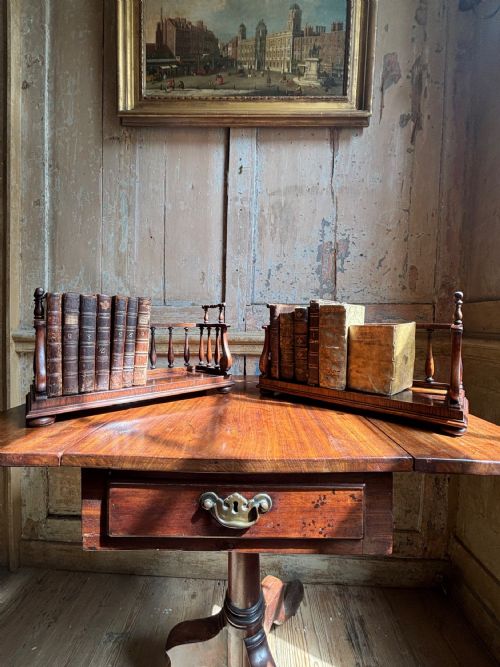
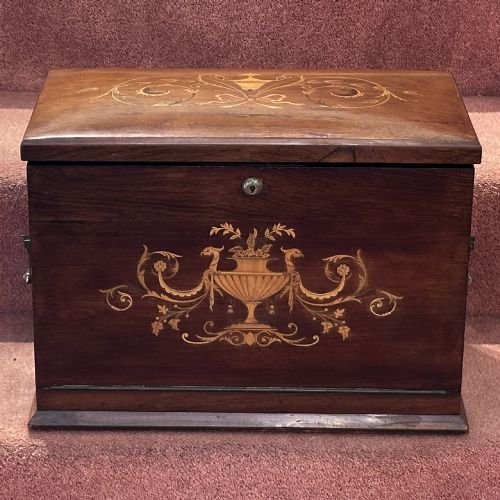
A rosewood desk organiser is a functional desktop accessory designed to hold stationery, letters, and books. The selection includes writing boxes, correspondence boxes, stationery cabinets, book racks, and cartonnieres.
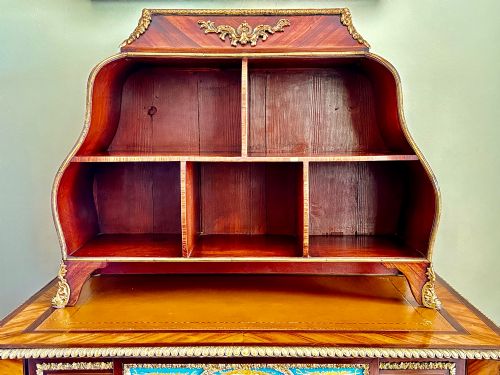
Most examples date from the Regency and Victorian periods, alongside mid-nineteenth-century items. Forms range from simple book carriers to elaborate Louis XV style cabinets with ormolu mounts and campaign pieces.
Makers and workshops of the era produced these items to suit refined libraries and writing desks. Buyers encounter pieces influenced by classical Regency lines and later Victorian tastes.
How they were made
Craftsmen utilised solid rosewood and applied veneers over secondary timbers to achieve deep, figured surfaces. Workshops enhanced these rich brown timbers with contrasting boxwood and satinwood inlay.
Many boxes incorporate brass inlay, brass handles, and ormolu mounts cast in floral or classical motifs. Interior fitments frequently integrate glass inkwells, bone inlay, and compartments lined for stationery.
Rosewood Desk Organiser Retail Price Guide 2026
Typical asking prices for rosewood desk organiser among the pieces listed under this phrase on Sellingantiques today, from the lower quarter to the upper quarter. They describe what is for sale here now, not the wider market.
Some Victorian letter boxes sport polite labels to shame the procrastinator into answering mail promptly.
What varies in quality
Quality rests in the precision of the cabinetwork and the selection of the rosewood veneer. Finer items display meticulous brass or satinwood inlay that remains flush with the surrounding timber.
The sophistication of the mounts and interior fittings separates standard boxes from exceptional productions. Attribution to known makers, such as Gillows or labelled retailers like F Waller, elevates a piece further.
Gillows of Lancaster·F Waller
The Rosewood Desk Organiser Glossary
- Cartonnier
- A desktop cabinet with multiple compartments or drawers designed for holding papers and documents. These pieces often feature decorative mounts and architectural fronts.
- Stationery box
- A desk accessory intended to hold writing paper and envelopes upright in dedicated slots. Victorian examples frequently incorporate sloping lids and fitted compartments.
- Ormolu
- Gilt bronze applied as decorative mounts and feet on nineteenth-century furniture and desk accessories. This technique adds metallic contrast to dark rosewood surfaces.
- Campaign box
- Portable furniture made for travel, typically fitted with flush brass handles and corner brackets for durability. Anglo-Indian examples showcase regional colonial craftsmanship.
Rosewood Desk Organiser: Frequently Asked Questions
What is a desk cartonnier?
A cartonnier is a desktop filing cabinet designed to organise loose papers and correspondence. These pieces sit directly upon a desk surface and provide structured storage for letters.
Nineteenth-century versions often incorporate architectural styling, drop fronts, and decorative ormolu mounts. They reflect the formal organisational needs of a Victorian study.
How do I date a rosewood box?
Dating relies on stylistic markers, construction methods, and materials associated with specific periods. Regency items often feature bold brass inlay and classical proportions.
Victorian pieces frequently display more eclectic influences, such as Louis XV Revival curves or campaign brass hardware. Makers labels and interior fittings also help narrow the timeline.
Where were these pieces used?
These accessories were placed on library tables, Davenport desks, and writing surfaces in grand homes and offices. They kept correspondence, writing paper, and books tidy.
Portable writing and correspondence boxes were also carried during travel or moved between rooms. Anglo-Indian pieces served colonial households abroad.
What is an answered letters box?
An answered letters box is a Victorian novelty stationery box featuring dual compartments labelled for correspondence management. The design helped writers track incoming mail.
Such pieces demonstrate the elaborate functional sorting systems popular on nineteenth-century desks. They combine utility with decorative rosewood and satinwood craftsmanship.