



Victorian Inlaid Slope
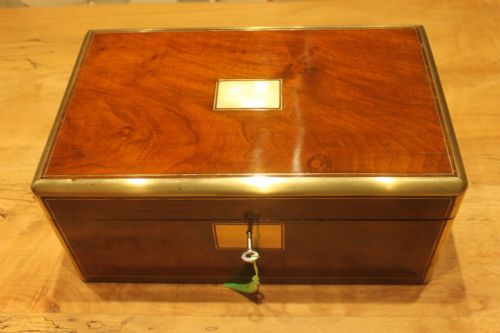
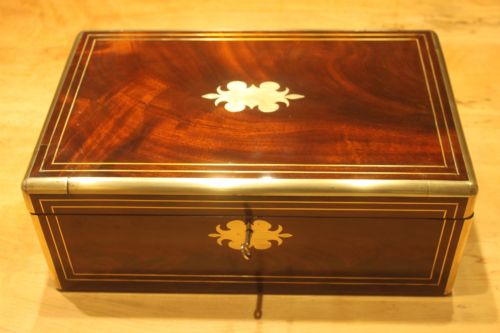
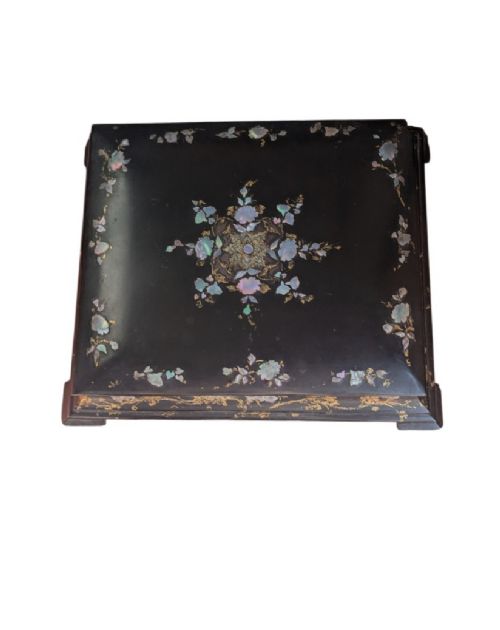
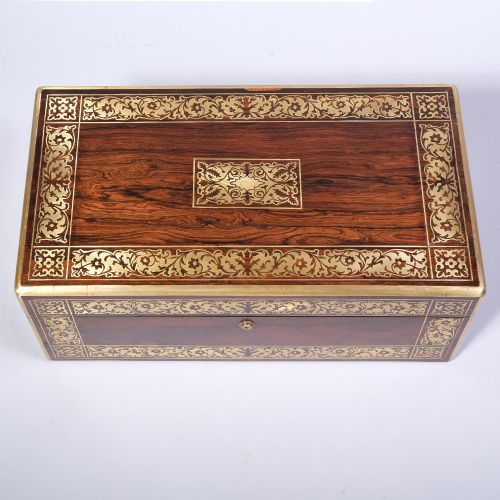
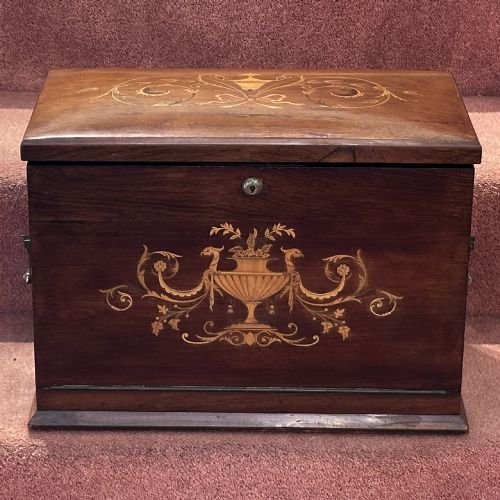
A victorian inlaid slope is a portable desktop writing cabinet lined for correspondence and finished with decorative banding or brass work.
Victorian Inlaid Slope
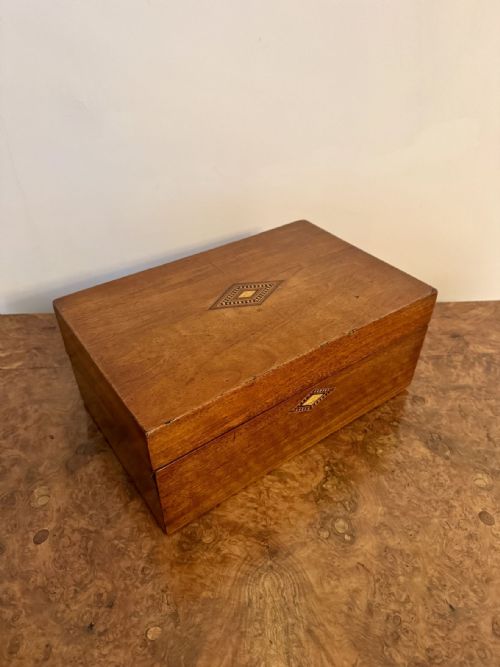
A victorian inlaid slope is essentially a hinged box that opens to reveal a sloping writing surface, inkwell compartments and concealed storage for letters.
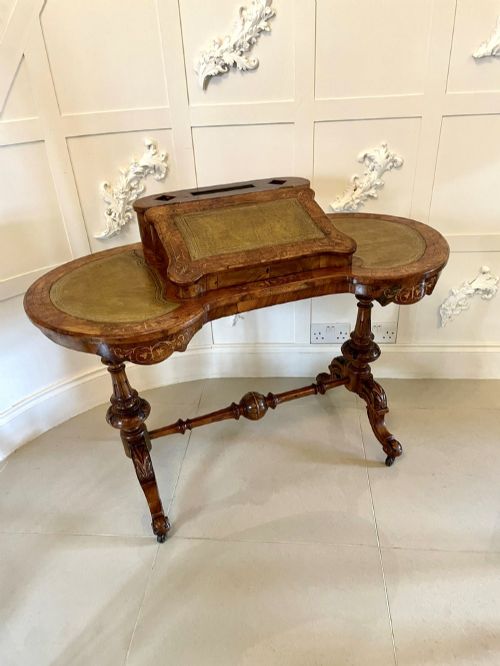
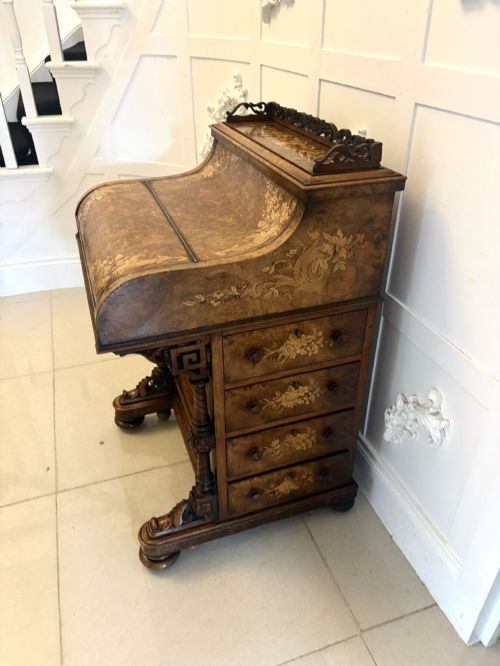
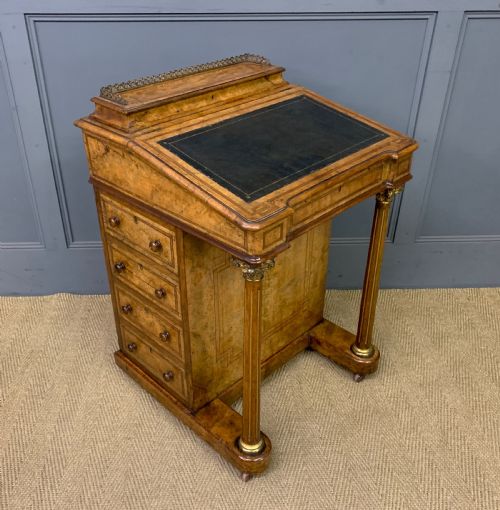
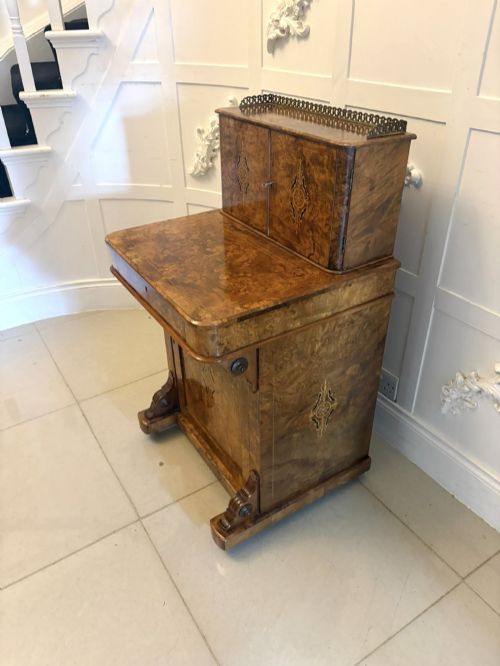
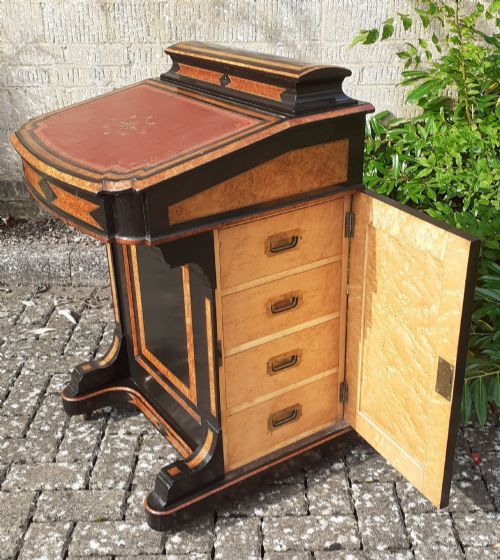
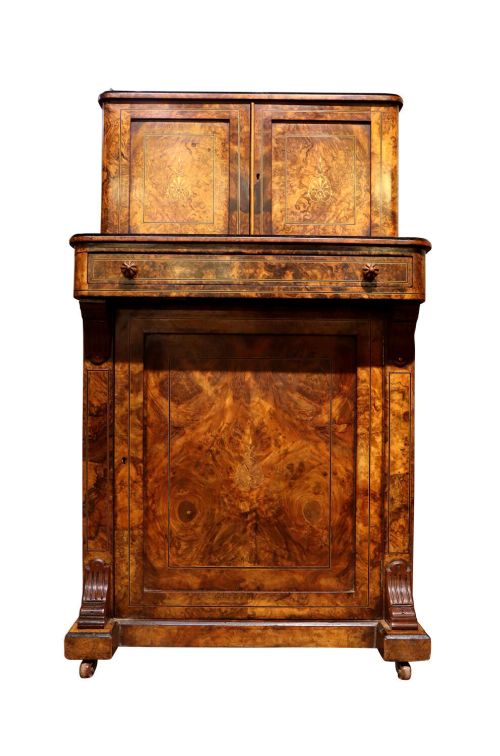
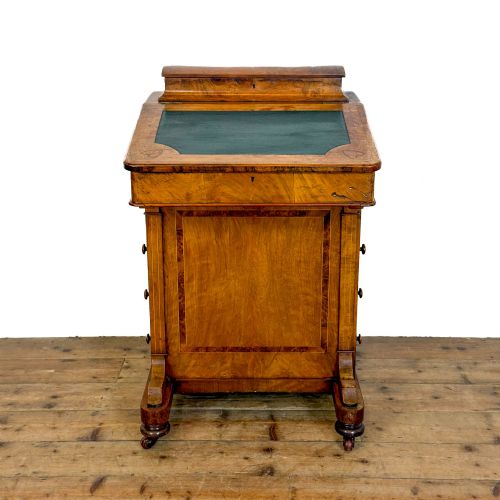
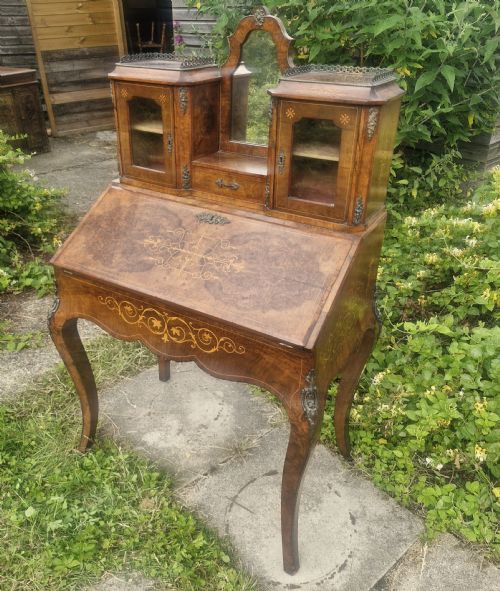
The pieces on this page span table-top writing boxes, larger Davenport desks with stacked drawers, and refined bonheur du jour writing tables from the nineteenth century.
Rosewood, burr walnut and mahogany form the foundational timber bodies, decorated with contrasting boxwood, satinwood, brass or mother of pearl inlay.
Materials and construction
Cabinet makers utilised dense exotic hardwoods like rosewood, coromandel and burr walnut as carcases, often applying book-matched veneers to display the natural grain.
Inlay work relied on precision cutting of contrasting materials such as boxwood, satinwood, bone and mother of pearl into recessed channels within the timber.
Brass banding, strapwork and corner reinforcement were integrated into the design to protect edges and secure the folding panels against warping.
Victorian Inlaid Slope Retail Price Guide 2026
Typical asking prices for victorian inlaid slope among the pieces listed under this phrase on Sellingantiques today, from the lower quarter to the upper quarter. They describe what is for sale here now, not the wider market.
Listings feature woods such as rosewood, burr walnut, coromandel and mahogany, frequently embellished with boxwood inlay, mother of pearl and brass.
Judging execution
Quality rests upon the precision of the inlay work and the harmonious selection of figured wood veneers across the exterior surfaces.
Superior examples incorporate functional complexity, such as secret drawers released by hidden spring mechanisms, alongside high-grade brass locks by makers like Bramah.
Interior fittings, including matching pen trays, leather skivers with gilt tooling and glass inkwells with original brass collars, distinguish finer pieces.
The Victorian Inlaid Slope Glossary
- Slope
- A portable writing desk featuring a hinged lid that opens at an angle to provide a firm writing surface. It typically folds flat when closed for travel or storage.
- Davenport
- A compact pedestal desk popular in the nineteenth century, featuring a slanted writing top above a bank of side drawers. The interior often conceals stationery compartments and small drawers.
- Inlay
- A decorative technique where contrasting materials such as wood veneers, brass, mother of pearl or wire are fitted flush into carved recesses on the surface of the timber.
- Secret drawers
- Concealed compartments built into writing boxes and slopes behind removable panels or false bottoms. They were designed to secure private papers and valuables.
- Tunbridge ware
- Small wooden decorative items adorned with intricate mosaic patterns made from thousands of tiny tinted wood blocks. This specialised craft flourished in Kent during the nineteenth century.
Victorian Inlaid Slope: Frequently Asked Questions
What is a victorian inlaid slope used for?
These boxes provided a portable writing surface for correspondence before the widespread availability of fitted desks. They kept stationery, ink, nibs and letters organised in one secure case.
The slanted lid offered an ergonomic angle for handwriting while seated at a table. When closed, the box protected writing materials and locked away personal documents.
How do I spot secret drawers?
Secret drawers are typically hidden behind internal partitions, false drawer fronts or sliding panels within the stationery compartment. Gentle pressure on a spring-loaded divider often releases the concealed space.
Many writing slopes incorporate these hidden compartments to store sensitive papers or valuables. They represent a hallmark of careful nineteenth-century cabinet making.
What woods were commonly used?
Dark, figured hardwoods form the majority of these pieces, with rosewood and burr walnut appearing most frequently in the listings. Mahogany and coromandel also provide sturdy foundations for decorative veneer.
Lighter woods such as satinwood and boxwood supply the contrast for intricate stringing and floral inlay. Mother of pearl and brass often punctuate the timber surfaces for added ornamentation.
How do I care for the wood surface?
Keep these items away from direct sunlight and heat sources to prevent the wood veneers from drying out and cracking. Maintain a stable indoor humidity where possible.
Apply a microcrystalline wax periodically and buff gently with a soft cloth to nourish the timber and preserve the polish. Avoid using liquid polishes or silicone sprays.