

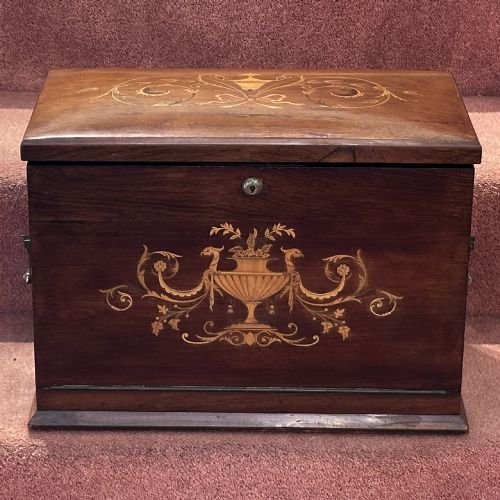


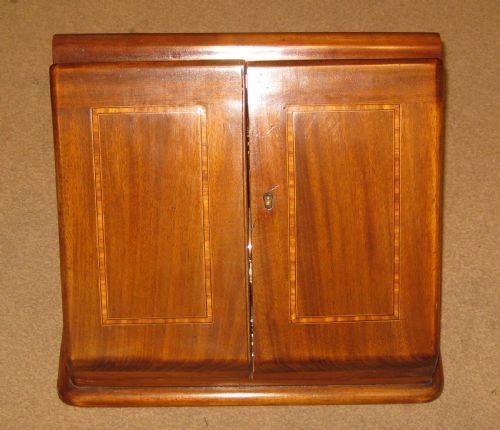


Marquetry Stationery Cabinet
These marquetry stationery cabinet pieces bring fine period timber and delicate inlay together to organise your desk with genuine historical character.
Marquetry Stationery Cabinet
When you search for a marquetry stationery cabinet, you encounter desktop organisers, correspondence chests, and writing furniture designed to hold letters and paper. These pieces range from Georgian mahogany knife boxes adapted for letters to Victorian burr walnut stationery cabinets and Edwardian satinwood examples.
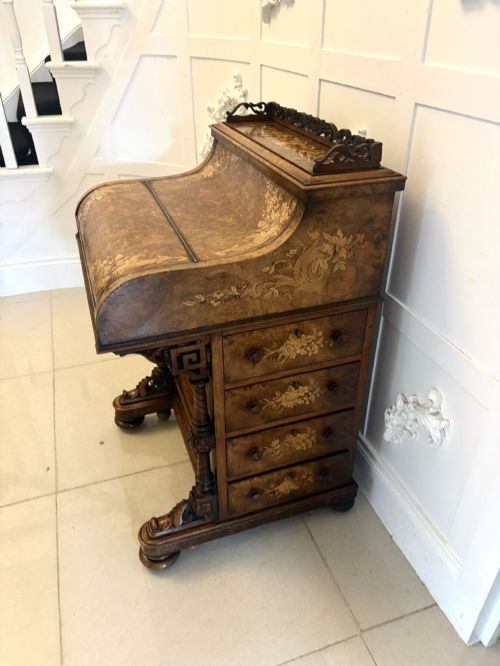
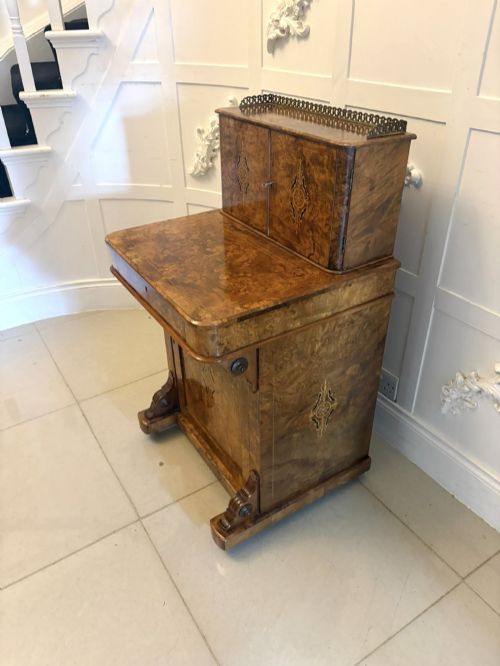
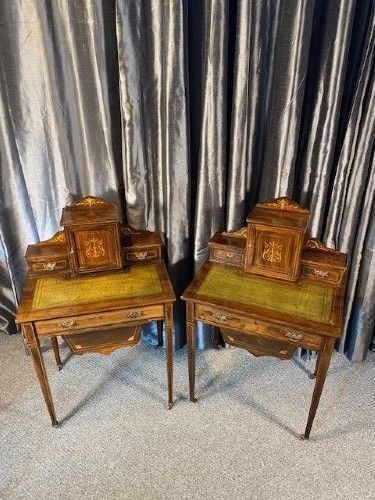
You are most likely to meet Victorian and Edwardian iterations on this page, often featuring fall fronts, fitted interiors, and compartments for envelopes. Forms extend to Davenport desks, bureaux de dame, and bonheur du jour writing tables that incorporate dedicated stationery storage within their overall design.
Originating largely from the nineteenth century, alongside select eighteenth-century and Edwardian examples, these items reflect the domestic writing habits of past eras. They combine practical desk organisation with decorative cabinet work suited to period and traditional interiors.
How they were made
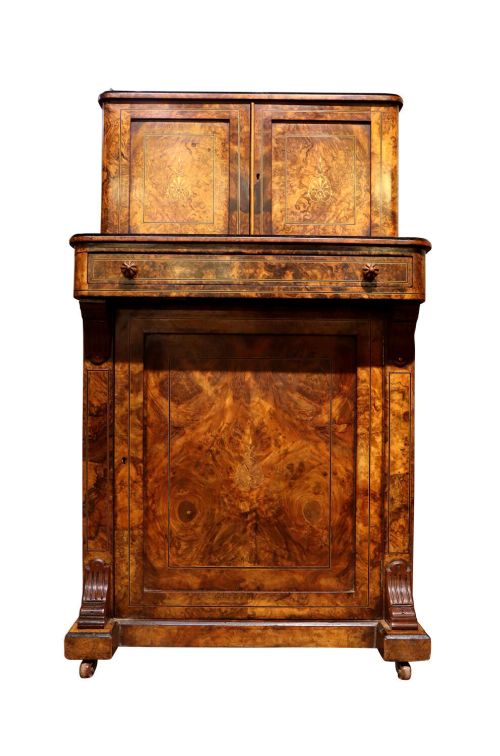
Cabinet makers utilised dense hardwood foundations such as walnut, mahogany, rosewood, and satinwood, frequently selecting burr walnut veneers for rich grain patterns. Boxwood and brass inlay provided contrasting linear detail and decorative motifs across the surfaces.
Surfaces received intricate marquetry and inlay work, combining different timber veneers to create geometric or floral patterns. Interiors often incorporated leather writing surfaces, fitted pigeonholes, and brass mounts to complement the exterior design.
Marquetry Stationery Cabinet Retail Price Guide 2026
Typical asking prices for marquetry stationery cabinet among the pieces listed under this phrase on Sellingantiques today, from the lower quarter to the upper quarter. They describe what is for sale here now, not the wider market.
The selection spans the eighteenth, nineteenth, and twentieth centuries, featuring Victorian, Edwardian, Georgian, and Sheraton Revival styles.
What varies in quality
The sophistication of the timber selection and the precision of the marquetry define the upper tier of these pieces. Finely figured burr walnut and crisp boxwood inlay set better examples apart from simpler constructions.
The complexity of the interior fitting also marks the distinction, with clever pop-up mechanisms, fitted letter slots, and intact brass hardware indicating superior workshop production.
The Marquetry Stationery Cabinet Glossary
- Marquetry
- Decorative veneer work forming pictures or patterns by assembling small pieces of different woods. This technique requires considerable skill to fit the contrasting timbers flush.
- Stationery cabinet
- A desktop box or small cabinet designed to hold writing paper, envelopes, and correspondence. These often feature sloping lids, folding fronts, or fitted internal dividers.
- Davenport desk
- A small compact writing desk featuring a sloped writing surface above a pedestal of drawers. Many variants incorporate a stationery compartment on top.
- Burr walnut
- Timber taken from a tree growth featuring intricate, swirling grain patterns. Cabinet makers prized this wood for decorative veneering on Victorian furniture.
- Bonheur du jour
- A light ladies writing desk featuring a small cabinet or set of shelves on the upper surface. This French form became popular in various British revivals during the nineteenth century.
Marquetry Stationery Cabinet: Frequently Asked Questions
What fits inside a stationery cabinet?
These pieces accommodate writing paper, envelopes, and small writing accessories within dedicated internal compartments and pigeonholes.
Larger variants can also store household correspondence, stamps, and nibs in fitted drawers.
How do I date a cabinet?
Dating relies on timber choices, construction methods, and stylistic cues such as Victorian burr walnut or Edwardian satinwood.
Makers labels, brass hardware styles, and internal mechanisms also help establish the period of production.
Where should I place one?
These cabinets suit a study, sitting room, or hallway desk where they can sit as decorative tabletop pieces.
Keep them away from direct sunlight and strong heat sources to protect the delicate veneer and inlay.
How do I clean the wood?
Dust the exterior gently with a soft, dry cloth to prevent dirt accumulation in the marquetry grain.
Apply a quality beeswax polish occasionally to nourish the timber without building up heavy residues.