


Rosewood Desk Organizer
These rosewood desk organizers bring order to correspondence and papers with the rich grain of exotic timber.
Rosewood Desk Organizer
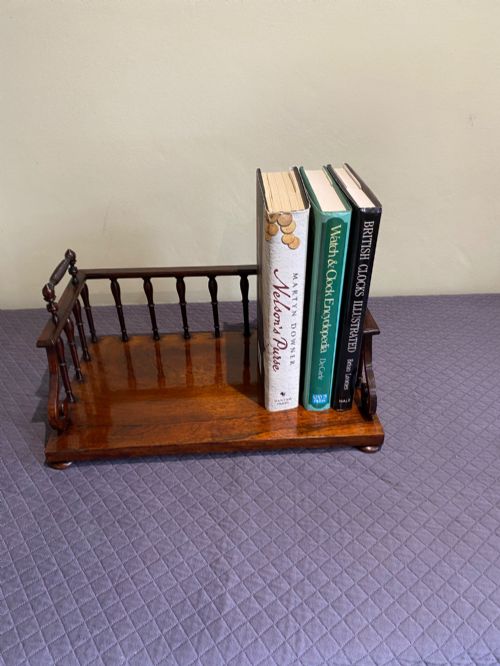
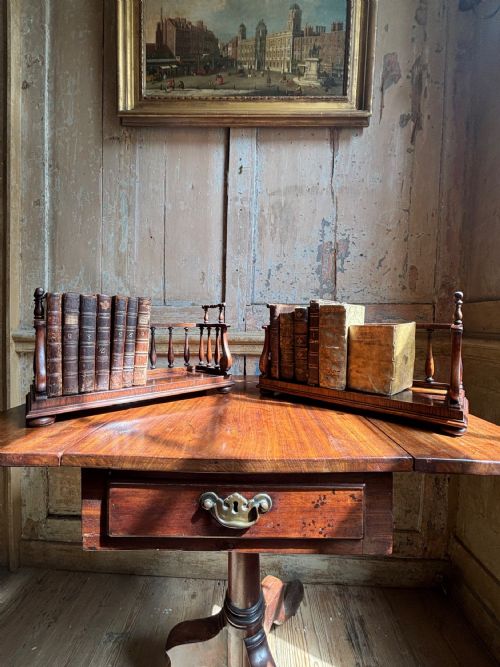
A rosewood desk organizer encompasses stationery boxes, correspondence cabinets, book stands, and desktop cartonnieres designed to keep writing materials tidy. Buyers searching for a rosewood desk organizer encounter pieces ranging from compact Regency book carriers to elaborate Victorian stationery boxes.
The selections span the Regency, William IV, and Victorian eras, alongside Louis XV Revival and Anglo Indian styles. Most items date across the nineteenth century, reflecting the period's emphasis on an organised desktop.
Forms vary from simple book racks to compartmentalised writing boxes with inlaid decoration. The diverse object types serve to hold letters, papers, and books in a domestic study or library.
Materials and construction
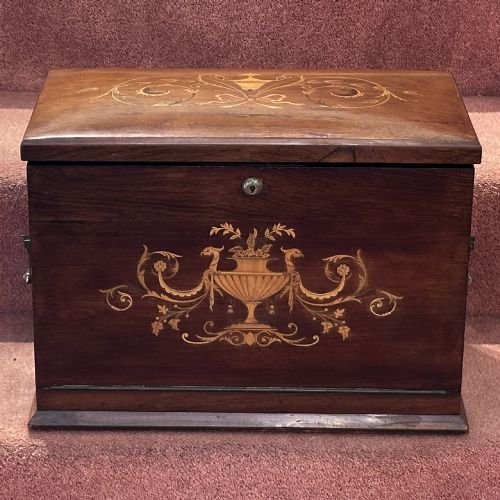
Workshops built these pieces using solid rosewood or rosewood veneers applied to secondary timbers. Cabinetmakers frequently enriched the dark timber with contrasting inlays of satinwood, boxwood, and bone.
Metal mounts in brass and ormolu strengthen corners, frame panels, and form carrying handles. Glass components appear in inkwells, while specialised makers integrated labels to mark their output.
Distinguishing quality
Quality rests in the precision of the joinery and the selection of figured rosewood timber. Finer pieces demonstrate meticulous brass inlay and well-fitted internal partitions for stationery.
Attribution to documented makers or workshops elevates a piece, as seen in items bearing makers' labels or created in the manner of established cabinetmakers. Secondary woods and the crispness of ormolu mounts further separate standard production from superior work.
The Rosewood Desk Organizer Glossary
- Cartonnier
- A desktop cabinet fitted with compartments or drawers for holding papers and documents. These pieces kept active correspondence sorted within easy reach.
- Stationery box
- A desk accessory featuring tiered slots or divisions designed specifically to hold envelopes and writing paper upright. They often match a larger writing slope or inkstand.
- Ormolu
- Gilt bronze mounts applied to furniture and desk accessories for decorative effect. The technique involves applying a gold amalgam to bronze.
- Campaign box
- Portable furniture constructed for travel, typically featuring recessed brass handles and reinforced corners. These items served officers and travellers during the nineteenth century.
- Inlay
- A decorative technique where contrasting materials such as brass, satinwood, or bone are inserted into depressions cut into the rosewood surface.
Rosewood Desk Organizer: Frequently Asked Questions
What is a desktop cartonnier?
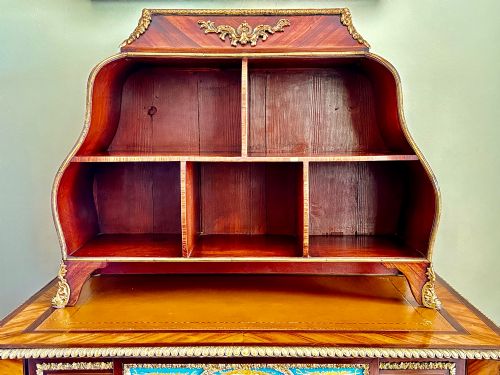
A desktop cartonnier is a small cabinet designed to hold papers, files, and correspondence in upright tiers. These pieces sat upon large library tables and partners' desks to keep working documents sorted.
Cabinetmakers constructed them in styles ranging from Regency austerity to ornate Louis XV Revival designs with ormolu mounts.
How do I date a rosewood box?
Dating relies on stylistic markers, construction methods, and the types of secondary timbers used inside the box. Regency examples display classical restraint and brass inlay, while Victorian pieces often incorporate varied internal stationery compartments.
Cabinetmakers' paper labels or stamps also help narrow the date of manufacture to a specific workshop or decade.
Were these boxes used for travel?
Some pieces, such as campaign correspondence boxes, were built specifically for travel with robust brass corners and flush handles. Other desk accessories remained stationary on library tables and writing desks.
Portable writing boxes and folding stationery cabinets accommodated the needs of nineteenth-century letter writers on the move.
What is an Anglo Indian desk piece?
Anglo Indian desk pieces are items manufactured in the Indian subcontinent during the British colonial period using local timbers and traditional decorative techniques. They frequently feature intricate bone inlay or carved details combined with rosewood.
These objects reflect the exchange of cabinetmaking styles between Britain and colonial workshops.