




Wooden Casing Wall Clock
These wooden casing wall clock pieces combine domestic utility with striking architectural presence, offering a reliable focal point for any interior.
Wooden Casing Wall Clock
A wooden casing wall clock provides both practical timekeeping and distinct period character for an interior wall. When searching for a wooden casing wall clock, buyers encounter formats spanning Victorian, Edwardian, and Art Deco designs.
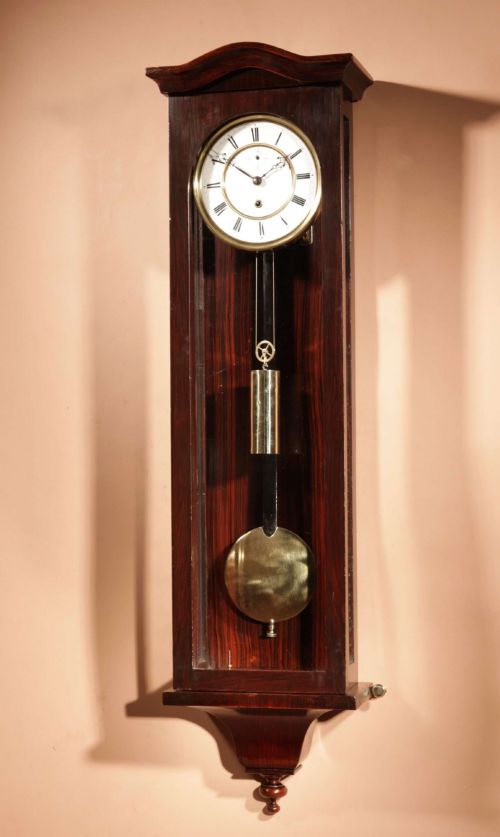
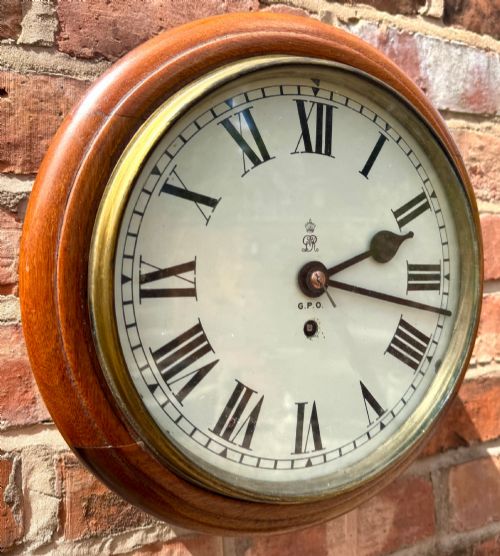
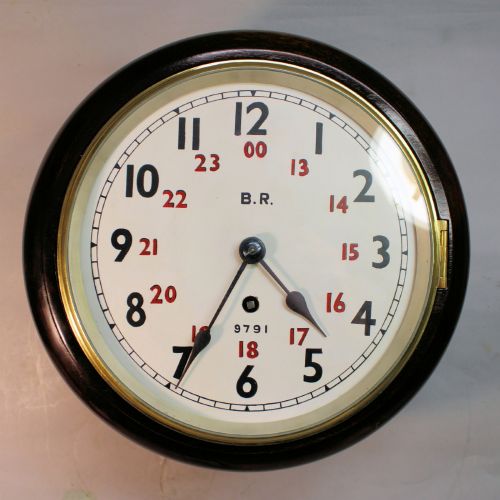
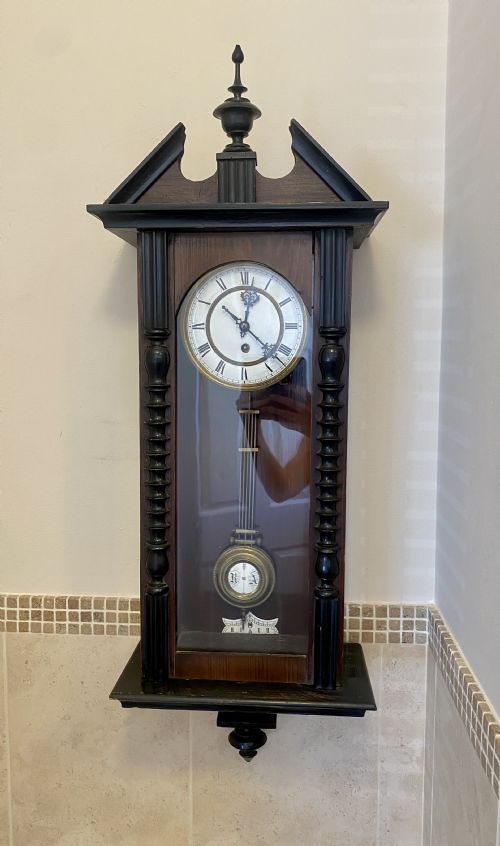
The selection here includes standard dial clocks housed in railway, school, and office styles alongside elaborate weight-driven Vienna regulators. Mahogany and walnut cases dominate, presenting varied silhouettes from simple round dials to carved architectural housings.
How they were made
Clockmakers built these wooden casing wall clock pieces using durable hardwoods such as mahogany, oak, and walnut, frequently housing mechanical movements featuring brass and steel components. Cases often incorporated glass viewing panels and glazed bezels to protect the paper, enamel, or metal dials.
Movements ranged from standard spring-driven mechanisms and single or double chain fusees to sophisticated weight-driven systems like the grande sonnerie. Ebonised wood and intricate carved details were applied to enhance the visual weight and finish of the housing.
The styles represented include Victorian, Art Deco, Biedermeier, and Vienna Regulator designs alongside practical school and railway dial formats.
What varies in quality
The calibre of a wooden casing wall clock rests primarily on the sophistication of its internal movement, such as fusee or multiple-weight regulator systems, compared to simpler timepieces. The precision of the cabinetwork, the depth of wood carving, and the preservation of the original dial finish further separate standard production from superior examples.
The Wooden Casing Wall Clock Glossary
- Fusee
- A conical pulley used in mechanical clocks to maintain an even pull on the movement as the mainspring unwinds. This mechanism helps ensure steady timekeeping accuracy throughout the running cycle.
- Vienna Regulator
- A precise pendulum clock developed in Austria during the nineteenth century, typically housed in a tall wooden case with glass sides. These pieces are celebrated for their refined movements and architectural presence.
- Grande Sonnerie
- A complex striking mechanism that chimes both the hours and the quarters automatically on every quarter hour. It represents a higher tier of horological craftsmanship.
- Dial
- The face of the clock where the hours and minutes are displayed, often painted enamel or metal. In many wall clocks, it sits protected behind a hinged glass door.
Wooden Casing Wall Clock: Frequently Asked Questions
How do fusee wall clocks work?
A fusee movement uses a specially shaped cone pulley connected to the mainspring by a cord or chain. This compensates for the diminishing power of the spring as it unwinds.
This clever mechanical design ensures the force delivered to the gear train remains constant, resulting in more accurate timekeeping across the running period.
Where should I hang a heavy wall clock?
Heavy timepieces require secure fixing directly into a solid wall stud or masonry using appropriate wall anchors. Hanging them on standard drywall without proper support can lead to structural failure.
Ensure the clock hangs completely plumb so the pendulum swings freely and evenly without catching on the internal case walls.
How do I wind a mechanical wall clock?
Winding involves inserting a key into the dial winding holes and turning it gently until resistance is felt. Care must be taken not to overwind the mechanism.
For weight-driven models, pulling the chains or cords carefully raises the weights back to their starting position near the top of the case.
What is the difference between a dial clock and a regulator?
Dial clocks generally feature a compact round face mounted in a simple wooden surround designed for functional timekeeping in public or domestic spaces. They focus on clear legibility from a distance.
Regulators are precision timepieces featuring extended wooden cases with visible pendulums and weights, built primarily for accuracy and visual display.