
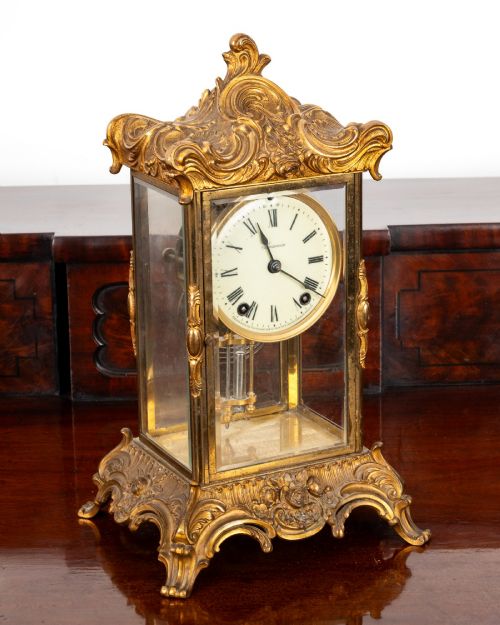


Antique American Clock
An antique american clock brings the precision of nineteenth-century engineering and traditional cabinetmaking straight into a modern room.
Antique American Clock
When you search for an antique american clock, you encounter timepieces ranging from large wall-hanging banjo and drop dial formats to substantial mantel clocks housed in rosewood, mahogany, and walnut cases. These objects record the industrial output of United States workshops during the nineteenth and early twentieth centuries, spanning periods from the 1860s to the 1930s.
The version you are most likely to meet on this page is the nineteenth-century wall clock or mantel clock, frequently built with an eight-day movement and housed in dark hardwoods. Styles on show move through Victorian, Gothic Revival, Colonial Revival, and American Empire aesthetics, reflecting the changing tastes of parlours and public rooms over several decades.
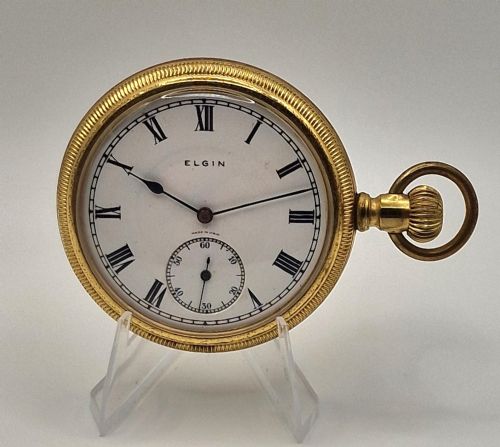
Beyond standard wall and mantel timepieces, the category also admits related instruments like pocket watches, barometers, and specialised solar timepieces. Each piece demonstrates how American makers adapted European horological traditions to local materials and domestic interiors.
How they were made
The construction of these pieces relies heavily on dense timbers like mahogany, rosewood, walnut, and ebonised woods, shaped into architectural cases with glass panels and brass bezels. Movements are typically driven by brass gears and steel components, sometimes incorporating paper dials and enamel faces.
Case makers utilised architectural styles such as Gothic Revival and American Empire, carving walnut or finishing rosewood to high sheens while incorporating painted glass panels into door fronts. Movements ranged from standard time-and-strike systems to bell chiming and gong striking mechanisms.
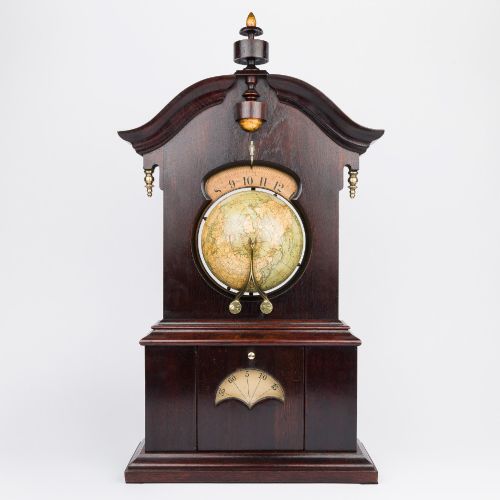
Timby's solar timepiece from 1860 offered nineteenth-century owners a mechanical link to the sun, proving that early American inventors loved complicated gadgets.
What varies in quality
Quality in these timepieces rests upon the crispness of the timber case and the sophistication of the movement within. A superior piece exhibits finely figured mahogany or rosewood veneers, clean carved details, and robust brass mechanics that maintain reliable time.
At the simpler end, you find plain pine or maple cases with ebonised finishes and straightforward paper dials, produced in high volumes for domestic use. The presence of specialised movements, such as double barrel systems or bell chiming functions, elevates the standing of an individual clock.
Seth Thomas·Ansonia·Wm. Gilbert U.S.A.·Elgin
The Antique American Clock Glossary
- Banjo clock
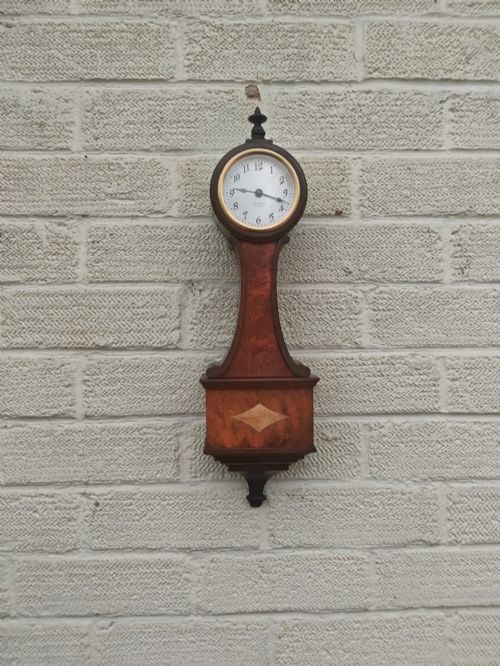
- A wall clock with a long, vertical neck and a round base, named for its resemblance to the musical instrument. This form was widely produced by American makers in the nineteenth and early twentieth centuries.
- Drop dial clock
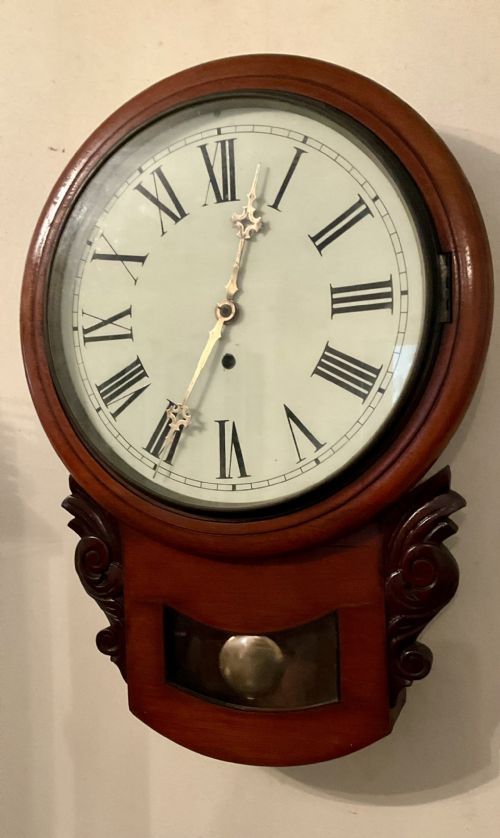
- A wall clock featuring a circular dial at the top and an extended wooden case below, often with a glazed pendulum window. The drop portion allows space for the pendulum to swing within a compact footprint.
- Crystal regulator
- A mantel clock enclosed in glass panels held by a brass or gilt bronze frame, exposing the movement from multiple angles. These pieces date predominantly to the late nineteenth century and emphasise decorative mechanical visibility.
- Gingerbread clock
- A popular American mantel clock housed in an elaborately pressed and carved wooden case, commonly featuring shelf brackets and scrollwork. They were mass-produced during the later nineteenth century for everyday household use.
- Solar timepiece
- A specialised clock designed to reconcile mechanical time with solar observation, such as Timby's solar timepiece from 1860. These scarce variants combine scientific utility with period craftsmanship.
Antique American Clock: Frequently Asked Questions
What is a banjo wall clock?
A banjo wall clock is a distinct American timepiece featuring a round dial mounted above a long vertical neck and a larger circular box at the base.
This wall-hanging format became popular during the nineteenth century and is frequently seen with painted glass panels decorating the lower portion of the case.
How do eight day movements work?
An eight day movement requires winding roughly once a week, utilising spring-driven or weight-driven brass gears to regulate time.
This mechanical setup allowed nineteenth-century households to maintain accurate time without the daily attention demanded by simpler thirty-hour clocks.
Where were these clocks displayed?
These timepieces were traditionally placed in prominent household locations such as hallways, parlours, and dining rooms where guests could consult them.
Wall clocks hung securely near entryways for daily scheduling, while mantel clocks sat atop fireplaces as decorative fixtures in the main living spaces.
How do I identify a Gothic Revival case?
A Gothic Revival case displays architectural motifs borrowed from medieval stone buildings, including pointed arches, finials, and heavy dark wood mouldings.
Cabinetmakers applied these dramatic structural elements to rosewood and walnut mantel clocks during the mid-to-late nineteenth century.