




Antique Chiming Shelf Clock
An antique chiming shelf clock brings a mechanical voice into a room, marking the hours in mahogany, walnut, or marble.
Antique Chiming Shelf Clock
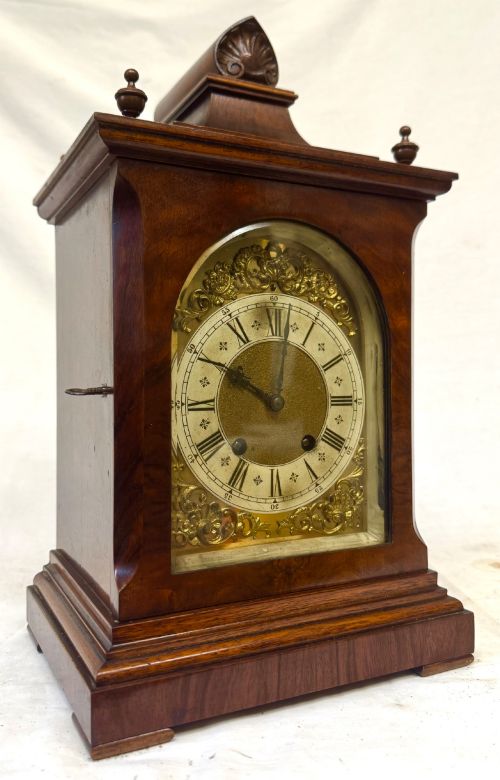
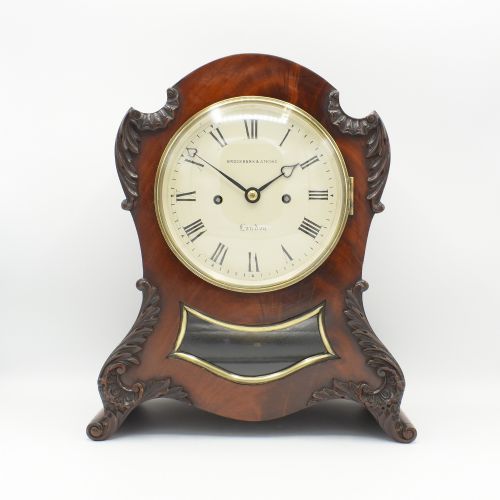
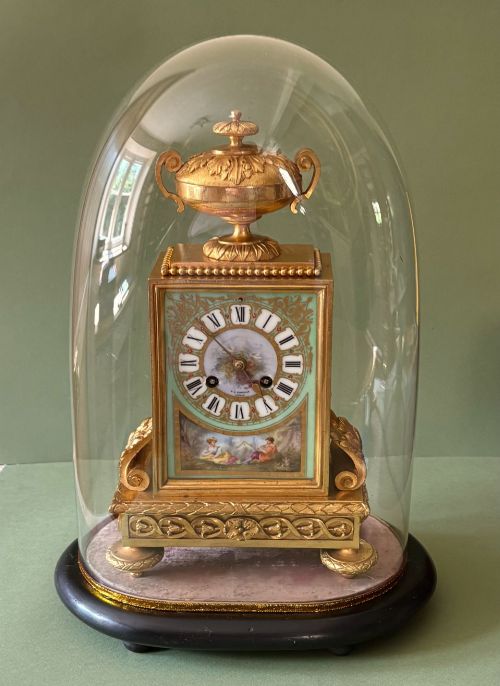
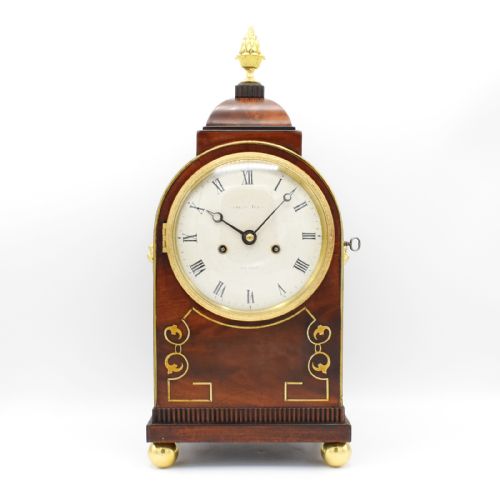
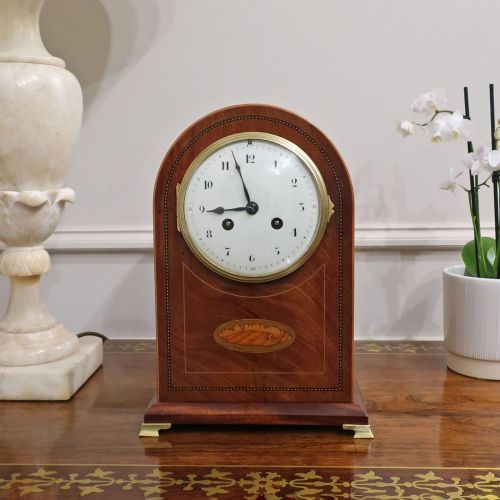
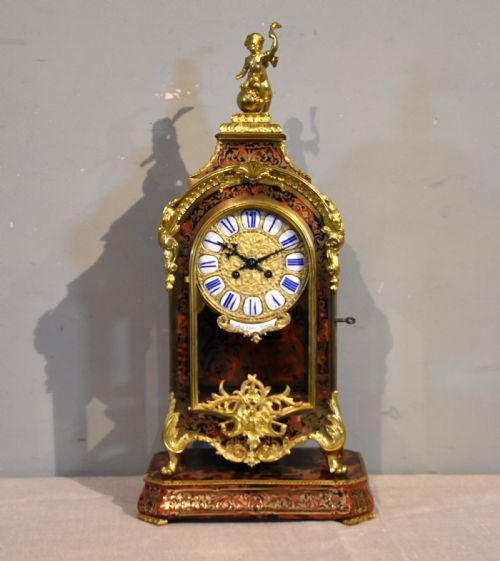
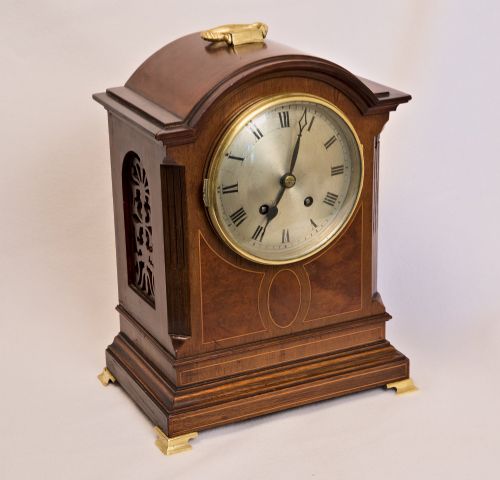
An antique chiming shelf clock sits on a mantelpiece, table, or bracket, serving both as a timekeeper and a decorative centrepiece. These pieces appear in varied regional styles, from English mahogany lancet designs to elaborate French ormolu and porcelain mounted works. Buyers seek them for their mechanical complexity and the architectural presence they lend to an interior.
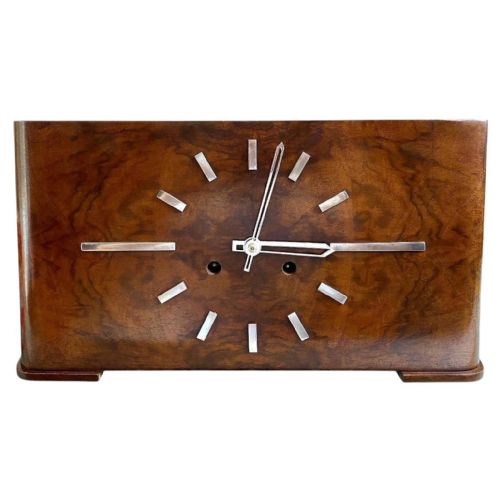
The specimens met most frequently on this page date from the nineteenth century into the nineteen-thirties. Victorian, Edwardian, and Art Deco eras dominate the selection, bringing materials ranging from dark hardwoods to slate and marble. Makers from England, France, and Germany contributed movements that strike the hours and quarters while housed in distinct period cases.
Materials and construction methods
Casework relies on dense timbers like mahogany, walnut, rosewood, and oak, often finished with marquetry inlay or ebonisation. Alternatively, makers utilised slate, white marble, bronze, and ormolu to build heavy, architectural structures. Glass doors and side panels protect the dial while allowing a view of the internal mechanics.
The inner workings combine brass plates and gears with steel springs or weights, driven by fusee or anchor escapement mechanisms. Dials feature enamelled cartouches, engraved brass plates, or visible chrome details suited to later modernist designs. Sound is produced by gongs or bells struck by internal hammers during the chiming sequence.
Some models hide thermometers right beside the dial, proving that keeping warm was once as pressing as knowing the time.
Distinctions in craftsmanship
The standard of a clock rests on the crispness of the case carving, the depth of timber grain, and the precision of the metal mounts. Ormolu details and cast bronze elements show varying degrees of hand-chasing after casting, separating standard production from exceptional workshop output. Dial legibility and the fidelity of painted or enamelled numerals also signal the original tier of manufacture.
Movement execution marks the primary divide between ordinary and superior pieces. Signed movements by notable makers demonstrate finer tolerances in gear cutting and more durable escapement construction. The resonance of the chime and the stability of the movement within its housing reflect the overall investment of the original maker.
Brockbanks & Atkins·Charles Pratt London·Haller·Junghans·Lenzkirch·Malecot of Paris·Pfeilkreuz Junghans·Savory & Fils A Paris
The Antique Chiming Shelf Clock Glossary
- Bracket clock
- A portable timekeeper originally designed to sit on a wall bracket or shelf. These pieces typically feature sturdy carrying handles and fine wood or metal cases.
- Fusee
- A conical pulley used in mechanical clocks to maintain even power as the mainspring unwinds. This device improves timekeeping accuracy across the duration of the wind.
- Ormolu
- Gilt bronze ornamentation applied to furniture and clock cases. The technique involves creating a gold and mercury amalgam on a bronze base.
- Westminster chime
- A four-note melody played by a clock movement to announce the quarters of the hour. It originates from the quarters sounded by the clock at the Palace of Westminster.
- Escapement
- The mechanical linkage that regulates the release of power from the gear train. It converts rotational force into impulse to maintain the motion of the pendulum or balance wheel.
Antique Chiming Shelf Clock: Frequently Asked Questions
How do I wind an antique chiming shelf clock?
Wind the clock using a matching key inserted into the winding arbors on the dial face. Turn gently until resistance is felt, avoiding over-winding to protect the mainspring.
Ensure you wind both the time and strike trains if the movement requires it. Keeping a regular schedule helps maintain consistent timekeeping.
Where should I place a heavy marble clock?
Place heavy slate or marble models on a sturdy mantelpiece or a reinforced console table capable of supporting the weight. Level the surface carefully so the pendulum swings evenly.
Avoid locations near direct heat sources or damp exterior walls, which can affect the timber and internal metal components over time.
How do I tell an Art Deco clock apart from a Victorian one?
Art Deco models from the nineteen-thirties favour geometric shapes, chrome accents, and streamlined walnut or glass forms. They reflect modern industrial design trends of the interwar period.
Victorian pieces lean towards historical revivals, featuring ornate carving, heavy brass mounts, and classical architectural motifs like columns and pediments.
What causes a chiming clock to go out of beat?
Moving the clock often shifts the delicate balance of the escapement or alters the position of the pendulum. This causes the ticking sound to become uneven and can stop the movement entirely.
Adjusting the base feet or repositioning the pendulum suspension spring usually restores the correct beat and sound.