


Wooden Cake Display
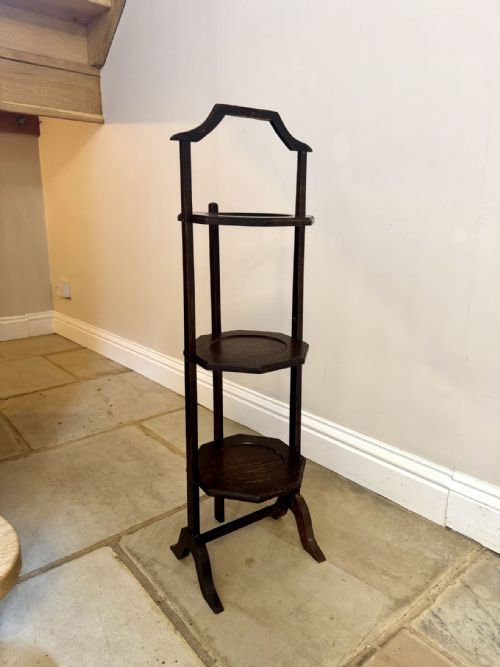
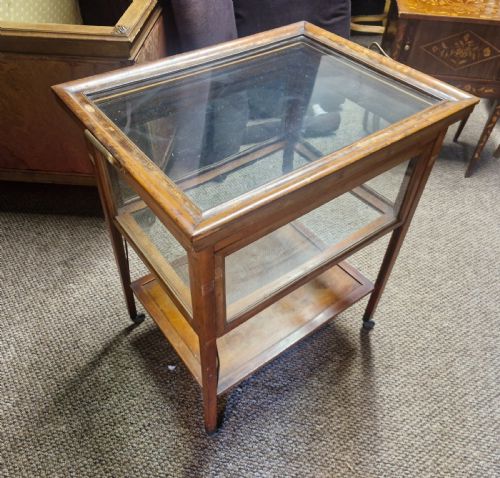
These wooden cake display pieces are tiered stands and folding tables designed for serving baked goods, offering practical elegance for any room.
Wooden Cake Display
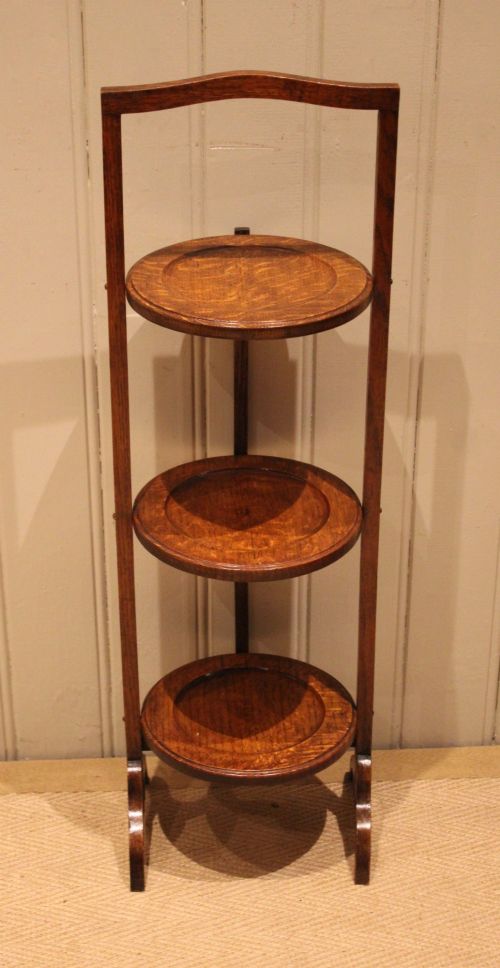
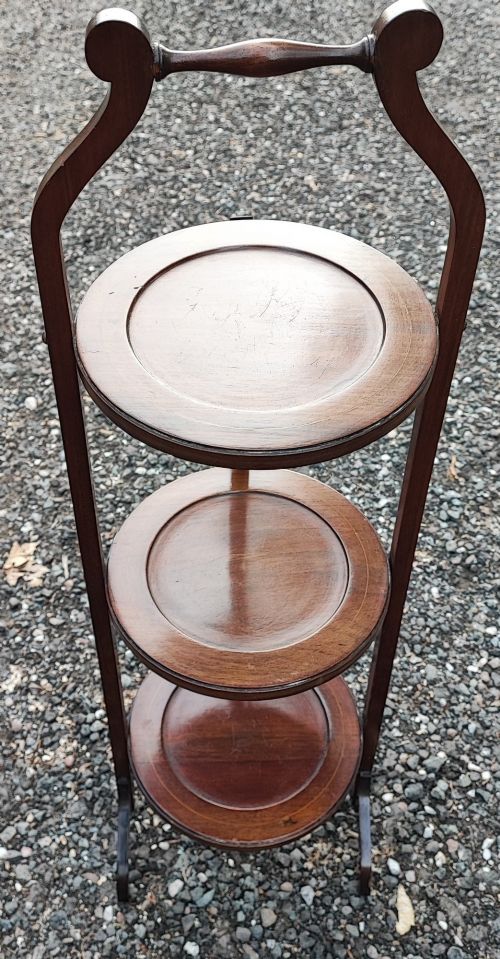
When you search for wooden cake display, you encounter a selection of tiered stands, folding tables, and tea trolleys designed to showcase pastries and cakes. The pieces on this page span from the Victorian and Edwardian eras into the early twentieth century, reflecting a period of refined domestic hospitality. Most examples you will meet are multi-tiered folding stands made to store flat when not in use.
The forms range from simple single-tier circular stands to elaborate three-tier and four-tier folding constructions. You will also find drop-side tea trolleys and specialised cake or cheese stands with circular tops. Oak and mahogany dominate the selection, often enriched with satinwood or boxwood inlay in the Sheraton Revival style.
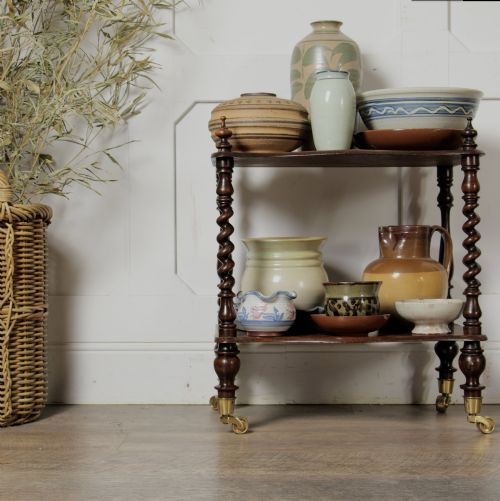
Edwardian and Victorian workshops produced the vast majority of these items, favouring utility alongside decorative domestic charm. Whether you choose a barley twist support or a simple tiered frame, these items serve as functional display furniture. They bring period character to modern interiors while retaining their original purpose of presenting food.
Materials and construction
Cabinet makers utilised dense hardwoods such as mahogany, oak, and rosewood to construct sturdy frames capable of supporting tiered trays. Brass fittings appear on hinges and drop sides, adding durability and functional contrast to the dark timber surfaces. Inlaid elements in boxwood and satinwood provide delicate geometric or floral detailing.
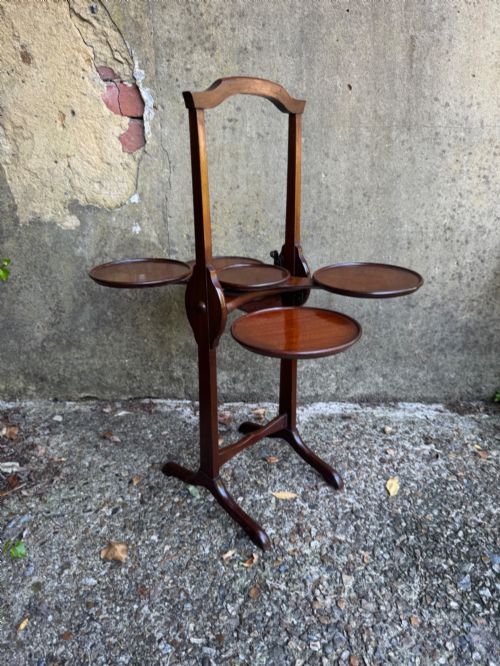
Folding mechanisms require precise joinery to ensure tiers open smoothly and lock securely into position without wobbling. Turning techniques created distinctive vertical supports like barley twist columns, while circular tabletops rely on stable core construction to prevent warping over time.
Some Victorian items served a dual identity, doubling as cheese stands for the dining room when the cake plates were cleared away.
Assessing quality and craftsmanship
Quality in a wooden cake display rests upon the choice of timber and the crispness of any inlay work. Better pieces exhibit finely figured mahogany or quarter-sawn oak with tight, deliberate grain patterns rather than plain utility timber.
The engineering of the folding mechanism separates standard items from finer examples. Superior pieces move smoothly on their brass hinges and maintain absolute rigidity when open, showing careful attention by the maker to the stability of each tier.
The Wooden Cake Display Glossary
- Tiered Stand
- A piece of furniture featuring multiple horizontal surfaces arranged vertically to display items. These structures maximise vertical space on a tabletop or floor.
- Sheraton Revival
- A late nineteenth and early twentieth century design style drawing on the neoclassical furniture of Thomas Sheraton. It relies on satinwood inlay, mahogany, and graceful proportions.
- Barley Twist
- A cylindrical furniture leg or column carved in a spiral resembling a twisted rope. This turning style is common in Victorian and Edwardian joinery.
- Drop-Side
- A tabletop design with hinged flaps that can be lowered or raised to alter the surface area. This mechanism allows furniture to save space when folded down.
- Inlay
- A technique where pieces of contrasting timber, such as boxwood or satinwood, are inserted into recesses in the primary wood to create decorative patterns.
Wooden Cake Display: Frequently Asked Questions
How do I fold a wooden cake stand?
Most folding stands rely on hinged vertical struts that pivot inward to allow the tiers to collapse together flat.
Take care to lift slightly on the supporting arms before folding to protect the brass hinges from undue strain.
Can I use these stands for daily dining?
These pieces were built to serve cakes, pastries, and afternoon tea in domestic settings. Their sturdy hardwood construction makes them entirely suitable for holding light tableware today.
Avoid placing excessively heavy items on the upper tiers to maintain balance and prevent tipping.
How do I date an Edwardian cake stand?
Edwardian pieces often feature lighter mahogany timbers, sometimes accented with delicate boxwood inlay reflecting Sheraton Revival tastes. Construction methods also lean towards lighter, more refined folding frames than their heavier Victorian predecessors.
Check for machine-cut components alongside hand-finished details, as industrial woodworking methods advanced significantly during this period.