


Inlaid Folding Stand
An inlaid folding stand provides a portable surface that collapses for storage while displaying intricate marquetry or metal inlay.
Inlaid Folding Stand
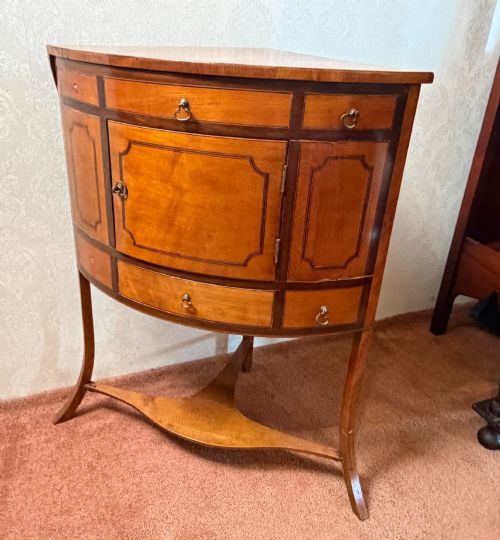
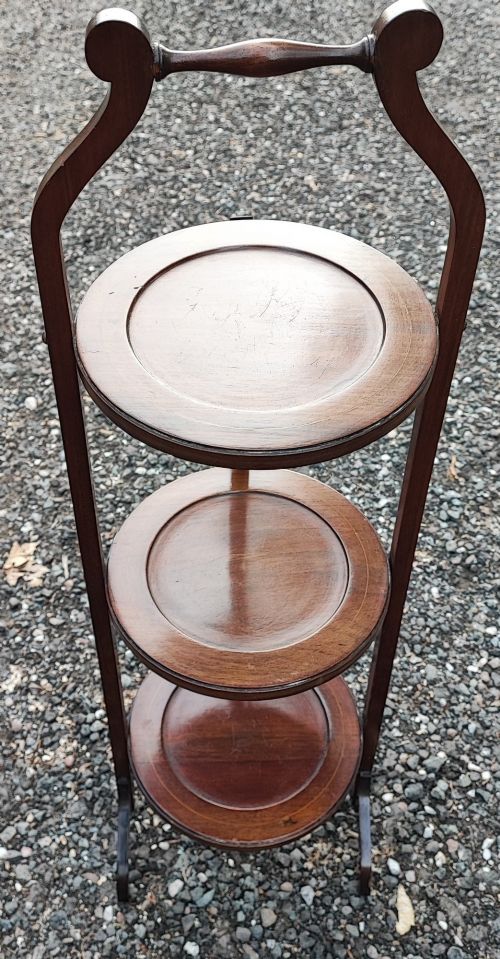
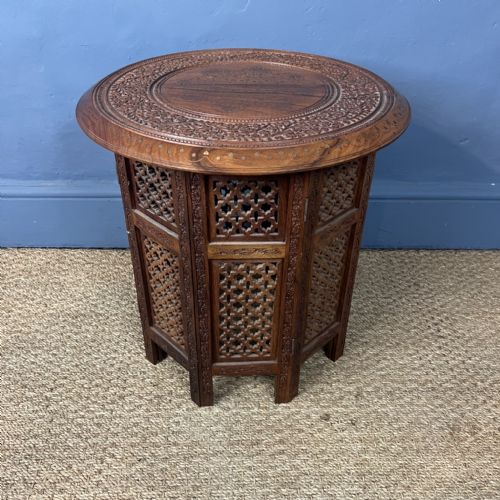
When you search for an inlaid folding stand, you encounter a variety of multi-functional furniture designed to be packed away or moved easily between rooms. The pieces appearing in this category span several centuries and styles, though Edwardian cake stands in mahogany appear most frequently alongside Anglo-Indian occasional tables.
The selection includes tiered cake stands, octagonal tables with folding bases, washstands with hinged elements, and occasional furniture from the Georgian, Victorian, and Edwardian eras. These objects combine practical utility with decorative surface patterns achieved through contrasting timbers and metal or bone embellishments.
Origins range from British workshops influenced by Sheraton Revival designs to workshops in Hoshiarpur producing intricate bone and brass work. Buyers find items intended for serving afternoon tea, holding books, or supporting wash basins, all united by a collapsible or folding construction.
How they were made
Makers utilised dense timbers such as mahogany, teak, sheesham wood, and satinwood as the structural foundation for these pieces. Boxwood and coromandel provided contrasting colour for stringing and geometric details.
Surface decoration frequently relied on brass wire inlay, bone inlay, and mother of pearl set flush into the wood. Carpenters constructed hinged mechanisms using brass brackets and pins to allow frames to fold flat without sacrificing stability.
Listings feature mahogany, teak, and satinwood alongside brass, bone, and mother of pearl inlay across multiple centuries.
What varies in quality
The standard of craftsmanship depends largely on the precision of the joinery in the folding mechanism and the tightness of the inlay. Superior examples retain all original bone or brass elements without shrinkage cracks in the surrounding timber.
Finer pieces display crisply carved foliage and balanced proportions, particularly in Anglo-Indian octagonal tables and Sheraton Revival tiered stands. The choice of secondary woods and the complexity of the internal hinge construction also distinguish higher grades of manufacture.
Gillows Lancaster
The Inlaid Folding Stand Glossary
- Inlay
- A technique where pieces of a contrasting material are embedded into depressions in a wood base to form a pattern.
- Sheesham
- A durable Indian rosewood frequently utilised for carved and inlaid tables originating from regions such as Hoshiarpur.
- Marquetry
- Elaborate decorative veneer arranged in pictorial or geometric patterns across a furniture surface.
- Tiered
- Describing furniture constructed with multiple horizontal levels, common in cake stands and occasional display pieces.
- Satinwood
- A pale, lustrous timber native to India and Ceylon, prized for fine cabinet work and contrasting stringing.
Inlaid Folding Stand: Frequently Asked Questions
What is an inlaid folding stand?
An inlaid folding stand is a piece of antique furniture, such as a cake stand, washstand, or occasional table, featuring decorative surface patterns and a collapsible frame.
These items were built to be easily stored or moved when not in use, combining portability with ornate woodwork.
How do I date an inlaid folding stand?
Dating relies on identifying the timber species, style markers like Sheraton Revival or Edwardian stringing, and the construction of the folding mechanism.
Earlier pieces from the eighteenth century utilise heavy mahogany and boxwood, while Edwardian examples often feature lighter satinwood frames and multi-tiered cake stand configurations.
Where were Anglo-Indian stands made?
Many Anglo-Indian folding stands and octagonal tables originated from craft centres like Hoshiarpur during the nineteenth and early twentieth centuries.
These regional pieces typically combine dense teak or sheesham wood with intricate bone and brass wire inlay.
How were folding stands used?
Folding stands served versatile domestic purposes, ranging from presenting afternoon tea on tiered cake stands to supporting wash basins in bedrooms.
Their collapsible design allowed households to clear floor space quickly or repurpose rooms for entertaining.