


Wooden Butler Tray
A wooden butler tray brings utility and heritage to a room, offering a versatile surface originally designed for domestic service.
Wooden Butler Tray
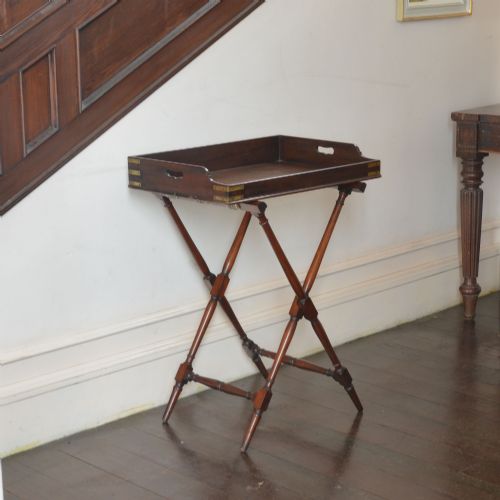
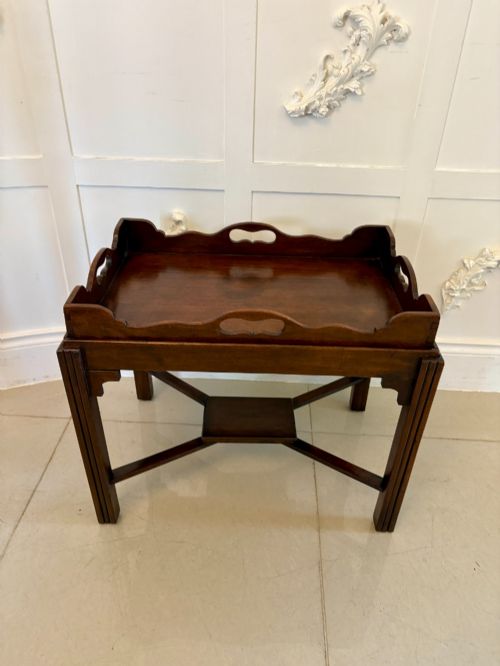
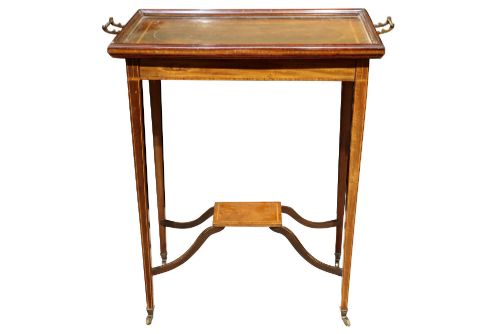
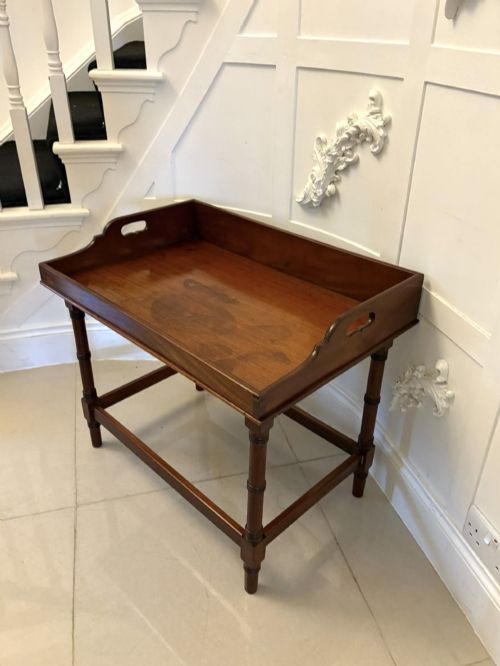
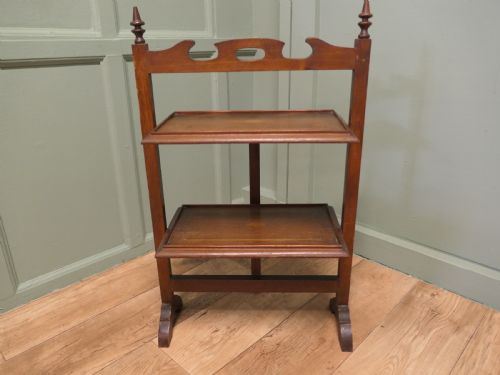
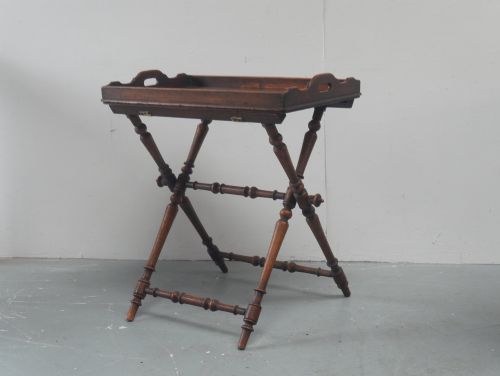
A wooden butler tray comprises a removable tray top paired with a folding or fixed stand, functioning as a portable serving surface or low table. These pieces span from the 18th century through the Edwardian period, encompassing Georgian, Victorian, and later iterations.
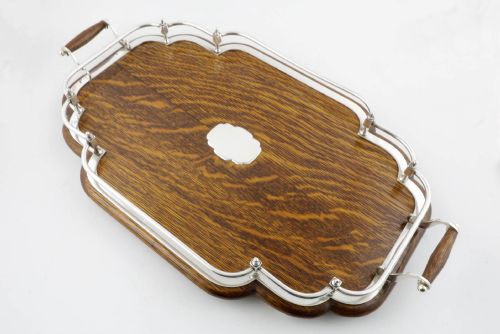
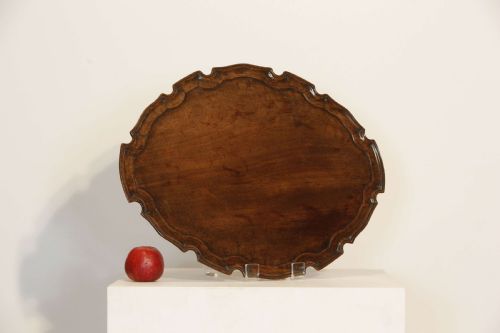
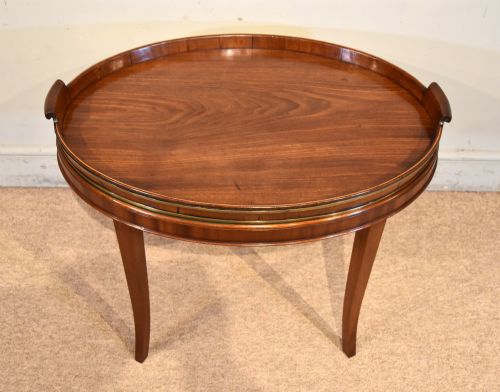
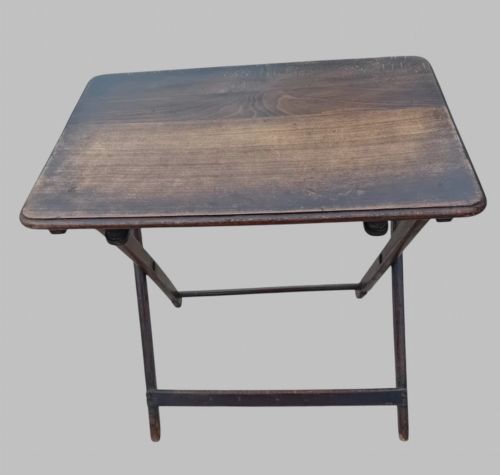
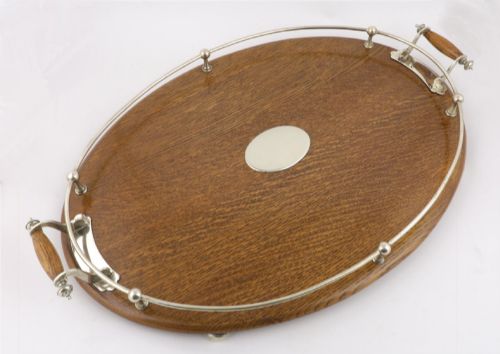
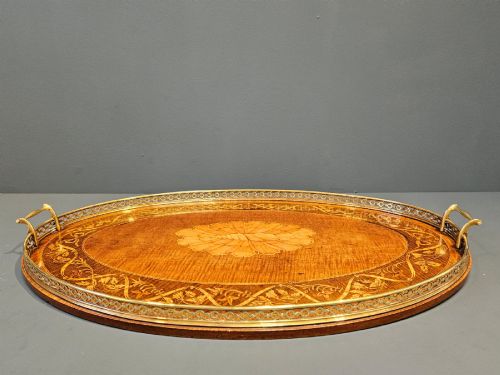
The most common formats found here include mahogany and oak trays resting on X-frame folding stands, often referred to as coaching tables or tray tables. Variations range from simple rectangular carrying trays with hinged drop-flaps to elaborate oval and kidney-shaped serving pieces.
How They Were Made
Cabinet makers utilised dense hardwoods such as mahogany, walnut, and oak, often constructing the tray bases with dovetailed corners for structural resilience. Drop-flap hinges and carrying handles were typically fashioned from brass to withstand frequent lifting and movement.
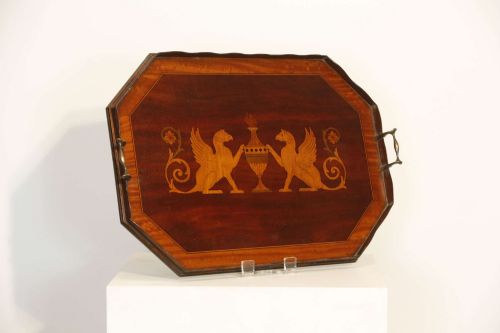
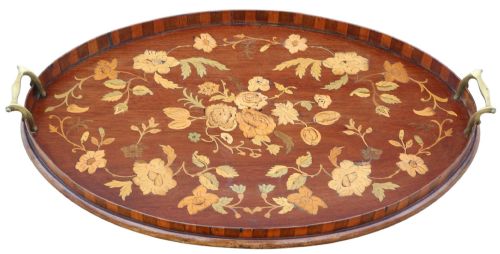
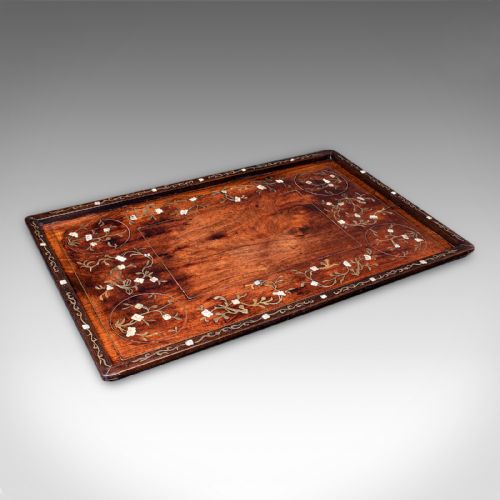
Surface decoration frequently involved intricate marquetry, satinwood inlay, or oyster veneering, whilst some examples employed coopered construction with brass banding. Stands were built to fold flat using clever pivoting wooden joints, allowing the entire unit to be stored away when not in active service.
Wooden Butler Tray Retail Price Guide 2026
Typical asking prices for wooden butler tray among the pieces listed under this phrase on Sellingantiques today, from the lower quarter to the upper quarter. They describe what is for sale here now, not the wider market.
The inventory encompasses periods from the 18th century through the Georgian, Victorian, and Edwardian eras.
What Varies in Quality
The calibre of a wooden butler tray depends largely on the crispness of the cabinet work and the selection of timber veneers. Superior examples display tight, figured mahogany or precise marquetry work that remains flush with the surrounding wood.
Hardware integration also dictates standard; top-tier pieces retain their original heavy brass hinges, drop handles, and matching stands rather than later replacements. The balance and stability of the tray when rested upon its folding stand reflect the initial precision of its construction.
Edwards and Roberts
The Wooden Butler Tray Glossary
- Drop-flap
- A hinged section on the side of a tray that lowers or locks into place horizontally to extend the usable surface area. This mechanism allowed servants to expand the table during tea service.
- Marquetry
- The art of applying decorative pieces of veneer to a structure to form intricate pictorial designs or geometric patterns. Makers used contrasting woods like satinwood and walnut to achieve this effect.
- Coaching table
- A portable folding wooden stand designed to support a removable tray top during travel or domestic use. The cross-frame design collapses flat for compact storage.
- Gallery
- A raised wooden or metal border fitted around the edge of a tray to prevent items from sliding off during transit. These rims are often pierced or shaped with decorative handles.
- Coopered
- A method of construction using curved wooden staves bound together, traditionally borrowed from barrel making. This technique created sturdy, rounded tray walls.
Wooden Butler Tray: Frequently Asked Questions
How were wooden butler trays originally used?
These trays served domestic staff in transporting food, silver, and tea from the kitchens to the main reception rooms. Once in the room, the tray was placed upon its folding stand to create a temporary side table.
After use, the tray was lifted off and the stand folded away, making the entire setup highly adaptable for homes with limited space.
Are the trays permanently attached to their stands?
Most traditional examples feature a completely removable tray resting unattached on a folding X-frame base. This allowed the tray to function independently as a serving platter before being returned to its stand.
Some later or modified pieces incorporate fixed attachments, but the classic design separates the two elements for ease of handling.
How do I care for an antique wooden tray?
Keep wooden butler trays away from direct heat sources and strong sunlight to prevent the timber and veneers from drying out or splitting. Dust regularly with a soft, dry cloth and apply a quality beeswax periodically to nourish the polished surface.
Avoid placing wet glasses or hot dishes directly onto antique polish by using coasters and mats to protect the vintage finish.
How can I tell a Georgian tray from a Victorian one?
Georgian trays generally favour restrained elegance, relying on solid mahogany, understated brass handles, and subtle carved or galleried edges. Victorian and Edwardian examples often introduce more elaborate decoration, including marquetry inlay, satinwood banding, and kidney-shaped forms.
Examining the construction methods, screw types, and wood ageing helps clarify the specific period of manufacture.