
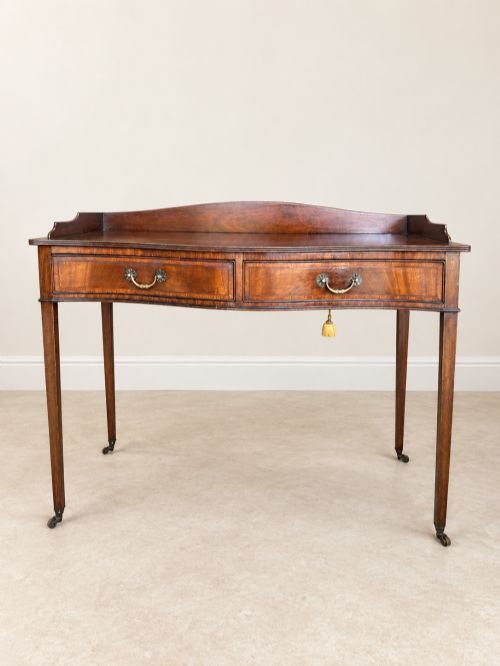
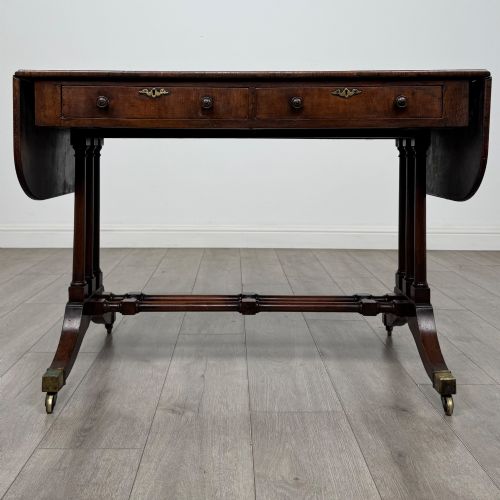
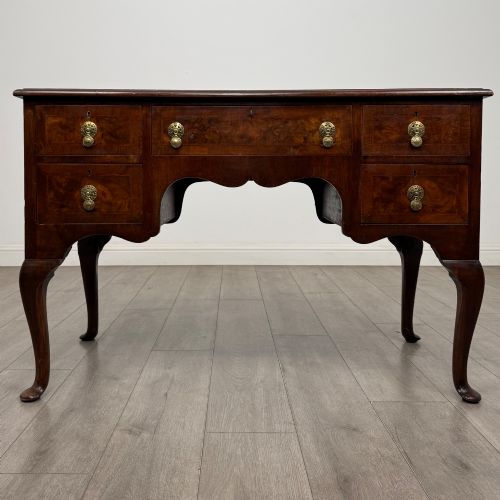
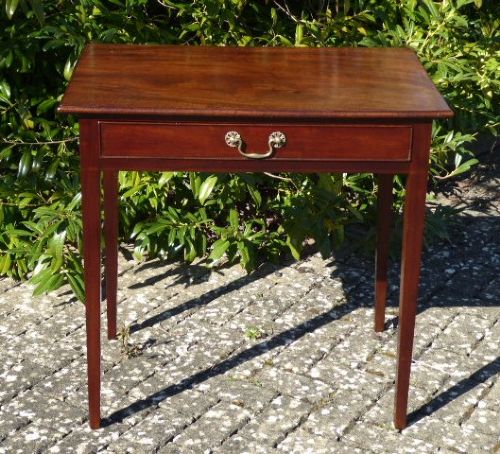
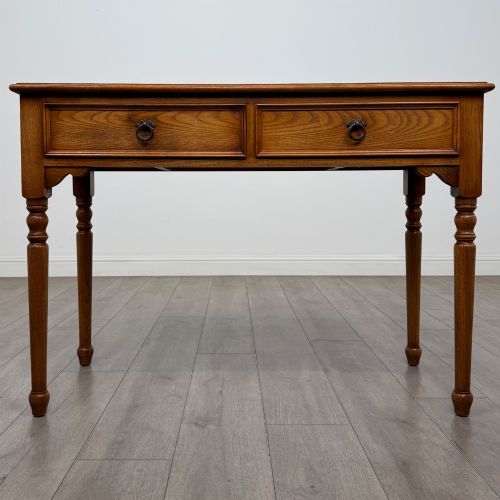
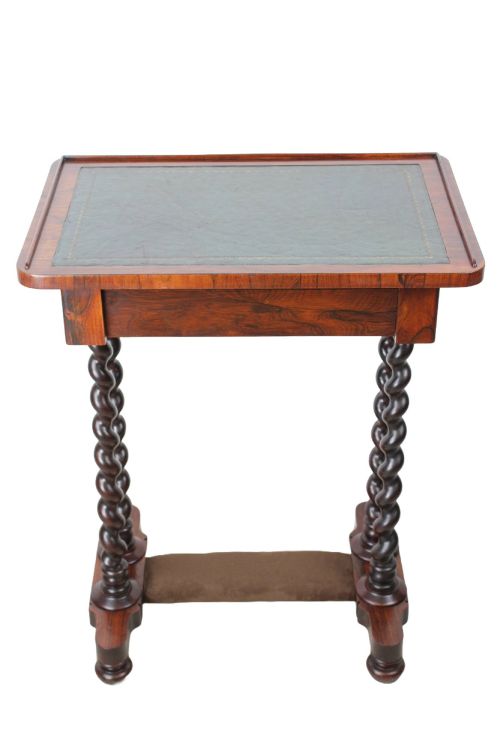


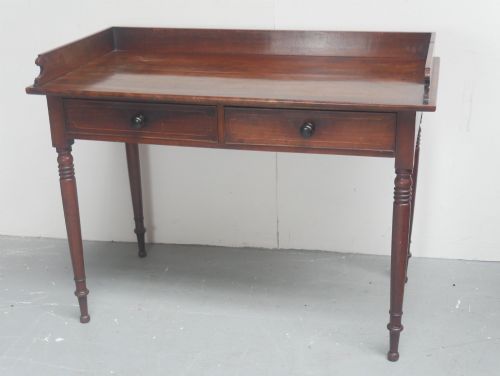
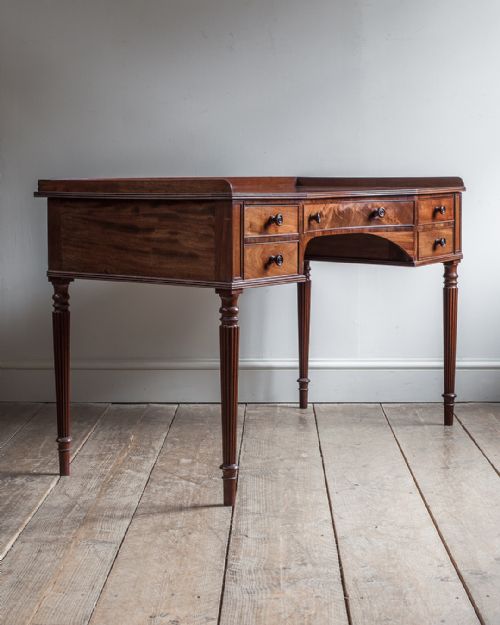
Wood Writing Table
When you search for a wood writing table, you enter a world of practical surfaces shaped from mahogany, rosewood, and oak for study and correspondence.
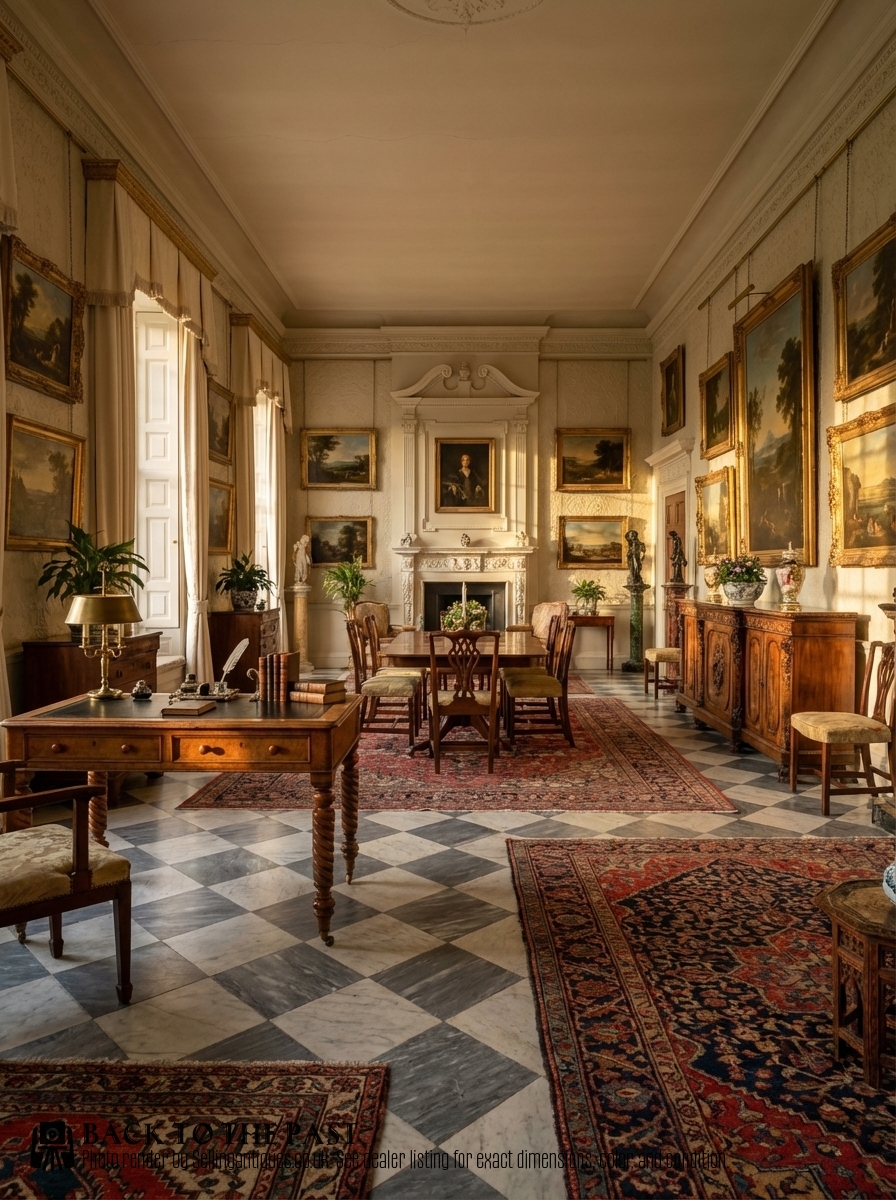
Wood Writing Table
A wood writing table serves as a dedicated station for correspondence, study, and administrative tasks, appearing across multiple centuries and decorative movements. Buyers exploring this category encounter forms ranging from compact Edwardian and Georgian freestanding writing desks to larger Regency and Victorian library tables.
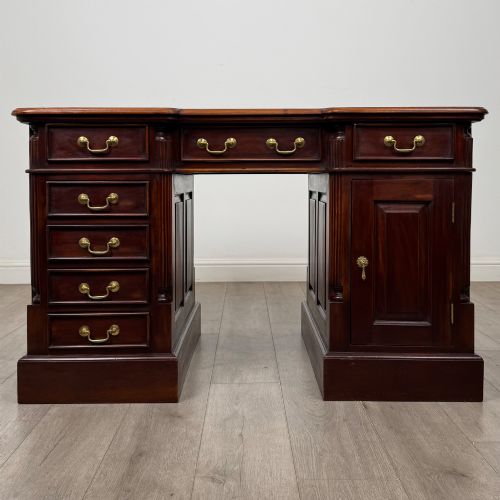
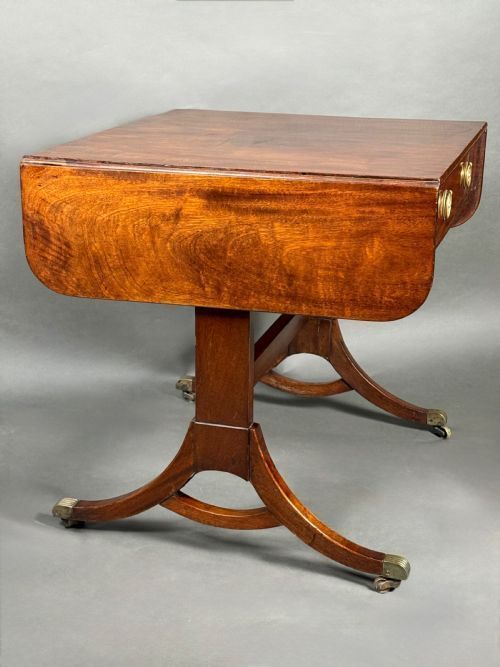
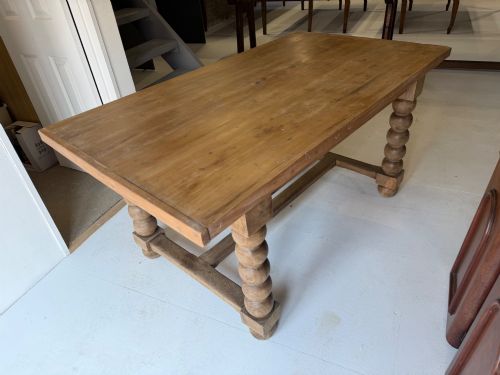
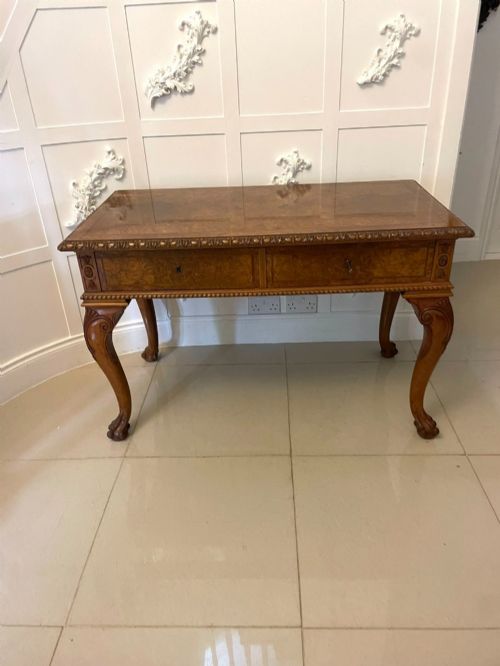
The pieces listed on this page span the 18th, 19th, and early 20th centuries, taking shapes such as kneehole desks, pedestal formats, and side tables fitted with drawers. Mahogany and rosewood dominate the selection, often accompanied by lighter contrasting timbers like satinwood and walnut.
Originating primarily from British workshops, these tables reflect the domestic requirements of their eras, from modest ladies' writing desks to grand partner's desks. Many examples incorporate leather inserts, drop leaves, or tambour compartments designed specifically for writing materials.
How They Were Made
Cabinetmakers utilised solid timbers and selected veneers such as flame mahogany, burr walnut, and kingwood, applying them over sturdy secondary woods like oak and pine. Construction often involved traditional dovetail joints for drawer construction and precise mortise and tenon framing for the structural legs and pedestals.
Surface ornamentation relied on contrasting stringing, boxwood and satinwood inlay, marquetry, and occasional brass mounts or ormolu details. Leather writing surfaces were typically tooled and gilt-edged, while finishes were built up using traditional polishing methods to bring out the natural grain figures.
The listings on this site encompass pieces from the 17th century through to the Art Deco era, utilising oak, mahogany, rosewood, and satinwood.
What Varies In Quality
The hierarchy of these pieces rests on the choice of timber figures, the precision of the cabinetwork, and the retention of original elements such as brass handles and leather inserts. Master workshops employed finely figured veneers and meticulous crossbanding, whereas utilitarian pieces relied on plainer stock and simpler joints.
Trollope and sons·Jackson and Graham·Gill and Reigate·Gillows·Edwards and Roberts·Collinson and Lock
The Wood Writing Table Glossary
- Crossbanding
- A strip of veneer laid across the grain direction around the border of a top or drawer front. This technique frames the primary wood figure.
- Kneehole desk
- A desk featuring a central recess for the user's legs, flanked by pedestals of drawers. This form became popular during the Georgian period.
- Ormolu
- Gilt-bronze mounts applied as decorative ornaments to furniture. They are frequently found on French and high-status English pieces.
- Tambour
- A sliding surface made of narrow strips of wood glued to a canvas backing. It allows storage compartments to be concealed flexibly.
- Partners desk
- A large double-sided desk designed for two people to work opposite each other. These usually feature drawers and cupboards on both faces.
Wood Writing Table: Frequently Asked Questions
What is a wood writing table?
A wood writing table is a freestanding or wall-adjacent piece of furniture designed specifically for reading, writing, and storing stationery. These items typically feature flat timber tops, often inset with leather, alongside one or more functional drawers.
Historically used in studies, libraries, and drawing rooms, they combine structural utility with the decorative cabinet styles of their respective periods.
How do I identify the period?
Identifying the period relies on examining the primary timbers, construction methods, and stylistic motifs present in the piece. Georgian and Regency examples often display restrained classical lines in mahogany or rosewood, while Victorian and Edwardian pieces frequently introduce heavier proportions or revival ornamentation.
Hardware styles, dovetailing techniques, and secondary woods inside the drawers also provide reliable clues to the exact age of manufacture.
How should I care for the leather?
Leather writing surfaces require gentle cleaning with a dry or barely damp cloth to prevent the material from drying out over time. Avoid harsh chemical cleaners and excessive moisture, which can damage the gilt tooling around the edges.
Applying a specialist leather conditioner periodically helps maintain suppleness and protects the surface from everyday wear during use.
Where were these tables used?
These tables were placed in private studies, libraries, bedrooms, and reception rooms of large houses and urban residences. Smaller formats were often kept in drawing rooms for casual correspondence, while larger pedestal and partner desks served administrative functions.
Their placement depended entirely on the household requirements and the specific form of the desk, from portable writing slopes to grand library tables.