
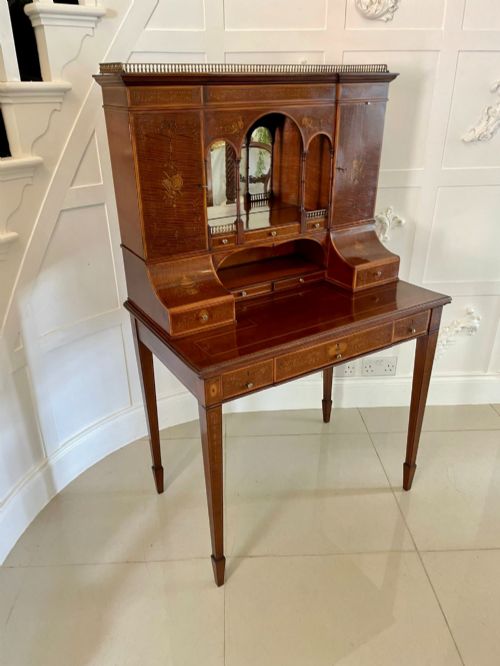
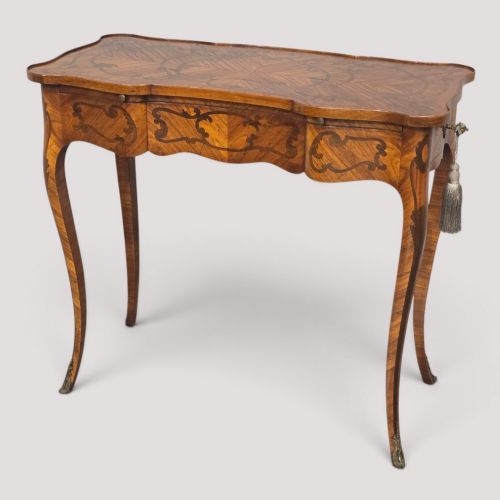

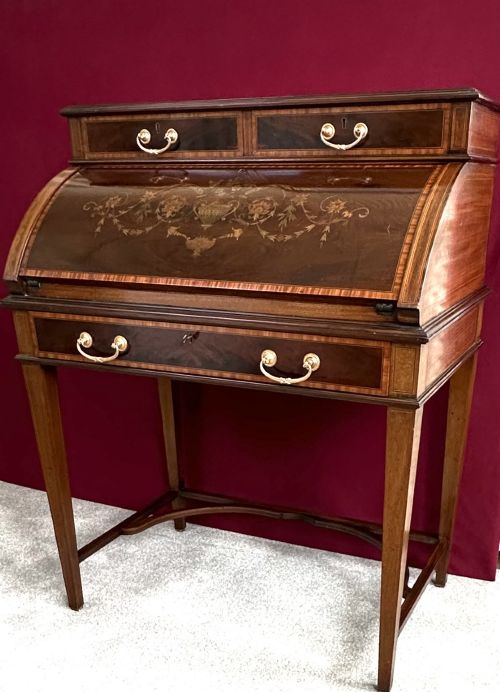
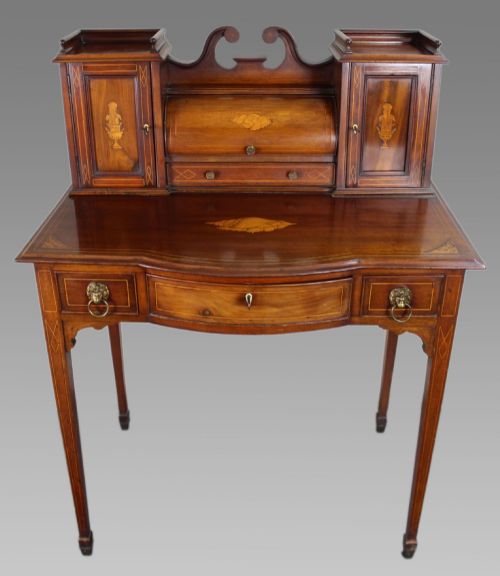

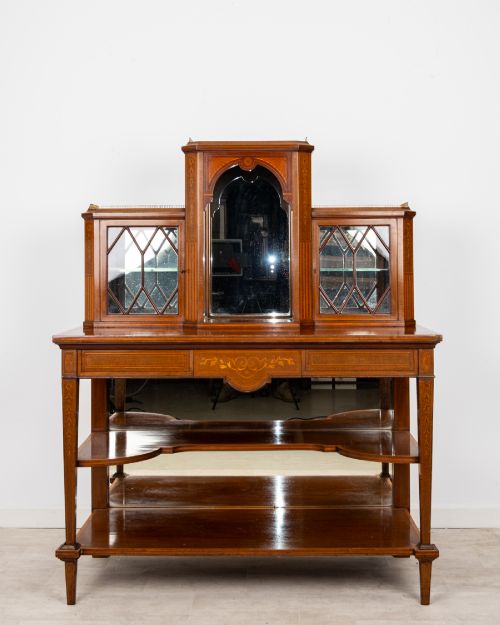
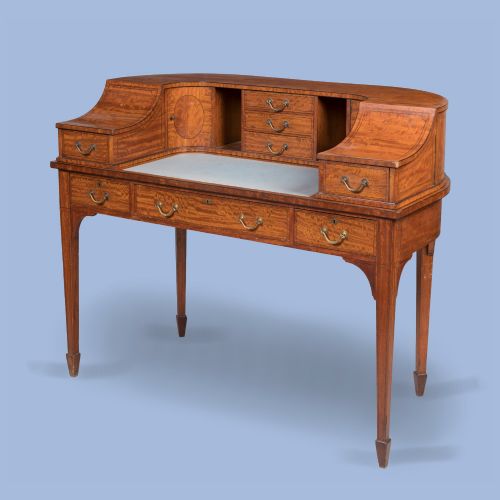
Vintage Lady Writing Desk
A vintage lady writing desk brings refined elegance to a corner, offering a compact surface designed for correspondence and private papers.
Vintage Lady Writing Desk
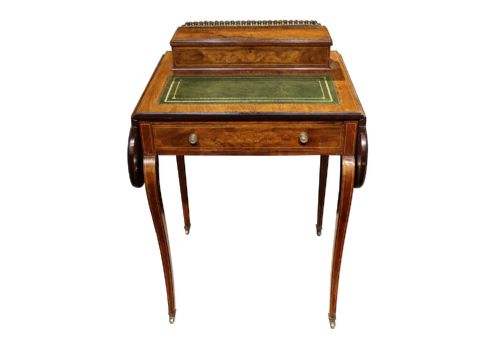
A vintage lady writing desk is a compact, elegant surface designed for correspondence, featuring small drawers and fitted interiors suited to intimate study. The examples seen here appear most frequently from the Edwardian period and the late nineteenth century, executed in rich timbers.
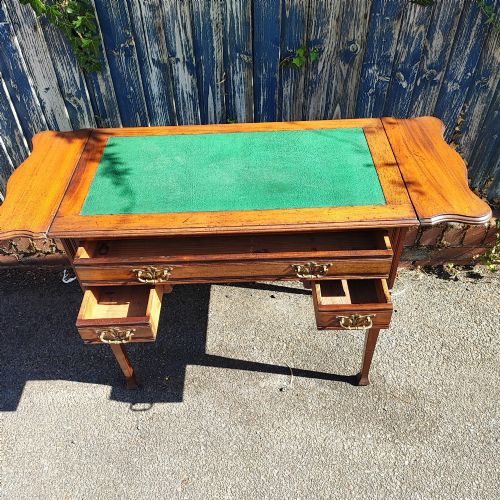
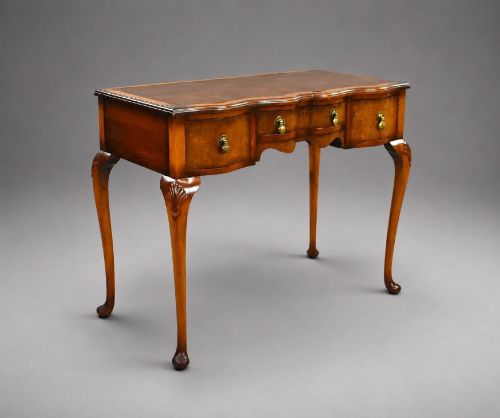
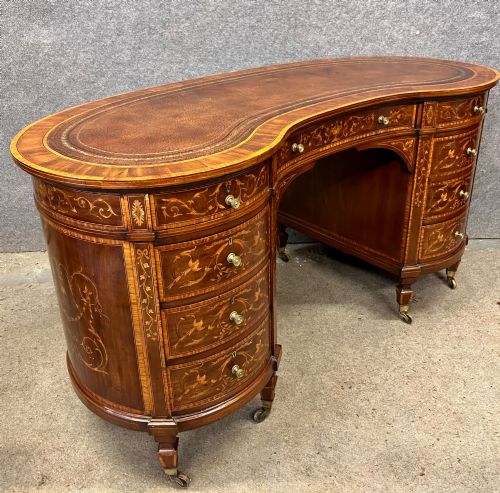
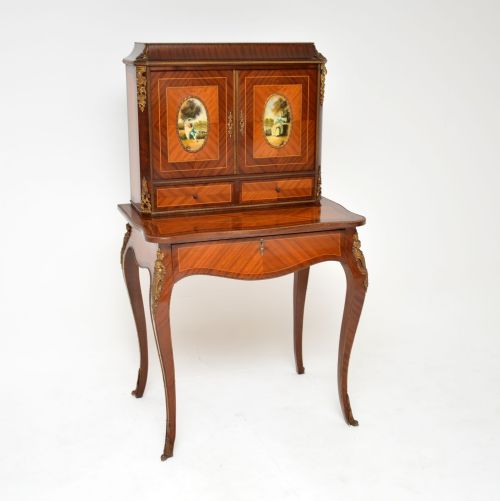
Makers produced diverse forms, ranging from serpentine fronted tables to elaborate bureau de dame models and kidney shaped writing surfaces. Many incorporate leather writing inserts, drop side flaps or compartmentalised superstructures for stationery.
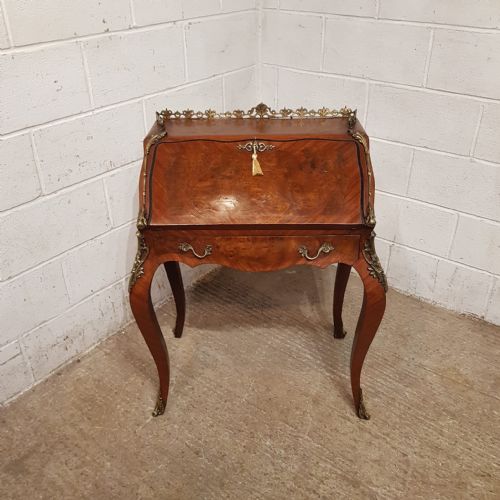
The aesthetic leans heavily towards refined revival styles, notably Sheraton Revival and French Louis XV influences. These pieces provide functional writing space while maintaining a delicate footprint appropriate for smaller rooms.
Materials and construction
Cabinet makers utilised dense hardwoods such as mahogany, walnut and satinwood as the primary carcass and surface materials. Marquetry and delicate stringing in contrasting timbers ornament the exteriors of many pieces.
Working surfaces frequently incorporate inset leather panels alongside brass handles, hinges and occasional ormolu mounts. Secondary woods like oak line the interior drawers to ensure durable construction.
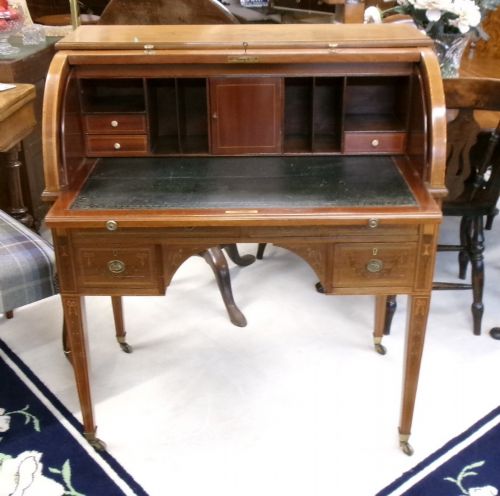
Techniques combine frame and panel joinery with curved elements such as kidney shapes and cylinder tops. Crossbanding in kingwood or rosewood frames the principal veneers to add decorative depth.
One extraordinary nineteenth-century entry records a contemporary painted portrait of a named woman actively writing at her desk.
Differentiating quality
The refinement of the timber selection dictates much of the distinction, with figured burr walnut, flame mahogany and carefully matched satinwood marking out superior examples. Hand cut marquetry and precise stringing demonstrate greater workshop skill than simpler plain surfaces.
Internal complexity elevates a piece, such as fully fitted stationery compartments, secret drawers and original brass hardware. The fluidity of curved outlines, particularly on kidney shaped writing tables and serpentine fronts, reflects the artisan's precision.
The Vintage Lady Writing Desk Glossary
- Bureau de dame
- A small lady writing desk, typically featuring a sloping fall front or fitted upper section. These French inspired forms often display delicate marquetry.
- Carlton house desk
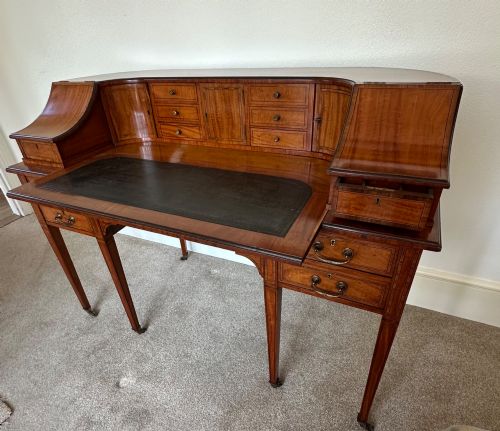
- A form of writing table featuring a curved superstructure of small drawers and pigeonholes enclosing the rear and sides of the desk. This design originated in the eighteenth century and saw revival popularity.
- Marquetry
- Decorative patterns formed by fitting together thin slices of wood veneer onto a carcass. Artisans employ contrasting timbers to create floral or geometric motifs.
- Ormolu
- Gilded bronze mounts applied to furniture for decorative effect. This technique appears predominantly on pieces with French stylistic influences.
- Tambour
- A sliding door or shutter constructed from narrow strips of wood glued to a canvas backing. This mechanism allows access to compact compartments on specialised writing desks.
Vintage Lady Writing Desk: Frequently Asked Questions
What is a Carlton house desk?
A Carlton house desk is a specialised writing table featuring a curved, stepped bank of small drawers and compartments wrapping around the rear of the writing surface. This layout provided organised storage for stationery and correspondence.
Such desks are typically executed in fine timbers like satinwood or mahogany, often enhanced with crossbanding and inlaid details. The design offers an enclosed workspace while maintaining a compact footprint.
How were these desks used?
These desks served as private spaces for writing letters, managing household accounts and keeping personal journals. The fitted interiors held writing paper, envelopes and ink supplies.
Their smaller scale allowed them to sit comfortably in private sitting rooms or bedrooms rather than large libraries. Many incorporate locking compartments to secure private papers.
How do I identify an Edwardian piece?
Edwardian writing desks, dating from around the early twentieth century, frequently display Sheraton Revival influences with light wood inlays on mahogany or satinwood. They often feature tapered legs and delicate brass hardware.
Construction details include machine milled components alongside hand finished elements, reflecting the manufacturing standards of the period. Interior drawer linings commonly utilise oak or softwood.
What is a bureau de dame?
A bureau de dame is a ladies desk, usually of French inspiration, characterised by graceful cabriole legs and ornate veneer work. These pieces often feature Ormolu mounts and floral marquetry.
The form prioritizes elegance and decorative presence, making them suitable for prominent placement in a reception room. They combine a writing surface with small internal compartments.
Are leather inserts original?
Many writing desks feature inset leather panels, often gold tooled around the borders, designed to provide a smooth writing surface. While some retain their initial leather, others have received replacement hides during conservation.
The presence of appropriate patination helps indicate the age of the material, though replacement leather remains a standard part of restoring antique writing furniture.