

Wood Corner Cupboard Display
A wood corner cupboard display turns neglected wall junctions into focal points while solving space issues with fitted storage.
Wood Corner Cupboard Display
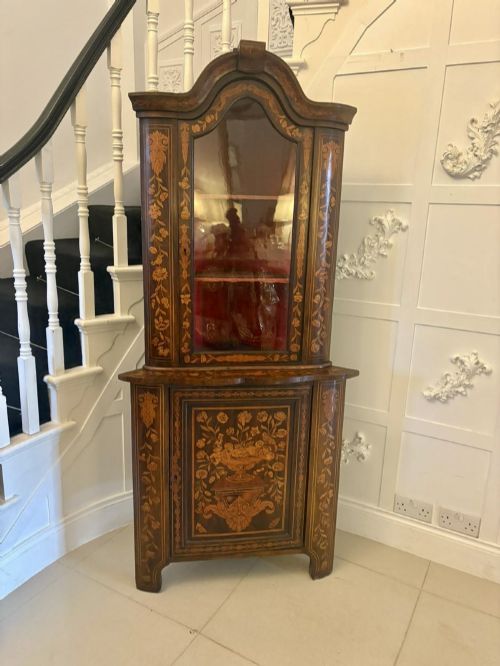
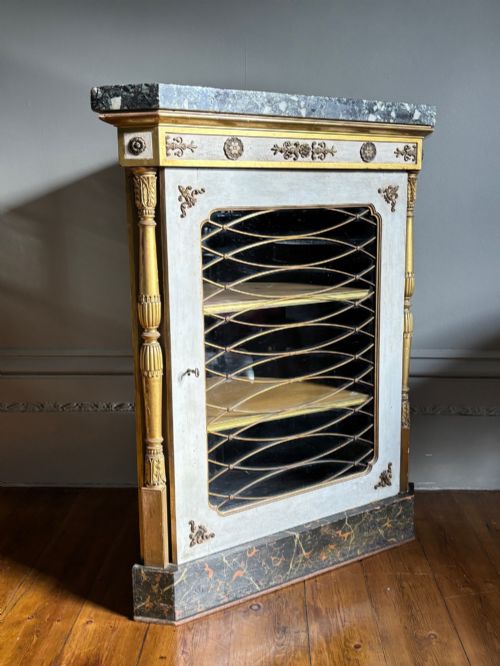
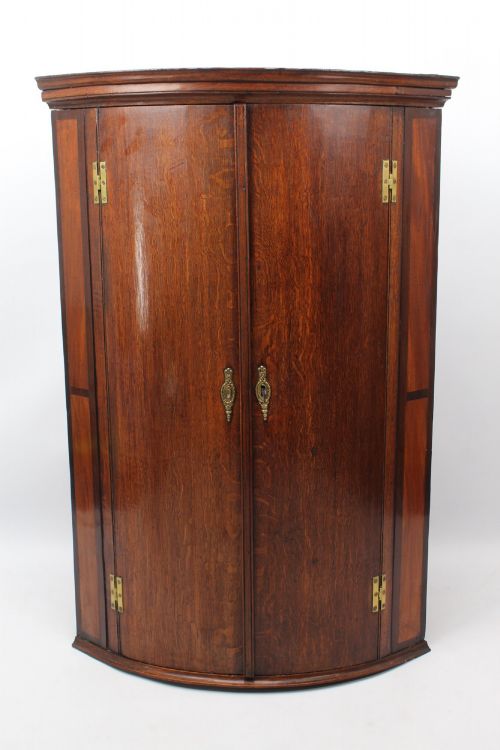
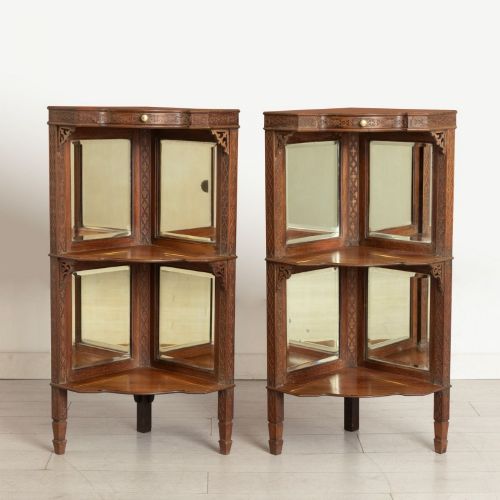
A wood corner cupboard display utilises awkward angles in a room to present items safely behind glazed doors or on open shelves. These architectural pieces alter the geometry of an interior by softening hard right angles with curved bow fronts or disciplined vertical lines.
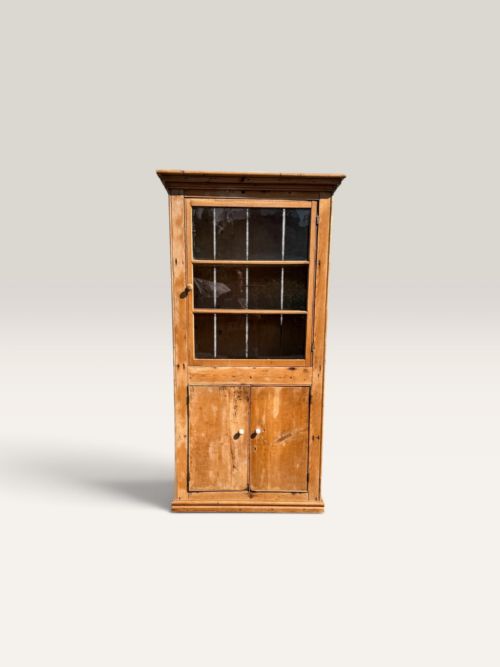
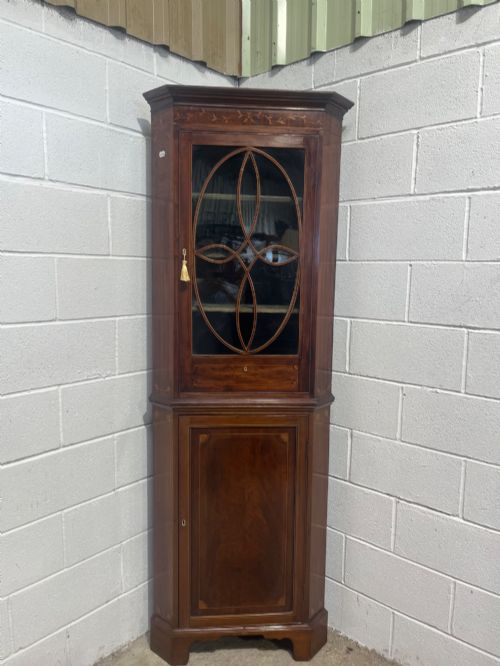
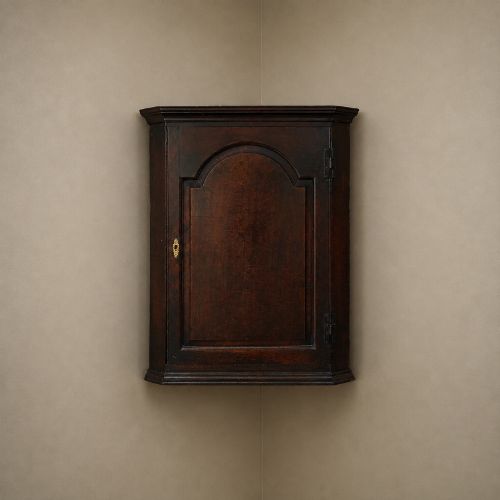
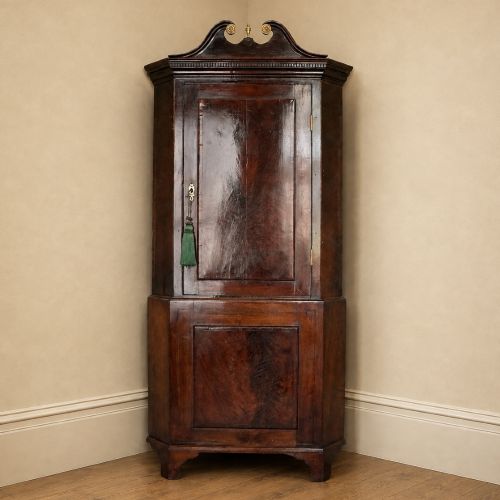
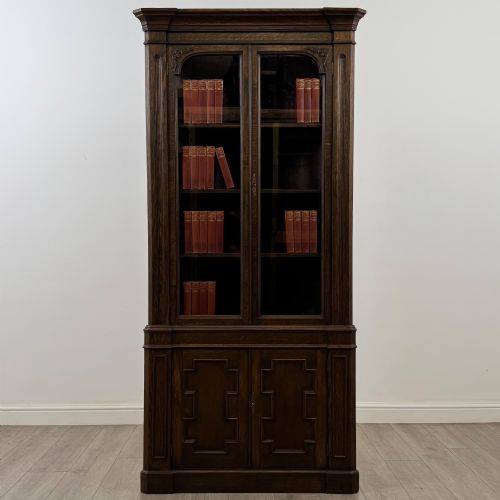
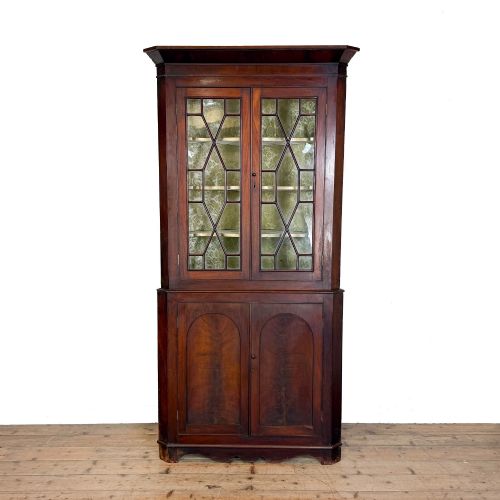
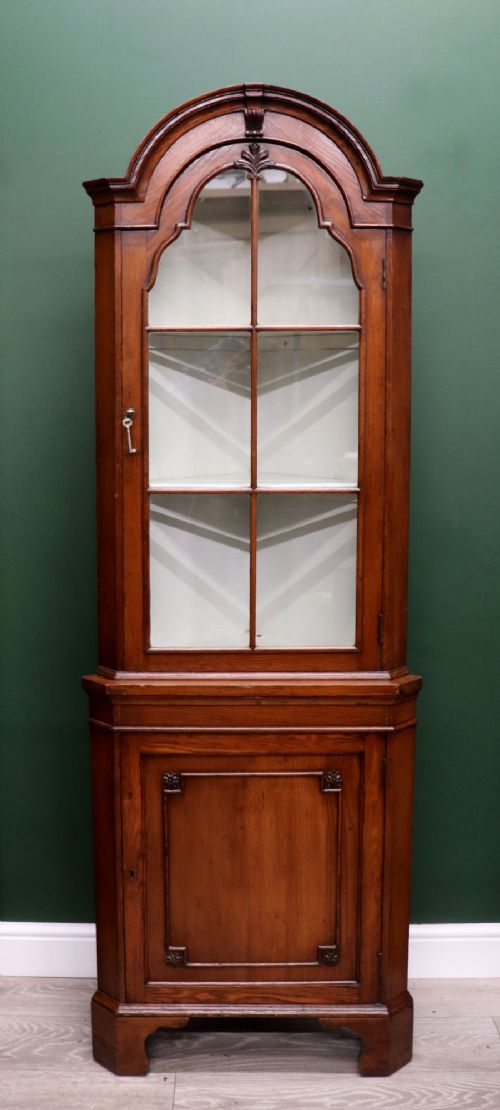
The pieces appearing on this page span wall hanging models, single floor-standing units, and taller double cabinets. Oak and mahogany dominate the offerings, built across Georgian, Victorian, and Edwardian periods for domestic interiors.
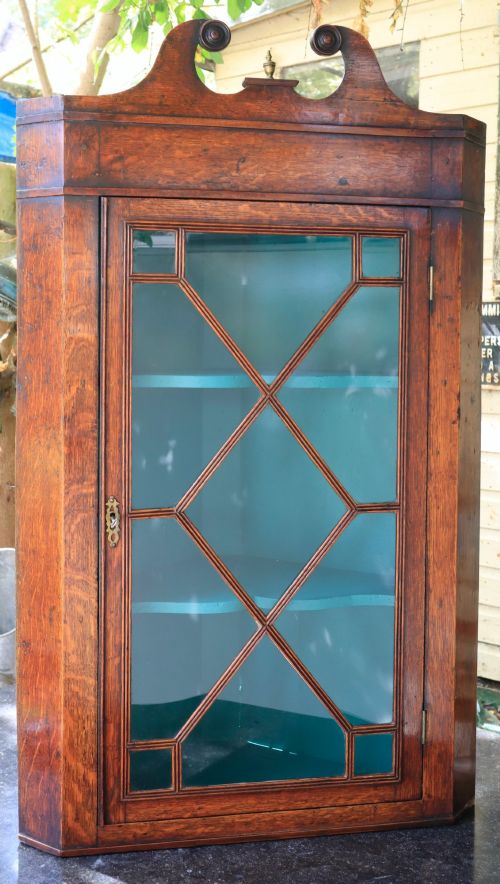
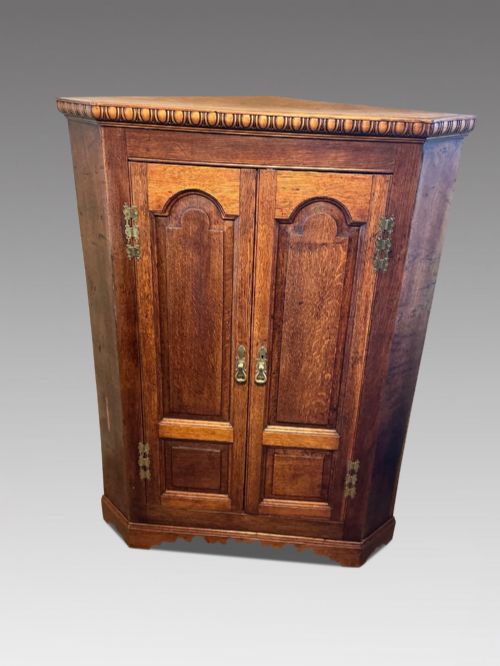
Wall-hung iterations often feature single doors with brass hinges, whilst larger floor-standing examples incorporate base cupboards beneath upper display sections. The internal arrangement typically relies on fixed timber shelves shaped to fit the triangular footprint of the cabinet.
Materials and construction
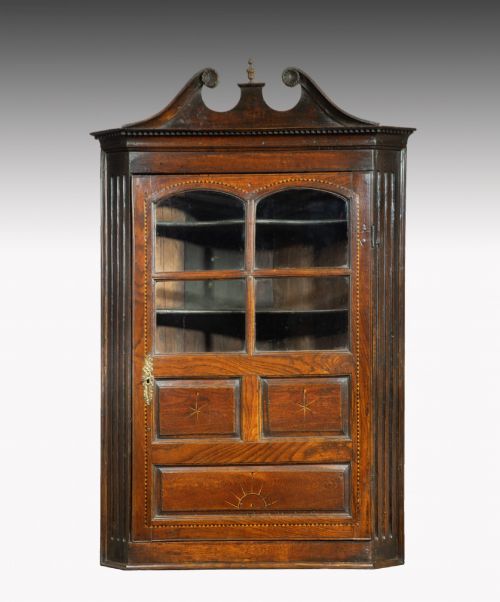
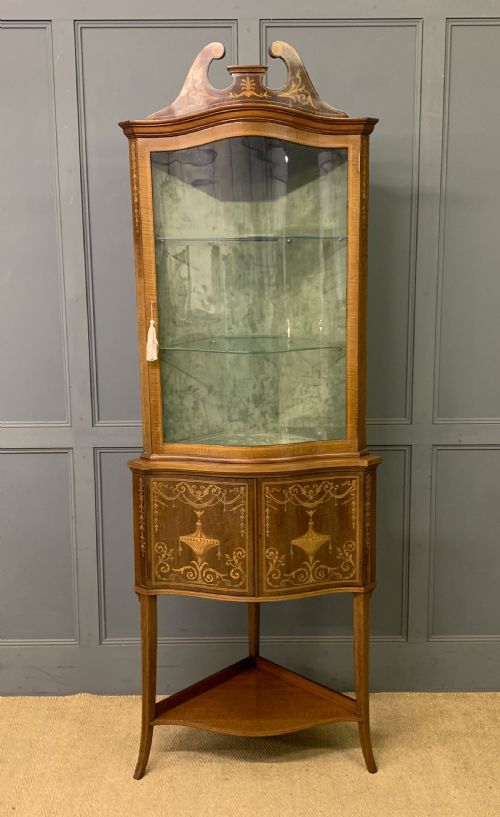
Cabinet makers constructed these bodies primarily in solid oak, mahogany, and walnut, often applying veneers of satinwood or rosewood for decorative contrast. Crossbanding and marquetry inlay provide surface detail, particularly across Georgian and Edwardian examples.
Glazing bars hold individual panes of glass within door frames, dividing the viewing area into geometric lights. Brass hardware such as escutcheons, hinges, and working locks secure the doors, while painted interiors occasionally provide a contrasting backdrop for displayed items.
The listings show pieces constructed from oak, mahogany, walnut, and fruitwood, spanning the eighteenth to the twentieth centuries.
Distinctions in construction and design
The refinement of the timber selection dictates the visual success of the piece, visible in straight-grained mahogany or richly figured oak. Crossbanding and inlaid stringing require exact hand-fitting by the cabinet maker to remain flush with the surrounding wood over centuries of expansion and contraction.
Structural integrity depends on the dovetail joints in the carcass and the stability of the hanging styles. Superior examples retain original brass fitments, undisturbed glazing bars, and intact backboards that demonstrate careful workshop assembly rather than later restoration.
Edwards & Roberts·Goodhall, Lamb and Heighway of Manchester
The Wood Corner Cupboard Display Glossary
- Bow front
- A convex curved cabinet face that projects forward from the corner walls. This curved profile softens the transition between adjacent panels.
- Crossbanding
- A narrow strip of veneer laid perpendicular to the grain of the primary surface. It creates a contrasting border around drawer fronts or cabinet doors.
- Glazing bar
- A wooden strip holding individual panes of glass within a door or window frame. These members create structural support and decorative patterns.
- Marquetry
- Elaborate patterns formed by fitting together contrasting veneers of wood or shell. Artisans use this technique to adorn cabinet doors and friezes.
- Pediment
- The decorative structure crowning the top of a cabinet. Examples include broken arch designs that terminate in distinct scrolls.
- Vitrine
- A glass-fronted cabinet designed for displaying collectibles or ceramics. The term originates from the French word for glass.
Wood Corner Cupboard Display: Frequently Asked Questions
How do I hang a wall cabinet?
Wall-hanging corner cupboards require secure fixing directly into masonry or robust internal timber studs using appropriate brackets.
The weight of solid mahogany or oak carcasses demands sturdy support to prevent structural strain on the backboards.
What is a floor standing unit?
A floor-standing corner cabinet rests directly upon a plinth or bracket feet, extending from the floor to eye level.
These taller pieces often combine a lower enclosed cupboard with an upper glazed display section for china and glassware.
How do I date an antique cabinet?
Dating relies on observing construction methods, timber choices, and hardware styles associated with specific periods like Georgian or Edwardian.
Hand-cut dovetails, secondary woods, and the type of glass panes help narrow down the decade of manufacture.
Where should I place a corner unit?
These cabinets fit precisely into ninety-degree room junctions that might otherwise remain empty or underutilised.
Placing them away from direct sunlight protects vulnerable mahogany and walnut finishes from fading over time.