

Glazed Corner Display Cupboard
A glazed corner display cupboard uses dead space to frame pottery, glass and books behind glass doors.
Glazed Corner Display Cupboard
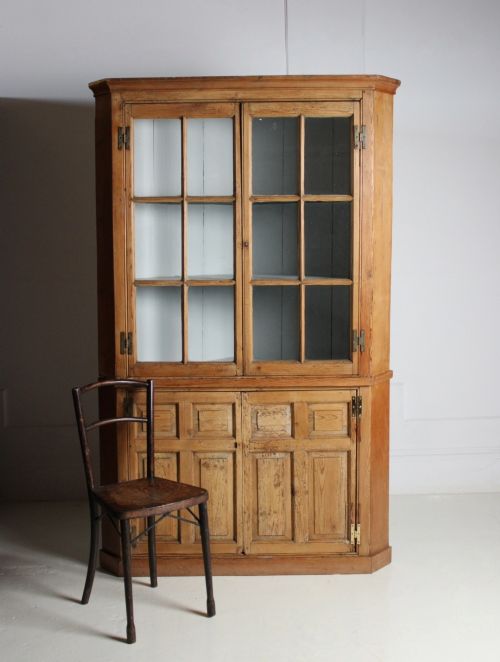
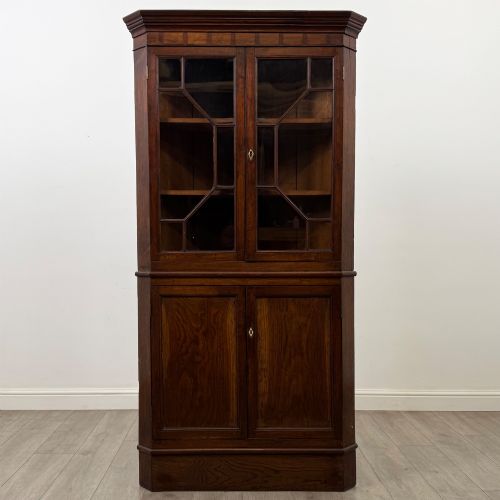
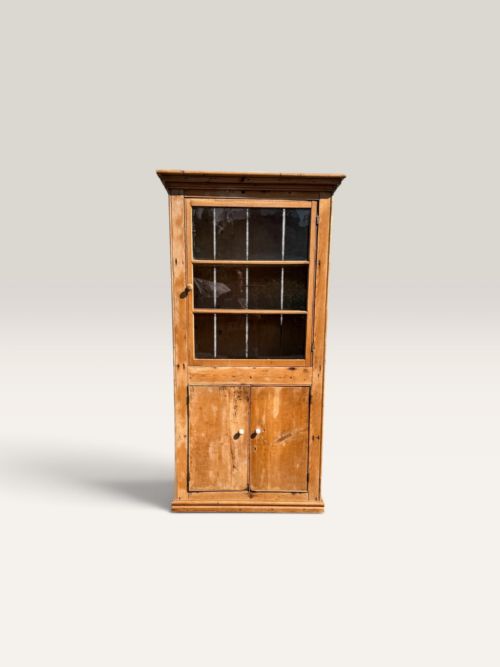
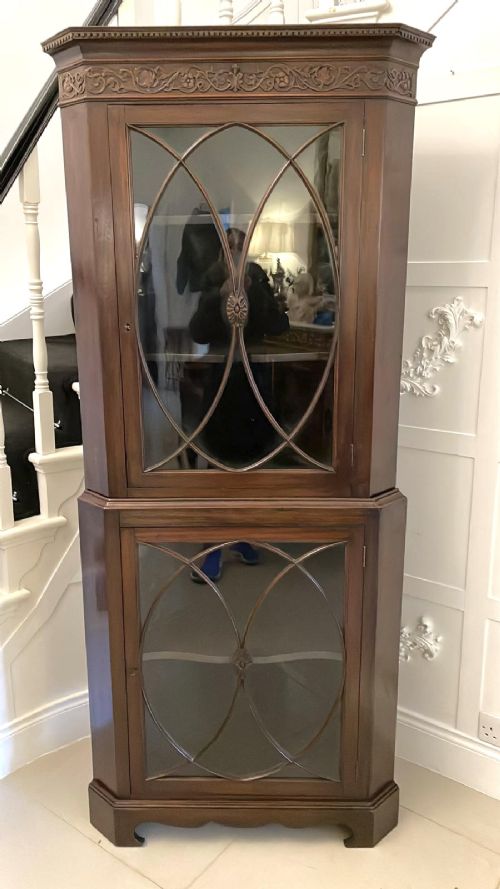
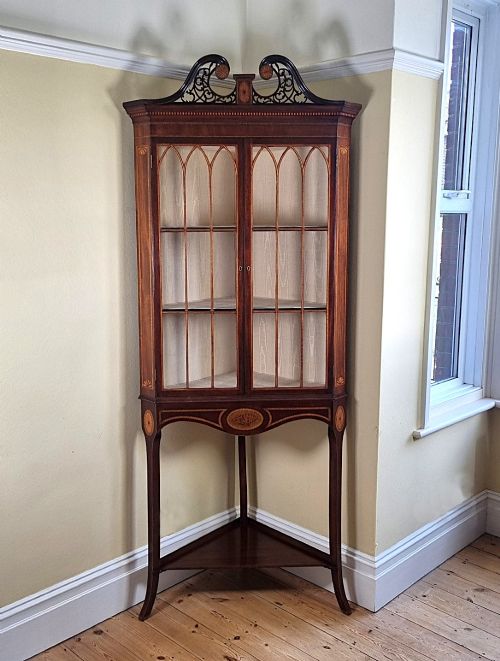
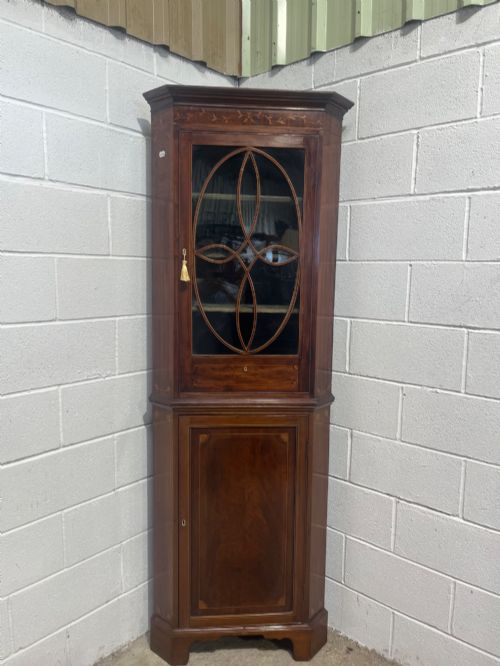
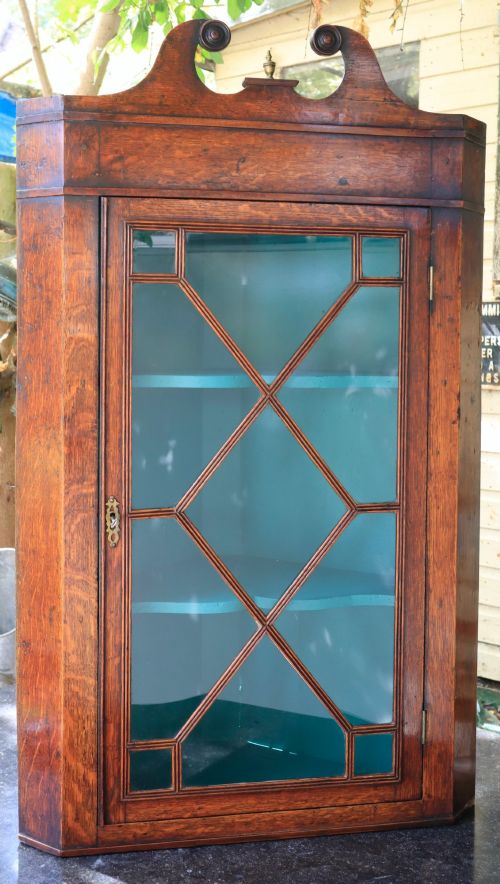
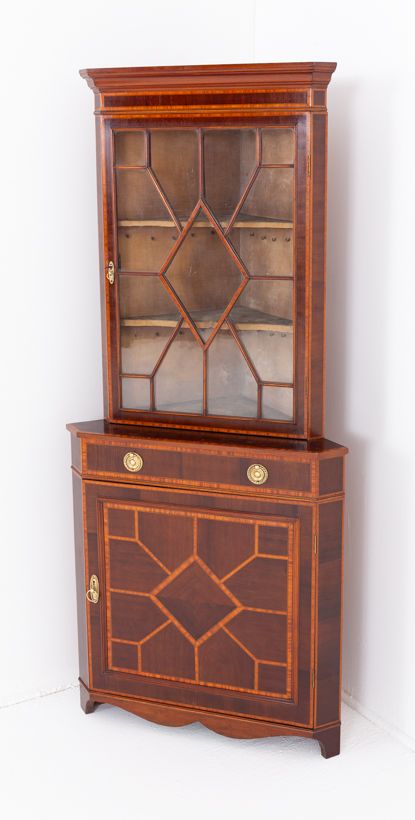
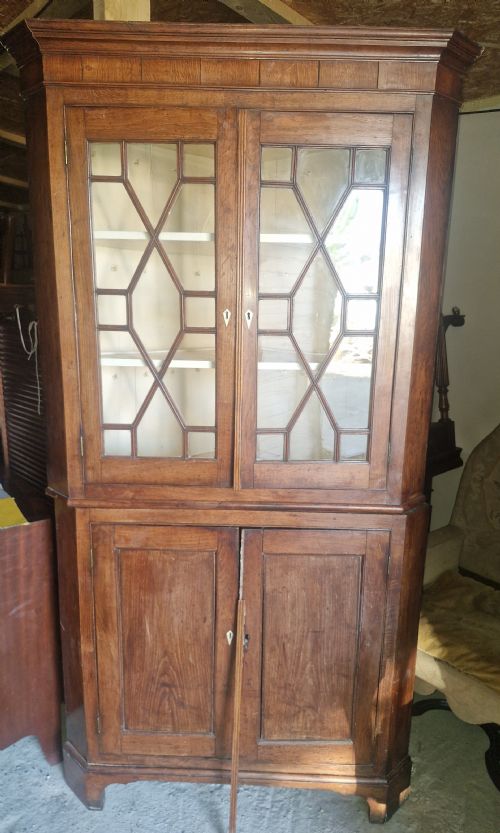
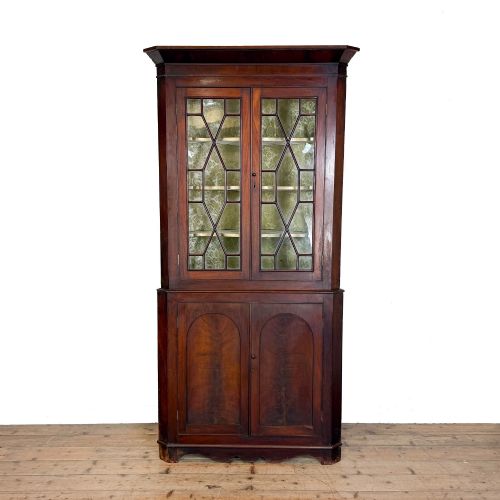
A glazed corner display cupboard turns a neglected room junction into a showcase for cherished objects. These pieces range from simple wall-hanging pine boxes to grand two-part standing cabinets in mahogany, oak or walnut. The most common varieties encountered here date from the Georgian era through the Edwardian period, often featuring glazed doors with astragal bars.
Makers designed these cabinets specifically to fit snuggly into ninety-degree angles, saving floor space while offering multiple interior shelves. Some sit on matching stands or form the upper section of a larger double-height cupboard. They provide secure dust-free storage that keeps collections visible from various angles across the room.
How they were made
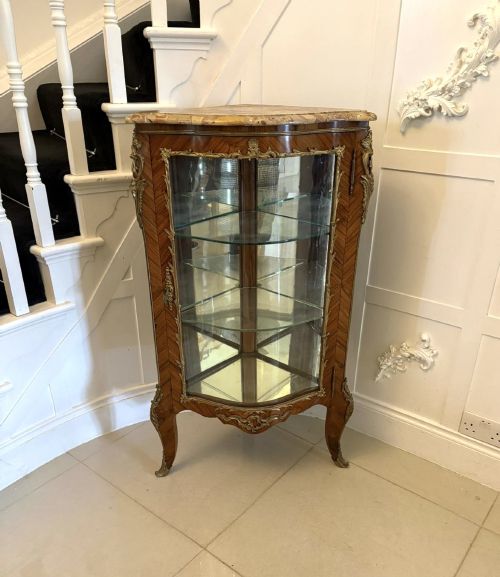
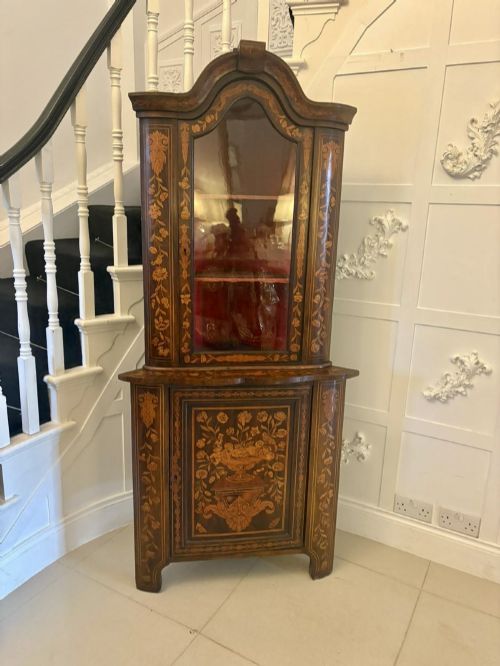
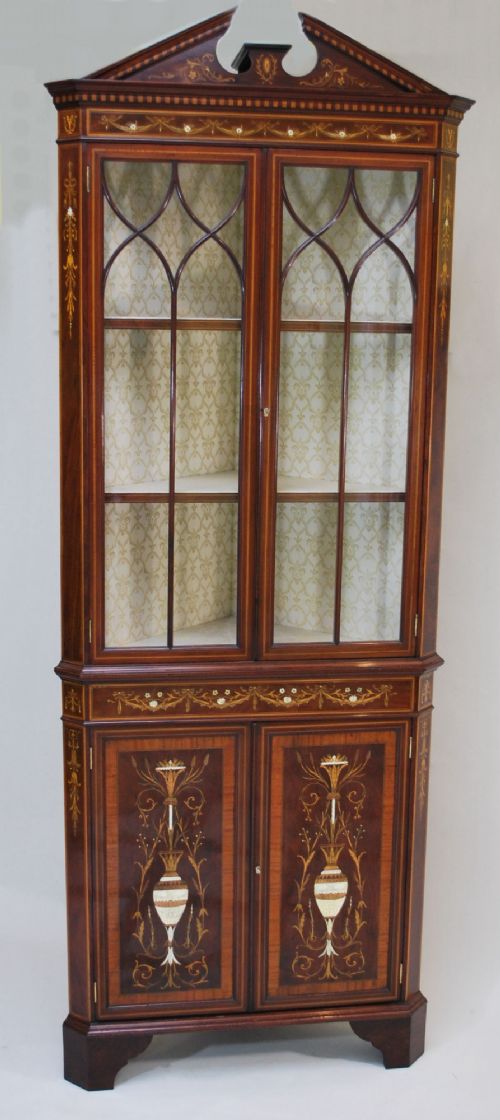
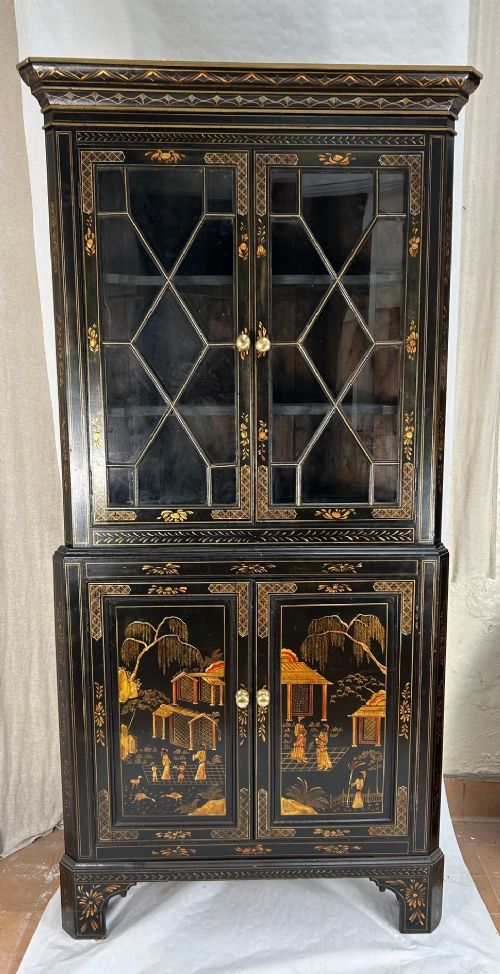
Cabinetmakers built these pieces using solid timbers such as mahogany, oak, pine and walnut, frequently applying fine veneers and marquetry or satinwood inlay for decorative contrast. Glass panes were held securely within slender wooden frames, sometimes shaped with astragal glazing bars to create multi-pane windows. Brass hinges, escutcheons and lock plates completed the doors, while select examples incorporated marble tops or ormolu mounts.
Construction relied on traditional joinery methods suited to angled furniture, ensuring the heavy triangular carcass remained stable over centuries. Interior surfaces were occasionally painted in contrasting colours or lined with fabric to highlight the objects displayed on the shelves.
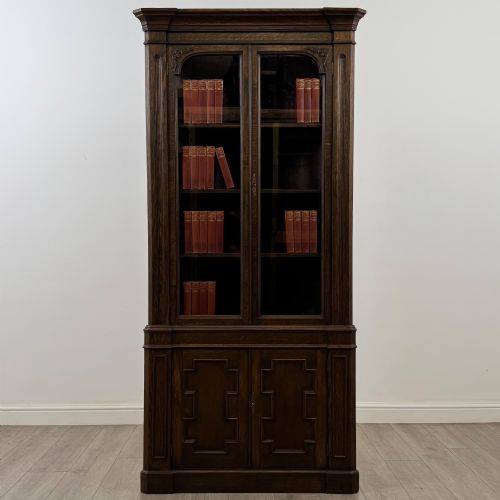
Cabinet formats range from compact wall-hanging single doors to tall two-part standing corner cupboards with triple aspect glass fronts.
What varies in quality
The standard of a glazed corner display cupboard depends heavily on the choice of timber and the precision of its construction. Superior examples display carefully selected grain patterns, intricate inlaid details and fine hand-cut glazing bars rather than heavy, utilitarian woodwork. Original glass, matching brass hardware and intact painted interiors separate ordinary vernacular pieces from the finer productions of cabinet workshops.
The Glazed Corner Display Cupboard Glossary
- Astragal glazing
- Wooden bars dividing glass panes into smaller geometric sections within a door frame. These delicate mouldings add structural rigidity while creating a refined visual grid.
- Marquetry
- Decorative veneer patterns formed by fitting together small pieces of different coloured wood and shell. Craftsmen used this technique to create elaborate floral or geometric designs on cabinet doors.
- Two-part form
- A cabinet constructed in separate upper and lower sections that stack together. This arrangement made heavy furniture easier to transport and position in domestic spaces.
- Bow front
- A convex, outwardly curved cabinet facade that softens room angles. This curved shaping requires advanced woodworking skill to match the glass and frame precisely.
Glazed Corner Display Cupboard: Frequently Asked Questions
Where should I place a corner cabinet?
These cupboards fit naturally into unused room junctions where straight furniture leaves awkward gaps. They anchor empty wall spaces without obstructing foot traffic.
Position them away from direct sunlight to protect interior wooden surfaces and any delicate items stored behind the glass.
Are these cabinets difficult to install?
Wall-hanging versions require secure fixings into solid masonry or wall studs to bear the weight of timber and glass safely. Floor-standing pieces simply need a level surface, though tall two-part models benefit from wall anchors for added stability.
Checking the squareness of your room corner helps ensure the cupboard sits flush against both walls.
How do I care for the wood and glass?
Dust the timber regularly with a dry cloth and apply occasional appropriate wax feeds to nourish older finishes. Clean the glass panes with standard solutions while avoiding moisture contact with vulnerable wooden frames.
Keeping interior humidity stable prevents the timber framing from warping around the glass panels.
What can I display inside them?
The adjustable shelving accommodates ceramic collections, glassware, books and small decorative sculptures. The enclosed environment protects fragile items from accidental knocks and airborne dust.
Consider adding subtle interior lighting if the original glazed panels require extra illumination to highlight darker contents.