




Vintage Corner Etagere
A vintage corner etagere makes the most of awkward angles while providing tiered display space for small collections and plants.
Vintage Corner Etagere
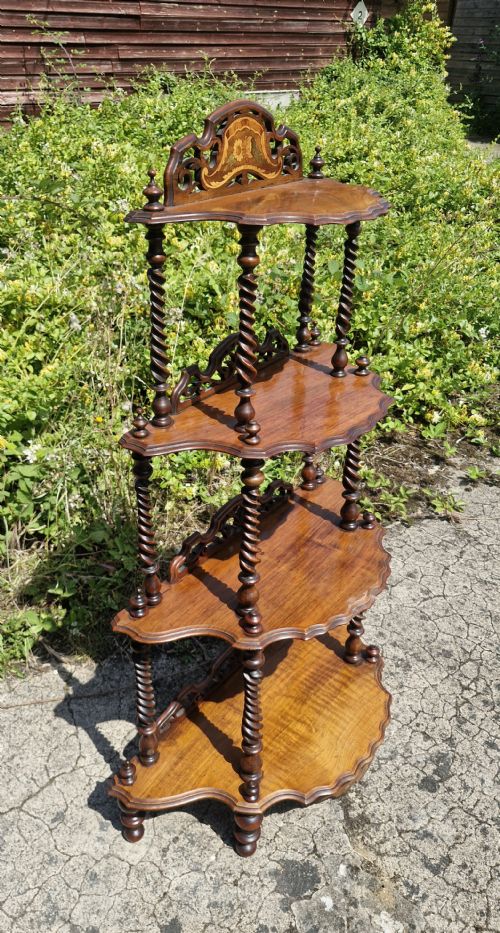
A vintage corner etagere is a multi-tiered shelving unit designed to fit neatly into the corner of a room, serving as a display stand or cabinet. The selections span periods from the Georgian era through the Victorian period and into the early twentieth century.
The most common forms encountered on this page are multi-tiered whatnots and corner units constructed to utilise vertical wall space efficiently. These pieces frequently appear in mahogany, walnut, and burr walnut, alongside bamboo and iron examples from later decades.
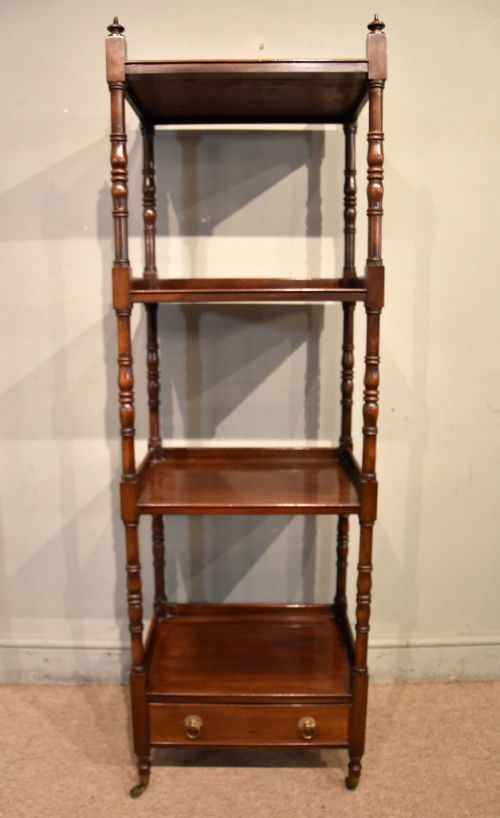
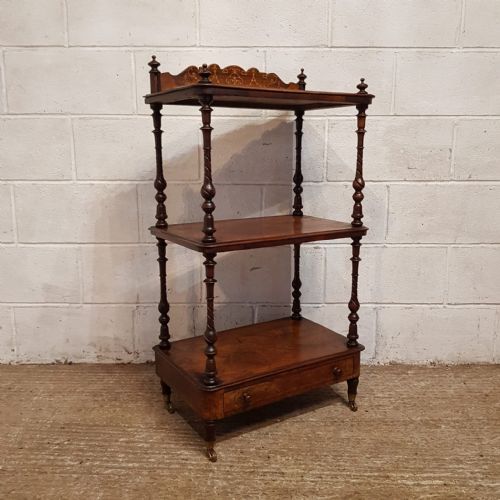
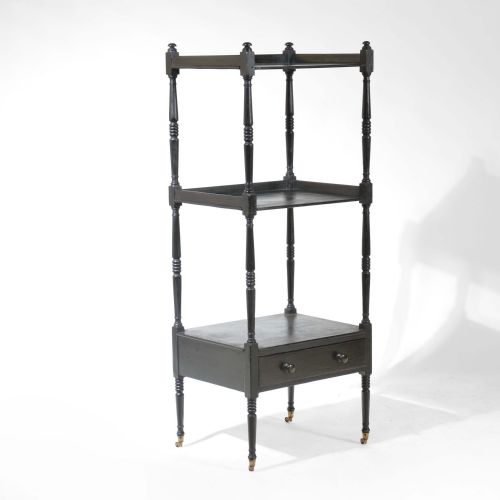
Makers and designers produced these shelves in various styles, including Regency, Aesthetic Movement, and French Revival. Buyers often find tapered forms, four-tier and five-tier shelving units, and pieces incorporating small cupboards at the base.
How they were made
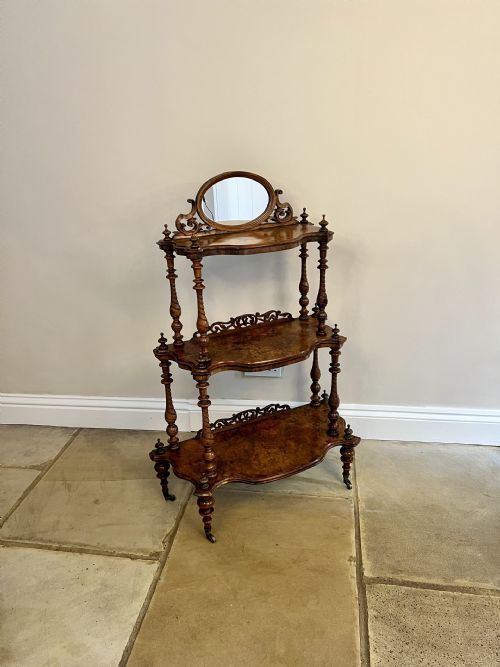
Makers utilised cabinet timbers such as mahogany and walnut, frequently selecting burr walnut veneers for rich surface grain. Ebonised wood, rosewood, and bamboo also appear across the inventory.
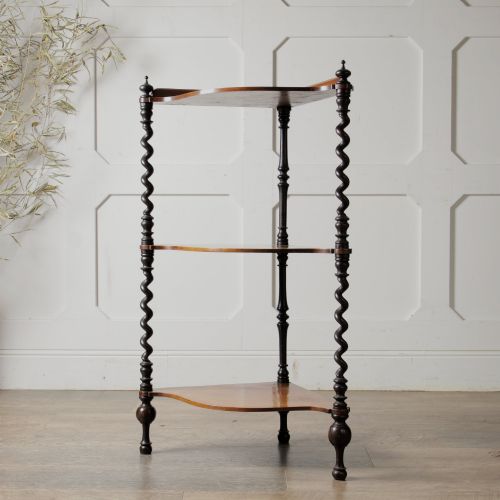
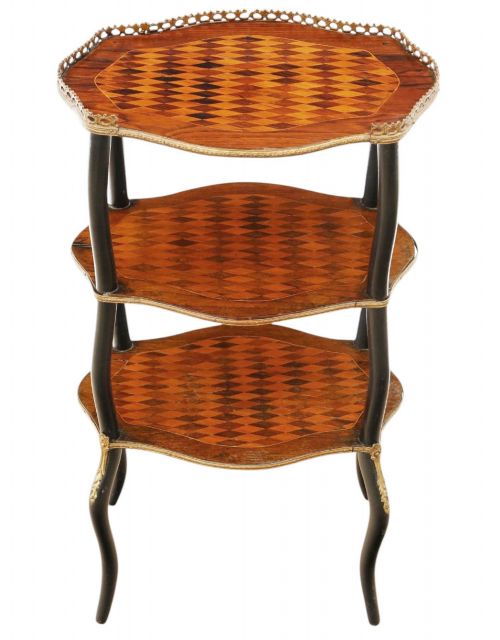
Construction techniques include turned columns, barley twist supports, and inlaid parquetry details. Iron examples employ slatted and riveted construction methods suited to plant stands and heavier utility pieces.
A white painted iron stand brings an unexpected industrial resilience to the traditional corner display.
What varies in quality
Quality depends heavily on the selection of timber veneers, such as figured burr walnut, and the precision of inlaid parquetry work. Simpler pieces rely on solid mahogany or turned supports without decorative embellishment.
Structural refinement distinguishes finer examples, visible in the turning of barley twist columns and the joinery of multi-tiered platforms. The integration of functional cupboards and tapering forms also indicates higher manufacturing ambition.
The Vintage Corner Etagere Glossary
- Etagere
- A set of open shelves for displaying small objects or ornaments. These pieces typically feature multiple tiers supported by slender columns.
- Whatnot
- A freestanding piece of furniture with multiple shelves for books or ornaments. The form gained popularity during the nineteenth century for corner and wall placement.
- Burr walnut
- Wood taken from a walnut tree growth that produces intricate, swirling grain patterns. Cabinet makers prized this veneer for high-status Victorian furniture.
- Barley twist
- A carved wooden support column resembling a spiral rope. This decorative turning technique appears frequently on nineteenth-century stands.
- Parquetry
- Geometric mosaic woodwork used for decorative surface patterns. It appears in inlaid panels on tabletops and shelf surfaces.
Vintage Corner Etagere: Frequently Asked Questions
What is a corner etagere used for?
These shelving units provide open platforms for displaying decorative objects, porcelain, and small collections in domestic spaces. The corner design allows them to occupy unused angles without obstructing room layouts.
They also function as plant stands or auxiliary storage for books and papers. The tiered structure keeps objects visible from multiple angles.
How do I distinguish a Victorian whatnot from a Georgian one?
Georgian pieces generally exhibit simpler lines, often utilising solid mahogany with restrained classical proportions. A-frame constructions and understated uprights are typical of this earlier period.
Victorian examples frequently introduce richer veneers like burr walnut, alongside elaborate turning such as barley twist columns. Inlaid decoration and ebonised finishes also point towards later nineteenth-century manufacture.
Where should I place a corner etagere?
These units fit into spare room corners, hallways, and drawing rooms where wall space is limited. Their open design prevents them from appearing heavy in smaller interiors.
Ensure the surface is level and avoid positioning delicate woods in direct sunlight. Placing them away from heat sources protects the timber veneers and joints.
Are bamboo etageres sturdy?
Bamboo pieces from the Aesthetic Movement are surprisingly resilient when constructed with traditional joinery. They are designed for lighter decorative items and small plants rather than heavy volumes.
Regular dusting with a dry cloth keeps the natural material in good condition. Avoid excessive moisture to preserve the binding and surface finish.