


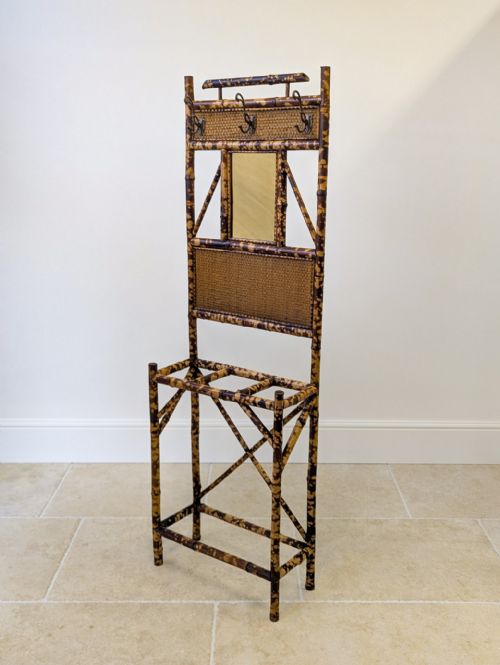
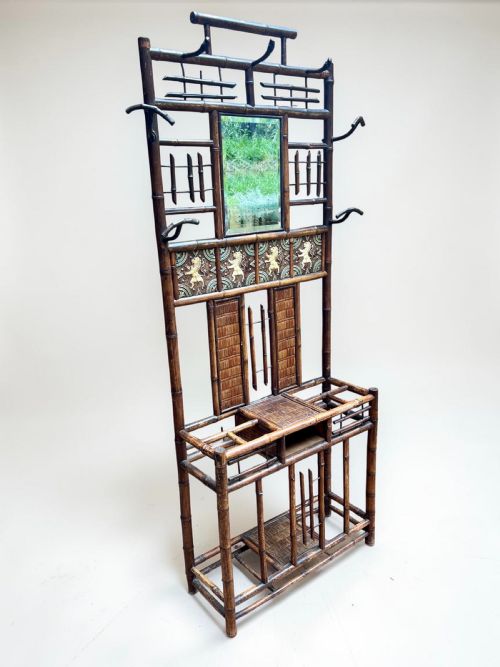


Tortoiseshell Bamboo Stand
A tortoiseshell bamboo stand brings instant warmth and texture to an interior, offering a distinct visual rhythm through its mottled stems.
Tortoiseshell Bamboo Stand
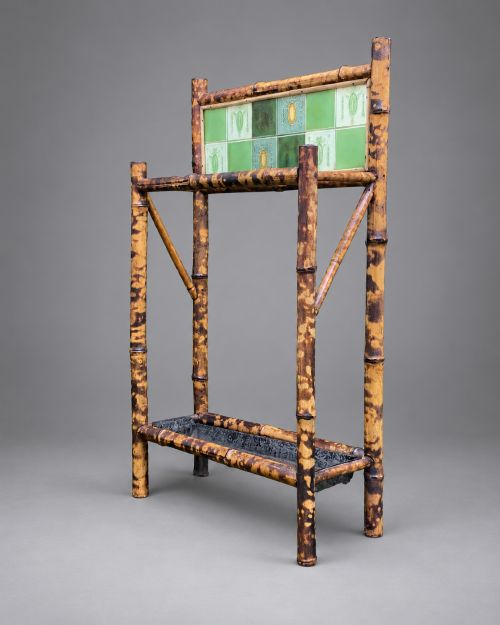
When you search for a tortoiseshell bamboo stand, you are looking at nineteenth-century furniture defined by its dark, mottled canework that mimics the rich patterns of tortoiseshell. These pieces emerge primarily from the Victorian era and the Aesthetic Movement, capturing a distinct nineteenth-century fascination with exotic natural materials.
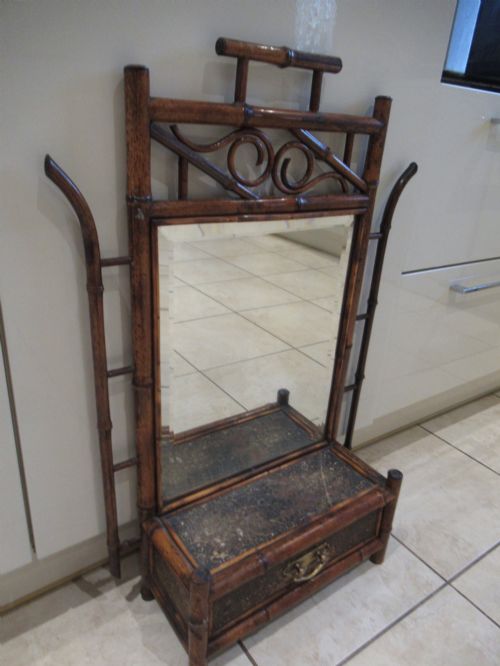
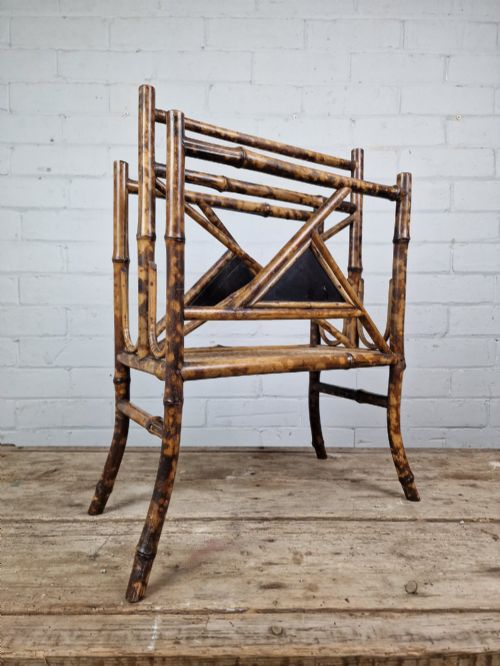
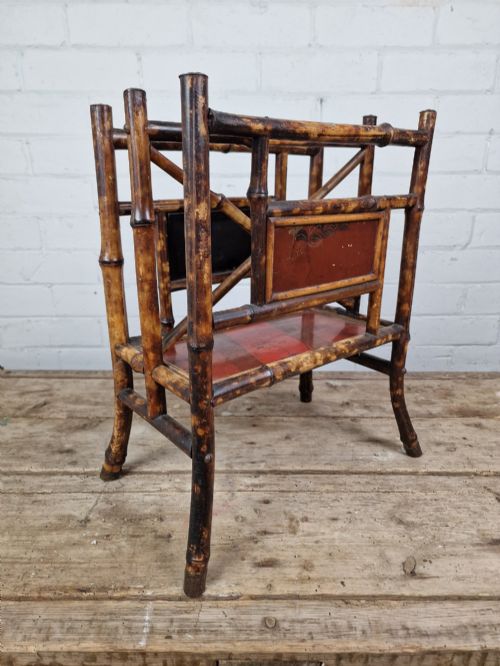
The versions you are most likely to meet on this page span several functional forms typical of the period, including occasional tables, magazine racks, and hall stands. Many incorporate contrasting panels or shelves made from wood, lacquer, or ceramic tiles, reflecting the eclectic tastes of late nineteenth-century British homes.
Originating during the height of the Anglo-Japanese style, these stands range from simple corner shelves and easels to more complex coat stands featuring mirrors and umbrella holders. The physical evidence shows dates clustered around eighteen-eighty to eighteen-ninety, placing them firmly in the later decades of the Victorian epoch.
How they were made
Makers constructed these items using tiger bamboo or standard bamboo treated to achieve its mottled, tortoiseshell finish, often combining the cane with secondary woods and rattan for stability. Joints were typically secured with pinned or wrapped bindings, creating a lightweight yet resilient frame suitable for domestic use.
Surface decoration frequently included hand-painted details or lacquer panels set into the bamboo framework, alongside functional additions like glass and metal hooks or trays. Ceramic tiles also appeared on table tops and plant stands, adding a smooth, durable surface that contrasted with the textured cane.
Tortoiseshell Bamboo Stand Retail Price Guide 2026
Typical asking prices for tortoiseshell bamboo stand among the pieces listed under this phrase on Sellingantiques today, from the lower quarter to the upper quarter. They describe what is for sale here now, not the wider market.
Listings feature bamboo furniture exclusively from the Victorian period, spanning the eighteen-eighties and eighteen-nineties alongside the Aesthetic Movement.
What varies in quality
The distinction between ordinary and superior examples lies in the depth and clarity of the tortoiseshell patterning on the bamboo, as well as the crispness of the applied hand-painting. Better pieces demonstrate careful selection of canes with rich, even mottling rather than faded or hastily stained surfaces.
Construction rigidity separates finer stands from lesser ones, particularly in how securely the shelves, mirrors, or umbrella wells integrate into the main bamboo frame. Superior workshops ensured that secondary materials like lacquer panels or ceramic tiles fit flush and remained stable within their bamboo housings.
The Tortoiseshell Bamboo Stand Glossary
- Tiger bamboo
- A natural cane exhibiting dark, mottled markings that resemble tortoiseshell. This visual effect was achieved through curing or scorching the bamboo surface during manufacture.
- Aesthetic Movement
- A late nineteenth-century design philosophy that prioritized beauty and artistic expression over strict utility. It heavily influenced British furniture through Japanese and exotic motifs.
- Canterbury
- A low, partitioned rack originally designed for holding sheet music or magazines. In bamboo furniture, these often double as occasional tables with lower compartment storage.
- Japanoise
- A stylistic term describing Western interpretations of Japanese art and design. These objects feature characteristic asymmetry, natural motifs, and Orientalist decorative elements.
Tortoiseshell Bamboo Stand: Frequently Asked Questions
What is a tortoiseshell bamboo stand?
It is a piece of nineteenth-century furniture made from bamboo that has been scorched or treated to display mottled, tortoiseshell-like patterns. These items were popular during the Victorian era and the Aesthetic Movement.
They encompass various functional forms, including occasional tables, magazine racks, hall stands, and easels, often incorporating wood, lacquer, or ceramic tiles.
How do I date a bamboo stand?
Dating relies on stylistic clues such as the presence of Aesthetic Movement motifs, hand-painted decoration, and construction methods typical of the late nineteenth century. Most surviving pieces date from the eighteen-eighties and eighteen-nineties.
Evidence from listings shows these items frequently align with the height of Victorian bamboo furniture production, marked by specific hardware and form combinations.
Were these stands made in Britain?
Many bamboo stands were manufactured in Britain during the Victorian period, capitalising on the immense popularity of imported East Asian materials and design styles. British makers adapted traditional forms like the Canterbury and hall stand to suit the new craze.
At the same time, some finished pieces and raw materials were imported directly from Asia, leading to a vibrant exchange of manufacturing techniques during the nineteenth century.
How should I care for bamboo furniture?
Bamboo furniture requires a stable indoor environment away from direct sunlight and excessive moisture to prevent the cane from drying out or splitting. Dusting gently with a dry or slightly damp cloth preserves the surface finish without harming the bindings.
Avoid using harsh chemical polishes or soaking the joints, as moisture can weaken the natural bindings and any applied lacquer or painted decoration.