
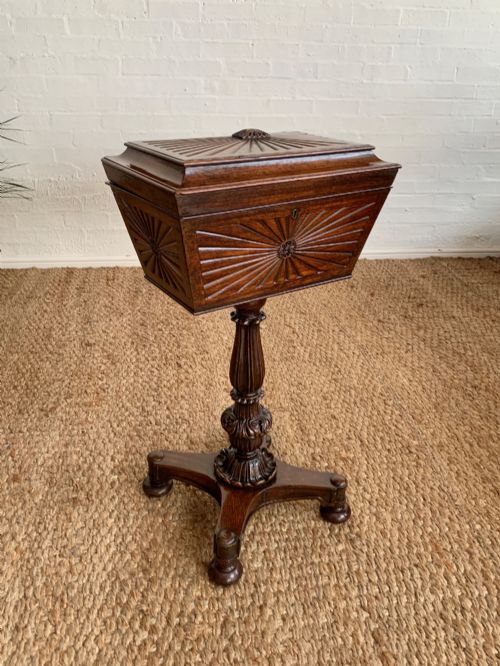


William IV Rosewood Box
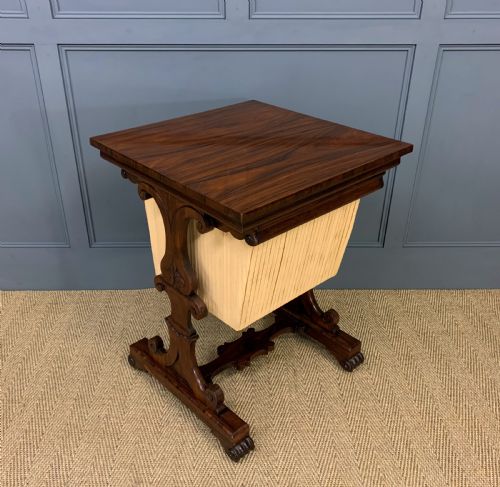
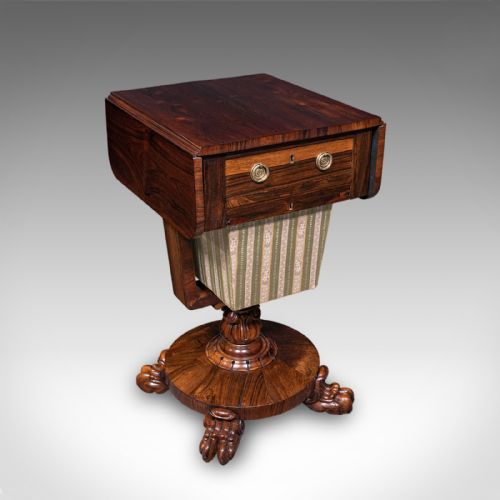
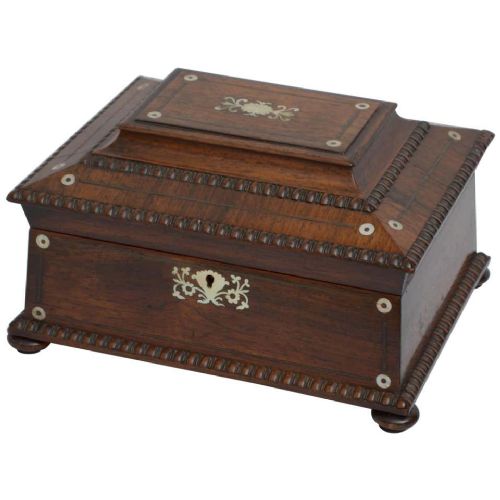
A william iv rosewood box offers dense timber grain and precise brass or mother-of-pearl inlays, serving as a practical desktop chest or a refined sewing table.
William IV Rosewood Box
A william iv rosewood box encompasses a broad range of forms designed for domestic utility and display, from small desktop writing slopes and tea caddies to larger freestanding work tables. The evidence shows these pieces spanning the nineteenth century, with strong representation in the periods noted as Regency and Georgian.
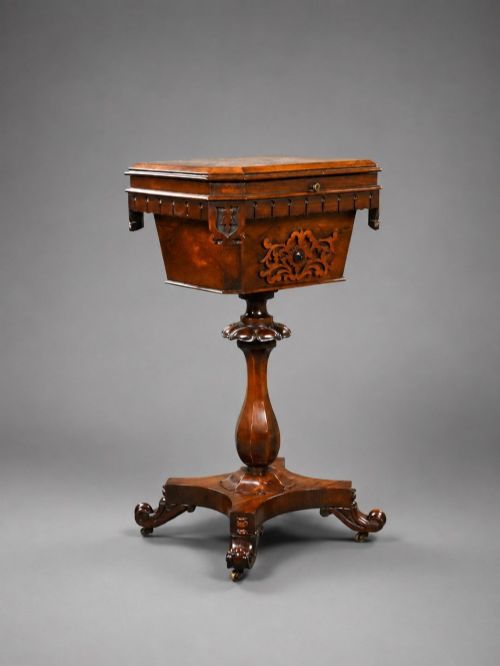
Table boxes and tea caddies dominate the smaller scale, often featuring sarcophagus shapes or inlaid decoration such as mother-of-pearl and brass. Alongside these sit sewing tables, teapoys, and occasional tables that utilise the same dark tropical timber for parlour or drawing room use.
What Varies in Quality
The standard of a william iv rosewood box rests on the precision of its construction and the complexity of its decorative elements. Superior examples display seamless alignment in their inlaid brass or mother-of-pearl motifs, alongside well-figured timber selection that highlights the natural grain of the rosewood.
Interior execution also marks the division between standard utility items and finer commissions. Retaining original fitted compartments, delicate contrasting stringing, and intact fabric linings elevates the execution of the piece significantly.
Secret compartments and hidden spring-release drawers frequently surprise new owners tucked beneath the stationery slots of nineteenth-century writing slopes.
The William IV Rosewood Box Glossary
- Rosewood
- A heavy, durable tropical timber with a dark, richly figured grain. It forms the primary structural and veneer material for these nineteenth-century boxes.
- Teapoy
- A small stand or chest traditionally used for storing tea leaves. These examples often feature internal caddies and rest on decorative pedestals.
- Sarcophagus
- A burial-vault shape with a domed or peaked lid adopted by cabinet makers for tea caddies and work boxes. This profile gives the piece a substantial, monumental presence.
- Writing Slope
- A desktop box with a hinged, slanted lid designed to provide an inclined writing surface. The interior typically conceals inkwell compartments and stationery storage.
- Tunbridge Ware
- Small wooden objects decorated with mosaic patterns created from tiny blocks of various coloured woods. This technique appears on specialised desk and stationery boxes.
William IV Rosewood Box: Frequently Asked Questions
What is a william iv rosewood box used for?
These boxes served various domestic functions in nineteenth-century households, primarily for storing tea, writing letters, or organising sewing equipment and jewellery. Smaller variations sat upon tables for personal items, while larger versions stood independently as multi-purpose work tables.
Today, collectors utilise them for similar desktop storage or as decorative focal points in period interiors. Their fitted interiors remain practical for holding small modern accessories.
How do I identify a william iv period piece?
Identification relies on a combination of characteristic styling, timber choice, and construction methods typical of the eighteen-thirties. Makers during this era favoured dark rosewood veneers often accented with bold mother-of-pearl or brass inlay.
Proportions tended to be robust and architectural, frequently incorporating sarcophagus curves or heavy pedestal bases. Evidence also points to distinct decorative carving such as sunburst motifs on table tops.
What is the difference between a tea caddy and a teapoy?
A tea caddy is a portable tabletop box designed to hold dry tea leaves securely within internal compartments. These boxes were often locked to protect expensive imported tea.
A teapoy is a larger, more substantial piece that often incorporates a stand or pedestal base. It functions as a small piece of furniture rather than a simple desktop box.
How should I care for antique rosewood furniture?
Maintain these pieces by keeping them away from direct sunlight and extreme temperature fluctuations to prevent the rosewood veneer from drying or splitting. Regular dusting with a soft, dry cloth preserves the polished surface without moisture damage.
Avoid commercial silicone sprays and harsh chemical cleaners. Occasional application of appropriate wax feeds the timber and maintains the natural lustre of the grain.