
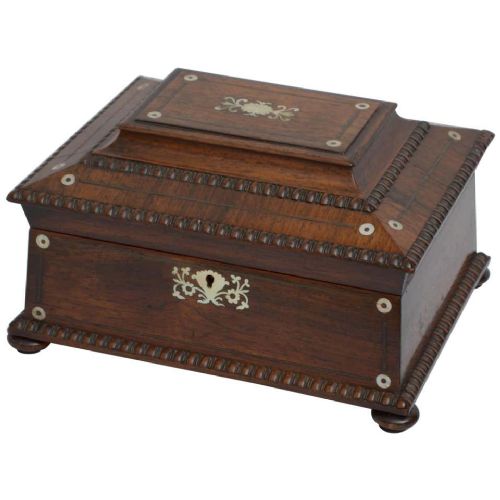
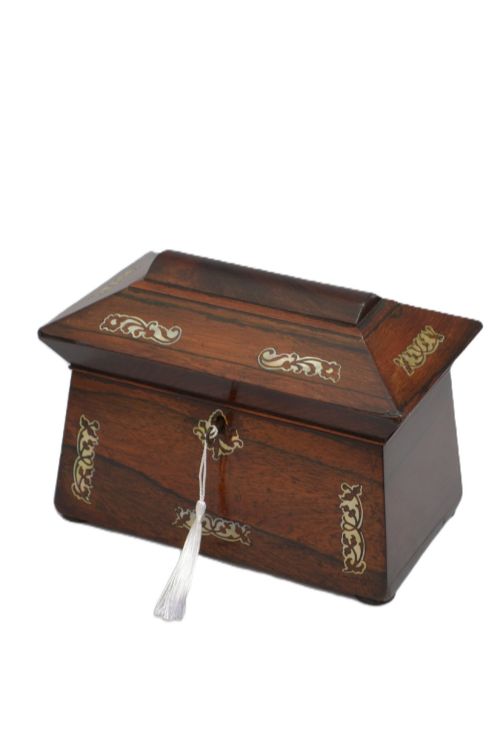


Regency Rosewood Casket
These regency rosewood casket pieces are fine nineteenth-century containers built to hold letters, tea, jewellery and sewing gear.
Regency Rosewood Casket
A regency rosewood casket is a desktop or table-top container built to house correspondence, tea, sewing tools or trinkets. You will most frequently meet these pieces as jewellery boxes, work boxes and tea caddies dating from the Regency, Georgian and William IV periods. The inventory spans straightforward document boxes alongside sarcophagus-shaped sewing boxes and brass-bound campaign pieces.
These objects served practical daily functions in domestic interiors, holding letters, currency and precious personal items. The forms range from compact table cabinets to larger stationery caskets, often fitted with silk linings and internal compartments. They represent the high standard of nineteenth-century cabinet work in England.
What varies in quality
The standard of a regency rosewood casket depends heavily on the precision of its brass or mother-of-pearl inlay and the execution of its carcase joinery. Superior examples display crisp metalwork flush with the wood surface and well-figured grain patterns across the exterior lids and sides.
Internal arrangements and surviving original silk linings further separate ordinary production from high-end pieces. Well-preserved escutcheons, working locks and carefully fitted removable trays indicate superior workshop output.
Listings for this phrase feature rosewood combined with brass, mother-of-pearl, bone and silk across Regency, Georgian and Victorian periods.
The Regency Rosewood Casket Glossary
- Rosewood
- A dense, heavily figured timber native to tropical regions, prized in the nineteenth century for its dark grain and purplish-brown hues.
- Sarcophagus
- A coffin-like shape with a steep sloping lid and curved sides, frequently used for nineteenth-century tea caddies and work boxes.
- Stringing
- Thin lines of contrasting wood, such as boxwood, inlaid into the surface of furniture to create geometric borders.
- Escutcheon
- A protective plate surrounding the keyhole of a box or cabinet, often cast in brass.
- Campaign box
- A portable container fitted with brass corners and recessed handles designed for travel.
Regency Rosewood Casket: Frequently Asked Questions
What did people store in a rosewood casket?
These caskets were designed for private valuables, letters, tea leaves and sewing equipment. Interiors often included small trays and compartments tailored to specific domestic tasks.
Larger versions held correspondence and documents, while smaller ones functioned as desktop jewellery or trinket boxes.
How do I date a Regency box?
Dating relies on stylistic clues such as sarcophagus shapes, brass inlay patterns and the presence of William IV or Georgian design traits. Material choices like mother-of-pearl and silk linings also point to specific decades in the nineteenth century.
Construction details, including handmade screws and secondary woods, help confirm the era of manufacture.
Are these boxes waterproof?
No, these boxes were constructed for indoor domestic or office environments. Their wood and fabric linings would suffer damage from moisture.
They are intended for dry table tops and desks rather than damp conditions.
What is the difference between a work box and a tea caddy?
Work boxes contain internal compartments and removable trays designed to hold sewing threads, needles and cloth. Tea caddies feature foil-lined or divided canisters intended to keep loose tea leaves fresh.
Both utilise similar rosewood exterior treatments but serve entirely different domestic purposes.