



Dark Wood Vanity Box
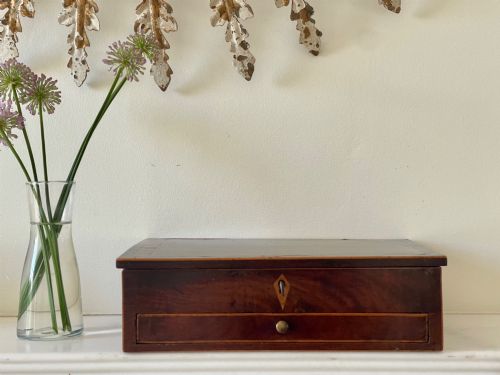
A dark wood vanity box holds personal treasures and keepsakes in dense timber lined with glass and brass.
Dark Wood Vanity Box
A dark wood vanity box is a portable chest designed for holding jewellery, cosmetics, and small personal belongings. These pieces span several eras, including the Georgian, Regency, and Victorian periods.
Makers shaped these containers for dressing tables, boudoirs, and travel. Some examples double as work boxes, sewing tables, or miniature cabinets with fitted interiors.
How they were made
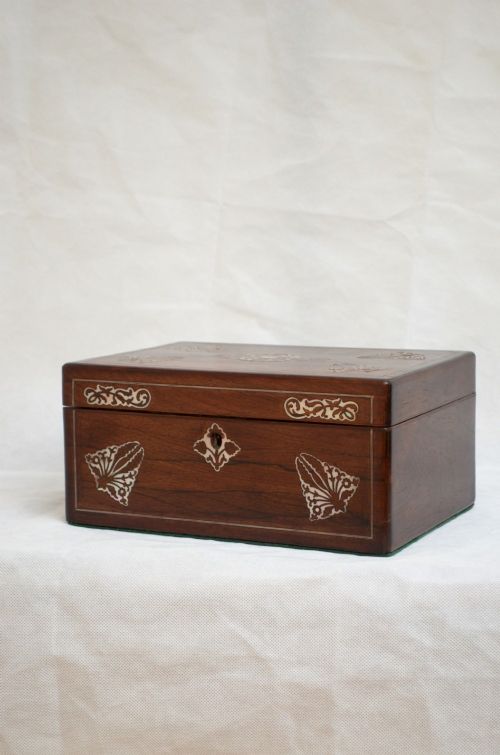
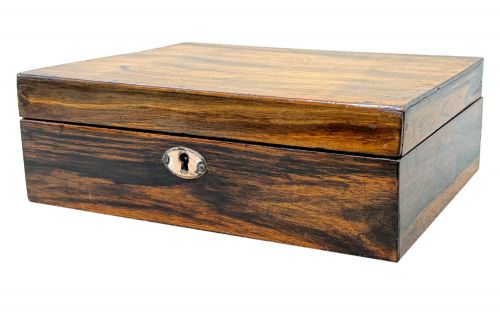
Cabinet makers utilised dense timbers such as mahogany, rosewood, and coromandel wood to build the carcasses of these boxes. These woods were often selected for rich grain patterns and durability.
Metal and shell details were frequently integrated into the construction. Craftsmen added brass hinges, locks, and handles alongside mother of pearl inlay to decorate the surfaces.
Interiors required precise joinery to create removable trays, secret compartments, and fitted slots for glass scent bottles.
Some nineteenth century boxes included secret drawers hidden behind false panel walls for truly private keepsakes.
What varies in quality
The choice of timber and the precision of the veneer work dictate the foundational quality of a piece. Dense coromandel and flame mahogany command attention through distinct grain movement.
Fittings and hardware demonstrate the level of craftsmanship involved. Heavy cast brass mounts, working locks with original keys, and intact glass bottles distinguish finer examples.
The complexity of the interior layout affects the standing of a piece. Well preserved silk or velvet linings and neatly divided compartments show careful original manufacture.
H Mitchell
The Dark Wood Vanity Box Glossary
- Flame mahogany
- A veneer cut from the fork of the mahogany tree, producing a distinctive fire-like ripple pattern. It was favoured by Georgian and Regency cabinet makers.
- Toilet mirror
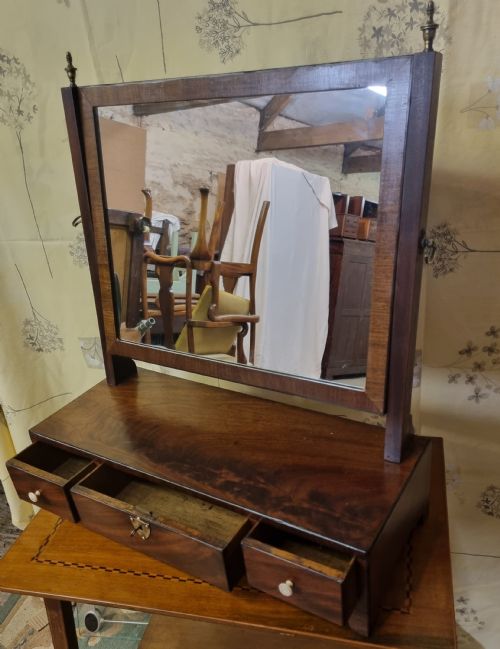
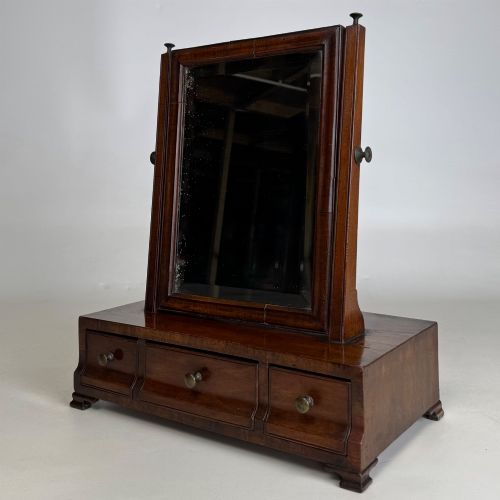
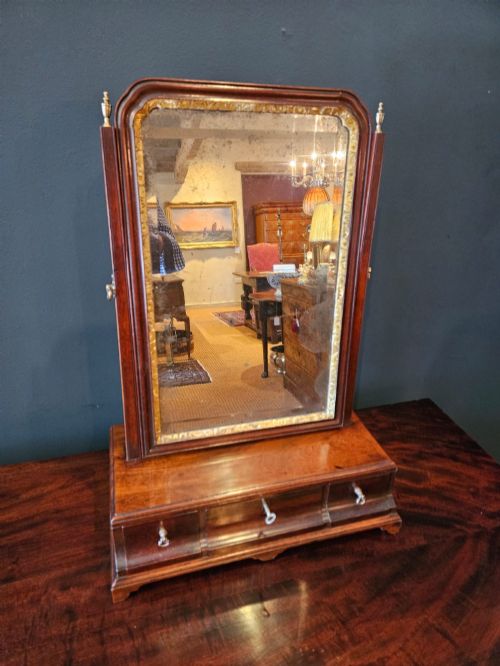
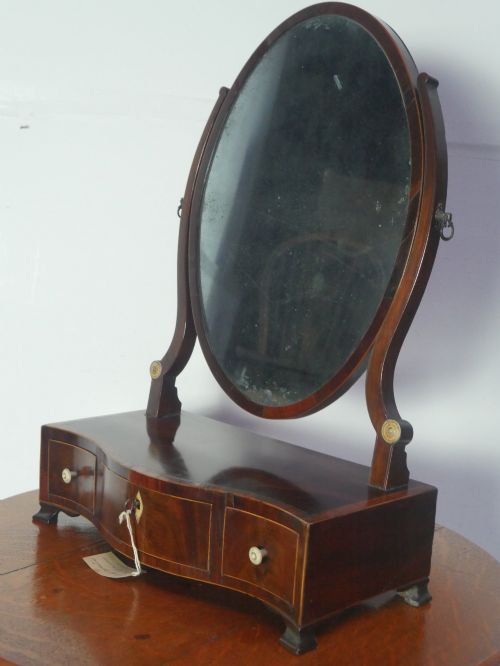
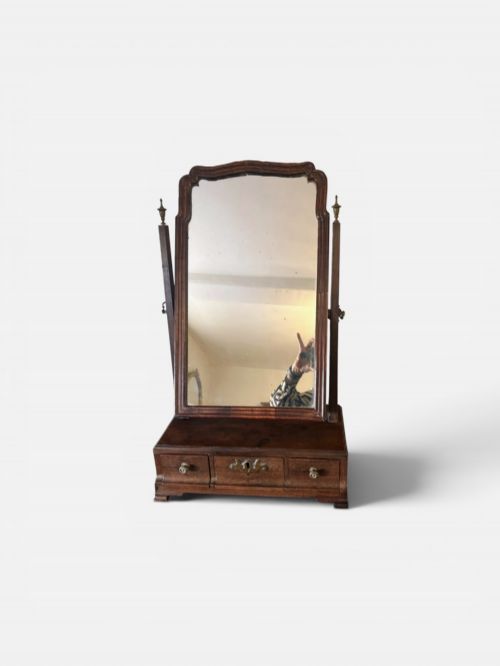
- A small mirror mounted on a wooden frame with drawers, designed to sit upon a dressing table. These often accompanied early vanity sets.
- Sarcophagus
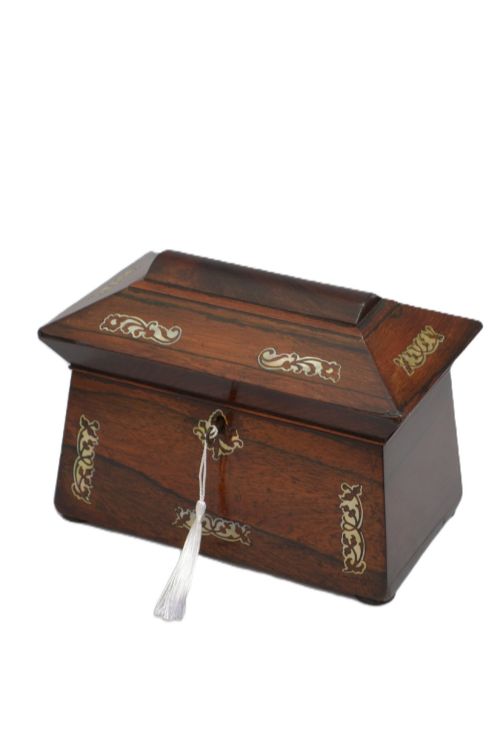
- A box shape featuring a domed lid and sloping sides, popular during the Regency and William IV periods. Such forms frequently housed jewellery.
- Mother of pearl
- The iridescent inner layer of certain mollusc shells. Craftsmen used thin pieces of it to inlay geometric patterns into wooden lids.
Dark Wood Vanity Box: Frequently Asked Questions
What is a dark wood vanity box?
A dark wood vanity box is a lidded container built from timbers like mahogany, rosewood, or coromandel. These items were made to store jewellery, cosmetics, and small personal effects.
Most examples include fitted internal trays, compartments, or glass bottles. They range from portable travel cases to stationary dressing table accessories.
How were vanity boxes used historically?
These boxes served as secure storage for valuable trinkets, grooming tools, and personal documents. Owners kept them in bedrooms, boudoirs, or packing trunks for travel.
Fitted interiors ensured that glass scent bottles and delicate items remained secure during transit. Many boxes included working locks to protect contents.
How do I care for a rosewood or coromandel box?
Maintain the timber by keeping the box away from direct sunlight and sudden changes in humidity. Dust the surface gently with a dry, soft cloth.
Avoid using harsh chemical polishes that might damage old wood finishes or delicate mother of pearl inlay. Natural wax can help preserve the timber.
How do I tell a Georgian box from a Victorian one?
Georgian and Regency boxes typically rely on clean architectural lines, flame mahogany veneers, and restrained brass mounts. They reflect earlier furniture design trends.
Victorian pieces frequently introduce exotic timbers like coromandel and heavy mother of pearl inlay. Interiors from the later nineteenth century often feature elaborate velvet or silk linings.