

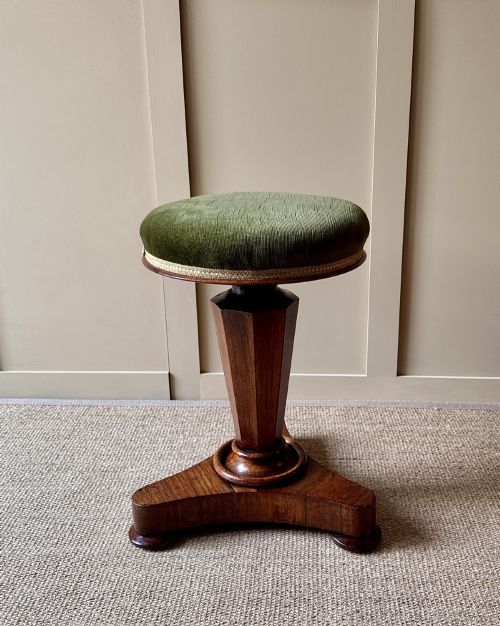


William IV Music Stool
These William IV music stool examples are sturdy, adjustable seats built for the parlour and the drawing room.
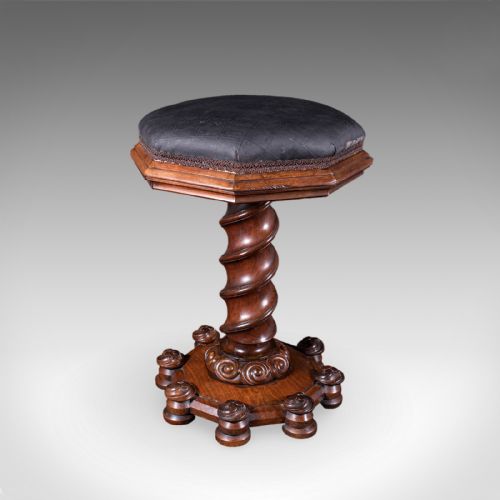
William IV Music Stool
A William IV music stool is a specialised seat designed for musicians at the piano, organ, or harp. Most pieces found here belong to the 19th Century, particularly the Regency and Victorian eras, taking the form of piano stools, music chairs, and square top adjustable seats.
How they were made
Cabinet makers utilised dense timbers such as mahogany, rosewood, and walnut to build these frames. Figured veneers and solid turnings define the structural bodies seen in the archive.
Makers integrated brass components into the rotating and rising mechanisms. Upholstery materials included leather, velvet, and tapestry fabric for the tops.
William IV Music Stool Retail Price Guide 2026
Typical asking prices for william iv music stool among the pieces listed under this phrase on Sellingantiques today, from the lower quarter to the upper quarter. They describe what is for sale here now, not the wider market.
Periods represented in the stock range from Georgian and Regency through William IV to Victorian.
What varies in quality
Quality rests in the choice of timber and the precision of the turning work. Pieces utilising figured walnut or rich rosewood sit at a different level from standard mahogany examples.
The complexity of the adjustment mechanism distinguishes finer items from simpler stationary forms. Smooth operation of the screw thread or revolving screw dictates the mechanical standard.
The William IV Music Stool Glossary
- William IV
- A British design style bridging the Regency and early Victorian periods, characterised by robust classical revival forms. It spans the years from eighteen thirty to thirty-seven.
- Adjustable piano stool
- A seat featuring a mechanism that alters the height for the player. This usually involves a threaded screw column hidden beneath the cushion.
- Rosewood
- A heavy, dark tropical timber prized for its rich grain patterns. Makers utilised it extensively for high-status parlour furniture.
- Tapestry fabric
- A woven textile used for upholstery on period seat tops. It often displays floral or geometric patterns.
William IV Music Stool: Frequently Asked Questions
How do I adjust the height?
Most pieces raise or lower by rotating the padded top clockwise or anticlockwise on a central wooden or metal screw.
Heavier mechanisms may involve a side lever or a ratchet system concealed beneath the rail.
Where were these used?
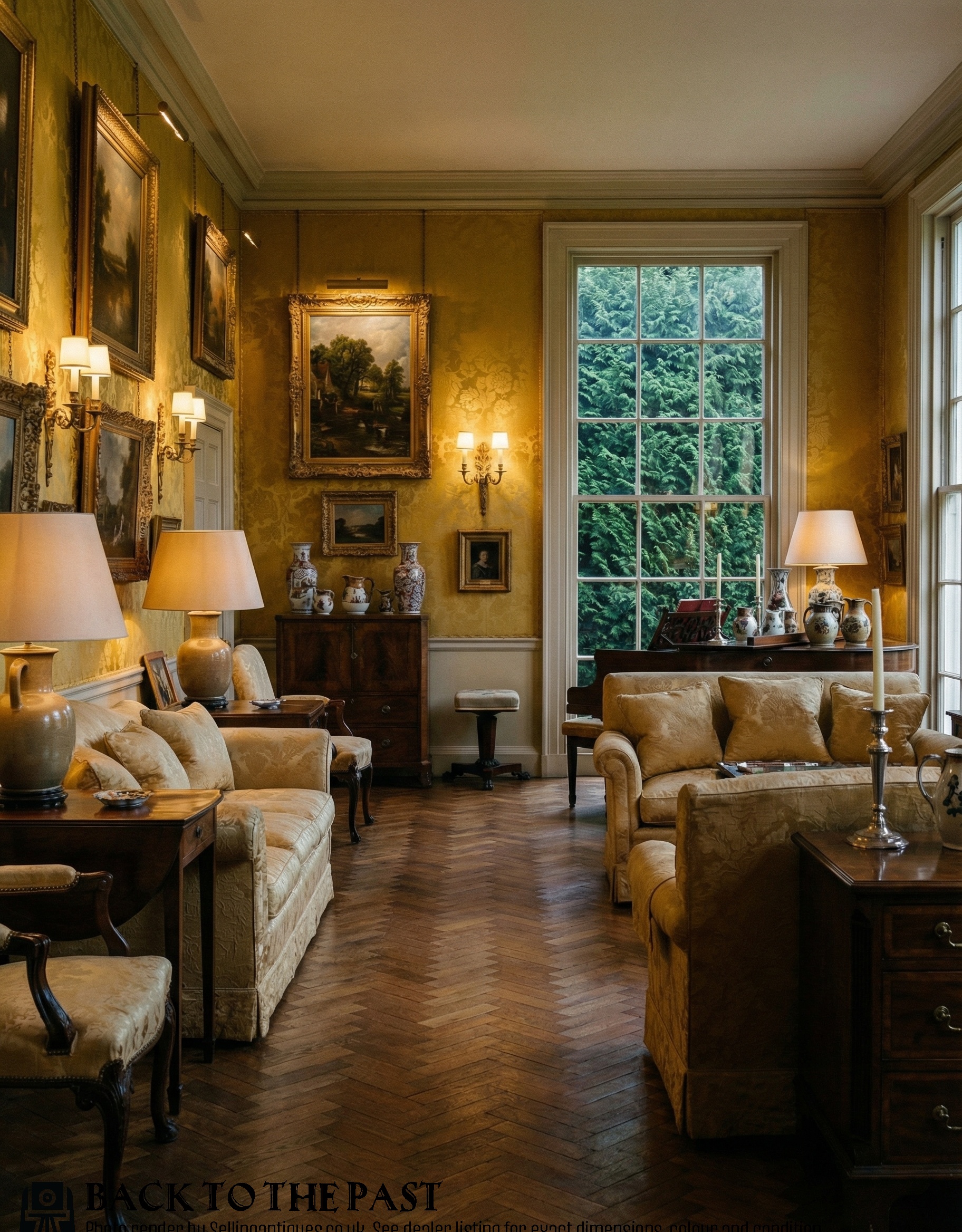
These seats stood beside upright pianos, grand pianos, and organs in nineteenth-century homes. Parlours and music rooms served as their primary locations.
Specialist variants like harpist chairs accommodated instruments that required specific arm configurations.
How do I clean the wood?
Use a soft, dry cloth to remove dust from the mahogany, rosewood, or walnut surfaces. Avoid modern silicone sprays that build up over time.
Apply a traditional beeswax polish sparingly to maintain the natural sheen of the timber.
Are all these stools from the same period?
The pieces span the nineteenth century, including Georgian, Regency, William IV, and Victorian periods. Stylistic crossover is common in transitional items.
Makers often retained earlier design motifs well into the reign of Queen Victoria.