





William IV Mahogany Server
A william iv mahogany server provides the sturdy elegance and generous surface required for dining room service.
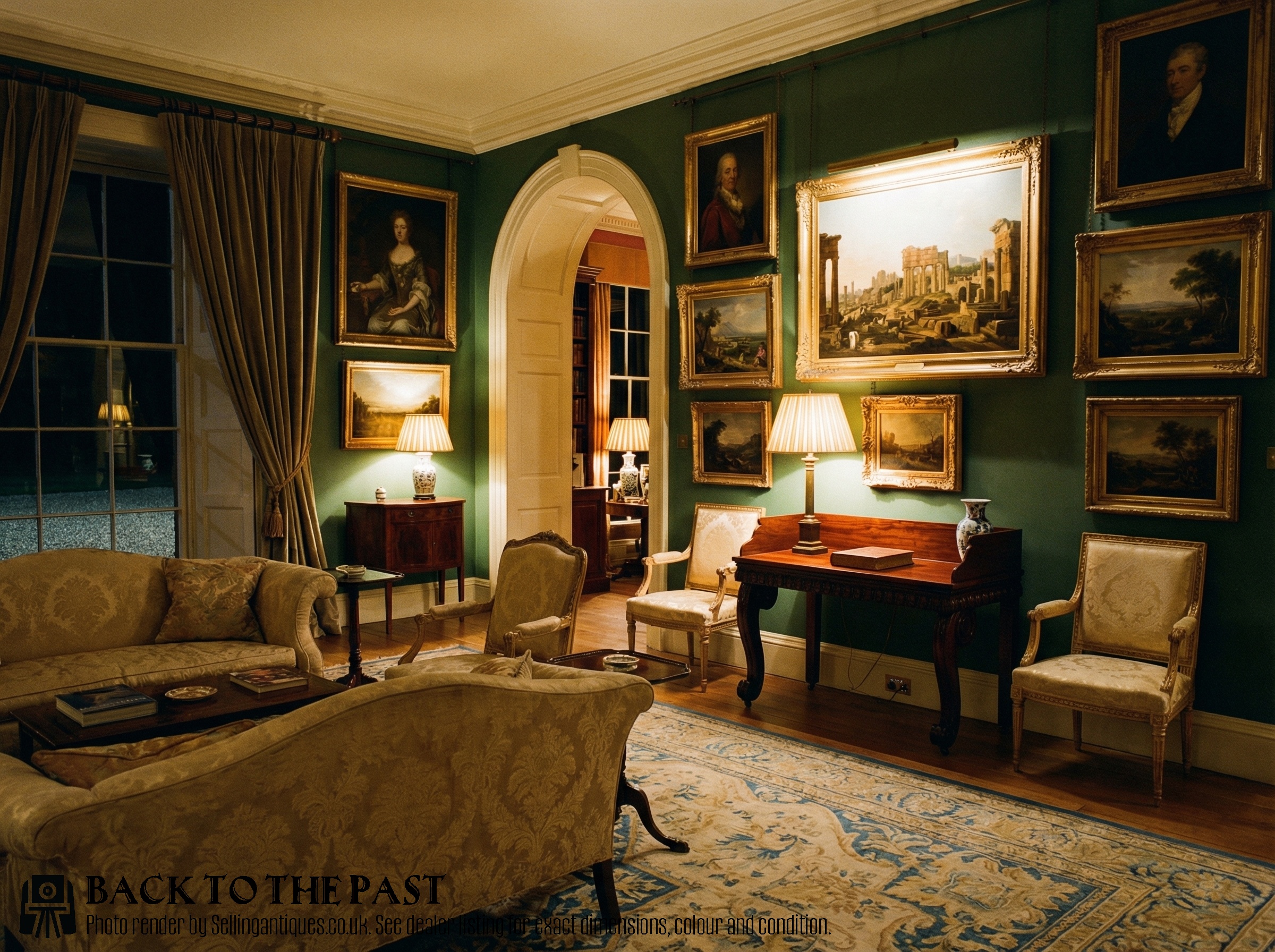
William IV Mahogany Server
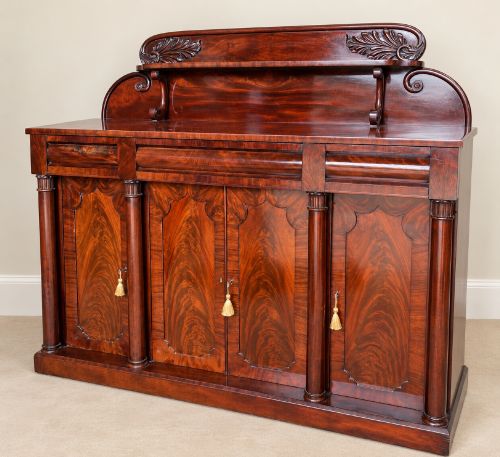
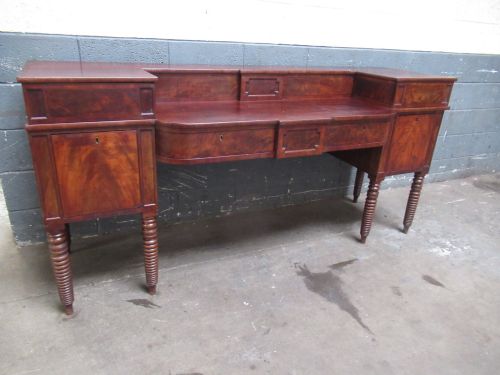
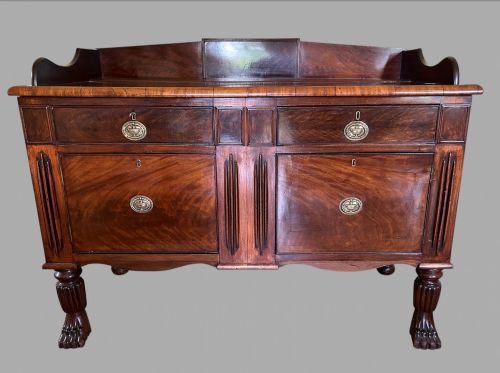
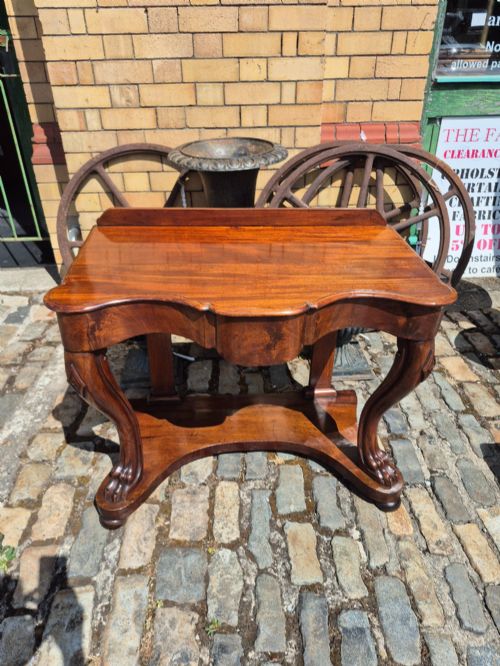
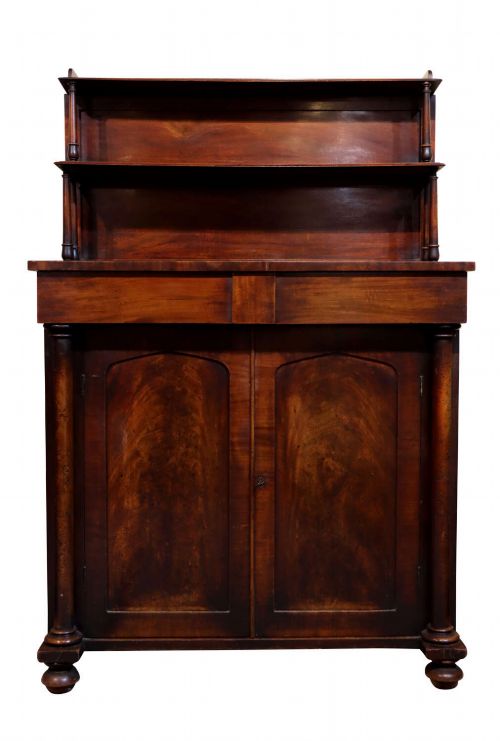
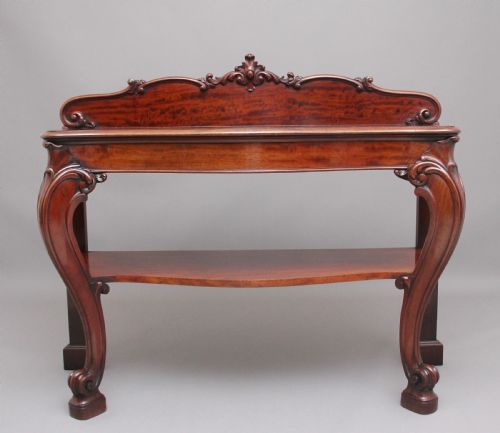
A william iv mahogany server unites robust proportions with the rich timber grain characteristic of the nineteenth century. These items manifest primarily as sideboards, serving tables, buffets, and console tables designed for dining spaces.
The version most commonly encountered on this page stems from the nineteenth century, bearing the heavy pedestals and carved details typical of the period. Pieces range from large Scottish and Irish examples to compact console tables.
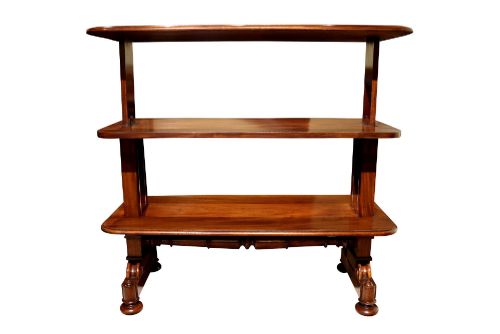
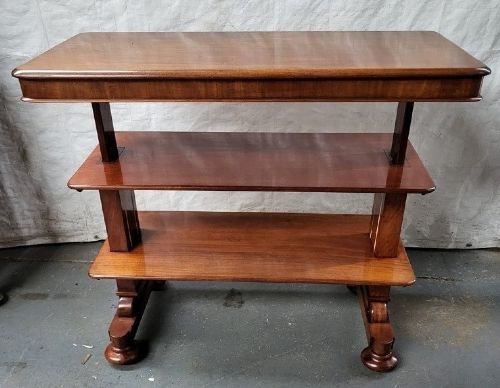
Makers and craftsmen of the era utilised versatile forms, including rise and fall three-tier buffets, metamorphic designs, and mirror back console tables. Such adaptability served the practical needs of nineteenth-century households while maintaining formal dignity.
Differentiating quality across pieces
The selection of timber grain largely dictates the visual hierarchy, with vibrant flame mahogany veneers commanding greater attention than plain stock. Highly figured surfaces demonstrate superior selection by the cabinetmaker.
Carved ornament depth and clarity distinguish high-tier examples from simpler utilitarian pieces. Crisp execution of nineteenth-century motifs on pedestals and backsplashes elevates the standing of a server.
Some nineteenth-century buffets rise and fall on command, proving that Victorian dining rooms enjoyed secret mechanical tricks just as much as we do.
Gillows of Lancaster and London
The William IV Mahogany Server Glossary
- Flame mahogany
- A veneer cut from timber where the grain creates a flickering, flame-like pattern. This decorative surface is prized for its dramatic visual movement.
- Chiffonier
- A compact sideboard or cabinet featuring shelves or a small superstructure. These pieces gained popularity during the nineteenth century for dining and drawing rooms.
- Console table
- A table designed to stand against a wall, frequently supported by brackets or pillars. Many nineteenth-century versions function as serving surfaces in formal halls.
- Metamorphic
- Describing furniture that transforms from one form to another for alternate uses. Rise and fall buffets demonstrate this mechanical ingenuity.
- Pedestal sideboard
- A large dining room base flanked by two structural pedestals enclosing cupboards or drawers. This heavy nineteenth-century form anchors large dining spaces.
William IV Mahogany Server: Frequently Asked Questions
How do I identify a william iv server?
Look for dense mahogany timbers, bold classical carving, and pedestal bases typical of the nineteenth-century style. These items often feature scrolled brackets and substantial proportions.
Compare the silhouette against standard regency or early victorian forms to confirm the distinct nineteenth-century characteristics.
Where were these pieces used?
Dining rooms and grand hallways served as the primary locations for these large servers and console tables. They held dishes, cutlery, and serving vessels during formal meals.
Their sturdy construction supported heavy silver and glassware while complementing the architecture of nineteenth-century interiors.
Are smaller versions available?
Compact console tables and diminutive sideboards appear among nineteenth-century listings for buyers with restricted space. These items retain the heavy timber and carved details of larger pedestals.
Check the dimensions carefully to ensure the piece fits modern domestic layouts without overwhelming smaller rooms.
How should I clean mahogany furniture?
Apply a soft, dry cloth to remove dust and maintain the natural sheen of the polished veneer. Avoid abrasive household cleaners that might strip the historic finish.
Feed the timber periodically with appropriate wax to preserve the depth and grain of the nineteenth-century wood.