



Regency Tiered Buffet
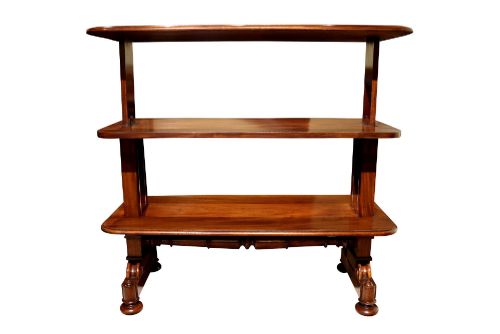
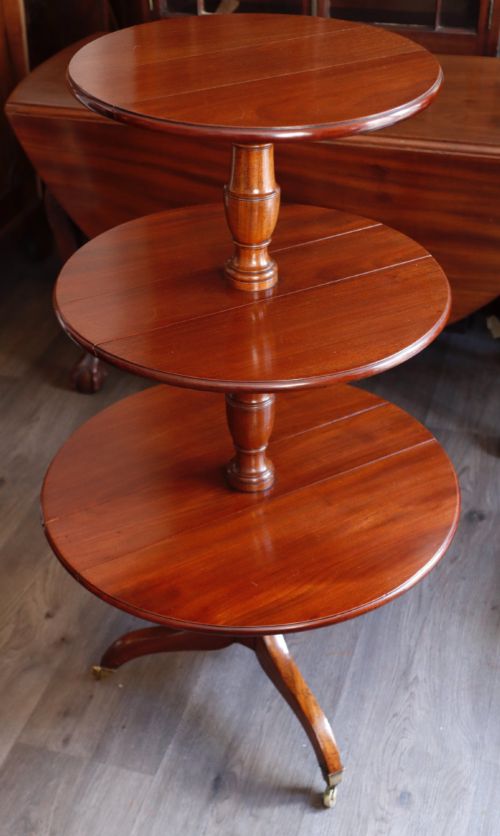
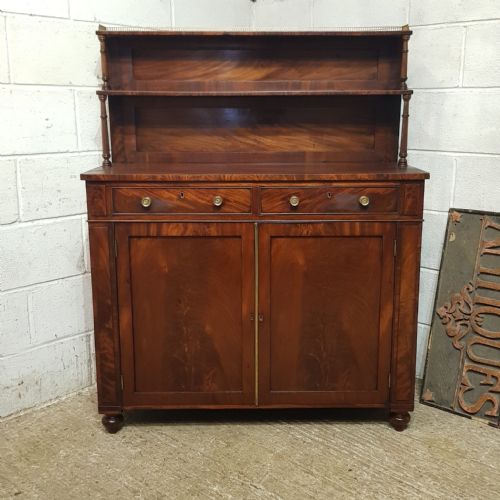
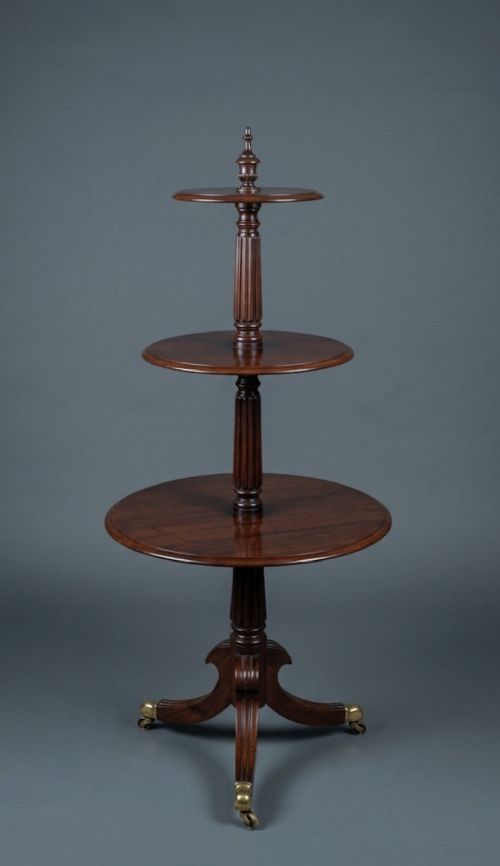
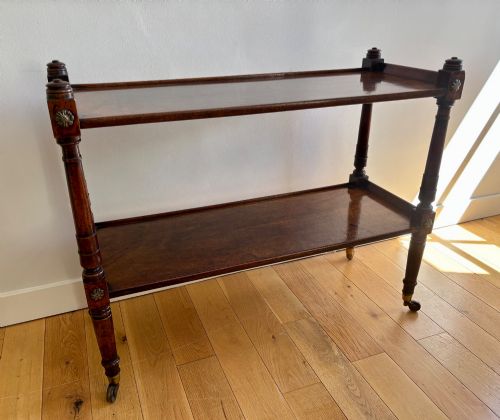
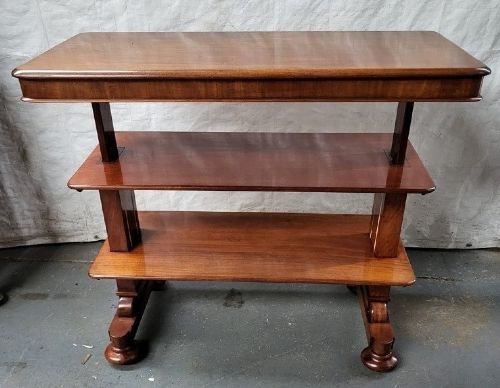
These regency tiered buffet pieces are multi-shelved dining room servers designed for holding dishes and bottles.
Regency Tiered Buffet
A regency tiered buffet brings multiple surface levels to the dining room or parlour for serving food and drink. These pieces appear in forms such as dumb waiters, serving tables, and folding etageres with two or three tiers.
The pieces listed here span the Georgian, Regency, William IV, and Victorian periods, alongside later twentieth-century iterations. Buyers encounter circular tiers, folding shelves, and metamorphic formats designed to adapt to the room.
Originating primarily in English workshops, these items serve as practical furniture for hospitality. The format prioritises vertical space, allowing hosts to present dishes or display items within easy reach during a meal.
Materials and construction
Cabinetmakers built these pieces predominantly using mahogany, often selecting figured varieties like fiddleback, Cuban, or pollard oak for decorative impact. Secondary woods provided structural support beneath the polished exterior surfaces.
Metal components played a crucial role in operational elements, incorporating brass castors, hinges, and pivoting mechanisms for folding shelves or rise-and-fall functions. Joinery techniques ensured stable stacking of multiple tiers on central turned columns or side supports.
The listings on this site feature pieces constructed from mahogany, rosewood, pollard oak, and oak, spanning the Georgian, Regency, and Victorian eras.
Distinctions in quality
Proportion and ingenuity of design distinguish exceptional examples, particularly those featuring metamorphic capabilities or attribution to notable cabinetmakers. The execution of brass fittings and the stability of multi-tiered structures indicate the original standard of craftsmanship.
Gillows of Lancaster and London
The Regency Tiered Buffet Glossary
- Dumb waiter
- A tiered serving stand designed to hold dishes or drinks without the presence of servants. These pieces typically feature rotating or fixed circular shelves mounted on a central pillar.
- Metamorphic
- Furniture engineered to transform into different shapes or configurations for alternative uses. These pieces adjust their height or fold their shelves away when not in service.
- Etagere
- A piece of furniture consisting of a set of open shelves for displaying small objects or serving items. This French term describes tiered stands intended for presentation.
- Fiddleback
- A type of wood grain showing a wavy pattern resembling the back of a violin. Cabinetmakers prized this figuring for its lustrous appearance under polish.
- Parcel gilt
- Woodwork partially covered with gold leaf to highlight carved details or architectural moulding. This decorative treatment adds contrast to the dark timber base.
Regency Tiered Buffet: Frequently Asked Questions
What is a regency tiered buffet used for?
These pieces served as auxiliary serving tables during formal meals to hold extra dishes, glassware, and bottles. Hosts placed them beside the dining table to keep food and drinks accessible without crowding the main surface.
Today, buyers use them in dining rooms, living spaces, or hallways as display surfaces and occasional tables. Their stacked shelves provide generous surface area while maintaining a compact footprint.
How do I identify a genuine period piece?
Examine the timber selection, secondary woods, and construction methods used in the framing and joints. Period pieces exhibit hand-turned components, period-appropriate brass hardware, and timber patination consistent with age.
Check for consistency in wear patterns around the shelf edges and the central column base. Signatures, stamps, or specific stylistic details pointing to known workshops can further confirm the era of origin.
Are folding and metamorphic versions practical?
The mechanical elements allow the furniture to adapt to different spaces and hosting requirements. Folding shelves and rise-and-fall mechanisms offer flexibility for modern rooms without sacrificing period character.
Ensure that the brass hinges, pivots, and locking catches operate smoothly without excessive play. Well-maintained mechanisms function reliably despite centuries of use.
How do I care for antique mahogany surfaces?
Maintain the finish by dusting regularly with a soft, dry cloth and avoiding direct sunlight or excessive moisture. Periodic application of appropriate wax feeds the timber and preserves the depth of the grain.
Protect the tiers from heat and liquid spills by using coasters or mats beneath serving vessels. Gentle upkeep safeguards the historic polish and the underlying timber.