



Antique Drinks Trolley Wood
An antique drinks trolley wood piece brings period charm to hosting, offering tiered storage and mobility for serving glasses and bottles.
Antique Drinks Trolley Wood
When you search for an antique drinks trolley wood option, you encounter pieces designed for serving and displaying refreshments across various historic periods. The selection ranges from early folding butler trays to tiered Edwardian tea trolleys and Art Deco walnut cocktail carts.
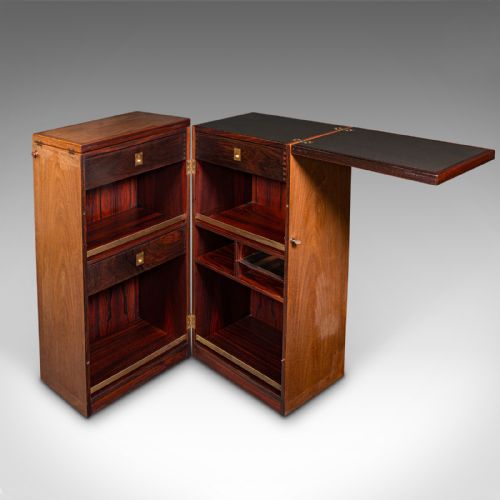
Most examples you meet on this page span the Victorian, Edwardian and 1930s eras, alongside Georgian style pieces and utilitarian designs. Formats vary from two-tier serving tables and three-tier tea trolleys to circular bar carts and specialised drinks cabinets.
Origins stretch across English workshops, French studios, Chinese export studios and Indian carvers, providing diverse timber grains and decorative details. These items functioned historically as tea tables, dumb waiters and mobile sideboards before evolving into dedicated cocktail carts.
Materials and construction methods
Makers utilised solid timbers and decorative veneers such as mahogany, oak, walnut, burr amboyna and teak to build these pieces. Hardwood frames frequently feature carved detailing, boxwood inlay or ebonised finishes.
Metal elements including brass galleries, cast iron wheels and gilt brass mountings provide functional support and decorative contrast to the timber. Glass inserts appear within trays and shelves to protect the wood surfaces during service.
Construction techniques involve traditional joinery combined with folding mechanisms, tiered shelving supports and wheeled castor assemblies. Cabinet forms incorporate panelled doors, bow fronts and hinged leaves that expand the surface area.
Listings feature pieces spanning the 19th Century, Victorian, Edwardian, and 1930s periods in mahogany, oak, walnut, and teak.
Distinguishing quality across pieces
The refinement of the timber grain and the choice of decorative veneer set superior examples apart from simpler utility items. Finely figured burr walnut, amboyna or Cuban mahogany indicate higher workshop standards than standard domestic hardwoods.
Engineering and hardware sophistication reveal the tier of craftsmanship, from smooth-rolling wheels and sturdy brass fittings to complex folding mechanisms and crisp hand-carving. Integrated galleries and secure tier joints demonstrate structural integrity that supports heavy glassware.
Gillows
The Antique Drinks Trolley Wood Glossary
- Butler tray
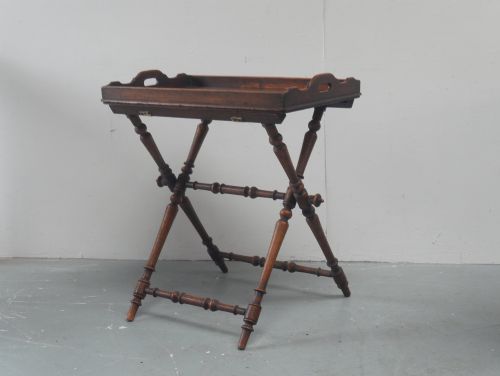
- A removable wooden tray with side handles designed to sit upon a folding wooden stand. It allowed servants to transport items between rooms before placing the tray on its support.
- Dumb waiter
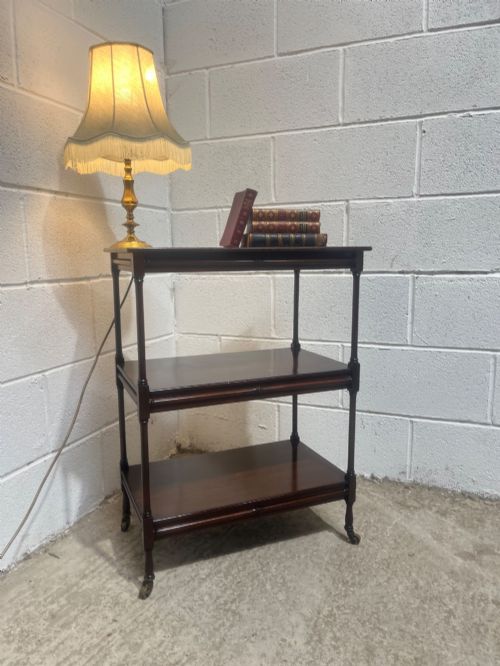
- A multi-tiered piece of dining room furniture used to hold dishes and drinks without requiring servant attendance. These sturdy serving tables often featured revolving or stepped shelves.
- Etagere
- An open piece of furniture with multiple tiers for displaying ornaments, tea wares or bottles. The form relies on slender vertical supports and graduated shelves.
- Gallery
- A low raised rim or railing encircling the edge of a tray, shelf or table top. It prevents glassware and bottles from sliding off during movement.
- Burr walnut
- A prized timber veneer taken from the knotted growth of a walnut tree. It yields highly decorative swirling grain patterns prized by cabinet makers.
Antique Drinks Trolley Wood: Frequently Asked Questions
How do I date an antique wooden trolley?
Dating relies on examining the timber species, construction techniques and stylistic markers characteristic of specific eras like the Victorian period or the 1930s. Hardware such as castors and handles also provides reliable clues to manufacturing periods.
Comparing the piece against documented examples from similar workshops helps narrow down the decade of production. Examining secondary woods and joinery methods confirms whether the piece belongs to a historic era or represents a later revival style.
Were these trolleys used only for tea?
While many Edwardian examples were built specifically as tea trolleys to serve afternoon refreshments, others served diverse domestic functions. Georgian and Victorian pieces often acted as mobile sideboards, dumb waiters or butler trays for heavy dining service.
By the 1930s, the emergence of cocktail culture transformed these items into dedicated mobile bars equipped for spirits and glassware. The tiered structure accommodated bottles, mixers and ice buckets alongside serving glasses.
Can I use an old wooden trolley for daily serving?
Most antique wooden trolleys remain structurally sound and functional for serving drinks and displaying glassware in a modern home. Checking the stability of the castor wheels and tier supports ensures safe movement across flat floors.
Protecting vulnerable timber surfaces with coasters or glass trays prevents spill damage while maintaining the original finish. Regular polishing preserves the historic wood grain against daily wear.
What is the difference between a tea trolley and a bar cart?
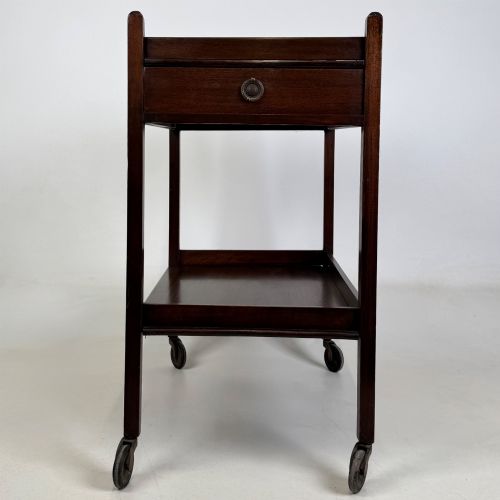
Tea trolleys typically feature two or three rectangular wooden shelves, often with folding leaves or drop-down sides designed for serving tea wares. They frequently date from the Edwardian era and emphasise traditional British domestic comfort.
Bar carts, particularly from the Art Deco period, often adopt circular formats, metal frames, and specialised bottle holders tailored for cocktails. They prioritize display and mobility for entertaining over formal tea service.